Love this? Save it for later!
Share the inspiration with your friends
There used to be a tiny cider mill off the old River Road, the kind of place with a crooked screen door and a gravel parking lot that always had a few stray chickens pecking around. They pressed their own cider and sold it out of a dented galvanized tub, and every October, they served this warm, spiced drink that was honestly life-changing. When the mill closed three years ago—the owner finally retired and the family sold the land—I felt a genuine pang of loss. It wasn’t just the cider I missed; it was the whole experience. The cold air hitting your face, the steam rising from the paper cup, that first sip that tasted like autumn itself.
After the mill closed, I spent two whole seasons trying to recreate that drink. My first attempt was a disaster—way too sweet, like liquid candy. The second was too tart, and the third just tasted like regular apple juice with a stick of cinnamon floating in it, which is not the same thing at all. I mean, I tried everything. I experimented with different apple varieties, different spice ratios, even different heating methods. My kitchen looked like a cider lab for a while there, with jars lined up on the counter and notes taped to the cabinets. My neighbor, Margaret, started calling me “the cider scientist.” Honestly, she wasn’t wrong.
But then, on a random Tuesday night in late October, it happened. I had a bottle of leftover red wine from dinner the night before, a half-gallon of fresh cider from the farmers market, and a desperate need for something cozy. I threw it all together, added a few cinnamon sticks, and let it sit in the fridge overnight. The next morning, I tasted it, and I actually teared up a little. It was the drink from the mill—only better, because it was mine. This cozy apple cider sangria with cinnamon sticks is that recipe. It’s the drink I’ve been making every fall since, and the one I’m betting you’ll make every year too. Maybe you’ve been chasing a memory like this yourself? If so, you’re in the right place.
Why You’ll Love This Recipe
Let me tell you why this cozy apple cider sangria with cinnamon sticks has become my most-requested fall recipe. I’ve tested this combination at least fifteen times, tweaking the ratios and the chilling time until it was absolutely perfect. I’m not a professional chef or anything, but I’ve been cooking and developing recipes for long enough to know when something is right. And this? This is right.
- Only 5 Ingredients: You read that correctly. Five simple, easy-to-find ingredients are all that stand between you and the most delicious fall drink you’ve ever made. No fancy liquor store trips, no obscure mixers.
- Comes Together in 5 Minutes: I’m serious. The active prep time for this recipe is laughably short. You just pour, stir, and let the fridge do the work. It’s perfect for those busy weeks when you still want something special.
- Perfect for Cozy Nights In: This is the drink you want when the weather turns cold, when you’re curled up on the couch in your favorite sweater, or when you’ve had a rough day and need something soothing. It’s comfort in a glass.
- Always a Crowd-Pleaser: I’ve served this at Thanksgiving, at casual fall get-togethers, and even at a Halloween party. Every single time, people ask for the recipe. It’s not too sweet, not too boozy—it’s just right.
- Unbelievably Delicious: The magic here is in the combination of crisp apple cider and smooth red wine, all infused with warm cinnamon. The flavors meld together in the fridge, creating something that tastes way more complex than the ingredient list suggests. It’s the kind of drink that makes you close your eyes after the first sip.
What makes this recipe different from every other sangria recipe out there is the technique. Instead of just mixing everything together and serving it right away, you let it rest overnight. That resting time is crucial. It allows the cinnamon sticks to slowly release their oils, the apple flavors to deepen, and the whole thing to become perfectly balanced. I tried serving it immediately once, and it was fine, but it wasn’t this. The overnight rest is the secret. Trust me on this.
This sangria isn’t just a drink—it’s an experience. It’s the taste of a crisp autumn afternoon, the warmth of a crackling fire, the feeling of being exactly where you’re supposed to be. It’s comfort food in liquid form, and it’s guaranteed to make any evening feel a little more special.
What Ingredients You Will Need
This recipe uses simple, wholesome ingredients to deliver a bold, comforting flavor without any fuss. You probably already have most of these in your kitchen, which is part of the beauty of it. Let’s break down each one.
- 1 bottle (750 ml) dry red wine: This is the backbone of the sangria. I recommend a medium-bodied red like a Merlot, Zinfandel, or a Spanish Tempranillo. You don’t need anything expensive—a $10 bottle works perfectly. The key is to avoid anything too sweet or too tannic. A dry wine balances the sweetness of the apple cider beautifully. I personally love using a Garnacha for its soft, fruity notes.
- 2 cups (480 ml) apple cider: Not apple juice! Apple cider is unfiltered and has a richer, more complex flavor. It’s cloudier and has that authentic farmstand taste. Look for fresh, refrigerated cider at the grocery store or farmers market. If you can get it from a local orchard, even better. The quality of the cider makes a big difference here.
- 1/2 cup (120 ml) apple brandy or Calvados: This is optional, but highly recommended. It adds a lovely apple-forward kick and a bit of warmth. Calvados is a French apple brandy that’s absolutely wonderful, but a good American apple brandy works great too. If you want to keep it non-alcoholic, you can skip this and add an extra 1/2 cup of apple cider instead.
- 1/4 cup (60 ml) maple syrup: This is my secret weapon. Instead of using plain sugar or simple syrup, maple syrup adds a deep, earthy sweetness that complements the apple and cinnamon flavors perfectly. Use pure maple syrup, not pancake syrup. The grade doesn’t matter much—I use Grade A for its lighter flavor, but Grade B (now often called Grade A Dark) works beautifully too.
- 4-5 cinnamon sticks: Please use whole cinnamon sticks, not ground cinnamon. The sticks infuse the sangria gradually, giving it a warm, aromatic flavor without making it gritty or cloudy. I prefer Ceylon cinnamon for its delicate, sweet flavor, but Cassia cinnamon works fine and is more common. You’ll need enough to fill your pitcher.
- 1 apple, thinly sliced: For garnish and a little extra apple flavor. I like using Honeycrisp or Fuji apples because they hold their shape well and don’t brown too quickly. Granny Smith would also work if you want a tarter note.
- 1 orange, thinly sliced: Adds a bright citrus note that cuts through the sweetness. The oils from the orange peel also add a lovely aromatic quality. Use a navel orange or a Cara Cara if you can find one.
Ingredient Selection Tips: When choosing your apple cider, look for one that says “fresh pressed” or “unfiltered” on the label. The cloudier it is, the more flavor it has. For the wine, I’ve found that a bottle of Bogle Merlot or a Campo Viejo Tempranillo works beautifully without breaking the bank. And for the maple syrup, I always reach for the one with the leaf on the label—you know the one.
Substitution Guidance: If you’re serving this to a crowd that includes non-drinkers, you can easily make a non-alcoholic version. Just replace the red wine with a high-quality unsweetened pomegranate or grape juice, and skip the brandy. The rest of the ingredients stay the same, and it’s still delicious. For a gluten-free option, just make sure your brandy is gluten-free (most are, but it’s always good to check).
Equipment Needed
You don’t need anything fancy to make this cozy apple cider sangria with cinnamon sticks. Here’s what you’ll need:
- A large pitcher: A 2-quart (2-liter) pitcher is ideal. I use a simple glass one I picked up at a home goods store for about $10. A wide-mouthed pitcher makes it easier to add the fruit and stir everything together.
- A wooden spoon or long-handled spoon: For stirring everything together. A wooden spoon is gentle on the glass and won’t scratch your pitcher.
- A sharp knife and cutting board: For slicing the apples and oranges. A sharp knife makes clean, even slices that look beautiful in the pitcher.
- A measuring cup and measuring spoons: For accurate measurements. I like using a glass measuring cup for liquids.
- Wine glasses or mason jars: For serving. This sangria looks gorgeous in stemless wine glasses or even in simple mason jars for a more rustic feel.
Budget-Friendly Options: Don’t have a pitcher? You can use a large bowl with a ladle, or even a clean, empty milk jug in a pinch. The important thing is that it has a lid or you can cover it with plastic wrap for the overnight rest. I’ve made this in a large mason jar before, and it worked perfectly.
Personal Experience: I used to have a fancy sangria dispenser with a spigot at the bottom, and honestly, it was more trouble than it was worth. The spigot always got clogged with fruit. Now I just use a simple pitcher and a ladle, and it’s so much easier. Sometimes the simplest tools really are the best.
Preparation Method

This is the easy part. I promise you can do this with your eyes closed. Well, maybe keep them open for the knife work. Here’s how to make the best cozy apple cider sangria with cinnamon sticks.
- Prep the fruit: Start by washing your apple and orange thoroughly. Cut the apple in half, remove the core, and slice it into thin half-moons. You want the slices to be about 1/4-inch thick so they look pretty in the glass and release a little flavor without falling apart. Then slice the orange into thin rounds. Don’t peel it—the peel adds essential oils and flavor to the sangria. Set the fruit aside.
- Combine the liquids: In your large pitcher, pour in the entire bottle of red wine. Follow that with the 2 cups of apple cider and the 1/2 cup of apple brandy (if using). Give it a gentle stir with your wooden spoon to combine everything. At this point, it will just taste like wine and cider mixed together—don’t worry, the magic happens later.
- Add the sweetener: Pour in the 1/4 cup of maple syrup. Stir well to make sure it’s fully incorporated. Maple syrup is thicker than sugar, so it takes a little more stirring to dissolve. Make sure you scrape the bottom of the pitcher to get any syrup that might have settled there.
- Add the spices and fruit: Drop in the 4-5 cinnamon sticks. They’ll float around and slowly infuse the sangria. Then add the sliced apple and orange. Give everything one more gentle stir to distribute the fruit evenly. You should see the cinnamon sticks nestled among the fruit slices—it’s a beautiful sight.
- Chill overnight: This is the most important step. Cover the pitcher with plastic wrap or a lid and place it in the refrigerator. Let it rest for at least 8 hours, but 12-24 hours is even better. I know it’s hard to wait, but this rest is what transforms the sangria from good to unforgettable. The flavors meld, the cinnamon infuses, and the fruit softens slightly, releasing its juices.
- Serve and enjoy: When you’re ready to serve, give the sangria a gentle stir. Fill your glasses about 3/4 full, making sure to include a few pieces of fruit and a cinnamon stick in each glass. The cinnamon stick doubles as a beautiful stirrer. Serve chilled. If you want, you can add a few ice cubes, but I find the sangria is cold enough straight from the fridge.
Troubleshooting Tips: If you taste the sangria after its overnight rest and it’s not sweet enough, you can stir in a little more maple syrup, a teaspoon at a time, until it’s to your liking. If it’s too sweet, a squeeze of fresh lemon juice will help balance it out. And if you’re in a hurry and can’t wait overnight, you can serve it after just 2-3 hours in the fridge—just know it won’t be quite as flavorful.
Sensory Cues: After the overnight rest, the sangria should have a deep, rich ruby color. The aroma should be warm and inviting, with notes of apple, cinnamon, and a hint of citrus. The fruit should look slightly softened but still intact. When you take a sip, you should taste the wine first, followed by the apple cider, and then a lingering warmth from the cinnamon. It should feel smooth and balanced, not harsh or boozy.
Personal Efficiency Tip: I like to make this sangria the night before I plan to serve it. That way, it’s ready to go when I am. I’ve also been known to make a double batch on a Sunday and enjoy it throughout the week. It actually gets better after a couple of days in the fridge—the flavors just keep deepening.
Cooking Tips & Techniques
Over the years, I’ve learned a few things about making this cozy apple cider sangria with cinnamon sticks. Some of them came from happy accidents, and some came from outright failures. Here’s what I wish someone had told me when I first started making it.
Don’t skip the overnight rest. I cannot stress this enough. I know it’s tempting to serve it right away, especially when you’re craving something cozy. But the overnight rest is what makes this sangria special. The cinnamon needs time to infuse, the fruit needs time to release its flavors, and the wine and cider need time to marry. I made the mistake of serving it after just an hour once, and it was like drinking two separate things in the same glass. Not good.
Use a dry wine, not a sweet one. This is a common mistake. People think that because they’re adding apple cider and maple syrup, they should use a sweet wine. But that leads to a sangria that’s cloyingly sweet. A dry wine provides the necessary backbone and balance. The sweetness from the cider and maple syrup will be enough—trust the process.
Toast the cinnamon sticks first. This is a pro tip I picked up from a bartender friend. Before you add the cinnamon sticks to the pitcher, toast them in a dry skillet over medium heat for about 30 seconds per side, until they become fragrant. This releases their essential oils and gives the sangria a deeper, more complex cinnamon flavor. It’s a small step that makes a big difference.
Don’t overdo the fruit. I know it’s tempting to throw in a whole orchard’s worth of apples, but too much fruit can dilute the flavor and make the sangria watery. Stick to one apple and one orange. The fruit is there to complement the drink, not overwhelm it. You can always add more fruit to individual glasses if you want.
Timing is everything. I like to make this sangria in the morning if I’m serving it that evening. That gives it a solid 8-10 hours to rest. If I’m making it for a party, I’ll make it two days ahead. The sangria actually peaks in flavor around the 24-hour mark, so planning ahead is key.
My biggest failure: One time, I used ground cinnamon instead of cinnamon sticks because I thought it would be fine. It was not fine. The sangria was cloudy, gritty, and had an overpowering cinnamon taste that drowned out everything else. I had to throw the whole batch away. Learn from my mistake—always use whole cinnamon sticks.
Variations & Adaptations
One of the best things about this cozy apple cider sangria with cinnamon sticks is how adaptable it is. I’ve tried several variations over the years, and here are my favorites.
Spiced Pear Sangria: Replace the apple cider with pear cider or pear nectar, and swap the apple slices for thinly sliced ripe pears. Add a star anise pod along with the cinnamon sticks for a warm, licorice-like note. This version is slightly sweeter and has a more delicate flavor. It’s perfect for a fancy dinner party.
Non-Alcoholic Harvest Punch: This is the version I make when I’m serving a crowd that includes kids or non-drinkers. Replace the red wine with a high-quality unsweetened pomegranate juice or a dark grape juice. Omit the apple brandy. Everything else stays the same. It’s still incredibly flavorful and festive, and no one will feel left out.
Whiskey Apple Cider Sangria: For a cozier, more wintery twist, replace the red wine with a full-bodied bourbon or rye whiskey. Use 1 1/2 cups (360 ml) of whiskey instead of the wine, and increase the apple cider to 3 cups (720 ml). Add a few sprigs of fresh rosemary along with the cinnamon sticks. This version is stronger and more warming—perfect for a cold winter night by the fire.
Slow Cooker Version: If you want a warm version of this sangria, combine all the ingredients in a slow cooker and cook on low for 2-3 hours. Don’t let it boil. Serve it warm in mugs with a fresh cinnamon stick for stirring. This is my go-to for holiday parties and outdoor fall gatherings. It fills the whole house with the most amazing aroma.
Personal Variation: My absolute favorite variation is to add a few slices of fresh ginger along with the fruit. It adds a subtle spicy kick that pairs beautifully with the apple and cinnamon. I just peel a 1-inch piece of ginger, slice it thin, and toss it in with everything else. It’s a small addition, but it takes the sangria to a whole new level.
Serving & Storage Suggestions
This cozy apple cider sangria with cinnamon sticks is best served chilled, straight from the refrigerator. I like to serve it in stemless wine glasses or in mason jars for a more rustic, casual feel. The cinnamon stick in each glass doubles as a beautiful stirrer and adds a lovely visual touch.
Presentation Tips: For a truly stunning presentation, rim the glasses with a mixture of cinnamon and sugar before pouring the sangria. Just mix 1 tablespoon of sugar with 1/2 teaspoon of ground cinnamon on a small plate. Wet the rim of the glass with a slice of apple, then dip it into the cinnamon-sugar mixture. It adds a beautiful sparkle and an extra hit of cinnamon flavor with every sip.
Complementary Dishes: This sangria pairs beautifully with a cheese board featuring sharp cheddar, aged gouda, and creamy brie. It’s also wonderful with roasted nuts, apple pie, or a simple plate of shortbread cookies. For a full fall meal, serve it alongside a hearty butternut squash soup or a roast chicken with root vegetables.
Storage Instructions: The sangria will keep in the refrigerator for up to 5 days. The flavors will continue to deepen over time, so it actually gets better after a day or two. Just make sure to keep it covered so it doesn’t absorb any other odors from the fridge. The fruit will start to break down after about 3 days, but that’s fine—it just adds more flavor to the drink.
Reheating (if making the warm version): If you’ve made the slow cooker version and have leftovers, you can reheat it gently on the stovetop or in the microwave. Just don’t let it boil, as that will cook off the alcohol and alter the flavor. Warm it slowly over low heat, stirring occasionally.
Flavor Development: I’ve noticed that the sangria hits its peak flavor around the 24-hour mark. At that point, the cinnamon has fully infused, the fruit has softened and released its juices, and the wine and cider have become one cohesive flavor. After about 48 hours, the flavor is still excellent, but the fruit starts to get a little mushy. I usually try to finish it within 3 days for the best texture.
Nutritional Information & Benefits
While this cozy apple cider sangria with cinnamon sticks is certainly a treat, it does offer some surprising benefits. Here’s a rough estimate of what you’re getting in a standard 6-ounce serving.
Estimated Nutritional Values (per serving):
- Calories: 180-200
- Carbohydrates: 22g
- Sugar: 18g
- Alcohol: 14g
Health Benefits of Key Ingredients: Apple cider is rich in antioxidants and polyphenols, which can help support immune health. Cinnamon is known for its anti-inflammatory properties and can help regulate blood sugar levels. Red wine, in moderation, contains resveratrol, an antioxidant that supports heart health. And maple syrup provides trace amounts of minerals like zinc and manganese, which are important for immune function.
Dietary Considerations: This recipe is naturally gluten-free, dairy-free, and vegan (as long as you use a vegan wine, which most are). It can easily be made non-alcoholic by substituting the wine and brandy with juice. It’s not low-carb or low-sugar, but you can reduce the maple syrup to 2 tablespoons if you want to cut back on sweetness.
Potential Allergens: This recipe is free from the top eight common allergens. However, if you’re serving someone with a sulfite sensitivity, be aware that most wines contain sulfites. You can find sulfite-free wines at most natural food stores.
Personal Wellness Perspective: I believe in balance. This sangria is a treat, something to be enjoyed on a cozy evening or shared with loved ones during the holidays. It’s not something you’d drink every day, but when you do, it’s a wonderful way to slow down, savor the season, and nourish your soul. Sometimes that’s just as important as what’s on the nutrition label.
Conclusion
This cozy apple cider sangria with cinnamon sticks is more than just a drink—it’s a memory in the making. It’s the taste of crisp autumn afternoons, the warmth of good company, and the comfort of something made with care. I spent years chasing that flavor from the old cider mill, and now that I’ve finally captured it, I’m so excited to share it with you.
I hope you’ll make this sangria your own. Add a little more cinnamon if you like things spicy, or a little less maple syrup if you prefer things tart. Serve it at your next fall gathering, or just make it for yourself on a quiet Tuesday night. However you enjoy it, I promise it will bring a little warmth to your heart.
I’d love to hear how it turns out for you. Did you try a variation? Did you serve it at a party? Did it bring back a memory of your own? Drop a comment below and let me know—I read every single one. And if you loved this recipe, please share it with someone who needs a little cozy in their life. Until next time, happy sipping!
Frequently Asked Questions
Can I make this sangria ahead of time?
Absolutely! In fact, I recommend it. This sangria actually tastes better after it’s had time to rest in the refrigerator. You can make it up to 2 days in advance for the best flavor. Just keep it covered in the fridge and give it a gentle stir before serving.
What’s the best wine to use for apple cider sangria?
I recommend a dry, medium-bodied red wine like a Merlot, Zinfandel, or Tempranillo. Avoid sweet wines, as the apple cider and maple syrup will add plenty of sweetness. A $10 bottle works perfectly—you don’t need anything fancy.
Can I use apple juice instead of apple cider?
You can, but I wouldn’t recommend it. Apple juice is filtered and sweeter, with a thinner consistency. Apple cider is unfiltered and has a richer, more complex flavor that’s essential to this recipe. If you can only find apple juice, look for one that’s unfiltered or labeled “fresh pressed.”
How long does the sangria last in the refrigerator?
The sangria will keep for up to 5 days in the refrigerator if stored in a covered container. The flavors will continue to deepen over time. The fruit will start to break down after about 3 days, but that just adds more flavor to the drink. I usually try to finish it within 3 days for the best texture.
Can I make a non-alcoholic version of this sangria?
Yes, and it’s delicious! Simply replace the red wine with an equal amount of high-quality unsweetened pomegranate juice or dark grape juice. Omit the apple brandy. The rest of the ingredients stay the same. It’s perfect for kids, pregnant women, or anyone who prefers not to drink alcohol.
Pin This Recipe!
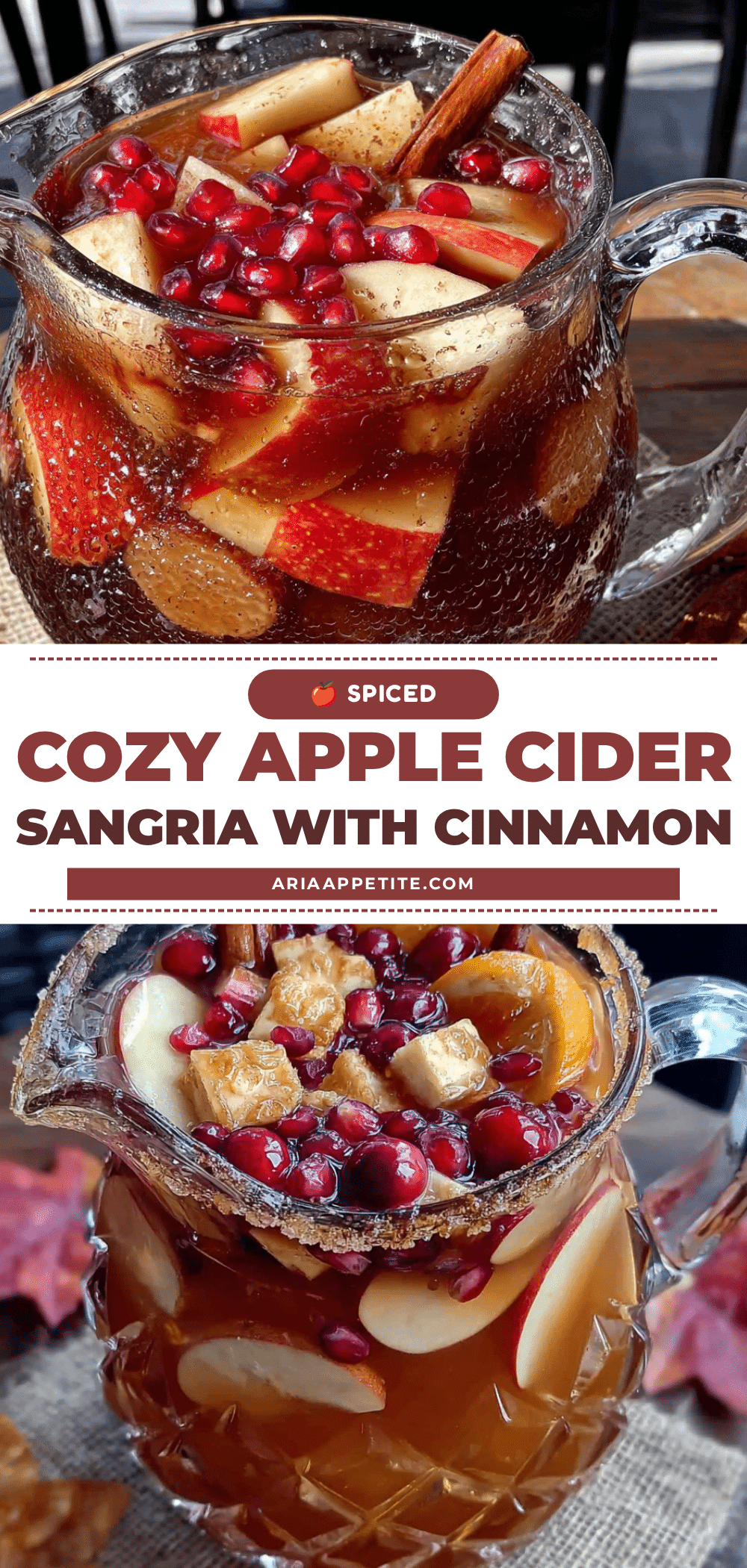
Cozy Apple Cider Sangria: 5-Ingredient Easy Fall Drink
This cozy apple cider sangria with cinnamon sticks is a 5-ingredient, 5-minute prep fall drink that tastes like autumn itself. Made with dry red wine, fresh apple cider, maple syrup, and cinnamon, it’s the perfect make-ahead cocktail for cozy nights in.
- Prep Time: 5 minutes
- Cook Time: 0 minutes
- Total Time: 8 hours 5 minutes (includes chilling time)
- Yield: 6 servings 1x
- Category: Beverage
- Cuisine: American
Ingredients
- 1 bottle (750 ml) dry red wine (Merlot, Zinfandel, or Tempranillo)
- 2 cups (480 ml) apple cider (unfiltered, fresh pressed)
- 1/2 cup (120 ml) apple brandy or Calvados (optional)
- 1/4 cup (60 ml) pure maple syrup
- 4–5 cinnamon sticks (whole)
- 1 apple (Honeycrisp or Fuji), thinly sliced
- 1 orange, thinly sliced
Instructions
- Prep the fruit: Wash the apple and orange thoroughly. Cut the apple in half, remove the core, and slice into thin half-moons (about 1/4-inch thick). Slice the orange into thin rounds. Do not peel the orange.
- Combine the liquids: In a large pitcher, pour the entire bottle of red wine, 2 cups apple cider, and 1/2 cup apple brandy (if using). Stir gently with a wooden spoon.
- Add the sweetener: Pour in 1/4 cup maple syrup and stir well until fully incorporated, scraping the bottom of the pitcher.
- Add the spices and fruit: Drop in 4-5 cinnamon sticks, then add the sliced apple and orange. Stir gently to distribute.
- Chill overnight: Cover the pitcher with plastic wrap or a lid and refrigerate for at least 8 hours, preferably 12-24 hours, to allow flavors to meld.
- Serve and enjoy: Give the sangria a gentle stir. Fill glasses about 3/4 full, including a few pieces of fruit and a cinnamon stick in each glass. Serve chilled.
Notes
The overnight rest is crucial for flavor development. Do not skip it. For a deeper cinnamon flavor, toast the cinnamon sticks in a dry skillet for 30 seconds per side before adding. Use a dry red wine to balance the sweetness. If the sangria is not sweet enough after resting, stir in more maple syrup a teaspoon at a time. If too sweet, add a squeeze of fresh lemon juice.
Nutrition
- Serving Size: 6 ounces
- Calories: 190
- Sugar: 18
- Sodium: 10
- Carbohydrates: 22
- Fiber: 1
Keywords: apple cider sangria, fall sangria, easy sangria recipe, 5-ingredient sangria, cinnamon sangria, cozy fall drink, apple cider cocktail