Love this? Save it for later!
Share the inspiration with your friends
It was a Tuesday afternoon in late July, and I was sweating through my shirt at the local farmers market. I had a bag of peaches in one hand and a container of cherry tomatoes in the other, completely overwhelmed by the sheer bounty of summer. A woman next to me—she must have been in her seventies, with the kind of sun-weathered hands that told you she’d been gardening her whole life—watched me struggle to juggle my produce while trying to snap a photo for Instagram. She didn’t say anything at first. Then she reached into her own basket and pulled out a small ball of burrata, still wrapped in its paper.
“You need this,” she said, like it was the most obvious thing in the world. “The peaches and tomatoes are sweet enough, but the creaminess will bring it all together.”
I laughed and told her I was just trying to make a simple salad, not reinvent the wheel. But she insisted, handing me the burrata with a wink. “Trust me. Drizzle some balsamic on top, add a little basil, and you won’t even miss the grill.”
Honestly, I almost forgot about her advice until I got home and unpacked my bags. There it was, sitting on my counter—that little ball of burrata, looking all soft and out of place next to my peaches. I had planned to make a standard peach Caprese, but something told me to follow her lead. So I sliced the peaches, tore up the burrata, and threw it all together with some tomatoes, basil, and a good glug of olive oil.
That first bite? I closed my eyes. I mean, really closed them. The sweetness of the peach, the creamy burst of the burrata, the tang of the balsamic—it was like summer had been bottled up and poured onto a plate. I sent a silent thank-you to that farmers market angel, because she was absolutely right. You don’t need a grill or a complicated recipe to make something unforgettable. Sometimes you just need a stranger with good instincts and a really ripe peach.
Maybe you’ve been there—standing in a market, unsure what to do with all that beautiful produce, hoping you’ll figure it out before it goes bad. Well, this Fresh Peach Burrata Caprese Salad is the answer. It’s the kind of dish that makes you look like you spent hours in the kitchen when you really just threw it together in ten minutes. And honestly, that’s my favorite kind of cooking.
Why You’ll Love This Recipe
Let me tell you why this Fresh Peach Burrata Caprese Salad has become my go-to summer side dish. First off, it’s ridiculously easy. I’m talking ten minutes from start to finish, and that includes the time it takes to find a good cutting board. You don’t need to cook anything, you don’t need to heat up your kitchen, and you definitely don’t need to stress about timing.
- Quick & Easy: Comes together in under 10 minutes, perfect for those hot summer evenings when you want something fresh without the fuss.
- Simple Ingredients: You only need a handful of ingredients—peaches, burrata, tomatoes, basil, olive oil, and balsamic. No fancy grocery trips required.
- Perfect for Summer Gatherings: Whether it’s a backyard barbecue, a pool party, or a quiet dinner on the patio, this salad fits right in. It’s light, refreshing, and absolutely gorgeous on a platter.
- Crowd-Pleaser: I’ve served this at multiple gatherings, and it always gets rave reviews. Even people who claim they don’t like fruit in their salads come back for seconds.
- Unbelievably Delicious: The combination of sweet peaches, creamy burrata, and tangy balsamic is next-level comfort food. It’s the kind of dish that makes you wonder why you don’t eat peaches every single day.
What makes this recipe different from all the other Caprese salads out there? It’s the burrata. See, traditional Caprese uses fresh mozzarella, which is great, but burrata takes it to a whole new level. When you cut into that little pouch, the creamy center spills out and coats everything in this rich, decadent sauce. It’s like the cheese version of a hug. Plus, using peaches instead of the usual tomatoes adds a natural sweetness that balances the acidity of the balsamic perfectly.
This isn’t just another version of a Caprese salad—it’s my best version. I’ve tested it with different fruits (nectarines work, but they’re not as sweet), different cheeses (mozzarella is fine, but it’s not the same), and different vinegars (skip the white balsamic and go for the good stuff). Trust me, this combination is the winner.
What Ingredients You Will Need
This recipe uses simple, wholesome ingredients to deliver bold flavor and satisfying texture without the fuss. Most of these are summer staples, so you probably already have them in your kitchen or can grab them at your local market in minutes.
- Ripe Peaches (3 medium): Look for peaches that are slightly soft to the touch but not mushy. The fragrance should be sweet and floral. I prefer yellow peaches for their balance of sweetness and acidity, but white peaches work too if that’s what you have. (Pro tip: If your peaches aren’t quite ripe, let them sit on the counter for a day or two.)
- Burrata Cheese (8 ounces, 1 ball): This is the star of the show. Burrata is a fresh Italian cheese made from mozzarella and cream. The outside is solid mozzarella, but the inside is a soft, creamy mixture. I recommend BelGioioso or Di Stefano for consistently good quality. If you can’t find burrata, fresh mozzarella works in a pinch, but you’ll miss that luscious creamy center.
- Cherry Tomatoes (1 cup, halved): Use a mix of colors if you can find them—red, yellow, and orange make for a beautiful presentation. I prefer cherry or grape tomatoes because they’re sweeter and less watery than larger varieties.
- Fresh Basil Leaves (1/4 cup, loosely packed): Go for the big, fragrant leaves if possible. Small leaves are fine, but larger ones have more flavor. Tear them by hand just before serving to release their oils.
- Extra Virgin Olive Oil (2 tablespoons): Use a good quality oil here—it’s one of the main flavors in the salad. I like California Olive Ranch for a fruity, peppery finish.
- Balsamic Glaze (2 tablespoons): This is thicker and sweeter than regular balsamic vinegar, which makes it perfect for drizzling. You can buy it pre-made or reduce balsamic vinegar on the stove until it thickens. (I usually just buy it because I’m lazy, and it saves time.)
- Flaky Sea Salt (1/2 teaspoon): Maldon or another flaky salt is ideal. The large crystals add a nice crunch and burst of saltiness that contrasts beautifully with the sweet peaches.
- Black Pepper (1/4 teaspoon, freshly ground): Freshly ground pepper has more flavor than pre-ground, so take the extra 10 seconds to grind it yourself.
Optional Add-ins:
- Prosciutto (4-6 slices): For a savory, salty twist that pairs beautifully with the sweet peaches. Just drape the slices over the salad before serving.
- Arugula (2 cups): Adds a peppery bite and makes the salad more substantial. Toss it with a little olive oil and lemon juice before layering the other ingredients.
- Honey (1 tablespoon): If your peaches aren’t as sweet as you’d like, a light drizzle of honey can help balance things out.
- Toasted Pine Nuts (2 tablespoons): For a nutty crunch. Toast them in a dry pan over medium heat for 2-3 minutes until golden.
Equipment Needed
You don’t need much for this recipe, which is part of its beauty. Here’s what I use:
- Cutting Board: Any size works, but a larger one gives you room to arrange the finished salad.
- Chef’s Knife: A sharp 8-inch knife is perfect for slicing peaches and halving tomatoes. Dull knives will squish the peaches, so keep it sharp.
- Large Serving Platter: A flat platter or wide shallow bowl works best for arranging the salad. I have a white ceramic one that really makes the colors pop.
- Small Bowl: For mixing the olive oil and balsamic glaze if you want to combine them before drizzling. (I usually just drizzle them separately because it looks prettier.)
- Measuring Spoons: For the olive oil, balsamic, salt, and pepper. Eyeballing works too, but measuring ensures consistency.
If you don’t have a serving platter, a large dinner plate works just fine. And if you’re using a balsamic reduction instead of pre-made glaze, you’ll need a small saucepan and about 10 minutes to reduce 1/2 cup of balsamic vinegar down to 2 tablespoons. But honestly, the store-bought glaze is just as good and saves you the hassle.
Preparation Method
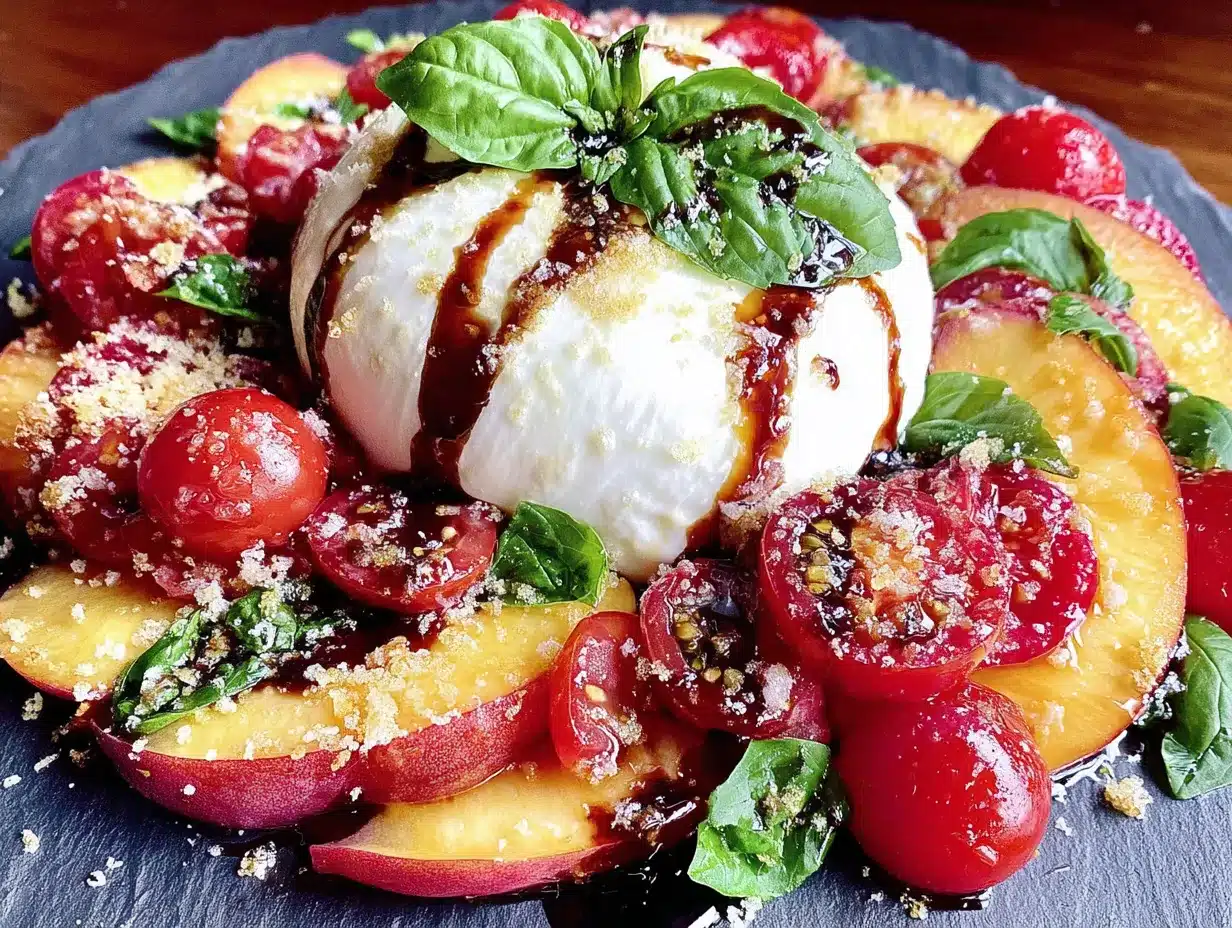
Let me walk you through this step by step. It’s so simple you’ll memorize it after one try.
- Prepare the peaches (5 minutes): Wash and dry your peaches. Cut them in half around the pit, then twist to separate. Remove the pit and slice each half into 1/4-inch thick wedges. Don’t slice them too thin, or they’ll fall apart when you arrange them. You want nice, chunky pieces that hold their shape. (If your peaches are really ripe, handle them gently—they bruise easily.)
- Halve the tomatoes (2 minutes): Wash the cherry tomatoes and cut them in half. If you’re using larger tomatoes, cut them into quarters. Try to keep the pieces roughly the same size for even distribution.
- Tear the basil (1 minute): Gently wash the basil leaves and pat them dry with a paper towel. Tear the larger leaves into smaller pieces by hand—this releases more flavor than cutting with a knife. Leave some smaller leaves whole for garnish.
- Prepare the burrata (1 minute): Remove the burrata from its packaging and let it drain on a paper towel for a minute. This removes excess liquid and prevents the salad from getting watery. Don’t cut it yet—you’ll want to present it whole and let people break into it at the table.
- Arrange the salad (3 minutes): On your serving platter, start by arranging the peach slices in a single layer, slightly overlapping. Scatter the halved cherry tomatoes around and between the peaches. Place the whole ball of burrata in the center of the platter. If you’re using two smaller balls, place them on opposite sides for symmetry.
- Drizzle and season (1 minute): Drizzle the extra virgin olive oil evenly over the peaches and tomatoes. Follow with the balsamic glaze—I like to do a zigzag pattern over everything. Sprinkle the flaky sea salt and freshly ground black pepper over the top. Don’t be shy with the salt—it really makes the flavors pop.
- Add the basil and serve (1 minute): Scatter the torn basil leaves over the salad. If you saved some small whole leaves, place them on top of the burrata for a pretty presentation. Serve immediately, encouraging guests to break into the burrata themselves and mix everything together.
Pro tip: If you’re making this ahead for a party, prepare all the components separately and assemble just before serving. The peaches will start to brown and release juice once they’re cut, and the burrata is best when it’s still cool and creamy. I usually slice the peaches and tomatoes, store them in separate containers in the fridge, and assemble everything right before my guests arrive.
Sensory cues to watch for: When you slice into a ripe peach, you should see a slight glisten of juice on the cut surface. The burrata should feel slightly firm on the outside but give a little when you press it. When you drizzle the balsamic glaze, watch for it to pool slightly in the crevices between the peaches—that’s where all the flavor concentrates.
Cooking Tips & Techniques
I learned a few of these the hard way, so you don’t have to. Let me save you some trouble.
Choose the right peaches. This is the most important tip I can give you. Underripe peaches are hard, sour, and will ruin your salad. Overripe peaches are mushy and fall apart. You want peaches that give slightly when you press them near the stem—like the softness of a ripe avocado. If they’re not quite there yet, leave them on the counter for a day or two. And whatever you do, don’t refrigerate them until they’re fully ripe. Cold stops the ripening process cold.
Don’t skip the salt. I know it sounds weird to add salt to a fruit salad, but trust me on this. Flaky sea salt does two things: it enhances the sweetness of the peaches and balances the richness of the burrata. Without it, the salad can taste flat. I learned this the first time I made it, and it was a game-changer. Now I’m generous with the salt, and everyone always comments on how well the flavors come together.
Let the burrata come to room temperature. Cold burrata is firm and less creamy. Take it out of the fridge about 20 minutes before you’re ready to serve. This allows the center to soften and become that luscious, spreadable texture that makes this salad so special. I once served it straight from the fridge, and the contrast was noticeable—the cream didn’t flow as nicely, and the overall experience was less indulgent.
Use a sharp knife for the peaches. A dull knife will crush the peaches and release too much juice, leaving you with a soggy salad. I use a serrated knife sometimes, which works great because it cuts through the skin without squishing the flesh. If you’re using a chef’s knife, make sure it’s freshly sharpened.
Timing is everything. This salad is best within 15 minutes of assembling. After that, the peaches start to release juice, the basil wilts, and the burrata loses its structure. If you’re serving it at a party, assemble it right before you bring it out. I’ve made the mistake of letting it sit on the counter while I finished grilling, and by the time we ate, it was a bit watery. Still delicious, but not as pretty.
Variations & Adaptations
One of the best things about this Fresh Peach Burrata Caprese Salad is how adaptable it is. Here are some of my favorite variations:
Savory Addition: Add 4-6 slices of prosciutto draped over the top. The salty, savory ham contrasts beautifully with the sweet peaches and creamy burrata. I tried this at a friend’s dinner party, and it was the first thing to disappear. You can also use thinly sliced salami or speck for a different flavor profile.
Green Twist: Swap the peaches for nectarines or plums for a slightly different sweetness. Nectarines are firmer and hold up better if you’re making the salad ahead. Plums add a beautiful deep red color and a more tart flavor that pairs well with the creamy burrata. I’ve also used apricots, which are smaller and sweeter—just cut them in half instead of slicing.
Low-Carb Option: Skip the peaches and use grilled zucchini or yellow squash slices instead. The smoky flavor from the grill adds depth, and the texture is surprisingly similar to peaches. I developed this version for a friend on a keto diet, and she loved it. Just slice the zucchini into 1/4-inch rounds, grill for 2-3 minutes per side, and let them cool before assembling.
Herb Swap: If you don’t have fresh basil, try fresh mint or a combination of mint and basil. Mint adds a refreshing coolness that’s perfect for hot summer days. I made this version for a Fourth of July barbecue, and it was a hit. You can also use fresh oregano or thyme for a more savory profile.
Balsamic Alternatives: If you’re out of balsamic glaze, you can use a balsamic reduction (just simmer 1/2 cup balsamic vinegar until it thickens) or a simple honey-lemon dressing (2 tablespoons honey, 2 tablespoons lemon juice, 1/4 cup olive oil). The honey-lemon version is lighter and brighter, perfect for a lunch salad.
Spicy Kick: Add a pinch of red pepper flakes or a drizzle of hot honey for a sweet-spicy combo. I tried this on a whim one night, and now I can’t go back. The heat cuts through the richness of the burrata and makes the peach flavor pop even more.
Serving & Storage Suggestions
This salad is best served immediately, but I have a few tips for different scenarios.
Serving temperature: Serve this salad at room temperature or slightly chilled. If you’ve refrigerated the peaches or burrata, let them sit out for 15-20 minutes before assembling. The flavors are more vibrant when they’re not ice-cold. I like to serve it on a large platter family-style, with a spoon for the burrata cream and tongs for the rest.
Presentation tips: Arrange the peach slices in a circular pattern on the platter, with the burrata in the center. This creates a beautiful, restaurant-worthy presentation. I sometimes add a few whole basil leaves on top of the burrata for a pop of green. If you’re using prosciutto, drape the slices artfully around the edges.
Complementary dishes: This salad pairs beautifully with grilled chicken, fish, or steak. It’s also great alongside a crusty baguette and a glass of crisp white wine like Sauvignon Blanc or Pinot Grigio. For a complete summer meal, I serve it with my grilled lemon herb chicken and some crusty bread to soak up the juices.
Storage instructions: If you have leftovers (which is rare in my house), store them in an airtight container in the refrigerator for up to 24 hours. The peaches will soften and release some juice, and the basil will wilt, but it’s still tasty. I like to eat leftovers as a sort of peach-burrata spread on toast the next morning. Just spoon it over some toasted sourdough and thank me later.
Reheating: Don’t reheat this salad. It’s meant to be served cold or at room temperature. If the burrata has firmed up in the fridge, let it sit at room temperature for 20 minutes before serving to soften.
Flavor development: Interestingly, the flavors meld together beautifully after a few hours in the fridge. The peaches release their juice, which mixes with the olive oil and balsamic to create a sort of natural dressing. I’ve actually started making this salad a few hours ahead on purpose for dinner parties, just so the flavors have time to marry. Just add the basil right before serving to keep it fresh.
Nutritional Information & Benefits
This Fresh Peach Burrata Caprese Salad is not just delicious—it’s also packed with nutrients. Here’s a rough breakdown per serving (assuming 4 servings):
- Calories: 280-320
- Protein: 12-15g
- Fat: 18-22g (mostly from the burrata and olive oil)
- Carbohydrates: 18-22g
- Fiber: 3-4g
- Sugar: 14-16g (natural sugars from peaches and tomatoes)
Health benefits: Peaches are rich in vitamins A and C, which support immune function and skin health. They also contain antioxidants like chlorogenic acid, which may help reduce inflammation. Burrata is a good source of calcium and protein, though it’s higher in fat than some other cheeses. Tomatoes provide lycopene, a powerful antioxidant linked to heart health. And olive oil is packed with healthy monounsaturated fats that support brain function.
Dietary considerations: This recipe is naturally vegetarian and gluten-free. For a dairy-free version, you can substitute the burrata with a good quality vegan mozzarella or simply omit the cheese and add extra avocado for creaminess. It’s also low-carb if you skip the peaches or use grilled zucchini instead.
Potential allergens: This recipe contains dairy (burrata). If you’re lactose intolerant, look for lactose-free burrata or use a dairy-free alternative. Some people are allergic to stone fruits, so check with your guests before serving.
I love that this salad feels indulgent and decadent, but it’s actually pretty healthy. It’s the kind of dish that makes you feel good about eating well—no guilt, just pure satisfaction.
Conclusion
This Fresh Peach Burrata Caprese Salad is the kind of recipe that makes summer cooking feel effortless. It’s simple, beautiful, and absolutely packed with flavor. Whether you’re serving it at a backyard barbecue, a fancy dinner party, or just a quiet weeknight dinner, it never fails to impress.
What I love most about this recipe is how adaptable it is. You can swap the peaches for nectarines, add prosciutto for a savory twist, or throw in some arugula for extra greens. It’s a canvas for your creativity, and every version is delicious. I’ve made this salad at least a dozen times this summer, and I’m still not tired of it. In fact, I’m already planning to make it again for my next get-together.
So go ahead—grab some ripe peaches, a ball of creamy burrata, and a handful of fresh basil. Throw it all together on a platter, drizzle with olive oil and balsamic, and watch it disappear. And when someone asks you for the recipe, just smile and tell them it’s the one from that farmers market lady who knew exactly what you needed.
I’d love to hear how yours turns out! Leave a comment below and let me know if you tried any variations, or tag me in your photos on social media. Happy cooking, and here’s to a summer full of simple, unforgettable meals.
Frequently Asked Questions
Can I make this salad ahead of time?
You can prep the components ahead—slice the peaches, halve the tomatoes, and tear the basil—but assemble the salad just before serving. The peaches will release juice and the basil will wilt if it sits too long. If you need to make it entirely ahead, assemble it no more than 2 hours before serving and keep it in the fridge.
What if I can’t find burrata cheese?
Fresh mozzarella is the best substitute, though it won’t have that creamy center. Look for “bocconcini” or “ciliegine” (small mozzarella balls) and slice them in half. For a dairy-free option, use ripe avocado slices—they add a similar creaminess and healthy fats.
Can I use frozen peaches?
I don’t recommend frozen peaches for this salad. They become mushy and watery when thawed, which will make your salad soggy. Stick with fresh, ripe peaches for the best texture and flavor. If peaches are out of season, try using mangoes or papayas instead.
How do I pick the perfect peach?
Look for peaches that are slightly soft near the stem, with a sweet, floral fragrance. Avoid peaches with green shoulders (they were picked too early) or any that feel rock hard. A ripe peach should give slightly when you gently squeeze it, like a ripe avocado. If they’re not quite there, leave them on the counter for 1-2 days.
What other fruits work well in this salad?
Nectarines, plums, apricots, and even mangoes all work beautifully. Each fruit brings its own unique sweetness and texture. I’ve also tried it with fresh figs in the fall, which was incredible. Just adjust the sweetness of your dressing based on the fruit you choose—sweeter fruits need less balsamic, while tarter fruits might benefit from a little honey.
Pin This Recipe!
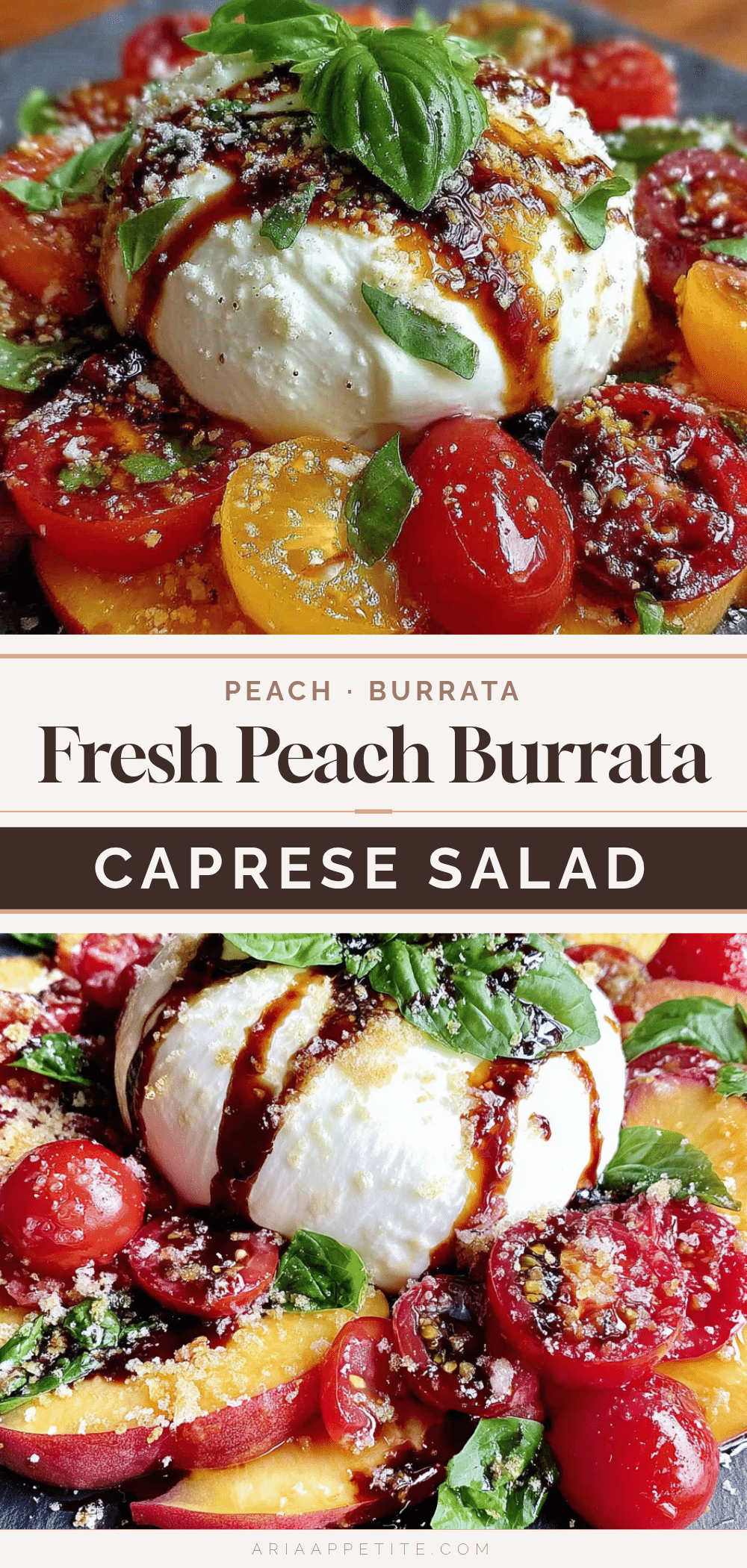
Fresh Peach Burrata Caprese Salad Recipe: Easy 10-Minute Summer Side
This Fresh Peach Burrata Caprese Salad is a quick and easy summer side dish that combines sweet peaches, creamy burrata, cherry tomatoes, and fresh basil with a drizzle of olive oil and balsamic glaze. Ready in just 10 minutes, it’s perfect for backyard barbecues, pool parties, or a quiet dinner on the patio.
- Prep Time: 10 minutes
- Cook Time: 0 minutes
- Total Time: 10 minutes
- Yield: 4 servings 1x
- Category: Side Dish
- Cuisine: Italian
Ingredients
- 3 medium ripe peaches
- 8 ounces burrata cheese (1 ball)
- 1 cup cherry tomatoes, halved
- 1/4 cup fresh basil leaves, loosely packed
- 2 tablespoons extra virgin olive oil
- 2 tablespoons balsamic glaze
- 1/2 teaspoon flaky sea salt
- 1/4 teaspoon freshly ground black pepper
- Optional: 4-6 slices prosciutto
- Optional: 2 cups arugula
- Optional: 1 tablespoon honey
- Optional: 2 tablespoons toasted pine nuts
Instructions
- Wash and dry the peaches. Cut them in half around the pit, twist to separate, remove the pit, and slice each half into 1/4-inch thick wedges.
- Wash the cherry tomatoes and cut them in half. If using larger tomatoes, cut into quarters.
- Gently wash the basil leaves and pat them dry. Tear larger leaves into smaller pieces by hand; leave some smaller leaves whole for garnish.
- Remove the burrata from its packaging and let it drain on a paper towel for a minute to remove excess liquid.
- On a serving platter, arrange the peach slices in a single layer, slightly overlapping. Scatter the halved cherry tomatoes around and between the peaches. Place the whole ball of burrata in the center.
- Drizzle the extra virgin olive oil evenly over the peaches and tomatoes. Follow with the balsamic glaze in a zigzag pattern. Sprinkle the flaky sea salt and freshly ground black pepper over the top.
- Scatter the torn basil leaves over the salad. If using, add optional prosciutto, arugula, honey, or toasted pine nuts. Serve immediately, encouraging guests to break into the burrata and mix everything together.
Notes
Choose peaches that are slightly soft near the stem with a sweet fragrance. Let burrata come to room temperature for 20 minutes before serving for best creaminess. Assemble just before serving to prevent sogginess. For a dairy-free version, substitute burrata with ripe avocado slices.
Nutrition
- Serving Size: 1 serving
- Calories: 300
- Sugar: 15
- Sodium: 350
- Fat: 20
- Saturated Fat: 8
- Carbohydrates: 20
- Fiber: 3.5
- Protein: 13.5
Keywords: peach burrata caprese salad, summer salad, easy caprese, peach salad, burrata recipe, 10-minute salad, no-cook recipe