Love this? Save it for later!
Share the inspiration with your friends
The neighborhood brunch was in twelve hours and I’d completely forgotten. Everyone else would be bringing those fancy quiches with the perfect crusts, homemade cinnamon rolls from recipes passed down for generations, and fruit salads arranged like edible art. I had a pound of breakfast sausage thawing in the sink, a bag of frozen hash browns I’d bought on a whim, and a growing sense of panic. Let me tell you, staring into my fridge at 9 PM with a potluck the next morning is not my finest moment.
I mean, I could have run to the store. But honestly, it was raining, I was in my pajamas, and the thought of navigating a crowded grocery store at that hour made me want to cry. So I did what any slightly desperate, moderately prepared home cook would do. I grabbed eggs, milk, cheese, and that bag of frozen potatoes. I figured I’d throw something together, hope for the best, and apologize for the mediocrity. Maybe I’d blame it on the rain.
I whisked the eggs, crumbled the sausage, and layered everything in a dish my aunt gave me that has a chip in the corner. I covered it up, shoved it in the fridge, and went to bed fully expecting a breakfast flop. The next morning, I pulled it out, baked it while I made coffee, and carried it to the party like a guilty secret. You know that feeling when you’re about to be exposed as a fraud? That was me.
But then, the first person took a bite. Then another. Then someone asked for the recipe. Honestly, I couldn’t believe it. The thing I threw together in a panic, the dish I was almost embarrassed to bring, ended up being the star of the table. People went back for seconds. They asked if I catered. I just smiled and said it was an easy overnight breakfast casserole with sausage and hash browns. And that’s the honest truth—it’s the recipe I keep making, not because it’s fancy, but because it works every single time. Maybe you’ve been in that same spot, staring at your pantry, wondering what to bring.
Why You’ll Love This Recipe
This isn’t just another breakfast casserole. After testing this recipe about seven times (my neighbors are very well-fed), I can tell you exactly why it stands out. It’s the one dish that makes you look like a hero without actually having to do much work. Let me break it down for you.
- Quick & Easy: The active prep time is about 20 minutes. You mix, layer, and walk away. The refrigerator does the rest of the work overnight. For a busy host, that’s pure gold.
- Simple Ingredients: You likely have most of these in your kitchen right now. Eggs, milk, cheese, bread, sausage, and frozen hash browns. No hunting down obscure ingredients at three different stores.
- Perfect for Hosting: This is the ultimate dish for brunch gatherings, holiday mornings, or potluck breakfasts. You can assemble it the night before and just bake it when guests arrive. No early morning scrambling.
- Crowd-Pleaser: I’ve served this to picky kids, health-conscious friends, and hungry teenagers. It disappears every time. The combination of savory sausage, crispy potatoes, and melted cheese is basically universal comfort food.
- Unbelievably Delicious: Here’s the secret—the overnight rest allows the eggs to soak into the bread and hash browns, creating this incredibly soft, almost custard-like texture on the inside while the top gets golden and slightly crispy. It’s next-level comfort food that tastes like you spent hours on it.
What makes this recipe different from the rest? It’s the technique. Most breakfast casseroles end up either too dry or too soggy. This one nails the balance. The frozen hash browns add structure, the bread soaks up just enough egg mixture, and the sausage provides that savory depth. I’ve tried versions with fresh potatoes, with different breads, with extra vegetables—and this combination is my best version. It’s the one I trust for every gathering.
This recipe isn’t just good—it’s the kind that makes you close your eyes after the first bite. It’s comfort food reimagined for the busy host. Perfect for impressing guests without stress, or turning a simple brunch into something memorable. Honestly, it’s the dish that saved me from brunch humiliation, and now it’s my go-to secret weapon.
What Ingredients You Will Need
This recipe uses simple, wholesome ingredients to deliver bold flavor and satisfying texture without the fuss. Most of these are pantry staples or easy to find at any grocery store. Here’s what you’ll need and why each one matters.
- Breakfast Sausage (1 pound): I prefer a mild or maple-flavored breakfast sausage for this casserole. Jimmy Dean or a local butcher brand works great. You want it crumbled and fully cooked before layering. If you like a bit of heat, go for hot sausage instead.
- Frozen Hash Browns (3 cups, thawed): The shredded style works best here. They add texture and structure to the casserole. Don’t use the cubed style—they don’t distribute as evenly. Let them thaw in the fridge overnight or run them under cool water and pat dry.
- Large Eggs (8): Eggs are the backbone of this dish. They create that custard-like texture when baked. Use room temperature eggs if you can—they mix more evenly with the milk.
- Whole Milk (2 cups): Whole milk gives the casserole a richer, creamier texture. You can use 2% if that’s what you have, but avoid skim milk—it makes the casserole too watery.
- Shredded Cheddar Cheese (2 cups): Sharp cheddar adds the most flavor. I’ve used mild cheddar in a pinch, but sharp is better. You can also mix in some Monterey Jack or mozzarella for extra creaminess.
- Day-Old Bread (4 cups, cubed): A crusty French bread or sourdough works best. The bread soaks up the egg mixture overnight. Day-old bread is ideal because it’s slightly stale and absorbs better. If your bread is fresh, toast the cubes lightly first.
- Yellow Onion (1 medium, diced): Onion adds savory depth. Sauté it with the sausage until translucent for the best flavor. You can skip it if someone in your crowd hates onions, but it really does add something.
- Salt (1 teaspoon): Use kosher salt for the best flavor distribution. Table salt works too, but reduce to 3/4 teaspoon.
- Black Pepper (1/2 teaspoon): Freshly ground is always better. It adds a subtle warmth to the dish.
- Garlic Powder (1/2 teaspoon): This is optional but I love the extra savory note it adds. It’s not overpowering, just a gentle background flavor.
- Butter (2 tablespoons, melted): Brushing the top of the casserole with melted butter before baking gives it that golden, crispy finish. Don’t skip this step.
For substitutions, you can use turkey sausage or a plant-based sausage for a lighter option. Gluten-free bread works perfectly for gluten-sensitive guests. Dairy-free cheese and unsweetened almond milk can replace the cheese and milk, though the texture will be slightly less creamy. I’ve tested all these variations and they work, just with slightly different results.
Equipment Needed
You don’t need a fancy kitchen for this recipe. Here’s what you’ll actually use.
- 9×13-inch Baking Dish: This is the standard size for a breakfast casserole. A ceramic or glass dish works best because it distributes heat evenly. I’ve used metal pans too, and they work, but the edges tend to brown faster.
- Large Skillet: For cooking the sausage and onions. A 12-inch skillet gives you enough room to crumble the sausage evenly. Non-stick makes cleanup easier, but stainless steel works fine.
- Large Mixing Bowl: For whisking the eggs and milk. You want a bowl big enough to whisk without splashing.
- Whisk: A good whisk ensures the eggs and milk are fully combined. A fork works in a pinch, but a whisk is better.
- Measuring Cups and Spoons: For accurate measurements. I’ve eyeballed this recipe before and regretted it.
- Spatula or Wooden Spoon: For breaking up the sausage as it cooks.
- Plastic Wrap or Foil: For covering the casserole overnight. Plastic wrap creates a better seal, but foil works too.
- Sharp Knife and Cutting Board: For dicing the onion and cubing the bread.
If you don’t have a 9×13 dish, you can use two 8×8 dishes or a large cast-iron skillet. Just adjust the baking time slightly—smaller dishes may need a few extra minutes. Budget-friendly tip: I bought my glass baking dish at a thrift store for three dollars, and it works perfectly.
Preparation Method
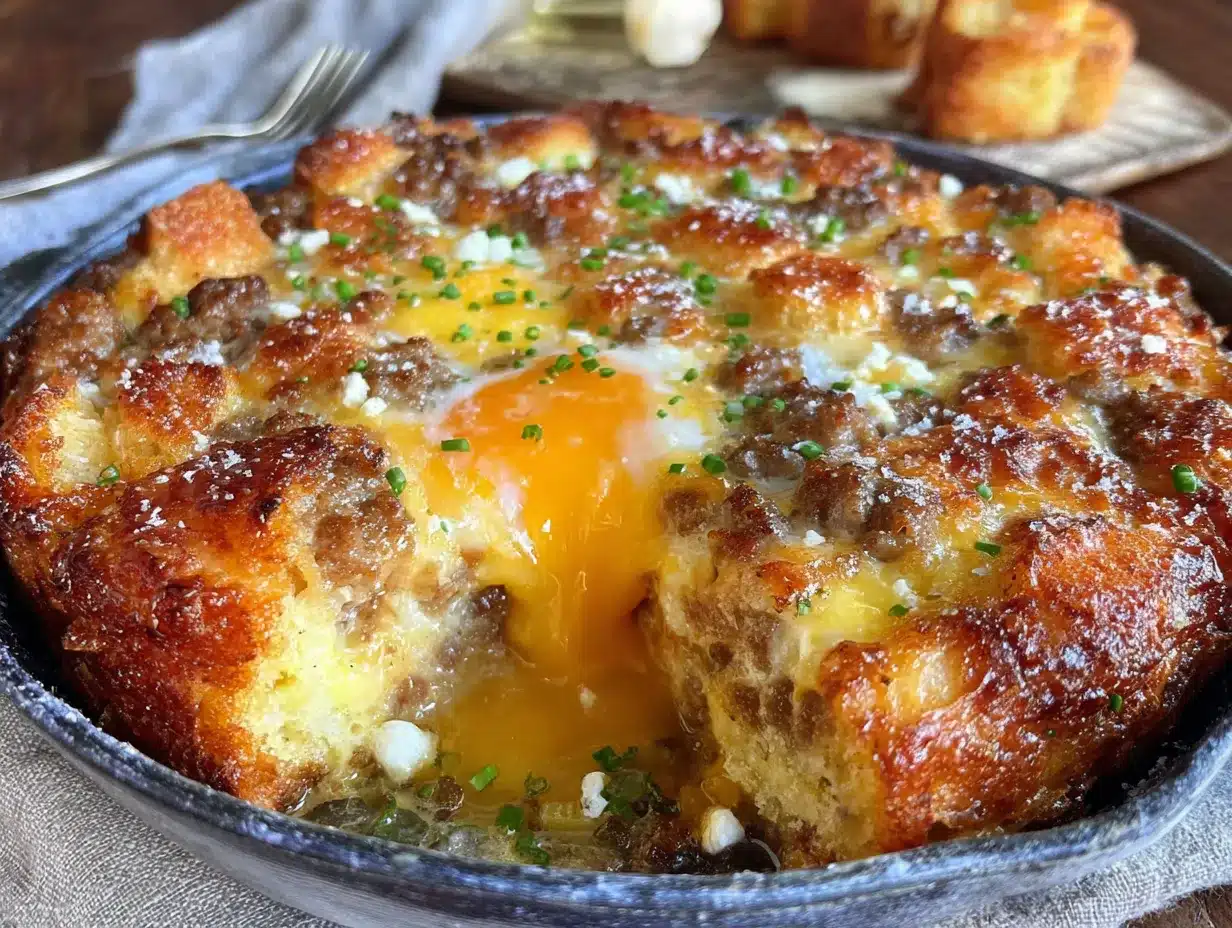
Let me walk you through this step by step. I’ve made this casserole so many times I could do it in my sleep, but I’ll give you all the details so your first time is a success.
- Cook the Sausage and Onions (10 minutes): Heat your large skillet over medium-high heat. Add the breakfast sausage and cook, breaking it up with your spatula, until it’s browned and no longer pink. This takes about 5-7 minutes. Add the diced onion in the last 2 minutes of cooking and stir until the onion is translucent. Drain any excess grease if there’s more than a tablespoon left. Set aside to cool slightly.
- Prepare the Bread (5 minutes): While the sausage cooks, cube your day-old bread into 1-inch pieces. If your bread is fresh, spread the cubes on a baking sheet and toast them at 350°F for 5 minutes. This prevents them from getting mushy.
- Whisk the Egg Mixture (3 minutes): In your large mixing bowl, crack all 8 eggs. Add the milk, salt, pepper, and garlic powder. Whisk vigorously until the eggs are fully broken up and the mixture is a uniform pale yellow. You don’t want any streaks of egg white. This takes about a minute of solid whisking.
- Layer the Casserole (10 minutes): Grease your 9×13 baking dish with butter or non-stick spray. Spread the bread cubes evenly across the bottom. Sprinkle the cooked sausage and onions over the bread. Distribute the thawed hash browns evenly on top. Pour the egg mixture slowly over everything, making sure to cover all the bread and potatoes. Use your spatula to gently press down so the liquid soaks in. Sprinkle the shredded cheese evenly over the top.
- Rest Overnight (8-12 hours): Cover the dish tightly with plastic wrap or foil. Place it in the refrigerator. The magic happens here—the bread absorbs the egg mixture, the flavors meld together, and everything becomes perfectly tender. Don’t skip this step. Even 4 hours makes a difference, but overnight is best.
- Bake the Casserole (45-55 minutes): In the morning, preheat your oven to 350°F. Remove the casserole from the fridge and let it sit on the counter for 15 minutes while the oven heats. This takes the chill off and helps it bake evenly. Uncover the dish and brush the top with melted butter. Bake for 45-55 minutes, until the center is set and the edges are golden brown and slightly puffed. The top should be lightly browned and the cheese bubbly.
- Rest Before Serving (10 minutes): This is crucial. Let the casserole rest for at least 10 minutes after it comes out of the oven. This allows the custard to set fully and makes slicing much cleaner. If you cut into it immediately, it will be runny.
Pro tip from my kitchen disasters: If the top is browning too quickly but the center isn’t set yet, loosely tent the dish with foil for the last 10-15 minutes of baking. I learned this after burning the top of my first attempt.
Cooking Tips & Techniques
After making this casserole more times than I care to count, I’ve collected a few tricks that make a real difference. Let me share the ones I wish I’d known from the start.
Don’t Overmix the Eggs: When whisking the eggs and milk, stop as soon as they’re combined. Over-whisking incorporates too much air, which can make the casserole puff up in the oven and then collapse. You want a smooth, uniform mixture, not a frothy one.
Thaw Your Hash Browns: I made the mistake of using frozen hash browns straight from the bag once. They released too much water during baking, and the casserole turned out soggy. Thaw them in the fridge overnight or run them under cold water and squeeze out the excess moisture with a clean kitchen towel.
Use a Water Bath for Even Baking: If you’re worried about the edges drying out before the center sets, place your baking dish inside a larger pan and pour hot water halfway up the sides. This creates a gentle, even heat. I do this when I’m making the casserole for a special occasion and want perfect results.
Check for Doneness with a Knife: Insert a knife into the center of the casserole. If it comes out clean, it’s done. If there’s wet egg mixture on the blade, give it another 5-10 minutes. The top should be golden and slightly puffed, but the center should feel firm when you gently shake the dish.
Let It Rest: I cannot stress this enough. The resting period is not optional. It allows the custard to set, making the casserole sliceable and structurally sound. I once rushed this step because guests were hungry, and I ended up serving what looked like breakfast soup.
Timing Strategy for Hosting: Here’s my hosting timeline. The night before, I assemble the casserole in about 20 minutes while I’m already cleaning up from dinner. In the morning, I pull it out of the fridge, preheat the oven, and put it in. While it bakes, I set up the coffee station, arrange fresh fruit, and put out juice. By the time guests arrive, the casserole is resting, and I’m relaxed and ready to enjoy the party.
Variations & Adaptations
One of the best things about this recipe is how easy it is to adapt. Here are some variations I’ve tried and loved.
Vegetarian Version: Skip the sausage and add a mix of sautéed mushrooms, bell peppers, and spinach. The mushrooms provide that savory, umami flavor that mimics meat. I’ve also used a plant-based breakfast sausage crumble, and it worked surprisingly well.
Spicy Southwest Twist: Use chorizo instead of breakfast sausage. Add a can of drained diced green chiles and a teaspoon of cumin to the egg mixture. Top with pepper jack cheese instead of cheddar. Serve with salsa and sour cream. This version is a hit at my friend’s annual brunch.
Holiday Special: Swap the breakfast sausage for cooked, crumbled bacon and add a cup of cubed ham. Use a mix of cheddar and Swiss cheese. Add a tablespoon of Dijon mustard to the egg mixture for extra tang. This version feels fancy without any extra effort.
Low-Carb Option: Replace the bread cubes with additional thawed hash browns or cauliflower florets. The texture is slightly different—more potato-forward—but it still holds together beautifully. I’ve tested this for a keto-friendly friend, and she loved it.
Make It Ahead for the Freezer: Assemble the casserole in a disposable aluminum pan. Cover tightly with plastic wrap and foil. Freeze for up to 3 months. To bake, thaw in the fridge overnight and bake as directed. This is my secret weapon for holiday mornings when I’m already overwhelmed.
Serving & Storage Suggestions
This casserole is incredibly versatile when it comes to serving. Here’s how I like to present it and store the leftovers.
Serving Temperature and Presentation: Serve the casserole warm, not piping hot. The 10-minute rest brings it to the perfect temperature. Cut it into squares or rectangles and arrange on a platter. Garnish with fresh parsley or chives for a pop of color. If I’m hosting a brunch buffet, I place the casserole on a warming tray so it stays at the perfect temperature for an hour or so.
Complementary Dishes: This casserole pairs beautifully with fresh fruit salad, a simple green salad with vinaigrette, or roasted cherry tomatoes. For beverages, offer coffee, mimosas, or a fruit-infused sparkling water. The richness of the casserole balances well with something light and acidic on the side.
Storage Instructions: Leftovers keep in the refrigerator for up to 4 days. Store in an airtight container or cover the baking dish tightly with foil. The flavors actually deepen overnight, so day-old casserole is delicious.
Reheating Methods: The best way to reheat is in the oven at 300°F for 10-15 minutes. This restores the crispy top without drying out the inside. The microwave works in a pinch, but the texture gets a bit soft. If using the microwave, cover the portion with a damp paper towel to add moisture.
Freezing Leftovers: You can freeze individual portions in freezer-safe containers for up to 3 months. Thaw in the fridge overnight and reheat in the oven. I often make a double batch and freeze half for busy mornings.
Nutritional Information & Benefits
Here’s an estimated nutritional breakdown per serving (based on 8 servings). Keep in mind these are approximate values that can vary based on specific ingredients and portion sizes.
| Nutrient | Amount Per Serving |
|---|---|
| Calories | 425 |
| Protein | 24g |
| Carbohydrates | 28g |
| Fat | 25g |
| Saturated Fat | 10g |
| Cholesterol | 245mg |
| Sodium | 780mg |
| Fiber | 2g |
| Calcium | 280mg |
| Iron | 2.5mg |
Health Benefits: This casserole provides a solid amount of protein from the eggs, sausage, and cheese, which helps keep you full and satisfied. The eggs are a great source of choline, which supports brain health. The bread and hash browns provide energy from complex carbohydrates. If you want to boost the nutritional profile, add a cup of chopped spinach or bell peppers to the egg mixture.
Dietary Considerations: This recipe contains gluten, dairy, and eggs. For gluten-free, use gluten-free bread. For dairy-free, use dairy-free cheese and unsweetened almond milk. For a lower-sodium option, use reduced-sodium sausage and cheese, and skip the added salt.
I personally love that this casserole feels indulgent but still has a decent nutritional profile. It’s the kind of breakfast that keeps you going through a busy morning without that heavy, sluggish feeling.
Conclusion
This easy overnight breakfast casserole with sausage and hash browns is more than just a recipe—it’s a lifesaver for anyone who loves hosting but doesn’t love the stress. It’s the dish I turn to when I want to impress without exhausting myself. It’s the one that makes people ask for seconds and beg for the recipe.
I encourage you to make this recipe your own. Add your favorite veggies, swap the cheese, play with the spices. That’s the beauty of a good base recipe—it’s a starting point for your own creativity. And honestly, the best version is the one that makes you happy.
If you try this recipe, I’d love to hear about it. Leave a comment below and tell me how it turned out. Did you add anything special? Did it save your brunch like it saved mine? Share your photos and tag me—I love seeing your creations. Until next time, happy cooking, and remember: sometimes the best dishes come from a moment of panic and a fridge full of simple ingredients.
Frequently Asked Questions
Can I use fresh potatoes instead of frozen hash browns?
Yes, you can. Shred about 3 cups of fresh potatoes using a box grater or food processor. After shredding, squeeze out as much moisture as possible using a clean kitchen towel. Fresh potatoes may release more water during baking, so keep an eye on the texture.
Can I assemble this casserole the morning of and bake it right away?
You can, but the texture won’t be the same. The overnight rest allows the bread to absorb the egg mixture fully, creating that soft, custard-like interior. If you bake it immediately, the bread will be firmer and the casserole won’t hold together as well. If you’re short on time, aim for at least 2-3 hours of resting time.
How do I prevent the casserole from being too watery?
Make sure your hash browns are fully thawed and squeezed dry. Also, drain any excess grease from the sausage after cooking. If your casserole still seems watery, it might need a few more minutes in the oven. Let it rest for 10-15 minutes after baking to allow the custard to set completely.
Can I use a different type of cheese?
Absolutely. Sharp cheddar is my go-to, but you can use Monterey Jack, Gouda, Colby, or a Mexican blend. For a more indulgent version, try Gruyère or fontina. Avoid very soft cheeses like fresh mozzarella, as they can make the casserole too wet.
How far in advance can I assemble the casserole?
You can assemble it up to 24 hours in advance. Any longer than that, and the bread can become too soft and break down. For best results, assemble it the night before you plan to bake it. If you need to prep further ahead, freeze the unbaked casserole and thaw in the fridge overnight before baking.
Pin This Recipe!
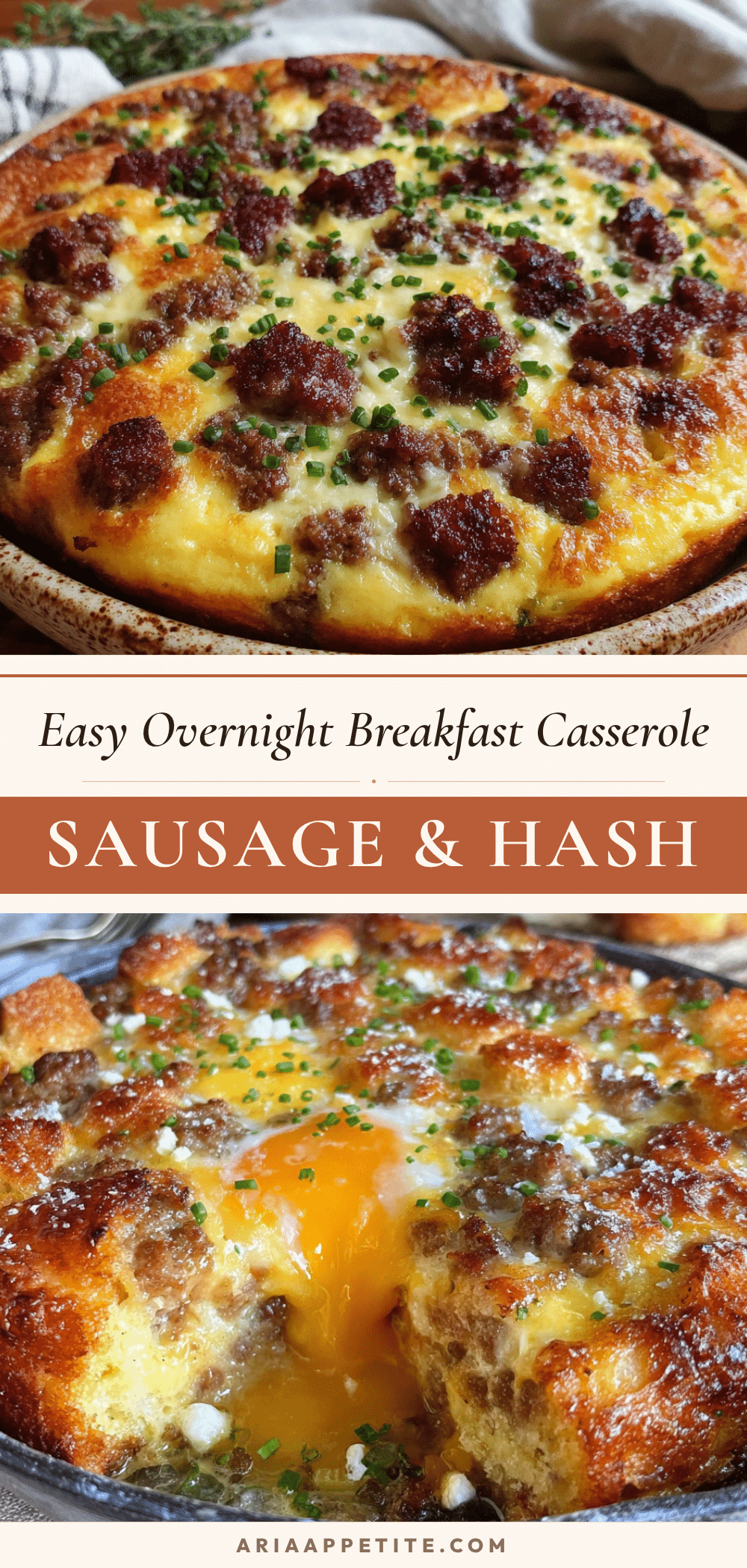
Easy Overnight Breakfast Casserole with Sausage and Hash Browns

This easy overnight breakfast casserole with sausage and hash browns is a lifesaver for busy hosts. Assemble it the night before, bake in the morning, and enjoy a crowd-pleasing, comforting dish that tastes like you spent hours on it.
- Prep Time: 20 minutes
- Cook Time: 50 minutes
- Total Time: 8 hours 10 minutes (including overnight rest)
- Yield: 8 servings 1x
- Category: Main Course
- Cuisine: American
Ingredients
- 1 pound breakfast sausage
- 3 cups frozen hash browns, thawed
- 8 large eggs
- 2 cups whole milk
- 2 cups shredded cheddar cheese
- 4 cups day-old bread, cubed (crusty French or sourdough)
- 1 medium yellow onion, diced
- 1 teaspoon kosher salt
- 1/2 teaspoon black pepper, freshly ground
- 1/2 teaspoon garlic powder (optional)
- 2 tablespoons butter, melted
Instructions
- Cook the sausage and onions: Heat a large skillet over medium-high heat. Add the breakfast sausage and cook, breaking it up with a spatula, until browned and no longer pink (5-7 minutes). Add the diced onion in the last 2 minutes and cook until translucent. Drain excess grease and set aside to cool slightly.
- Prepare the bread: Cube the day-old bread into 1-inch pieces. If using fresh bread, spread cubes on a baking sheet and toast at 350°F for 5 minutes.
- Whisk the egg mixture: In a large mixing bowl, whisk together the eggs, milk, salt, pepper, and garlic powder until uniform and pale yellow.
- Layer the casserole: Grease a 9×13-inch baking dish with butter or non-stick spray. Spread the bread cubes evenly on the bottom. Sprinkle the cooked sausage and onions over the bread. Distribute the thawed hash browns evenly on top. Pour the egg mixture slowly over everything, pressing down gently with a spatula to help it soak in. Sprinkle the shredded cheese evenly over the top.
- Rest overnight: Cover the dish tightly with plastic wrap or foil and refrigerate for 8-12 hours (at least 4 hours).
- Bake the casserole: Preheat oven to 350°F. Remove casserole from fridge and let sit on counter for 15 minutes. Uncover, brush top with melted butter, and bake for 45-55 minutes until center is set and edges are golden brown and puffed.
- Rest before serving: Let the casserole rest for at least 10 minutes before slicing and serving.
Notes
For best texture, use day-old bread and thawed hash browns. If top browns too quickly, tent with foil. Let casserole rest before serving to set custard. Can be assembled up to 24 hours in advance.
Nutrition
- Serving Size: 1 square (1/8 of cas
- Calories: 425
- Sugar: 4
- Sodium: 780
- Fat: 25
- Saturated Fat: 10
- Carbohydrates: 28
- Fiber: 2
- Protein: 24
Keywords: breakfast casserole, overnight casserole, sausage casserole, hash brown casserole, brunch recipe, easy breakfast, holiday breakfast