Love this? Save it for later!
Share the inspiration with your friends
My dad had refused to eat braised short ribs for thirty-seven years. Thirty-seven years. He claimed they were “too heavy,” “too rich,” “not worth the calories.” Every Thanksgiving, he’d load his plate with turkey and mashed potatoes while eyeing anyone who dared order beef somewhere else with deep suspicion. Then last November, I caught him. I’d made a small batch of these braised short ribs just for myself—a little experiment for a lighter Thanksgiving side project—and left the Dutch oven cooling on the stovetop while I ran to grab my mail. When I came back, there he was, standing at the counter with a fork in one hand and a napkin already tucked into his collar. “These are… different,” he said, trying to look casual. The pot was half empty.
Listen, I get it. Thanksgiving is sacred territory for turkey traditionalists. But honestly, after years of watching half the bird go to waste while everyone fought over the dark meat anyway, I started wondering why we don’t give beef a real seat at the table. Maybe you’ve been there too—staring at a twenty-pound turkey for eight people, wondering if you could just… not. These braised short ribs changed my dad’s mind, and they might change yours too. The secret is in the balance: rich enough to feel indulgent, but light enough that you don’t need to unbutton your pants after one serving.
The first time I made these for a proper Thanksgiving dinner, I accidentally used too much red wine and thought I’d ruined everything. The kitchen smelled like a frat party gone wrong. But I let it simmer an extra hour, added a splash of beef broth, and somehow it transformed into the most velvety, complex sauce I’d ever made. That’s the thing about braising—it forgives your mistakes and rewards your patience. This recipe stayed with me because it proved something I’d always suspected: you can have comfort food that feels good, not guilty.
Why You’ll Love This Recipe
Let me tell you why these short ribs have earned a permanent spot on my lighter Thanksgiving menu. After testing this recipe at least a dozen times—and forcing friends to be brutally honest—I finally landed on a version that delivers everything you want without the post-feast food coma.
- Surprisingly Light: Most braised short ribs swim in butter and heavy cream. This version uses a clever blend of aromatics and a touch of tomato paste to build richness without drowning in fat. You get that deep, soul-warming flavor with about half the calories of traditional recipes.
- Make-Ahead Magic: These ribs actually taste better the next day. You can braise them two days before Thanksgiving, refrigerate them, and simply reheat before serving. That means less stress on the big day and more time for gravy-related emergencies.
- Impressive Without Stress: Braised short ribs look like you spent hours of complicated effort. But honestly? The oven does all the work. You brown the meat, throw everything in a pot, and walk away for three hours. It’s practically foolproof.
- Perfect for Smaller Gatherings: Not everyone needs a twenty-pound turkey. These ribs serve six to eight people generously, making them ideal for intimate Thanksgivings where you actually want to taste your food.
- Crowd-Pleasing Flavor: The meat falls off the bone with a fork. The sauce is rich, savory, and slightly sweet from caramelized vegetables. Even my dad—who swore off beef for decades—now asks for the leftovers before I’ve cleared the table.
What makes this recipe different from the dozens of other short rib recipes out there? It’s the technique. Instead of drowning the meat in heavy liquids, I use a combination of low-sodium beef broth and a splash of balsamic vinegar to create a sauce that’s deeply flavorful but never greasy. The vegetables—carrots, celery, and onion—break down into the sauce, adding natural sweetness and body without needing extra fat. It’s comfort food reimagined: healthier, faster to prep, but with the same soul-soothing satisfaction that makes you close your eyes after the first bite.
What Ingredients You Will Need
This recipe uses simple, wholesome ingredients to deliver bold flavor and satisfying texture without the fuss. Most of these are pantry staples, and none require a special trip to a fancy grocery store.
For the Short Ribs
- 4 to 5 pounds bone-in beef short ribs (look for ribs with good marbling—the fat keeps them tender during braising)
- 2 tablespoons olive oil (use a good quality one for browning, not the cheap stuff)
- 1 large yellow onion, diced (about 2 cups)
- 3 large carrots, peeled and diced (about 1.5 cups)
- 3 celery stalks, diced (about 1 cup)
- 6 cloves garlic, minced (I use a microplane for this—it releases more flavor)
- 2 tablespoons tomato paste (I prefer the tube version—easier to store and squeeze)
- 1 cup dry red wine (something you’d actually drink, like a Cabernet Sauvignon or Merlot)
- 2 cups low-sodium beef broth (I recommend Kitchen Basics or Swanson’s organic)
- 1 tablespoon balsamic vinegar (adds brightness without extra acid)
- 2 sprigs fresh rosemary (dried works in a pinch, but fresh is better here)
- 3 sprigs fresh thyme (or 1 teaspoon dried)
- 2 bay leaves
- Salt and freshly ground black pepper (don’t skip the fresh pepper—it makes a difference)
For the Finishing Touch
- 2 tablespoons all-purpose flour (optional, for thickening the sauce)
- 1 tablespoon cold butter (optional, for a glossy finish—skip if you’re keeping it lighter)
- Fresh parsley, chopped (for garnish)
Ingredient Selection Tips: When choosing short ribs, look for pieces that are about 3 to 4 inches long with a good amount of meat still attached to the bone. The fat cap should be white, not yellow—that’s a sign of freshness. If you can’t find bone-in ribs, boneless will work, but they cook faster and may not be as tender. For the wine, don’t use cooking wine. It’s salty and has no depth. A $10 bottle of red will do just fine.
Substitution Guidance: Need a lower-carb option? Skip the flour thickener entirely—the sauce will be slightly thinner but just as flavorful. Dairy-free? Omit the butter or use a plant-based version. Gluten-free? Use cornstarch instead of flour (mix 1 tablespoon cornstarch with 2 tablespoons cold water, then stir into the sauce at the end). You can also swap the beef broth for mushroom broth for a different umami profile, though I haven’t tested that version myself.
Equipment Needed
You don’t need a professional kitchen to make these short ribs, but a few key tools will make your life easier.
- Dutch oven or heavy-bottomed pot with a tight-fitting lid (I use a 6-quart Le Creuset, but any enameled cast iron works—my first attempt used a $30 Lodge and turned out just as good)
- Sharp chef’s knife (a dull knife makes dicing vegetables a nightmare—trust me, I’ve been there)
- Cutting board (preferably wood or plastic that won’t slide around)
- Tongs (for flipping the ribs without splattering hot oil everywhere)
- Measuring cups and spoons
- Wooden spoon or spatula (for scraping up the browned bits—that’s where the flavor lives)
- Fine-mesh strainer (optional, for straining the sauce if you want it silky smooth)
- Large bowl (for holding the browned ribs)
If you don’t have a Dutch oven, use a large oven-safe skillet or a roasting pan covered tightly with foil. The key is even heat distribution and a tight seal to trap steam. I once used a slow cooker for a similar recipe—it works, but you won’t get the same deep browning on the meat. For budget-friendly options, check thrift stores for cast iron. I found my backup Dutch oven for $12 and it’s been going strong for five years.
Preparation Method
Take your time with this recipe. The active prep is only about 30 minutes, but the braising needs a full three hours to work its magic. Put on some music, pour yourself a glass of that leftover wine, and settle in.
- Preheat your oven to 325°F (160°C). Position the rack in the lower third of the oven so the pot sits evenly.
- Pat the short ribs completely dry with paper towels. This is crucial—wet meat won’t brown properly. Season generously on all sides with salt and pepper. Don’t be shy; about 1 teaspoon of salt per pound is a good starting point.
- Heat the olive oil in your Dutch oven over medium-high heat until it shimmers (about 2 minutes). Working in batches to avoid crowding, add the short ribs and sear them for 3 to 4 minutes per side, until deeply browned. You’re looking for a rich mahogany color, not just pale tan. Transfer the browned ribs to a large bowl and set aside. Warning: Your kitchen will get smoky. Open a window or turn on your hood fan.
- Reduce the heat to medium and add the diced onion, carrots, and celery. Cook, stirring occasionally, for 6 to 8 minutes until the vegetables are softened and starting to brown. The bottom of the pot will have brown bits stuck to it—that’s good. Those are flavor bombs waiting to be released.
- Add the minced garlic and tomato paste and cook for 1 minute, stirring constantly. The tomato paste will darken slightly and smell intensely savory. Don’t let it burn—stir, stir, stir.
- Pour in the red wine and use your wooden spoon to scrape up all those browned bits from the bottom of the pot. This is called deglazing, and it’s where the magic happens. Let the wine simmer for 2 to 3 minutes until it reduces slightly and smells less alcoholic.
- Add the beef broth, balsamic vinegar, rosemary, thyme, and bay leaves. Stir everything together, then return the short ribs to the pot, nestling them into the liquid. The liquid should come about halfway up the sides of the ribs—if it doesn’t, add a splash more broth or water.
- Bring the liquid to a gentle simmer on the stovetop (you should see small bubbles around the edges), then cover the pot with the lid and transfer it to the preheated oven.
- Braise for 2.5 to 3 hours, until the meat is fork-tender and practically falling off the bone. Check at the 2-hour mark—if the liquid is reducing too quickly, add a half cup of water. The ribs are done when a fork slides into the meat with almost no resistance.
- Carefully remove the pot from the oven (use oven mitts—that handle gets hot) and transfer the short ribs to a clean plate. Cover loosely with foil to keep warm.
- Strain the braising liquid through a fine-mesh strainer into a small saucepan, pressing on the vegetables to extract all the flavor. Discard the solids and the bay leaves. Let the liquid sit for 5 minutes, then skim off any visible fat from the surface using a spoon.
- Optional: Thicken the sauce. If you want a thicker gravy, whisk 2 tablespoons flour with 3 tablespoons cold water until smooth. Bring the strained liquid to a simmer over medium heat, then whisk in the flour mixture. Cook for 2 to 3 minutes until thickened. For a glossy finish, stir in 1 tablespoon cold butter off the heat.
- Return the short ribs to the pot or a serving dish, pour the sauce over the top, and garnish with fresh parsley. Serve immediately.
Cooking Tips & Techniques
I’ve made every mistake in the book with braised short ribs, so you don’t have to. Here’s what I’ve learned the hard way.
Patience with browning is non-negotiable. The first time I made these, I rushed the searing step and ended up with gray, sad-looking ribs. That deep brown crust isn’t just for looks—it’s where the rich, savory flavor comes from. If the meat sticks to the pot, it’s not ready to flip. Give it another 30 seconds and try again. Also, don’t crowd the pot. If you add too many ribs at once, they’ll steam instead of sear. Work in batches, even if it feels tedious.
Watch your liquid level. Too much liquid and you’re boiling the meat, not braising it. Too little and it dries out. The liquid should come about halfway up the ribs—not covering them completely. I learned this after a disastrous batch where I basically made short rib soup. The flavor was fine, but the texture was all wrong.
Don’t skip the resting step. After braising, let the ribs rest in the sauce for at least 10 minutes before serving. This allows the meat to reabsorb some of the liquid and become even more tender. If you’re making these ahead, refrigerate the ribs in the sauce overnight—the flavors meld beautifully and the fat solidifies on top, making it easy to remove.
Timing tip for Thanksgiving: Braise the ribs two days before. Let them cool, refrigerate in the pot, and remove the solidified fat the next day. On serving day, reheat gently in a 300°F oven for 30 minutes, then thicken the sauce. This actually produces better results than serving them fresh.
One more thing: If your sauce tastes flat at the end, add a splash of balsamic vinegar or a squeeze of lemon juice. Acidity brightens braised dishes in a way that salt alone can’t fix. I keep a lemon wedge handy for exactly this reason.
Variations & Adaptations
This recipe is wonderfully flexible. Here are a few ways I’ve adapted it over the years.
Dietary Variations
- Keto/Low-Carb: Skip the flour thickener entirely. The sauce will be thinner but still packed with flavor. Serve with cauliflower mash instead of potatoes.
- Gluten-Free: Use cornstarch instead of flour for thickening (1 tablespoon cornstarch mixed with 2 tablespoons cold water, stirred in at the end). Double-check your beef broth—some brands contain gluten.
- Dairy-Free: Omit the butter at the end. The sauce will be less glossy but still delicious. Use olive oil instead of butter for any finishing touches.
Flavor Twists
- Asian-Inspired: Replace the red wine with dry sherry, add 2 tablespoons soy sauce, 1 tablespoon ginger, and a star anise. Omit the rosemary and thyme. Finish with a drizzle of sesame oil.
- Smoky Version: Add 1 teaspoon smoked paprika and 1 chipotle pepper in adobo sauce (minced) along with the tomato paste. The smokiness pairs beautifully with the rich beef.
- Herb-Forward: Use a whole head of garlic (halved crosswise) instead of minced cloves, and add fresh oregano and sage along with the rosemary and thyme. Strain everything at the end for a cleaner sauce.
Different Cooking Methods
- Slow Cooker: Sear the ribs and sauté the vegetables on the stovetop, then transfer everything to a slow cooker. Cook on low for 7 to 8 hours or on high for 4 to 5 hours. The sauce won’t reduce as much, so you may need to simmer it on the stovetop after cooking to thicken.
- Instant Pot: Use the sauté function for browning, then pressure cook on high for 45 minutes with a natural release. The results are surprisingly good and take a fraction of the time.
I personally love the Asian-inspired version for a non-Thanksgiving dinner. It feels completely different but uses the same technique. My sister-in-law requests it every time she visits, and I’ve started doubling the recipe just to have leftovers.
Serving & Storage Suggestions
These short ribs are versatile enough to star on a Thanksgiving table or shine on a random Tuesday night.
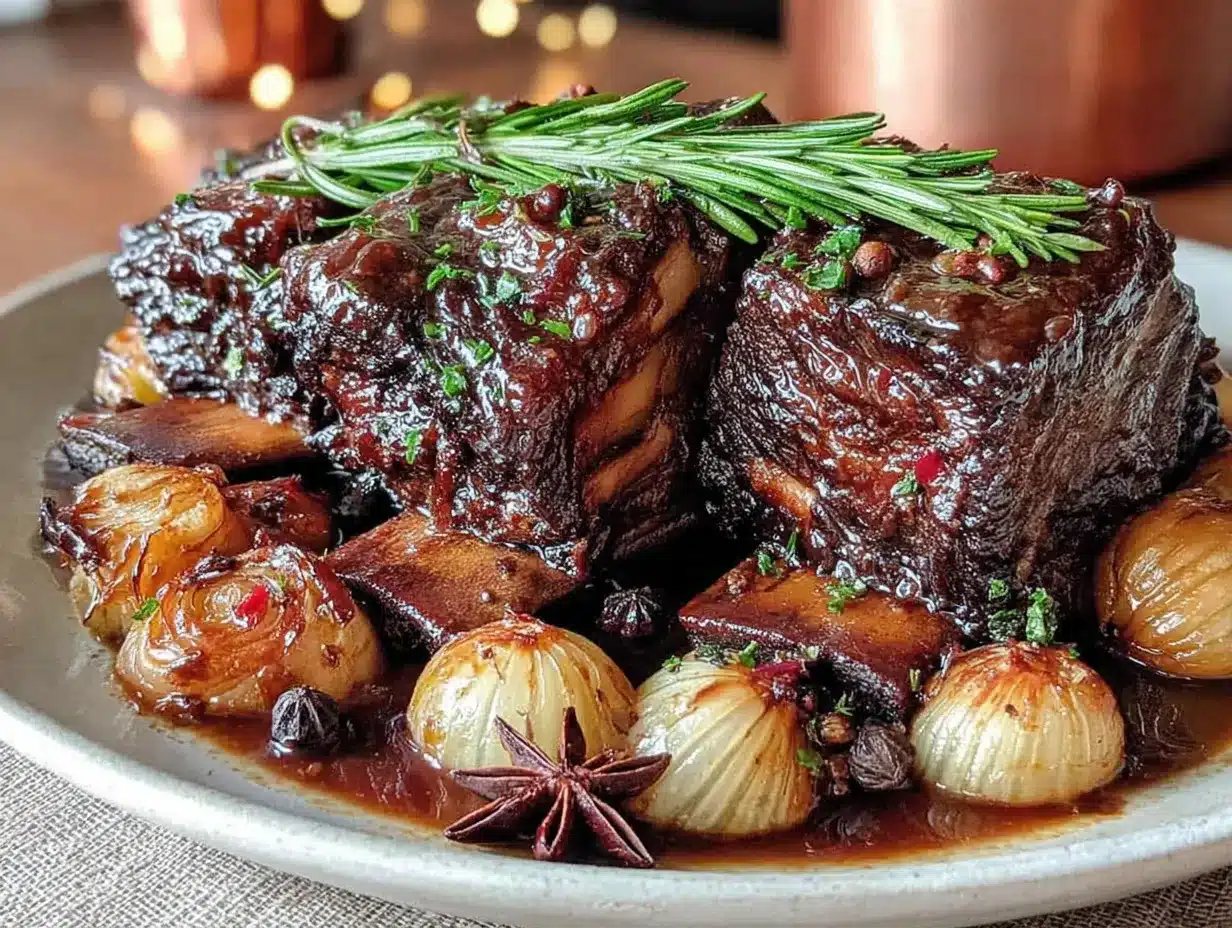
Serving Temperature: Serve the ribs hot, straight from the oven or reheating. The sauce should be bubbling gently when you pour it over the meat. I like to arrange the ribs on a large platter with the sauce pooled around them, then garnish with fresh parsley and a few sprigs of thyme for color.
What to Serve With Them: For a lighter Thanksgiving, pair these ribs with roasted Brussels sprouts (tossed with balsamic and honey), a simple arugula salad with lemon vinaigrette, and creamy mashed cauliflower instead of potatoes. The richness of the beef balances beautifully with bright, acidic sides. If you’re feeling traditional, creamy mashed potatoes or soft polenta are perfect for soaking up the sauce. A glass of the same red wine you used for cooking is the obvious beverage choice.
Storage Instructions: Store leftover short ribs in an airtight container in the refrigerator for up to 4 days. The flavors actually deepen over time, so day-two ribs are often better than day-one. To freeze, place the cooled ribs and sauce in a freezer-safe container for up to 3 months. Thaw overnight in the refrigerator before reheating.
Reheating Methods: The best way to reheat is gently on the stovetop over low heat, covered, for 10 to 15 minutes. You can also reheat in a 300°F oven for 20 minutes. Avoid the microwave—it toughens the meat and makes the sauce separate. If the sauce seems too thick after refrigeration, add a splash of beef broth or water while reheating.
Flavor Development Note: Don’t be alarmed if the sauce tastes slightly different after refrigeration. The flavors meld and mellow, becoming more cohesive. Some people actually prefer the leftovers for this reason. I’ve started making these ribs a day ahead specifically to let that magic happen.
Nutritional Information & Benefits
These braised short ribs are surprisingly balanced for a comfort food dish. Here’s the estimated nutritional breakdown per serving (based on 6 servings, without optional butter):
| Nutrient | Amount Per Serving |
|---|---|
| Calories | 485 |
| Protein | 42g |
| Fat | 28g |
| Saturated Fat | 11g |
| Carbohydrates | 12g |
| Fiber | 3g |
| Sugar | 6g |
| Sodium | 680mg |
| Iron | 4.2mg (23% DV) |
| Vitamin A | 4580 IU (92% DV) |
Health Benefits: Beef short ribs are an excellent source of high-quality protein, iron, and B vitamins, particularly B12, which supports energy metabolism and nervous system function. The carrots provide a massive dose of vitamin A (over 90% of your daily needs), while the celery and onions add fiber and antioxidants. By using low-sodium broth and skimming the fat, you’re controlling the sodium and saturated fat content without sacrificing flavor.
Dietary Considerations: This recipe is naturally gluten-free if you skip the flour thickener or use cornstarch. It’s also dairy-free without the optional butter. It’s not suitable for vegetarian, vegan, or low-fat diets due to the beef and natural fat content. If you’re watching your sodium, use unsalted broth and go light on the added salt during browning.
My Wellness Perspective: I don’t believe in demonizing any food. These short ribs are nutrient-dense and satisfying, which means you’ll likely eat a reasonable portion and feel full longer. That’s a win in my book. Pair them with vegetables and a sensible side, and you’ve got a meal that supports your health goals while still feeling like a treat.
Conclusion
These braised short ribs are more than just a recipe—they’re proof that Thanksgiving doesn’t have to be a choice between tradition and trying something new. You can have both. The meat is tender, the sauce is rich, and the whole dish comes together with less stress than wrestling a turkey into the oven. Plus, you get to watch someone like my dad discover that maybe, just maybe, they were wrong about something for thirty-seven years. That’s a special kind of holiday magic.
I’d love to hear how these turn out for you. Did you stick with the classic version or try one of the variations? Did you serve them for Thanksgiving or on a random Tuesday? Drop a comment below and let me know—I read every single one and answer questions within 24 hours. And if you make these for your holiday table, tag me in your photos. Nothing makes my day like seeing someone else’s version of this recipe.
Go ahead, give these a try. Your Thanksgiving table—and your taste buds—will thank you.
Frequently Asked Questions
Can I make braised short ribs in a slow cooker?
Absolutely. Sear the ribs and sauté the vegetables on the stovetop first for the best flavor, then transfer everything to a slow cooker. Cook on low for 7 to 8 hours or on high for 4 to 5 hours. The sauce will be thinner, so you may want to simmer it on the stovetop for 10 minutes after cooking to reduce and thicken.
How do I know when short ribs are done?
The meat should be fork-tender, meaning a fork slides into the thickest part with almost no resistance. The meat should also be pulling away from the bone slightly. For bone-in ribs, this typically takes 2.5 to 3 hours at 325°F. If the meat still feels tight and resists the fork, give it another 30 minutes.
Can I use boneless short ribs instead?
Yes, but boneless ribs cook faster—usually about 2 to 2.5 hours. They also tend to be leaner, so they may not be quite as tender. Keep an eye on them starting at the 2-hour mark to avoid overcooking. The bone adds flavor and helps retain moisture, so bone-in is preferred if you can find it.
Why is my sauce too thin or too thick?
Thin sauce usually means there was too much liquid or not enough cooking time. Remove the lid for the last 30 minutes of braising to let it reduce, or simmer the strained sauce on the stovetop after cooking. Thick sauce means too much reduction—add a splash of beef broth or water while reheating. The perfect sauce should coat the back of a spoon without being gloppy.
Can I freeze leftover braised short ribs?
Yes, they freeze beautifully. Let the ribs and sauce cool completely, then transfer to a freezer-safe container. They’ll keep for up to 3 months. Thaw overnight in the refrigerator and reheat gently on the stovetop or in a 300°F oven. The texture remains excellent, and the flavors actually deepen during freezing.
Pin This Recipe!
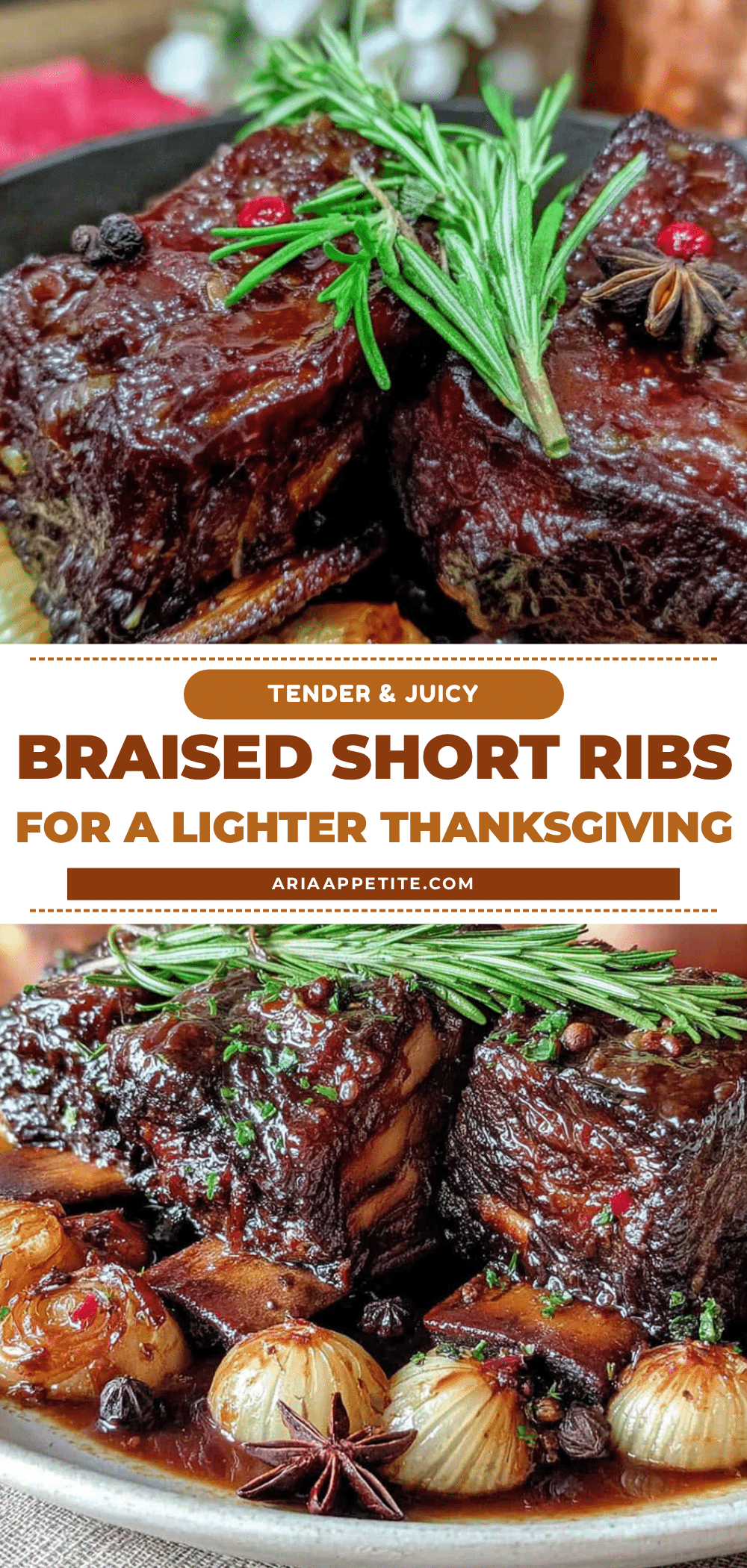
Easy Braised Short Ribs for a Lighter Thanksgiving
These braised short ribs are rich, tender, and surprisingly light—perfect for a smaller Thanksgiving gathering or any cozy dinner. The secret is a clever blend of aromatics and a touch of balsamic vinegar for depth without heaviness.
- Prep Time: 30 minutes
- Cook Time: 3 hours
- Total Time: 3 hours 30 minutes
- Yield: 6 servings 1x
- Category: Main Course
- Cuisine: American
Ingredients
- 4 to 5 pounds bone-in beef short ribs
- 2 tablespoons olive oil
- 1 large yellow onion, diced (about 2 cups)
- 3 large carrots, peeled and diced (about 1.5 cups)
- 3 celery stalks, diced (about 1 cup)
- 6 cloves garlic, minced
- 2 tablespoons tomato paste
- 1 cup dry red wine (e.g., Cabernet Sauvignon or Merlot)
- 2 cups low-sodium beef broth
- 1 tablespoon balsamic vinegar
- 2 sprigs fresh rosemary
- 3 sprigs fresh thyme
- 2 bay leaves
- Salt and freshly ground black pepper
- 2 tablespoons all-purpose flour (optional, for thickening)
- 1 tablespoon cold butter (optional, for glossy finish)
- Fresh parsley, chopped (for garnish)
Instructions
- Preheat your oven to 325°F (160°C). Position the rack in the lower third of the oven.
- Pat the short ribs completely dry with paper towels. Season generously on all sides with salt and pepper.
- Heat the olive oil in a Dutch oven over medium-high heat until shimmering. Working in batches, sear the short ribs for 3 to 4 minutes per side until deeply browned. Transfer to a bowl and set aside.
- Reduce heat to medium. Add onion, carrots, and celery. Cook, stirring occasionally, for 6 to 8 minutes until softened and starting to brown.
- Add garlic and tomato paste; cook for 1 minute, stirring constantly.
- Pour in the red wine and scrape up browned bits from the bottom of the pot. Let simmer for 2 to 3 minutes until slightly reduced.
- Add beef broth, balsamic vinegar, rosemary, thyme, and bay leaves. Stir, then return short ribs to the pot, nestling them into the liquid (liquid should come about halfway up the ribs).
- Bring to a gentle simmer on the stovetop, then cover and transfer to the preheated oven.
- Braise for 2.5 to 3 hours until the meat is fork-tender and falling off the bone.
- Carefully remove the pot from the oven. Transfer short ribs to a plate and cover loosely with foil.
- Strain the braising liquid through a fine-mesh strainer into a small saucepan, pressing on vegetables. Let sit for 5 minutes, then skim off visible fat.
- Optional: To thicken the sauce, whisk 2 tablespoons flour with 3 tablespoons cold water. Bring strained liquid to a simmer, whisk in flour mixture, and cook for 2 to 3 minutes. For a glossy finish, stir in 1 tablespoon cold butter off heat.
- Return short ribs to the pot or a serving dish, pour sauce over the top, and garnish with fresh parsley. Serve immediately.
Notes
For best results, braise the ribs two days before serving. Refrigerate in the pot, remove solidified fat, then reheat gently in a 300°F oven for 30 minutes before thickening the sauce. If the sauce tastes flat, add a splash of balsamic vinegar or lemon juice.
Nutrition
- Serving Size: 1 serving (about 1 r
- Calories: 485
- Sugar: 6
- Sodium: 680
- Fat: 28
- Saturated Fat: 11
- Carbohydrates: 12
- Fiber: 3
- Protein: 42
Keywords: braised short ribs, lighter Thanksgiving, beef short ribs, comfort food, holiday recipe, make-ahead, gluten-free option