Love this? Save it for later!
Share the inspiration with your friends
My neighbor, a retired truck driver named Frank, asked me last week why I couldn’t just dump everything in a bowl and bake it. I was mid-lecture about browning the meat first and sautéing onions until they were translucent. Frank just stood there in my kitchen, arms crossed, waiting. I started to explain why that wouldn’t work—then stopped. Honestly, I had no good answer. So we tried it his way.
I stood there watching him throw ground beef, breadcrumbs, an egg, and a packet of onion soup mix into a bowl with his bare hands. No pan-searing. No sweating aromatics. Just squishing everything together like he was making mud pies. I was certain this classic old-fashioned meatloaf with brown sugar glaze was going to be a greasy, dense disaster. Frank didn’t care about my food science concerns. He just kept squishing.
Twenty minutes into baking, my kitchen smelled like Sunday dinner at someone else’s house—someone who actually knew what they were doing. The brown sugar glaze started bubbling around the edges, turning into this sticky, caramelized crust that made me forget I was supposed to be right about the technique. I pulled the loaf out of the oven, let it rest for exactly seven minutes because I was too impatient to wait longer, and cut into it. The slice held together perfectly. The texture was tender but not mushy. The glaze had seeped into the top layer of meat, creating this sweet-savory thing I couldn’t stop eating with my fingers.
Frank just smiled. “Told you,” he said, grabbing another slice. I’ve been making meatloaf for over fifteen years, and a retired truck driver with zero culinary training showed me I was overcomplicating the whole thing. Now this is the only version I make. It’s the one my kids ask for on birthdays, the one I bring to potlucks where people fight over the last piece, and the one that taught me to shut up and listen once in a while. Maybe you’ve been there too—stuck in your ways, convinced your method is the only method. Trust me, this classic old-fashioned meatloaf with brown sugar glaze will change your mind.
Why You’ll Love This Recipe
Let me tell you why this particular meatloaf recipe is different from the dozens of others floating around the internet. I’ve tested this thing more times than I care to admit, and here’s what I’ve learned.
- Quick & Easy: From fridge to table in about an hour, with only 10 minutes of active prep. No browning meat, no chopping onions into tiny perfect cubes, no complicated steps. This is the kind of recipe you make on a Tuesday when you forgot to thaw anything for dinner.
- Simple Ingredients: You probably have everything in your kitchen right now. Ground beef, breadcrumbs, an egg, ketchup, brown sugar, and a few pantry staples. No fancy grocery trips needed.
- Perfect for Busy Weeknights or Sunday Dinner: It’s fancy enough for company but simple enough for a regular family meal. I’ve served this to my in-laws and to my kids on a random Wednesday, and it disappears the same way both times.
- Crowd-Pleaser: Kids love the sweet glaze on top. Adults love the nostalgic comfort food factor. Picky eaters love that it’s not weird or fancy. Everyone wins.
- Unbelievably Delicious: The texture is where this recipe shines. It’s not dry or crumbly like some meatloaves I’ve had at church potlucks. It’s moist and tender but holds together when you slice it. The brown sugar glaze caramelizes into this sticky, tangy-sweet crust that honestly makes the whole dish.
What makes this different from every other meatloaf recipe? It’s the technique—or rather, the lack of technique. Most recipes tell you to sauté vegetables, sear the meat, or use a specific blend of meats. This one skips all that noise and focuses on what actually matters: the right ratio of ingredients and a killer glaze. I spent years making meatloaf the “right” way until Frank showed me that simple is better. This isn’t just another version of meatloaf—it’s the version you’ll actually want to make again and again.
This recipe is comfort food at its finest. It’s the kind of meal that makes you close your eyes after the first bite and remember why you love cooking in the first place. No stress, no fuss, just really good food that feeds your people and your soul.
What Ingredients You Will Need
This classic old-fashioned meatloaf with brown sugar glaze uses simple, honest ingredients to deliver big flavor without any complicated steps. Most of these are pantry staples you probably already have on hand.
For the Meatloaf
- Ground beef, 2 pounds (80/20 blend is ideal—the fat keeps the meatloaf moist. I prefer 80/20 for best texture, but 85/15 works too if you’re watching fat content)
- Breadcrumbs, 1 cup (plain or Italian-style both work. Panko gives a lighter texture, while traditional breadcrumbs make it more dense and classic. I use plain panko most of the time)
- Large egg, 2 (room temperature if you remember, but straight from the fridge works too—I’ve done both)
- Milk, 1/2 cup (whole milk adds richness, but 2% or even oat milk works fine. The milk soaks into the breadcrumbs and keeps everything tender)
- Ketchup, 1/3 cup (adds moisture and a subtle tang. I recommend Heinz for consistent flavor, but any brand works)
- Worcestershire sauce, 2 tablespoons (this is non-negotiable in my kitchen—it adds that deep umami flavor that makes meatloaf taste like meatloaf)
- Onion soup mix, 1 packet (about 1 ounce. This is Frank’s secret weapon and the reason you don’t need to sauté onions separately. It adds flavor, salt, and texture all at once)
- Garlic powder, 1 teaspoon (not garlic salt—we’re controlling the salt content ourselves)
- Black pepper, 1/2 teaspoon (freshly ground if you have it, pre-ground is fine)
- Salt, 1/2 teaspoon (the onion soup mix already has salt, so go easy here)
For the Brown Sugar Glaze
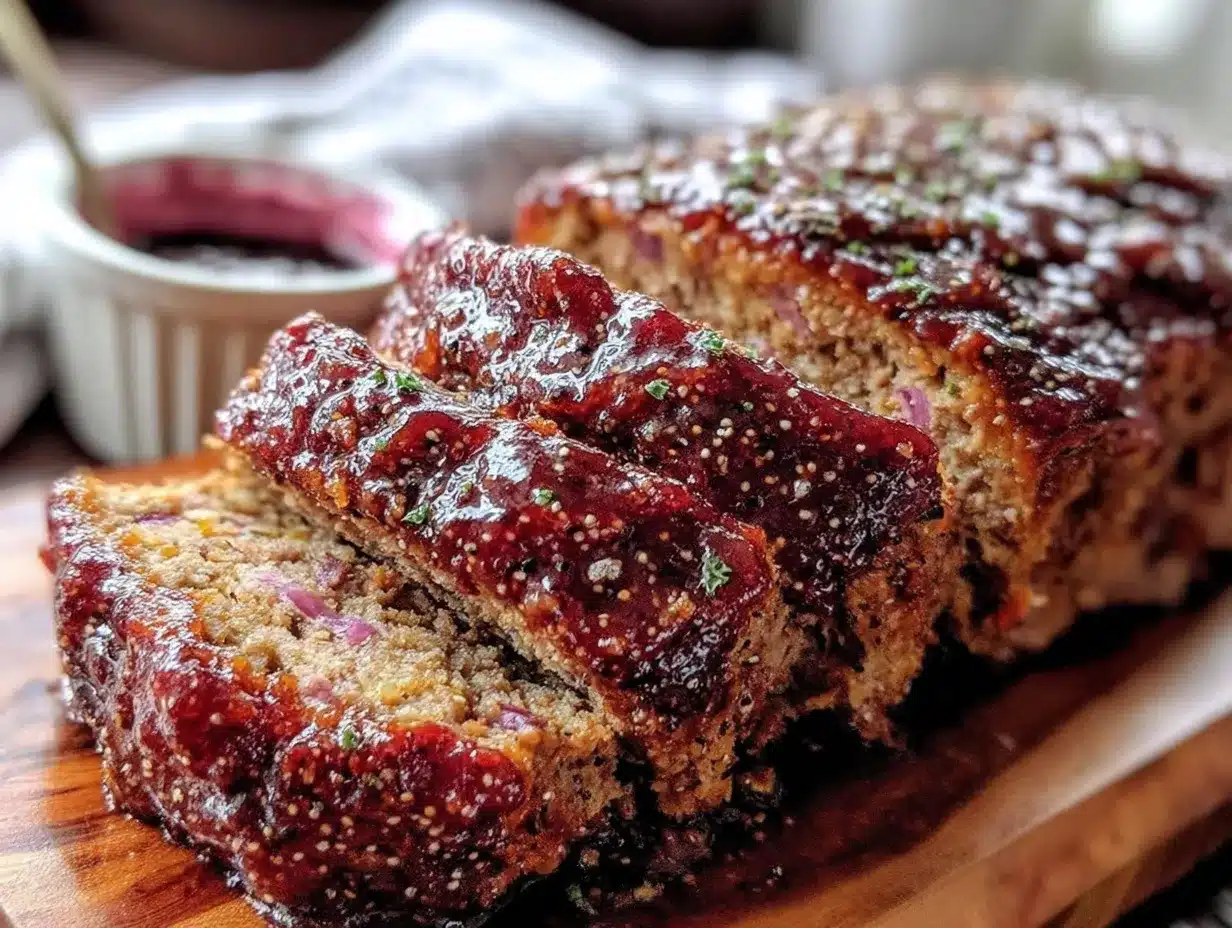
- Ketchup, 1/2 cup (the base of the glaze—use the same brand as above for consistency)
- Brown sugar, 1/3 cup (packed. Light brown sugar gives a milder caramel flavor, dark brown sugar makes it richer. I use light brown sugar for this recipe)
- Apple cider vinegar, 1 tablespoon (cuts through the sweetness and adds a little tang. White vinegar works in a pinch)
- Worcestershire sauce, 1 teaspoon (adds depth to the glaze—don’t skip it)
Ingredient Selection Tips: Look for ground beef that’s bright red and hasn’t been sitting in the package too long. If you can, ask your butcher to grind it fresh. For the brown sugar, make sure it’s fresh and soft—hardened brown sugar won’t dissolve properly into the glaze. I’ve made the mistake of using old brown sugar before, and the glaze came out grainy.
Substitution Guidance: For a gluten-free version, use gluten-free breadcrumbs or crushed gluten-free crackers. You can also use rolled oats instead of breadcrumbs—just pulse them in a food processor first so they’re not too chunky. For a dairy-free option, swap the milk for unsweetened almond milk or oat milk. The texture will be slightly different but still delicious.
Equipment Needed
You don’t need much fancy equipment for this classic old-fashioned meatloaf with brown sugar glaze. Here’s what you’ll need:
- Large mixing bowl (any size works, but you need room to get your hands in there and mix everything together)
- 9×5 inch loaf pan (standard size. If you don’t have one, you can shape the meatloaf free-form on a lined baking sheet—it’ll cook a bit faster that way)
- Small bowl (for mixing the glaze)
- Whisk or fork (for stirring the glaze ingredients together)
- Measuring cups and spoons (I’m not strict about exact measurements for most things, but for meatloaf, getting the ratios right matters)
- Parchment paper or aluminum foil (lining the loaf pan makes cleanup so much easier—trust me on this one)
- Meat thermometer (optional but highly recommended. I’ve been making meatloaf for years and still use one every time. It takes the guesswork out of doneness)
Budget-Friendly Options: If you don’t have a loaf pan, shape the meatloaf into a free-form log on a rimmed baking sheet. It’ll cook about 10-15 minutes faster, so check the temperature earlier. No meat thermometer? Cut into the center of the meatloaf to check—the juices should run clear and there shouldn’t be any pink remaining.
Personal Tip: I used to skip lining my loaf pan because I thought it was wasteful. Then I spent twenty minutes scrubbing caramelized glaze off the bottom of a pan and changed my mind forever. Line the pan. Your future self will thank you.
Preparation Method
This is where the magic happens. Follow these steps, and you’ll have a classic old-fashioned meatloaf with brown sugar glaze that’ll make you forget every dry, crumbly meatloaf you’ve ever had.
- Preheat your oven to 350°F (175°C). While it’s heating, line your loaf pan with parchment paper, leaving some overhang on the sides. This makes lifting the meatloaf out later super easy. If you don’t have parchment, grease the pan well with butter or cooking spray.
- In your large mixing bowl, combine the wet ingredients first. Crack the eggs into the bowl, add the milk, ketchup, and Worcestershire sauce. Whisk them together until everything is well combined. This step matters more than you think—mixing the wet ingredients first ensures the flavors are evenly distributed throughout the meatloaf.
- Add the dry ingredients to the wet mixture. Toss in the breadcrumbs, onion soup mix, garlic powder, black pepper, and salt. Stir everything together with a fork or spatula until it forms a thick, pasty mixture. Let it sit for about 2 minutes so the breadcrumbs can absorb the liquid. You’ll see the mixture thicken up as it rests.
- Add the ground beef. Plop the meat right on top of the breadcrumb mixture. Now here’s the important part—use your hands. I know it’s messy, but using your hands is the only way to mix meatloaf properly without overworking it. Gently squish the meat and the breadcrumb mixture together until everything is just combined. You don’t want to squeeze and knead it like dough—that’ll make your meatloaf tough. Stop mixing as soon as you don’t see any more streaks of raw meat or breadcrumb mixture.
- Transfer the mixture to your prepared loaf pan. Press it gently into the pan, making sure there aren’t any air pockets. Don’t pack it down too hard—just smooth the top so it’s even. If you’re shaping it free-form on a baking sheet, form it into a loaf shape about the same size as a standard loaf pan.
- Make the brown sugar glaze. In your small bowl, combine the ketchup, packed brown sugar, apple cider vinegar, and Worcestershire sauce. Whisk until the brown sugar is mostly dissolved. The mixture should be smooth and glossy. Taste it—it should be sweet with a tangy kick at the end.
- Spread about half the glaze over the top of the meatloaf. Use a spoon or a pastry brush to coat the top evenly. Reserve the remaining glaze for later. Don’t pour it all on at once—you want a thick layer on top, but you also want some to brush on after baking.
- Bake for 45 minutes. Place the loaf pan on a baking sheet to catch any drips (trust me, there will be drips). After 45 minutes, pull the meatloaf out of the oven and spread the remaining glaze over the top. Return it to the oven and bake for another 10-15 minutes, or until the internal temperature reaches 160°F (71°C). The glaze should be bubbling and caramelized around the edges.
- Let the meatloaf rest for 10 minutes. This is the hardest part of the whole recipe, I know. But if you cut into it too soon, the juices will run out and you’ll end up with dry meatloaf. The resting time lets the juices redistribute throughout the meat. Use this time to make your side dishes or set the table.
- Lift the meatloaf out of the pan using the parchment paper overhang. Slice it into 1-inch thick pieces using a sharp knife. The first slice might crumble a little, but the rest should hold together beautifully. Spoon any extra glaze from the pan over the slices before serving.
Sensory Cues: When the meatloaf is done, the glaze should be dark and sticky, almost like a caramel candy. The edges of the meatloaf will pull away slightly from the pan. If you tap the top of the meatloaf gently with a spoon, it should feel firm but not hard. The smell in your kitchen will be absolutely intoxicating—sweet, savory, and deeply comforting.
Troubleshooting: If your meatloaf is cracking on top while baking, don’t worry—that’s normal. The glaze will cover most of it. If the glaze is burning before the meatloaf is cooked through, tent a piece of aluminum foil loosely over the top for the last 15 minutes of baking. If your meatloaf feels too wet when you’re mixing it, add another tablespoon of breadcrumbs. If it feels too dry, add a splash more milk.
Cooking Tips & Techniques
After making this classic old-fashioned meatloaf with brown sugar glaze more times than I can count, I’ve picked up a few tricks that make a real difference.
Don’t Overmix: This is the number one mistake people make with meatloaf. The more you handle the meat, the tougher it gets. Mix just until everything comes together—you should still see small bits of meat and breadcrumb mixture. I learned this the hard way after making a meatloaf that could have doubled as a baseball. Now I stop mixing about ten seconds before I think I should.
Let the Breadcrumb Mixture Rest: After you mix the breadcrumbs with the wet ingredients, let it sit for a few minutes before adding the meat. This gives the breadcrumbs time to absorb the liquid, which means they’ll hold onto moisture during baking instead of drying out. It’s a small step that makes a big difference in texture.
Use a Meat Thermometer: I know it feels fancy and unnecessary, but a meat thermometer is the only way to guarantee perfectly cooked meatloaf every time. Ground beef needs to reach 160°F (71°C) to be safe, but if you cook it much past that, it’ll dry out. The thermometer takes the guesswork out completely. I use a simple instant-read thermometer that cost me eight dollars, and it’s paid for itself a hundred times over.
Glaze in Stages: Don’t dump all the glaze on at the beginning. Applying half the glaze halfway through baking gives you that beautiful caramelized crust, while the second coat adds a fresh layer of sticky sweetness. I learned this trick from a barbecue competition cook, and it works perfectly here.
Let It Rest: I mentioned this in the instructions, but it bears repeating. Ten minutes of resting time transforms a good meatloaf into a great one. The slices hold together better, the juices stay in the meat, and the flavors have time to settle. Use this time to make mashed potatoes or steam some green beans.
Common Mistake to Avoid: Don’t use lean ground beef. I know it seems healthier, but 90/10 or 93/7 ground beef will give you a dry, crumbly meatloaf every time. The fat in 80/20 ground beef is what keeps the meatloaf moist and tender. If you’re really concerned about fat, you can drain the pan juices before serving, but don’t start with lean meat.
Variations & Adaptations
One of the best things about this classic old-fashioned meatloaf with brown sugar glaze is how adaptable it is. Here are some variations I’ve tried and loved.
Turkey Meatloaf Version: Swap the ground beef for ground turkey (93/7 works best here since turkey is naturally leaner than beef). Add an extra tablespoon of olive oil and an extra egg to compensate for the lower fat content. The cooking time stays about the same, but check the temperature earlier—ground turkey cooks slightly faster than beef. I make this version when I’m trying to eat lighter, and honestly, my family doesn’t even notice the difference.
Spicy Kick Variation: Add 1-2 tablespoons of sriracha or your favorite hot sauce to the meat mixture, and stir 1/2 teaspoon of cayenne pepper into the glaze. The sweetness of the brown sugar balances the heat beautifully. I made this version for a Super Bowl party last year, and it was the first thing to disappear from the buffet table.
Cheese-Stuffed Meatloaf: After you put half the meat mixture in the pan, make a shallow well down the center and fill it with shredded cheddar cheese or cubed mozzarella. Cover with the remaining meat mixture and press gently to seal. The cheese melts into the center as it bakes, creating pockets of gooey goodness. This is my kids’ absolute favorite version—they call it “surprise meatloaf.”
BBQ Glaze Swap: If you’re out of ketchup or just want a different flavor profile, swap the brown sugar glaze for your favorite barbecue sauce. Use about 3/4 cup of BBQ sauce total, applying half before baking and half after. The smoky flavor pairs really well with the savory meatloaf. I use a sweet and smoky Kansas City-style sauce when I go this route.
Gluten-Free Adaptation: Replace the breadcrumbs with an equal amount of gluten-free breadcrumbs or crushed gluten-free crackers. Make sure your Worcestershire sauce is gluten-free too (Lea & Perrins is gluten-free, but some brands aren’t). The texture will be slightly different—a bit more delicate—but still delicious.
Serving & Storage Suggestions
This classic old-fashioned meatloaf with brown sugar glaze is incredibly versatile when it comes to serving and storing.
Serving Suggestions: Serve the meatloaf warm, sliced into 1-inch thick pieces. Spoon any extra glaze from the pan over the top. It pairs beautifully with creamy mashed potatoes (the perfect vehicle for soaking up extra glaze), roasted green beans, or a simple side salad. My personal favorite combination is meatloaf, mashed potatoes, and steamed broccoli with a squeeze of lemon. For a truly nostalgic meal, serve it with macaroni and cheese and buttered peas.
What to Drink With It: A glass of full-bodied red wine like a Zinfandel or Merlot complements the sweetness of the glaze. For non-alcoholic options, iced tea with a splash of lemon or a classic root beer float (yes, really) both work surprisingly well. My kids insist on chocolate milk with their meatloaf, and honestly, I can’t argue with that.
Storage Instructions: Leftover meatloaf keeps beautifully in the refrigerator for up to 4 days. Wrap it tightly in aluminum foil or store it in an airtight container. The flavors actually get better as they meld together overnight. I often make a double batch just so I have leftovers for sandwiches.
Reheating Tips: For best results, reheat slices in a 300°F (150°C) oven for about 10-15 minutes, or until warmed through. You can also reheat slices in a skillet over medium-low heat with a splash of water or beef broth, covered, for about 5 minutes per side. The microwave works in a pinch, but the texture won’t be as good—the meat can get rubbery. If you’re using the microwave, cover the plate with a damp paper towel to add moisture.
Freezer Instructions: Meatloaf freezes beautifully. Let it cool completely, then wrap it tightly in plastic wrap, followed by a layer of aluminum foil. Freeze for up to 3 months. To thaw, transfer it to the refrigerator overnight. Reheat in a 300°F (150°C) oven until warmed through. You can also freeze individual slices for quick lunches—just wrap each slice separately and grab what you need.
Cold Meatloaf Sandwiches: I can’t talk about storage without mentioning the legendary cold meatloaf sandwich. Slice the cold meatloaf thick, spread some mayonnaise on white bread, add a leaf of lettuce and a slice of tomato, and you’ve got lunch perfection. The glaze gets even stickier and more flavorful when cold. This is honestly one of my favorite things about making meatloaf.
Nutritional Information & Benefits
While this classic old-fashioned meatloaf with brown sugar glaze is definitely comfort food, it does offer some nutritional benefits worth noting.
Estimated Nutritional Values (per serving, based on 8 servings):
- Calories: 385
- Protein: 28g
- Fat: 22g
- Carbohydrates: 18g
- Fiber: 1g
- Sugar: 12g
- Sodium: 680mg
Health Benefits of Key Ingredients: Ground beef is an excellent source of high-quality protein, iron, and B vitamins, particularly B12 which is essential for energy and brain function. The eggs add additional protein and healthy fats. While this isn’t a health food by any stretch, it’s a balanced meal that provides sustained energy and keeps you full for hours. I like to serve it with a generous portion of vegetables to round out the plate.
Dietary Considerations: This recipe contains gluten (from breadcrumbs and Worcestershire sauce), dairy (from milk), and eggs. For a gluten-free version, use gluten-free breadcrumbs and gluten-free Worcestershire sauce. For a dairy-free version, use unsweetened almond milk or oat milk. The recipe is naturally nut-free and soy-free if you use a soy-free Worcestershire sauce (Annie’s makes a good one).
My Personal Wellness Perspective: I believe in balance. This meatloaf isn’t something I eat every day, but it’s a meal I feel good about serving my family. It’s made with real ingredients, it’s satisfying, and it brings people together around the table. For me, that counts for a lot more than counting calories. If you’re watching your sodium, you can use a low-sodium onion soup mix and reduce the added salt to 1/4 teaspoon.
Conclusion
This classic old-fashioned meatloaf with brown sugar glaze has become a staple in my kitchen for a reason. It’s simple, it’s forgiving, and it delivers every single time. Whether you’re making it for a busy weeknight dinner, a Sunday family gathering, or just because you’re craving something warm and comforting, this recipe will not let you down.
I love that this recipe taught me something important about cooking—and about life. Sometimes the simplest approach is the best one. You don’t need fancy techniques or complicated steps to make food that tastes incredible. You just need good ingredients, a little patience, and the willingness to try something different. Frank’s version of meatloaf reminded me that cooking is supposed to be enjoyable, not stressful.
I’d love to hear how this recipe turns out for you. Did you try any of the variations? Did your family love it as much as mine does? Drop a comment below and let me know—I read every single one and I answer questions too. And if you make this meatloaf, tag me in your photos. There’s nothing that makes my day like seeing someone else enjoying a recipe that came from my kitchen.
Now go preheat that oven. Your meatloaf is waiting.
Frequently Asked Questions
Can I make this meatloaf ahead of time?
Absolutely. You can assemble the meatloaf completely (including the glaze) up to 24 hours in advance. Cover it tightly with plastic wrap and store it in the refrigerator. When you’re ready to bake, let it sit at room temperature for about 20 minutes while the oven preheats. You may need to add 5-10 minutes to the baking time since you’re starting with a cold meatloaf.
Why is my meatloaf falling apart?
This usually happens for one of three reasons: not enough binder (breadcrumbs and egg), too much moisture in the mixture, or cutting into it before it’s had time to rest. Make sure you’re using the full cup of breadcrumbs and both eggs. If your mixture feels too wet, add another tablespoon of breadcrumbs. And please, I’m begging you, let it rest for at least 10 minutes before slicing.
Can I use ground pork or a meat blend instead of beef?
Yes, and it’s delicious. A blend of ground beef and ground pork (about 50/50) gives the meatloaf even more flavor and moisture. You can also use ground veal or ground lamb for a different flavor profile. Just make sure the internal temperature reaches 160°F (71°C) regardless of what meat you’re using.
How do I know when the meatloaf is done without a thermometer?
If you don’t have a meat thermometer, look for these signs: the meatloaf will pull away from the sides of the pan, the juices will run clear when you poke the center with a fork (not pink), and the glaze will be dark and caramelized. You can also cut a small slit in the center to check—there should be no pink remaining and the meat should feel firm but not hard.
Can I double this recipe?
Yes, this recipe doubles beautifully. Use a 9×13 inch baking dish or two loaf pans. If you’re using one large dish, the baking time will increase by about 15-20 minutes. If you’re using two loaf pans, the baking time stays about the same. Just make sure both pans have enough space between them for air to circulate in the oven.
Pin This Recipe!
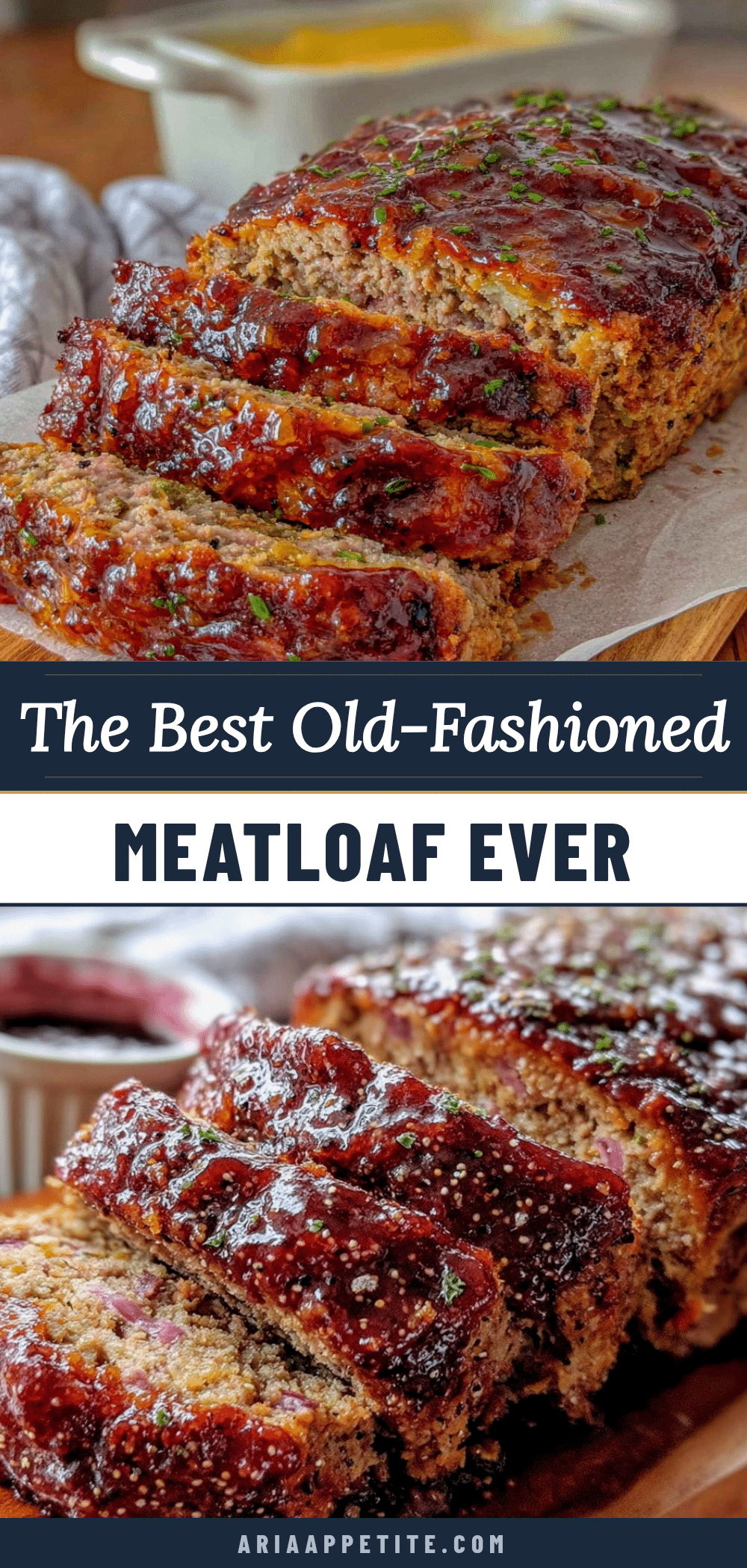
Classic Old-Fashioned Meatloaf with Brown Sugar Glaze – Easy Family Dinner
This classic old-fashioned meatloaf with brown sugar glaze is a simple, forgiving recipe that delivers incredible flavor every time. Made with ground beef, breadcrumbs, and a sweet-tangy glaze, it’s the perfect comfort food for busy weeknights or Sunday dinners.
- Prep Time: 10 minutes
- Cook Time: 55-60 minutes
- Total Time: 1 hour 10 minutes
- Yield: 8 servings 1x
- Category: Main Course
- Cuisine: American
Ingredients
- 2 pounds ground beef (80/20 blend)
- 1 cup breadcrumbs (plain or Italian-style)
- 2 large eggs
- 1/2 cup milk (whole milk preferred)
- 1/3 cup ketchup
- 2 tablespoons Worcestershire sauce
- 1 packet onion soup mix (about 1 ounce)
- 1 teaspoon garlic powder
- 1/2 teaspoon black pepper
- 1/2 teaspoon salt
- 1/2 cup ketchup (for glaze)
- 1/3 cup brown sugar (packed, light or dark)
- 1 tablespoon apple cider vinegar
- 1 teaspoon Worcestershire sauce (for glaze)
Instructions
- Preheat your oven to 350°F (175°C). Line a 9×5 inch loaf pan with parchment paper, leaving some overhang on the sides. If you don’t have parchment, grease the pan well with butter or cooking spray.
- In a large mixing bowl, combine the eggs, milk, ketchup, and Worcestershire sauce. Whisk together until well combined.
- Add the breadcrumbs, onion soup mix, garlic powder, black pepper, and salt to the wet mixture. Stir with a fork or spatula until it forms a thick, pasty mixture. Let it sit for about 2 minutes so the breadcrumbs can absorb the liquid.
- Add the ground beef to the bowl. Using your hands, gently mix the meat and breadcrumb mixture together until just combined. Do not overmix.
- Transfer the mixture to the prepared loaf pan. Press it gently into the pan, smoothing the top. If shaping free-form on a baking sheet, form into a loaf shape about the same size as a standard loaf pan.
- In a small bowl, combine the ketchup, packed brown sugar, apple cider vinegar, and Worcestershire sauce for the glaze. Whisk until the brown sugar is mostly dissolved and the mixture is smooth and glossy.
- Spread about half the glaze over the top of the meatloaf. Reserve the remaining glaze for later.
- Place the loaf pan on a baking sheet to catch drips. Bake for 45 minutes.
- After 45 minutes, remove the meatloaf from the oven and spread the remaining glaze over the top. Return to the oven and bake for another 10-15 minutes, or until the internal temperature reaches 160°F (71°C).
- Let the meatloaf rest for 10 minutes. This allows the juices to redistribute.
- Lift the meatloaf out of the pan using the parchment paper overhang. Slice into 1-inch thick pieces. Spoon any extra glaze from the pan over the slices before serving.
Notes
Don’t overmix the meatloaf to avoid toughness. Let the breadcrumb mixture rest for 2 minutes before adding the meat. Use a meat thermometer for perfect doneness. Apply glaze in stages for a caramelized crust. Let the meatloaf rest for 10 minutes before slicing. For a gluten-free version, use gluten-free breadcrumbs and gluten-free Worcestershire sauce. For a dairy-free version, use unsweetened almond milk or oat milk.
Nutrition
- Serving Size: 1 slice (1/8 of meat
- Calories: 385
- Sugar: 12
- Sodium: 680
- Fat: 22
- Saturated Fat: 8
- Carbohydrates: 18
- Fiber: 1
- Protein: 28
Keywords: meatloaf, old-fashioned meatloaf, brown sugar glaze, easy meatloaf, family dinner, comfort food, ground beef recipe