Love this? Save it for later!
Share the inspiration with your friends
The year I turned thirty, I decided I was finally going to conquer Thanksgiving. I had a menu planned, a timeline printed, and a confidence that only comes from not knowing what you’re doing yet. My grandmother, who had been making the same stuffing for forty years, was coming to visit. I wanted to impress her with something new—something that strayed from the traditional white bread cube recipe she swore by. I bought a beautiful loaf of sourdough from the bakery down the street, picked up fresh sage and some fancy sausage, and felt like a culinary genius. Honestly, I was so proud of myself for being bold.
The morning of my trial run, I was cubing the sourdough and explaining my master plan to my partner. “It’s going to be so much better than the mushy stuff,” I said, probably with a bit too much arrogance. He just nodded and asked, “Why don’t you just toast the bread first so it doesn’t get soggy?” I started to explain why that would dry it out—then stopped. He was right. I mean, it was such a simple, obvious thing, and I had completely overthought it. I toasted that bread, and let me tell you, it was a total game-changer. That little suggestion turned my “fancy” idea into something that genuinely worked. We ate the entire pan that night, and I knew I had found my new go-to recipe.
This Best Sourdough Stuffing with Sage and Sausage isn’t just another holiday side dish. It’s the one that made me realize the best cooking advice often comes from the most unexpected places. The sourdough gives it a tangy, chewy texture that holds up beautifully, while the sage and sausage bring that deep, savory comfort you crave. Maybe you’ve been there—stuck in your own way of doing things, only to find a better path by listening to someone else. That’s this stuffing. It’s the result of letting go of control and embracing a better idea. And honestly, it’s the only stuffing recipe I make now. It’s the one that stayed.
Why You’ll Love This Recipe
After years of testing and tweaking, I can say with confidence that this is the stuffing you’ve been looking for. It’s not just my family-approved version; it’s the one that gets requested for Friendsgiving, Christmas dinner, and even random Tuesday nights when we’re craving comfort food. I’ve made it for potlucks, for neighbors, and for my own sanity when the holidays get stressful. It never fails to deliver.
- Perfectly Textured: The sourdough holds its shape and stays slightly chewy, never turning into a mushy mess. Toasting the bread first is the secret—trust me on this.
- Bold, Savory Flavor: The combination of sweet Italian sausage and fresh sage is a classic for a reason. It’s rich, herby, and deeply satisfying without being overwhelming.
- Simple Ingredients: You don’t need a special trip to the store for obscure items. Good sourdough, quality sausage, fresh herbs, and pantry staples are all it takes.
- Make-Ahead Friendly: You can prep this stuffing a day in advance, which is a lifesaver during the holiday rush. Just pop it in the oven when you’re ready.
- Crowd-Pleaser: I’ve served this to picky eaters, serious foodies, and everyone in between. It always gets rave reviews and empty plates.
What makes this recipe different from the dozens of other stuffing recipes out there? It’s the technique. Toasting the sourdough cubes ensures they absorb the broth without disintegrating, giving you that perfect bite every single time. Plus, using a mix of fresh sage and a touch of fennel from the sausage creates a flavor profile that feels both rustic and refined. This isn’t just another version of stuffing—it’s the best version I’ve ever made. It’s the kind of dish that makes you close your eyes after the first bite, because it tastes exactly like the holidays should. It’s comfort food at its finest, and it’s surprisingly simple to pull off.
What Ingredients You Will Need
This recipe relies on simple, wholesome ingredients that work together to create something truly special. Most of these are pantry staples or easy to find at any grocery store, which makes this stuffing accessible for any home cook.
For the Stuffing Base
- Sourdough bread, 1 large loaf (about 1 pound or 450g), cut into 1-inch cubes. Day-old bread works best, but fresh is fine if you toast it well. I prefer a bakery-style loaf with a good crust for the best texture.
- Sweet Italian sausage, 1 pound (450g), casings removed. You can use mild or spicy, depending on your preference. I like using a brand like Applegate or a local butcher for quality meat.
- Unsalted butter, 4 tablespoons (56g), plus more for greasing the dish. It adds richness and helps the vegetables soften beautifully.
- Yellow onion, 1 large, diced (about 1.5 cups). It provides a savory base that’s essential for any good stuffing.
- Celery stalks, 3, diced (about 1 cup). It adds a subtle freshness and crunch that balances the richness.
- Fresh sage leaves, 2 tablespoons, finely chopped. This is the star herb here—don’t skimp on it. Dried sage can be used in a pinch, but fresh is miles better.
- Fresh thyme leaves, 1 tablespoon (or 1 teaspoon dried). It adds an earthy, floral note that complements the sage perfectly.
- Fresh parsley, ¼ cup, chopped (optional, for garnish). It adds a pop of color and freshness at the end.
- Chicken or vegetable broth, 2 cups (480ml). Use a good-quality broth, as it’s a major flavor component. I prefer low-sodium so I can control the salt level.
- Eggs, 2 large, lightly beaten. They help bind the stuffing together without making it heavy.
- Salt and black pepper, to taste. I recommend starting with 1 teaspoon of salt and ½ teaspoon of pepper, then adjusting.
- Fennel seeds, 1 teaspoon (optional). This enhances the sausage flavor and adds a subtle licorice note that’s lovely with sage.
For the best results, look for a sourdough loaf that’s sturdy and not too airy. A dense, crusty loaf will hold up much better than a soft, supermarket-style one. If you can’t find fresh sage, dried will work—just use about 1 tablespoon, as dried herbs are more concentrated. And if you’re feeding a crowd, you can easily double this recipe and bake it in a 9×13-inch dish.
Equipment Needed

You don’t need a fancy kitchen to make this stuffing. Here’s what you’ll need to get the job done:
- Large baking sheet – For toasting the sourdough cubes. A rimmed sheet works best to prevent them from rolling off.
- Large skillet or Dutch oven – For cooking the sausage and vegetables. A 12-inch skillet is ideal.
- Large mixing bowl – To combine all the ingredients. You’ll need a big one to give everything room to mix.
- 9×13-inch baking dish – For baking the stuffing. A 3-quart dish is perfect. You can also use a 10-inch cast-iron skillet for a rustic look.
- Chef’s knife and cutting board – For prepping the vegetables and herbs.
- Wooden spoon or spatula – For stirring the sausage and vegetables.
- Measuring cups and spoons – For accurate ingredient portions.
If you don’t have a large baking sheet, you can toast the bread in batches. And if you’re using a cast-iron skillet, you can cook the sausage and vegetables in it, then mix everything right in the skillet and bake it—one less dish to wash! I’ve done this many times, and it works beautifully. Just make sure the skillet is oven-safe.
Preparation Method
Making this stuffing is straightforward, but a few key steps make all the difference. Follow these instructions carefully, and you’ll have a dish that’s worthy of any holiday table.
- Preheat your oven to 375°F (190°C). While it’s heating, spread the sourdough cubes in a single layer on a large baking sheet. Toast them for 12-15 minutes, stirring halfway through, until they’re golden and dry. This step is crucial—it prevents the bread from turning into mush when you add the broth. Let the cubes cool on the sheet while you prepare the rest.
- In a large skillet over medium heat, cook the sausage, breaking it up with a wooden spoon, until it’s browned and cooked through, about 8-10 minutes. Use a slotted spoon to transfer the sausage to a plate, leaving the rendered fat in the skillet. This fat is liquid gold for flavor.
- Add the butter to the same skillet. Once it’s melted, add the diced onion and celery. Cook, stirring occasionally, until they’re softened and translucent, about 6-8 minutes. The aroma at this point is incredible—savory and sweet all at once.
- Stir in the fresh sage, thyme, and fennel seeds (if using). Cook for another minute until the herbs are fragrant. Be careful not to burn them—they can turn bitter quickly. If you’re using dried herbs, add them now as well.
- In a large mixing bowl, combine the toasted sourdough cubes, cooked sausage, and the vegetable-herb mixture. Toss everything together gently with your hands or a spatula until it’s evenly distributed. You want every cube to get some love.
- In a separate bowl or measuring cup, whisk together the chicken broth and the beaten eggs. Pour this mixture over the bread mixture. Toss gently again, making sure the liquid is absorbed evenly. The bread should feel moist but not soggy. If it looks too dry, add a splash more broth.
- Transfer the stuffing to a greased 9×13-inch baking dish. Spread it into an even layer. At this point, you can cover it and refrigerate it for up to 24 hours if you’re making it ahead. If baking immediately, proceed to the next step.
- Bake the stuffing uncovered at 375°F (190°C) for 30-35 minutes, until the top is golden brown and crispy. If you prefer a softer stuffing, cover it with foil for the first 20 minutes, then uncover for the last 10-15 to crisp the top. I like a mix of both—soft inside, crunchy on top.
- Let the stuffing rest for 5-10 minutes before serving. This allows it to set and makes it easier to scoop. Garnish with fresh parsley if desired, and serve warm.
A quick note: if you’re making this for a large crowd, you can easily double the recipe. Just use a larger baking dish or two 9×13-inch dishes, and increase the baking time by about 10 minutes. Keep an eye on the top to make sure it doesn’t burn.
Cooking Tips & Techniques
Over the years, I’ve made this stuffing more times than I can count—and I’ve learned a few things the hard way. Here are my best tips to ensure success every time.
- Don’t skip toasting the bread. I know it’s an extra step, but it’s non-negotiable. Fresh bread will turn into a paste, and nobody wants that. Toasted cubes hold their shape and absorb the broth like a dream. Trust me, I learned this after one particularly sad, mushy batch.
- Use a mix of broth and eggs. The eggs act as a binder, giving the stuffing structure without making it heavy. If you skip the eggs, the stuffing will be more like a bread salad—still tasty, but it won’t hold together as well.
- Season in layers. Don’t just dump salt and pepper at the end. Season the vegetables as they cook, and add a little to the sausage as well. This builds a deeper, more complex flavor.
- Watch the liquid ratio. You want the bread to be moist, not swimming in broth. Start with 1.5 cups of broth and add more if needed. The bread should feel damp but not heavy when you squeeze a piece between your fingers.
- Let it rest. I know it’s tempting to dig in right away, but letting the stuffing sit for a few minutes after baking allows the flavors to meld and the texture to set. It also makes it easier to serve without falling apart.
- Make extra. This stuffing reheats beautifully. I always make a double batch so we have leftovers for the next day. It’s even better the second day, in my opinion—the flavors have had time to get cozy.
One mistake I made early on was using too much liquid. I thought more broth would make it more flavorful, but it just made it soggy. Now, I always err on the side of less liquid. You can always add more, but you can’t take it out. It’s a lesson I learned after a particularly disappointing Thanksgiving stuffing that turned into a casserole-like mess. We still ate it, but I knew I could do better.
Variations & Adaptations
This recipe is wonderfully versatile. Here are a few ways to make it your own, depending on your dietary needs or flavor preferences.
- Vegetarian Version: Skip the sausage and add 1.5 cups of sautéed mushrooms (cremini or shiitake work great) for a meaty, umami flavor. Use vegetable broth instead of chicken broth. I’ve made this for a vegetarian friend, and she said it was the best stuffing she’d ever had.
- Gluten-Free Option: Use a good-quality gluten-free sourdough or a sturdy gluten-free bread. Toasting it is even more important here, as gluten-free bread can get mushy faster. I’ve tested this with a few brands, and it works wonderfully.
- Add Some Crunch: Stir in ½ cup of toasted pecans or walnuts before baking. They add a lovely nutty crunch that contrasts with the soft bread. This is my personal favorite variation for holiday dinners.
- Dried Fruit Twist: Add ½ cup of dried cranberries or chopped dried apricots for a touch of sweetness. It pairs beautifully with the sage and sausage. I did this one year on a whim, and it was a huge hit.
- Spicy Kick: Use hot Italian sausage instead of sweet, and add a pinch of red pepper flakes along with the herbs. It gives the stuffing a gentle warmth that’s perfect for cold winter nights.
- Make it a Meal: Turn this stuffing into a main dish by adding a can of drained and rinsed cannellini beans or chickpeas. You can also top it with a fried egg for a hearty breakfast or brunch. Yes, I’ve done this, and it’s amazing.
Don’t be afraid to experiment. The base recipe is forgiving, and the flavors are robust enough to handle a little creativity. I once added a splash of white wine to the vegetables while they were cooking, and it added a lovely depth. Little tweaks like that can make the recipe feel entirely new.
Serving & Storage Suggestions
This stuffing is best served warm, straight from the oven, but it’s also delicious at room temperature. Here’s how to serve and store it for the best experience.
- Serving Temperature: Serve it warm, ideally within 15 minutes of coming out of the oven. If you’re serving it as part of a larger meal, keep it covered with foil until you’re ready to eat.
- Presentation: Spoon it into a beautiful serving dish and garnish with a sprinkle of fresh parsley or a few sage leaves. A little bit of green makes it look festive and appetizing.
- Complementary Dishes: This stuffing pairs perfectly with roasted turkey or chicken, but it’s also great alongside a simple roast pork or even a hearty vegetable stew. For a holiday spread, serve it with mashed potatoes, green bean casserole, and cranberry sauce.
- Storage: Store leftovers in an airtight container in the refrigerator for up to 4 days. The flavors actually deepen as it sits, so it’s even better the next day. I’ve been known to eat it cold, straight from the fridge, as a midnight snack.
- Freezing: You can freeze the unbaked stuffing for up to 3 months. Assemble it in the baking dish, cover tightly with plastic wrap and foil, and freeze. To bake, thaw it overnight in the refrigerator, then bake as directed, adding 10-15 minutes to the cooking time. I’ve done this for busy holiday weeks, and it’s a lifesaver.
- Reheating: To reheat, place the stuffing in a 350°F (175°C) oven for 15-20 minutes, covered with foil. You can also reheat individual portions in the microwave for 1-2 minutes, but the oven gives you a crispier top. If it seems dry, add a splash of broth before reheating.
One thing I love about this stuffing is that it doesn’t dry out as much as traditional versions. The sourdough holds onto moisture beautifully, so even leftovers are delicious. It’s the gift that keeps on giving.
Nutritional Information & Benefits
While stuffing is definitely a comfort food, it also offers some surprising nutritional benefits. Here’s a rough breakdown per serving (based on 8 servings):
- Calories: Approximately 380-420 per serving
- Protein: 18-22g (thanks to the sausage and eggs)
- Carbohydrates: 35-40g
- Fat: 18-22g
- Fiber: 3-4g (from the sourdough and vegetables)
- Sodium: 700-900mg (can be reduced with low-sodium broth)
The sourdough bread offers some gut-friendly probiotics (especially if it’s naturally fermented), and the fresh herbs like sage and thyme are packed with antioxidants. Sage, in particular, has been studied for its anti-inflammatory properties. The celery and onion add fiber and vitamins, while the sausage provides a good dose of protein and iron. If you’re watching your sodium, use low-sodium broth and skip the added salt until the end. You can also use turkey sausage for a leaner option. It’s not a health food, but it’s a dish that nourishes both body and soul—especially when shared with loved ones.
Conclusion
This Best Sourdough Stuffing with Sage and Sausage is more than just a side dish—it’s the centerpiece of my holiday table, and it might just become the same for yours. It’s the recipe I turn to when I want to impress without stress, and it’s the one that always gets the most compliments. The combination of tangy sourdough, savory sausage, and aromatic herbs is simply unbeatable. I hope you give it a try and make it your own. Maybe you’ll add a handful of cranberries, or swap in turkey sausage, or even bake it in a cast-iron skillet like I sometimes do. Whatever you choose, I’d love to hear about it.
Have you tried this recipe? Did you add your own twist? Drop a comment below and let me know how it turned out. And if you loved it, share it with a friend who needs a new holiday tradition. Happy cooking, and here’s to the meals that bring us together.
Frequently Asked Questions
Can I make this stuffing ahead of time?
Absolutely! You can assemble the stuffing up to 24 hours in advance. Just prepare it, cover it, and refrigerate it. When you’re ready to bake, add about 10 minutes to the baking time since it’ll be cold from the fridge.
Can I use dried herbs instead of fresh?
Yes, you can. Use about 1 tablespoon of dried sage and 1 teaspoon of dried thyme instead of the fresh amounts. Just keep in mind that dried herbs are more potent, so you might want to start with a little less and adjust to taste.
What if I don’t have sourdough bread?
You can use any sturdy bread, like a French boule or ciabatta. The key is to use a bread with a good crust and a dense crumb. Avoid soft sandwich bread, as it will turn into mush.
Can I freeze the baked stuffing?
Yes, you can freeze baked stuffing for up to 3 months. Let it cool completely, then wrap it tightly in foil and place it in a freezer bag. To reheat, thaw it in the refrigerator overnight and warm it in a 350°F oven until heated through.
How do I prevent the stuffing from being too dry?
If your stuffing seems dry after baking, you can add a splash of warm broth before serving. The key is to make sure the bread is properly moistened before baking—it should feel damp but not soggy. Also, covering the dish with foil for part of the baking time can help retain moisture.
Pin This Recipe!
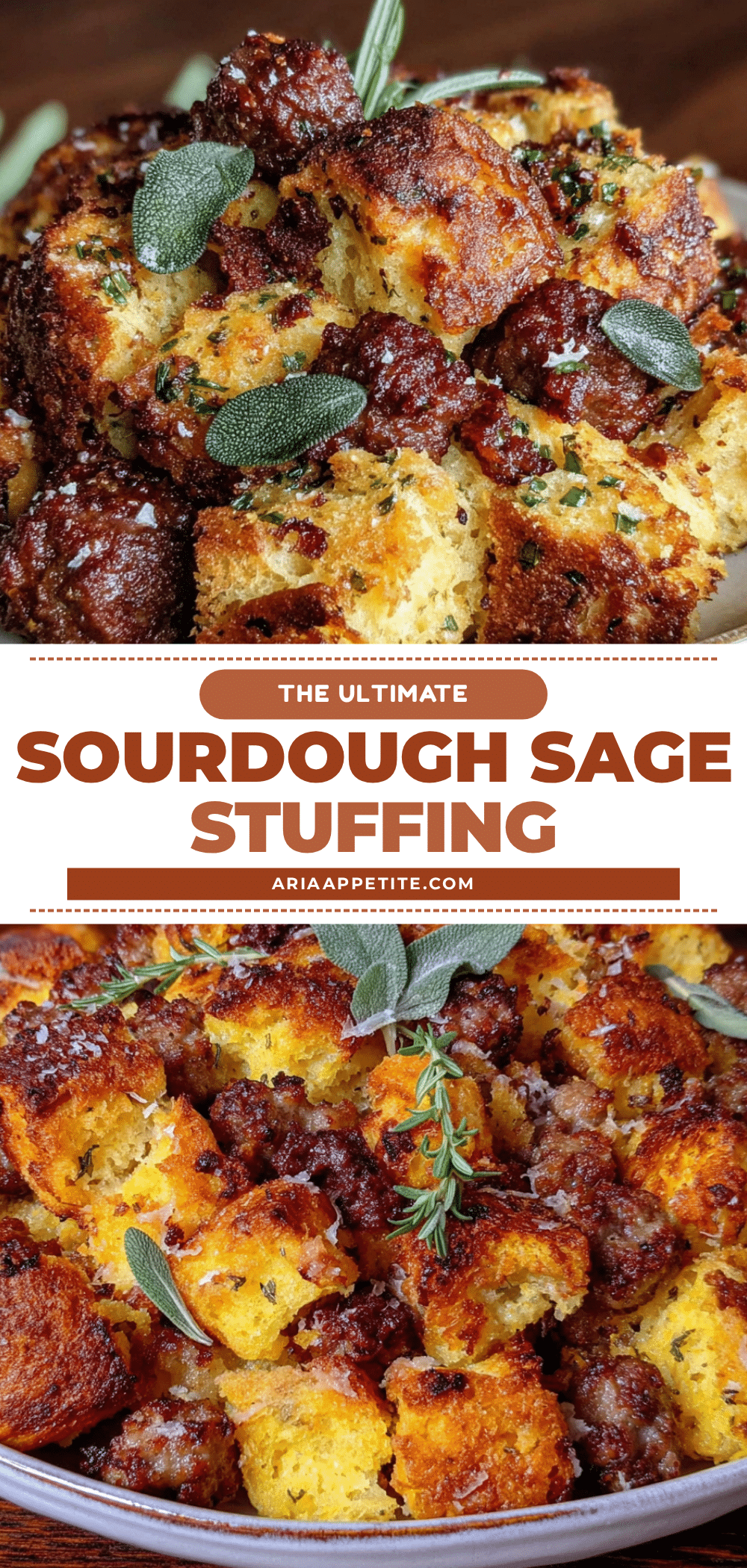
Best Sourdough Stuffing Recipe with Sage and Sausage

This tangy, savory sourdough stuffing with sage and sausage is the perfect holiday side dish. Toasting the bread ensures a perfect texture, while the combination of sweet Italian sausage and fresh herbs creates deep, comforting flavor.
- Prep Time: 20 minutes
- Cook Time: 45 minutes
- Total Time: 1 hour 5 minutes
- Yield: 8 servings 1x
- Category: Side Dish
- Cuisine: American
Ingredients
- 1 large loaf sourdough bread (about 1 pound or 450g), cut into 1-inch cubes
- 1 pound (450g) sweet Italian sausage, casings removed
- 4 tablespoons (56g) unsalted butter, plus more for greasing the dish
- 1 large yellow onion, diced (about 1.5 cups)
- 3 celery stalks, diced (about 1 cup)
- 2 tablespoons fresh sage leaves, finely chopped
- 1 tablespoon fresh thyme leaves (or 1 teaspoon dried)
- 1/4 cup fresh parsley, chopped (optional, for garnish)
- 2 cups (480ml) chicken or vegetable broth (low-sodium preferred)
- 2 large eggs, lightly beaten
- Salt and black pepper to taste (start with 1 teaspoon salt and 1/2 teaspoon pepper)
- 1 teaspoon fennel seeds (optional)
Instructions
- Preheat your oven to 375°F (190°C). Spread the sourdough cubes in a single layer on a large baking sheet. Toast for 12-15 minutes, stirring halfway through, until golden and dry. Let cool on the sheet.
- In a large skillet over medium heat, cook the sausage, breaking it up with a wooden spoon, until browned and cooked through, about 8-10 minutes. Transfer sausage to a plate, leaving the rendered fat in the skillet.
- Add the butter to the same skillet. Once melted, add the diced onion and celery. Cook, stirring occasionally, until softened and translucent, about 6-8 minutes.
- Stir in the fresh sage, thyme, and fennel seeds (if using). Cook for another minute until fragrant.
- In a large mixing bowl, combine the toasted sourdough cubes, cooked sausage, and the vegetable-herb mixture. Toss gently to distribute evenly.
- In a separate bowl or measuring cup, whisk together the chicken broth and beaten eggs. Pour over the bread mixture and toss gently until the liquid is absorbed evenly. The bread should feel moist but not soggy.
- Transfer the stuffing to a greased 9×13-inch baking dish and spread into an even layer. (At this point, you can cover and refrigerate for up to 24 hours.)
- Bake uncovered at 375°F (190°C) for 30-35 minutes, until the top is golden brown and crispy. For a softer stuffing, cover with foil for the first 20 minutes, then uncover for the last 10-15 minutes.
- Let the stuffing rest for 5-10 minutes before serving. Garnish with fresh parsley if desired.
Notes
Toasting the bread is crucial to prevent sogginess. For a vegetarian version, skip the sausage and add 1.5 cups of sautéed mushrooms; use vegetable broth. For a gluten-free option, use gluten-free sourdough. The stuffing can be assembled up to 24 hours in advance and refrigerated. Leftovers keep for up to 4 days in the refrigerator or can be frozen for up to 3 months.
Nutrition
- Serving Size: 1 serving (about 1 c
- Calories: 400
- Sugar: 4
- Sodium: 800
- Fat: 20
- Saturated Fat: 8
- Carbohydrates: 38
- Fiber: 3
- Protein: 20
Keywords: sourdough stuffing, sage and sausage stuffing, holiday stuffing, Thanksgiving stuffing, best stuffing recipe