Love this? Save it for later!
Share the inspiration with your friends
There used to be this little noodle shop tucked behind a laundromat near campus that made the most incredible stir fry. When they suddenly closed after my sophomore year, I was honestly heartbroken. That glossy, savory mess of noodles and veggies had gotten me through finals week more times than I cared to admit. After about eight tries — and one truly sad attempt that involved burnt garlic and a smoke alarm — I finally cracked the code. And the best part? It only takes five ingredients and one pan.
I remember the night it finally clicked. I was standing in my cramped dorm kitchen, staring at a packet of instant ramen, a sad-looking bell pepper, and some frozen peas I’d stolen from the communal freezer. My roommate was studying in the other room, and the smell of soy sauce started filling the hallway. When I took that first bite, I actually said “oh my god” out loud. It wasn’t exactly the same as that little shop’s version, but honestly? It was better in its own way. Maybe you’ve been there — that moment when a cheap, easy meal turns into something you actually crave.
This Easy 5-Ingredient Dorm Room Ramen Stir Fry has become my go-to for those nights when I need something fast, filling, and genuinely delicious. No fancy equipment, no complicated techniques, just pure comfort in a bowl. I keep making it because it reminds me that you don’t need a full kitchen or a culinary degree to eat well. Sometimes the best recipes come from the most unexpected places — and the most limited resources.
Why You’ll Love This Recipe
Let me tell you why this ramen stir fry has become my most-requested recipe among friends and family. It’s not just because it’s easy — it’s because it actually delivers on flavor without any of the fuss.
- Quick & Easy: From start to finish, this comes together in under 15 minutes. Perfect for those nights when you’re starving and have zero patience.
- Simple Ingredients: You probably already have everything in your pantry. No exotic spices or specialty items required.
- Perfect for Busy Nights: Whether you’re a college student, a tired parent, or just someone who doesn’t want to cook, this recipe has your back.
- Crowd-Pleaser: I’ve served this to picky eaters and food snobs alike, and it always gets devoured.
- Unbelievably Delicious: The way the noodles soak up that savory sauce, the slight char from the pan, the contrast of textures — it’s next-level comfort food.
What makes this version different from other ramen stir fry recipes is the technique. Instead of boiling the noodles separately and then stir-frying them, I cook them right in the pan with the sauce. This means the noodles absorb all that flavor instead of just being coated in it. Trust me, it makes a huge difference. I mean, I’ve tried it both ways, and this method is just better.
This recipe isn’t just good — it’s the kind that makes you close your eyes after the first bite. It’s comfort food reimagined: faster, simpler, but with the same soul-soothing satisfaction. Perfect for impressing your roommates without stress, or turning a simple Tuesday night into something memorable.
What Ingredients You Will Need
This recipe uses five simple ingredients to deliver big flavor without the fuss. Each one plays a specific role, and together they create something magical. Here’s what you’ll need:
- Instant Ramen Noodles (2 packets): The star of the show. I recommend using the cheap packets — the ones that cost like 25 cents. They have the perfect texture for stir-frying. Discard the seasoning packets or save them for another use. My personal favorite is the classic Maruchan or Nissin brand.
- Frozen Mixed Vegetables (1 cup): Peas, carrots, corn, green beans — whatever mix you like. Frozen works perfectly here because they’re already prepped and cook quickly. No chopping required! Look for a bag that has a good variety of colors for visual appeal.
- Soy Sauce (3 tablespoons): This is your main flavoring agent. I prefer low-sodium soy sauce so I can control the salt level better. If you’re gluten-free, tamari works great as a substitute. Kikkoman is my go-to brand.
- Vegetable Oil (2 tablespoons): For stir-frying. Any neutral oil works — canola, peanut, or avocado oil are all good choices. Avoid olive oil here because it has a lower smoke point and can burn.
- Eggs (2 large): These add protein and richness to the dish. They scramble into the noodles beautifully and make the whole thing feel more substantial. Room temperature eggs work best for even cooking.
That’s it! Five ingredients, and you probably already have most of them in your kitchen. The beauty of this recipe is its simplicity — no fancy sauces, no complicated prep, just straightforward, delicious food. If you want to add some heat, a drizzle of sriracha or a sprinkle of red pepper flakes works wonders. But honestly, it’s perfect as is.
Equipment Needed
You don’t need a fully stocked kitchen to make this recipe. Here’s what you’ll need:
- Large Non-Stick Skillet or Wok (12-inch): This is essential for stir-frying without sticking. If you don’t have a non-stick pan, a well-seasoned cast iron skillet works too. I’ve used both, and honestly, the non-stick makes cleanup so much easier.
- Wooden Spoon or Spatula: For stirring and scrambling the eggs. A silicone spatula also works great.
- Measuring Spoons: For the soy sauce and oil. Eyeballing it works in a pinch, but measuring ensures consistent results.
- Cutting Board and Knife: Only needed if you’re adding fresh veggies. For the basic recipe, you won’t need these.
- Bowl: For breaking the ramen blocks into pieces before cooking.
If you don’t have a wok, don’t worry. A large skillet works just as well. The key is having enough surface area so the noodles don’t steam instead of fry. My first attempt at this recipe was in a tiny saucepan, and let me tell you, it was not pretty. Upgrade to a larger pan when you can — it makes all the difference.
Preparation Method
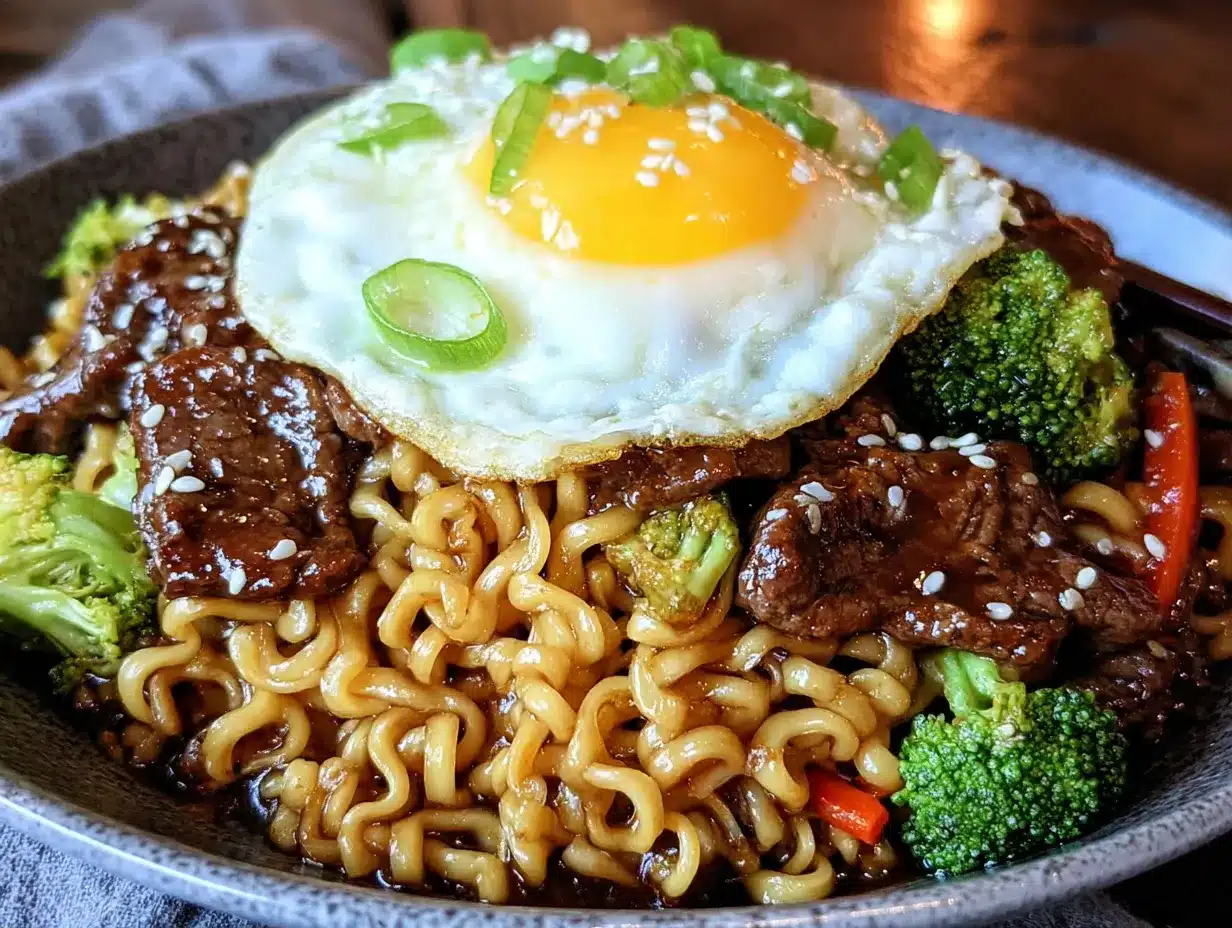
Let me walk you through this step by step. I’ve made this recipe dozens of times, so I’ve got all the little tricks figured out.
- Prep Your Ingredients (2 minutes): Before you start cooking, break the ramen blocks into small pieces right in their packets. You want bite-sized chunks, not powder. Open the packets and set aside. Measure out your soy sauce and oil. Take the frozen veggies out of the freezer so they can start to thaw slightly.
- Heat Your Pan (1 minute): Place your large skillet or wok over medium-high heat. Add the vegetable oil and let it heat up until it shimmers — about 30 seconds. You’ll know it’s ready when you flick a drop of water in and it sizzles immediately.
- Cook the Vegetables (2-3 minutes): Add the frozen vegetables to the hot pan. Spread them out in an even layer and let them cook without stirring for about 1 minute. This gives them a nice char. Then stir and cook for another 1-2 minutes until they’re heated through and starting to brown slightly. The sound of them hitting the hot oil is so satisfying.
- Scramble the Eggs (1-2 minutes): Push the vegetables to one side of the pan. Crack the eggs directly into the empty space. Use your spatula to scramble them quickly, breaking them into small pieces as they cook. Once they’re mostly set but still slightly soft, mix them in with the vegetables.
- Add the Noodles (3-4 minutes): Add the broken ramen noodles to the pan. Pour the soy sauce over the top. Stir everything together so the noodles are coated in the sauce. Here’s the key — don’t add any water. The noodles will cook in the soy sauce and the residual moisture from the vegetables. Keep stirring constantly to prevent sticking. The noodles will soften and absorb the sauce as they cook.
- Finish and Serve (1 minute): After about 3-4 minutes, the noodles should be tender and slightly crispy on the edges. Taste a piece to check — it should be cooked through but still have a little bite. Remove from heat and serve immediately. The whole process takes about 10-12 minutes total.
A few things I’ve learned the hard way: Don’t walk away from the pan during step 5. The noodles can go from perfect to burnt really quickly. Also, if the noodles seem too dry, add a tablespoon of water at a time until they soften. But honestly, if you keep stirring, they’ll cook perfectly in the sauce.
Cooking Tips & Techniques
Over the years, I’ve made every mistake in the book with this recipe. Here are the lessons I’ve learned so you don’t have to repeat them.
The Biggest Mistake: Adding Water to the Noodles. I know it seems counterintuitive, but don’t boil the ramen first. Cooking them directly in the pan with the sauce is what gives them that amazing texture. The first time I tried this recipe, I boiled the noodles first like I was making soup. They turned into a soggy mess. Never again.
Get Your Pan Hot Enough. A hot pan is crucial for getting that slight char on the vegetables and noodles. If your pan isn’t hot enough, everything will steam instead of fry. You want that sizzle when ingredients hit the oil. I usually let my pan heat for a full minute before adding anything.
Keep Things Moving. Stir-frying is all about constant motion. Don’t let the noodles sit in one spot for too long, or they’ll stick and burn. Use a wooden spoon or spatula to keep everything moving in the pan. It’s almost like a dance — steady, rhythmic stirring.
Timing is Everything. Have all your ingredients prepped and ready before you start cooking. This dish comes together fast, and you won’t have time to measure things once you’re at the stove. I learned this the hard way when I had to scramble to find the soy sauce while my noodles were burning.
Don’t Overcrowd the Pan. If you’re doubling the recipe, cook it in batches. Overcrowding the pan lowers the temperature and leads to steaming instead of frying. Trust me, it’s worth the extra few minutes to do it in two batches.
Variations & Adaptations
One of the best things about this recipe is how adaptable it is. Here are some variations I’ve tried and loved:
- Spicy Sriracha Version: Add 1-2 tablespoons of sriracha along with the soy sauce. The heat pairs beautifully with the savory noodles. I make this version when I need a little extra kick.
- Protein-Packed Version: Add cooked chicken, shrimp, or tofu along with the vegetables. Leftover rotisserie chicken works perfectly. Just shred it and toss it in when you add the noodles.
- Peanut Butter Ramen: Stir in 1 tablespoon of peanut butter with the soy sauce for a Thai-inspired twist. It sounds weird, but it’s absolutely incredible. The peanut butter melts into the sauce and creates this creamy, nutty coating on the noodles.
- Veggie-Loaded Version: Add fresh vegetables like bell peppers, snap peas, or broccoli along with the frozen mix. Just give them an extra minute or two of cooking time.
- Garlic Lover’s Version: Add 2-3 minced garlic cloves to the pan right after the vegetables. Cook for 30 seconds until fragrant before adding the eggs. The aroma is intoxicating.
My personal favorite variation is the peanut butter one. I discovered it by accident when I was trying to use up some leftover ingredients, and now I make it more often than the original. It’s that good.
Serving & Storage Suggestions
This dish is best served immediately, straight from the pan while it’s still hot and slightly crispy. I like to serve it in a big bowl with a sprinkle of sesame seeds or chopped green onions on top if I have them. It’s perfect on its own as a main dish, but it also works great as a side alongside grilled chicken or fish.
For storage, let the leftovers cool completely before transferring to an airtight container. It will keep in the refrigerator for up to 3 days. The texture won’t be quite as good as fresh, but it’s still delicious. To reheat, I recommend using a skillet over medium heat with a splash of water or soy sauce to rehydrate the noodles. Microwave works in a pinch, but the noodles can get a bit soft.
I’ve also frozen this dish successfully. Portion it into individual containers and freeze for up to 2 months. Thaw in the refrigerator overnight and reheat in a skillet. The vegetables might be a bit softer after freezing, but the flavor is still spot on.
One thing I’ve noticed is that the flavors actually meld together even more after a day in the fridge. The leftovers somehow taste even better than the fresh version. It’s like the noodles have had time to really soak up all that savory goodness.
Nutritional Information & Benefits
Here’s the approximate nutritional breakdown for one serving (half the recipe):
| Nutrient | Amount |
|---|---|
| Calories | 380 |
| Protein | 15g |
| Carbohydrates | 42g |
| Fat | 18g |
| Fiber | 4g |
| Sodium | 1200mg |
While this isn’t exactly health food, it does have some redeeming qualities. The eggs provide high-quality protein to keep you full and satisfied. The frozen vegetables add fiber, vitamins, and antioxidants. And the whole dish comes together without any added sugars or preservatives.
If you’re watching your sodium, use low-sodium soy sauce and you can cut the sodium by about 30%. You can also add more vegetables to bulk up the nutritional content. I sometimes add a handful of spinach at the end for an extra nutrient boost.
This recipe is naturally dairy-free and can be made gluten-free by using gluten-free ramen and tamari instead of soy sauce. It’s also easily adaptable for different dietary needs — just swap in your preferred protein and vegetables.
Conclusion
This Easy 5-Ingredient Dorm Room Ramen Stir Fry has saved me on countless busy nights, and I have a feeling it’ll become a staple in your kitchen too. It’s proof that you don’t need a fancy kitchen, expensive ingredients, or hours of time to make something genuinely delicious. Sometimes the simplest recipes are the ones we come back to again and again.
I’d love to hear how this turns out for you! Did you try any variations? Add any extra ingredients? Burn anything? (It happens to the best of us.) Drop a comment below and let me know. And if you share a photo on Pinterest, tag me — I love seeing your creations. Happy cooking, friends. You’ve got this.
Frequently Asked Questions
Can I use fresh ramen instead of instant?
Absolutely! Fresh ramen noodles work beautifully in this recipe. Just skip the step where you break them into pieces and cook them for a minute or two less since they cook faster.
What if I don’t have frozen vegetables?
No problem! Use any fresh vegetables you have on hand. Bell peppers, carrots, broccoli, and snap peas all work great. Just chop them into small pieces and add them to the pan first since they’ll need a little more cooking time than frozen.
Can I make this without eggs?
Yes, you can skip the eggs entirely or substitute with cubed tofu for extra protein. If you’re vegan, try adding some edamame or chickpeas instead.
How do I prevent the noodles from sticking?
The key is using enough oil and keeping the noodles moving in the pan. Make sure your pan is hot before adding the oil, and stir constantly once the noodles go in. A non-stick pan also helps tremendously.
Can I double this recipe?
You can, but cook it in two batches to avoid overcrowding the pan. If you try to cook everything at once, the noodles will steam instead of fry and you’ll lose that nice texture. Trust me, it’s worth the extra few minutes.
Pin This Recipe!
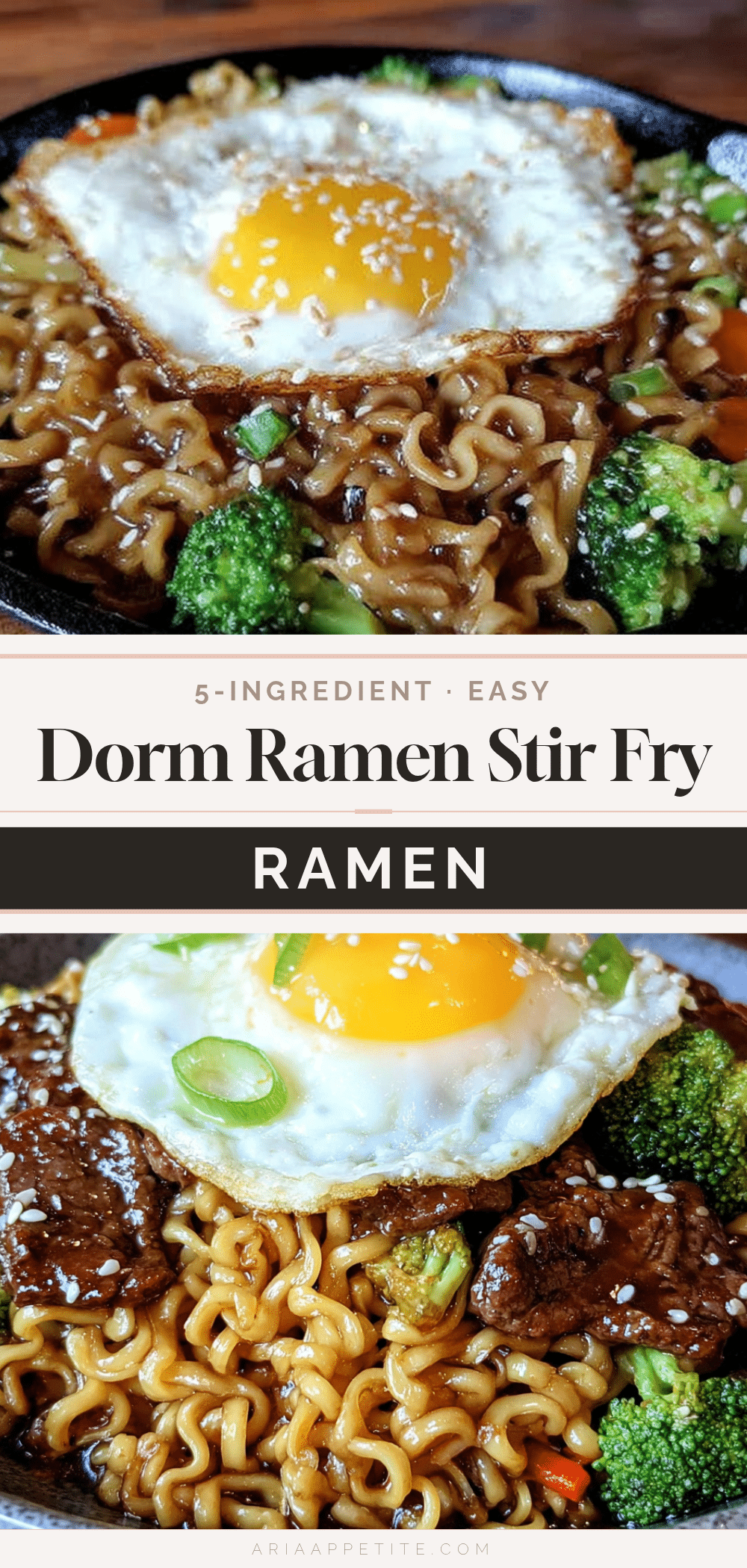
Easy 5-Ingredient Dorm Room Ramen Stir Fry
A quick and delicious stir fry made with instant ramen, frozen vegetables, soy sauce, and eggs. Perfect for busy nights when you need a fast, filling, and flavorful meal with minimal ingredients and cleanup.
- Prep Time: 2 minutes
- Cook Time: 10 minutes
- Total Time: 12 minutes
- Yield: 2 servings 1x
- Category: Main Course
- Cuisine: Asian Fusion
Ingredients
- 2 packets instant ramen noodles (discard seasoning packets)
- 1 cup frozen mixed vegetables (peas, carrots, corn, green beans)
- 3 tablespoons low-sodium soy sauce (or tamari for gluten-free)
- 2 tablespoons vegetable oil (canola, peanut, or avocado oil)
- 2 large eggs (room temperature)
Instructions
- Prep your ingredients: Break the ramen blocks into small pieces in their packets. Measure out soy sauce and oil. Take frozen veggies out to thaw slightly.
- Heat a large non-stick skillet or wok over medium-high heat. Add vegetable oil and heat until shimmering (about 30 seconds).
- Add frozen vegetables to the hot pan. Spread in an even layer and cook without stirring for 1 minute. Then stir and cook for another 1-2 minutes until heated through and slightly charred.
- Push vegetables to one side of the pan. Crack eggs into the empty space and scramble quickly until mostly set but still soft. Mix with vegetables.
- Add broken ramen noodles to the pan. Pour soy sauce over the top. Stir constantly to coat noodles. Do not add water. Cook for 3-4 minutes until noodles are tender and slightly crispy on edges.
- Remove from heat and serve immediately.
Notes
Do not boil the ramen first; cooking them directly in the pan with sauce gives the best texture. Keep the pan hot and stir constantly to prevent sticking. For extra flavor, add sriracha, red pepper flakes, or peanut butter. Leftovers can be stored in the refrigerator for up to 3 days or frozen for up to 2 months.
Nutrition
- Serving Size: 1 serving (half the
- Calories: 380
- Sugar: 5
- Sodium: 1200
- Fat: 18
- Saturated Fat: 3
- Carbohydrates: 42
- Fiber: 4
- Protein: 15
Keywords: ramen stir fry, easy ramen recipe, 5 ingredient dinner, dorm room meal, quick stir fry, college student recipe, one pan meal