Love this? Save it for later!
Share the inspiration with your friends
Mrs. Kowalski watched me from her porch for a good three minutes before she said anything. I was wrestling with a cheap cut of beef, trying to convince myself that a flashy marinade could fix what was fundamentally wrong with my approach. She didn’t laugh, not exactly, but the corner of her mouth twitched. “You’re fighting the meat,” she finally called over. “Come here tomorrow morning. I’ll show you what to buy.”
That was seven years ago, and I still think about that conversation every time I make this Perfect Beef Tenderloin with Creamy Horseradish Sauce. She was a retired home economics teacher from somewhere in the Midwest—Illinois, maybe—and she had this way of making you feel like cooking wasn’t a performance. It was just… living. She handed me a piece of paper with her recipe scrawled in pencil, and honestly, I nearly lost it three times before I actually made it right the first time. I overcooked the tenderloin, the sauce broke, and I stood in my kitchen feeling like I’d let her down. But I tried again the next week, and the week after that. Some recipes demand patience, you know?
The thing about this dish is that it looks like something you’d order at a fancy steakhouse, but it’s surprisingly straightforward once you understand a few key principles. The beef comes out perfectly pink from edge to edge, with a crust that’s almost caramelized. And that sauce—creamy, tangy, with just enough horseradish to clear your sinuses—it’s the kind of thing you’ll want to put on everything. Maybe you’ve been there, standing in the meat aisle, wondering if you’re about to waste forty bucks on a dinner that might not deliver. I get it. That’s exactly why I kept tweaking this recipe until it worked every single time.
Why You’ll Love This Recipe
Let me tell you why this recipe has earned a permanent spot in my rotation. I’ve made it for Christmas dinners, anniversary celebrations, and even a random Tuesday when I needed to remind myself that cooking can be joyful, not stressful.
- Foolproof Results: This isn’t one of those recipes that works only if the stars align. I’ve tested it with different ovens, different pan sizes, and even different grades of beef. It delivers every time.
- Restaurant-Quality at Home: You’re getting a crust that rivals any steakhouse, with an internal temperature that’s spot-on. No more guessing games.
- Simple Ingredients: The ingredient list is surprisingly short. No weird marinades or obscure spices. Just good beef, a few pantry staples, and fresh horseradish if you can find it.
- Make-Ahead Friendly: The sauce comes together in minutes and actually gets better after a day in the fridge. Perfect for when you want to prep ahead.
- Crowd-Pleaser: I’ve served this to picky eaters, serious foodies, and everyone in between. The plate always comes back clean.
What makes this version different is the technique. Instead of searing then roasting, you’re doing a reverse sear—slow roasting first, then finishing with a hot pan sear. It sounds backwards, but trust me, it’s the secret to that perfect edge-to-edge doneness. And the sauce? It’s creamy without being heavy, tangy without being harsh. I’ve had people ask for the recipe before they even finish eating.
This is the kind of meal that makes you close your eyes after the first bite. It’s comfort food that feels special, without the stress that usually comes with fancy cooking. Perfect for when you want to impress someone—or just treat yourself.
What Ingredients You Will Need
This recipe relies on a handful of quality ingredients to deliver big flavor. Here’s what you’ll need, along with a few notes from my own kitchen experiments.
For the Beef Tenderloin
- Beef tenderloin roast (3-4 pounds): Look for a center-cut roast if possible—it’s the most uniform in thickness, which means even cooking. I’ve had great results with both Choice and Prime grades. If you’re on a budget, Choice works beautifully.
- 2 tablespoons olive oil: Use a good quality extra virgin olive oil for the sear. It adds flavor and helps the crust form.
- 1 tablespoon kosher salt: Don’t skimp here. Salt is what draws out moisture and creates that beautiful crust. I prefer Diamond Crystal brand because it’s less salty by volume, giving you more control.
- 1 teaspoon black pepper: Freshly ground, please. The pre-ground stuff just doesn’t deliver the same punch.
- 2 teaspoons garlic powder: This is optional, but I love the subtle savory depth it adds. Make sure it’s garlic powder, not garlic salt.
- 2 sprigs fresh rosemary: For aromatics while roasting. Thyme works beautifully too.
- 3 cloves garlic, smashed: These go in the pan during roasting and infuse the meat with gentle garlic flavor.
For the Creamy Horseradish Sauce
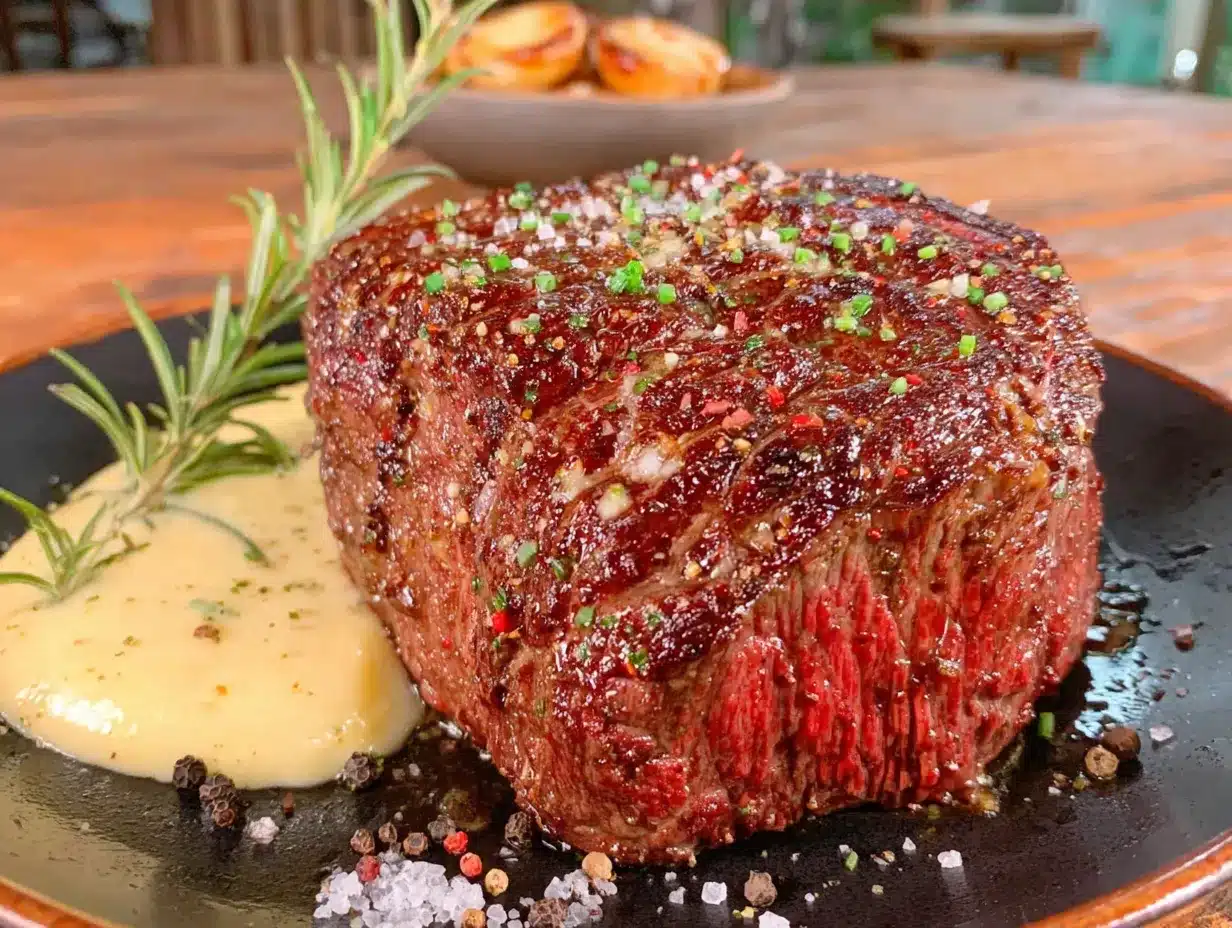
- 1/2 cup sour cream: Full-fat gives the best texture, but light sour cream works in a pinch. Let it come to room temperature so it doesn’t curdle.
- 1/4 cup prepared horseradish: Drain off some of the liquid if it looks watery. I prefer the refrigerated kind over the shelf-stable jars—it has more kick. My go-to brand is Boar’s Head.
- 2 tablespoons mayonnaise: Adds richness and helps stabilize the sauce. Duke’s is my favorite, but any brand works.
- 1 tablespoon fresh lemon juice: Brightens everything up. Bottled lemon juice works, but fresh is noticeably better.
- 1 teaspoon Dijon mustard: Adds a subtle tang and helps emulsify the sauce. Grey Poupon is great, but any smooth Dijon works.
- 1/2 teaspoon salt: Start with less and adjust to taste.
- 1/4 teaspoon white pepper: Black pepper works too, but white pepper keeps the sauce looking pristine.
- 1 tablespoon chopped fresh chives: For garnish and a mild oniony freshness. Optional but lovely.
One thing I’ve learned: don’t skip letting the beef come to room temperature before cooking. It makes a huge difference in how evenly it cooks. And for the horseradish, if you can find fresh horseradish root and grate it yourself, you’ll be rewarded with a sauce that has serious personality. But the prepared stuff works just fine for most of us.
Equipment Needed
You don’t need a professional kitchen to pull this off, but having the right tools makes the process smoother. Here’s what I use.
- Cast iron skillet or heavy-bottomed oven-safe pan: This is non-negotiable for the sear. Cast iron holds heat beautifully and gives you that crust. I use a 12-inch Lodge skillet, and it’s never let me down.
- Instant-read thermometer: Please, please get one. Guessing doneness is the number one reason beef tenderloin goes wrong. I love my Thermapen, but any reliable digital thermometer works.
- Wire rack set inside a baking sheet: This allows air to circulate around the roast while it rests and during the initial slow roast. If you don’t have one, just use the baking sheet directly.
- Chef’s knife: A sharp 8-inch chef’s knife makes trimming the tenderloin easy. A dull knife is dangerous—trust me on this.
- Cutting board: Preferably wooden or plastic with a groove to catch juices. I use a big bamboo board.
- Small bowl and whisk: For mixing the sauce. A fork works in a pinch, but a whisk gives you a smoother result.
- Aluminum foil: For tenting the roast while it rests. Don’t wrap it tightly or you’ll steam the crust.
- Tongs: For flipping the roast during searing. Silicone-tipped ones won’t scratch your pan.
If you don’t have a cast iron skillet, a heavy stainless steel pan works too. Just make sure it’s oven-safe. And if you’re on a budget, skip the fancy thermometer and get a basic instant-read one for under $15. It’s still better than guessing.
Preparation Method
Here’s the step-by-step process that I’ve refined over many, many attempts. Take your time with each step—rushing is the enemy of good beef.
Step 1: Prep the Beef
Take the tenderloin out of the refrigerator 45-60 minutes before cooking. Remove any silver skin (that thin, silvery membrane on the surface) using a sharp knife. Don’t worry if you leave a little—it’s edible, just chewy. Pat the roast completely dry with paper towels. This is crucial for a good sear. Season generously on all sides with the kosher salt, pepper, and garlic powder. Let it sit at room temperature while you preheat the oven.
Step 2: Slow Roast First
Preheat your oven to 275°F (135°C). Place the seasoned tenderloin on a wire rack set over a baking sheet. Roast for about 45-55 minutes, or until the internal temperature reaches 125°F (52°C) for medium-rare. Start checking at 40 minutes with your thermometer inserted into the thickest part. The temperature will climb about 5-10 degrees during resting, so pull it a little early if you’re nervous about overcooking. The roast should feel springy when you press it, not firm.
Step 3: Rest and Sear
Remove the roast from the oven and let it rest for 15-20 minutes. This is important—if you skip this, the juices will run out when you sear. While it rests, heat your cast iron skillet over high heat for about 3-4 minutes until it’s smoking hot. Add the olive oil and swirl to coat. Carefully place the roast in the pan (it will sizzle loudly). Sear for 1-2 minutes per side, turning with tongs, until a deep brown crust forms on all sides. Don’t crowd the pan—if your roast is very long, cut it in half and sear in batches.
Step 4: Add Aromatics and Finish
During the last minute of searing, add the smashed garlic cloves and rosemary sprigs to the pan. Tilt the pan slightly and use a spoon to baste the roast with the hot oil and aromatics. This adds incredible flavor. Transfer the roast to a cutting board and tent loosely with foil. Let it rest another 5-10 minutes before slicing. The internal temperature should reach about 130-135°F (54-57°C) for medium-rare.
Step 5: Make the Sauce
While the beef rests, whisk together the sour cream, prepared horseradish, mayonnaise, lemon juice, Dijon mustard, salt, and white pepper in a small bowl. Taste and adjust—I usually add a little more horseradish because I like it punchy. Cover and refrigerate until ready to serve. The sauce can be made up to 2 days ahead, and honestly, the flavors meld beautifully overnight.
Step 6: Slice and Serve
Use a sharp knife to slice the tenderloin against the grain into 1/2-inch to 3/4-inch thick rounds. The slices should be evenly pink with a thin gray band at the edge. Arrange on a platter, drizzle with a little of the sauce, and garnish with fresh chives. Serve the remaining sauce on the side.
Cooking Tips & Techniques
I’ve made every mistake in the book with this recipe, so let me save you some trouble. Here’s what I’ve learned the hard way.
Don’t skip the reverse sear. I know it feels backwards, but trust me—roasting first at a low temperature ensures the whole roast cooks evenly. If you sear first, you’ll end up with a gray ring around the outside and a raw center. I learned this after ruining two expensive roasts. The reverse sear gives you that beautiful pink from edge to edge.
Patience with the pan. When you’re searing, make sure the pan is hot enough. If the meat sticks when you try to flip it, it’s not ready. Let it cook another 30 seconds and try again. A good crust takes time, and rushing it will tear the meat. Also, don’t overcrowd the pan—if your roast is longer than the pan, cut it in half and sear in two batches.
Thermometer is your best friend. I cannot stress this enough. Guessing doneness is a gamble, and with a cut of meat this expensive, you don’t want to gamble. Insert the thermometer into the thickest part of the roast, away from any bone. For medium-rare, pull at 125°F (52°C) during the slow roast, and let it carry over to 130-135°F (54-57°C) after searing and resting.
Resting is not optional. I know you’re hungry, but cutting into the roast immediately will release all those precious juices onto the cutting board. Let it rest at least 15 minutes after the slow roast, and another 5-10 minutes after searing. The meat will be juicier and more tender. I once skipped the rest because I was impatient, and I regretted every dry bite.
Make the sauce ahead. The horseradish sauce actually improves after a day in the fridge. The flavors meld and mellow, and the texture thickens slightly. I always make it the day before and just give it a quick stir before serving. One less thing to worry about on dinner day.
Variations & Adaptations
This recipe is flexible, and I’ve tried a few different versions over the years. Here are some of my favorites.
Herb-Crusted Tenderloin
Mix 2 tablespoons each of finely chopped fresh rosemary, thyme, and parsley with 1 tablespoon olive oil. Rub this mixture all over the roast before seasoning with salt and pepper. The herbs create a gorgeous crust and add earthy flavor. I did this for a dinner party once, and everyone thought I’d spent hours on it.
Peppercorn Sauce Variation
If horseradish isn’t your thing, swap the sauce for a creamy peppercorn version. After searing the roast, remove it from the pan and deglaze with 1/4 cup brandy or beef broth. Add 1 cup heavy cream, 2 tablespoons crushed black peppercorns, and 1 teaspoon Dijon mustard. Simmer until thickened, about 5 minutes. It’s rich, indulgent, and pairs beautifully with the beef.
Garlic Butter Basted Tenderloin
During the final sear, add 3 tablespoons butter to the pan along with the garlic and rosemary. As the butter melts, tilt the pan and spoon it over the roast continuously for about 2 minutes. The butter adds incredible richness and helps form an even deeper crust. This is my go-to for special occasions.
Spicy Southwest Version
For a kick, mix 1 tablespoon chili powder, 1 teaspoon cumin, and 1/2 teaspoon cayenne into the salt and pepper rub. Serve the roast with a chipotle-horseradish sauce made by blending 2 chipotle peppers in adobo into the creamy horseradish sauce. It’s smoky, spicy, and totally unexpected.
Dietary Adaptations
This recipe is naturally gluten-free and low-carb. For a dairy-free sauce, substitute the sour cream with coconut cream (the thick part from a can of full-fat coconut milk) and use a vegan mayonnaise. The texture will be slightly different, but the flavor is still fantastic. I’ve made this for friends with dairy sensitivities, and they couldn’t tell the difference.
Serving & Storage Suggestions
This dish is versatile enough for both casual dinners and fancy celebrations. Here’s how I like to serve and store it.
Serving Temperature: Slice and serve the beef warm, not hot. The ideal serving temperature is about 120-125°F (49-52°C), which means it should be slightly warm to the touch but not steaming. The sauce should be chilled or at room temperature—the contrast is lovely.
Presentation: Arrange the sliced tenderloin on a large platter in overlapping rows. Drizzle a little sauce over the top and sprinkle with fresh chives or microgreens. Serve the remaining sauce in a small bowl on the side. For a complete meal, pair with roasted asparagus, garlic mashed potatoes, or a simple arugula salad with lemon vinaigrette. The peppery arugula cuts through the richness beautifully.
Storage: Leftover beef tenderloin keeps well in the refrigerator for up to 3 days. Wrap it tightly in plastic wrap or store in an airtight container. The sauce keeps for up to 5 days in the fridge. I’ve even frozen the sauce for up to a month—just thaw overnight in the fridge and whisk before serving.
Reheating: The best way to reheat leftover tenderloin is in a low oven. Place slices on a baking sheet, cover loosely with foil, and warm at 250°F (120°C) for about 10-15 minutes. Alternatively, sear slices quickly in a hot pan for about 30 seconds per side. Avoid microwaving—it will toughen the meat and ruin the texture. I learned this the hard way when I tried to reheat a slice for lunch and ended up with shoe leather.
Flavor Development: The horseradish sauce actually tastes better on day two. The horseradish mellows, and the flavors meld together. If you’re meal prepping, make the sauce ahead and let it sit in the fridge for a day before serving. The beef, however, is best enjoyed fresh—the texture suffers after refrigeration.
Nutritional Information & Benefits
Here’s a rough nutritional breakdown for a 6-ounce serving of beef tenderloin with about 2 tablespoons of sauce. Keep in mind these are estimates and can vary based on specific ingredients and portion sizes.
- Calories: Approximately 450-500
- Protein: 42-45 grams
- Fat: 28-32 grams (mostly healthy monounsaturated and saturated fats)
- Carbohydrates: 3-4 grams
- Fiber: 0 grams
- Sugar: 1-2 grams (from the sour cream and lemon juice)
Beef tenderloin is an excellent source of high-quality protein, which supports muscle repair and growth. It’s also rich in iron, zinc, and B vitamins, particularly B12, which is essential for energy production and brain function. The horseradish sauce adds a small amount of calcium from the sour cream and beneficial probiotics from the fermentation process.
This dish is naturally low-carb and gluten-free, making it suitable for keto, paleo, and low-carb diets. If you’re watching your sodium, you can reduce the salt in the rub and sauce—the flavor will still be excellent. I personally love that this meal feels indulgent but actually fits well into a balanced diet. It’s the kind of food that nourishes both body and soul, you know?
Potential allergens include dairy (from the sour cream and mayonnaise) and eggs (from the mayonnaise). For a dairy-free version, use the substitutions mentioned in the variations section.
Conclusion
This Perfect Beef Tenderloin with Creamy Horseradish Sauce has become my go-to for any occasion that calls for something special. It’s the recipe I turn to when I want to impress without stress, when I want to feel like a chef in my own kitchen. The reverse sear technique might seem counterintuitive, but it delivers results that are consistently better than any steakhouse I’ve visited. And that sauce—tangy, creamy, with just the right amount of heat—it’s the perfect companion to the rich, buttery beef.
I hope you’ll give this recipe a try, and I hope you’ll make it your own. Maybe you’ll add extra horseradish, or swap the rosemary for thyme, or serve it with a different side. That’s the beauty of cooking—it’s never really finished. It evolves with each person who makes it. Mrs. Kowalski would have loved that idea, I think. She always said a recipe is just a suggestion until you make it your own.
If you do make this, I’d love to hear about it. Leave a comment below and let me know how it turned out, what you changed, or just share your favorite beef tenderloin memory. And if you’re looking for more inspiration, check out my perfect prime rib recipe for another showstopper, or my creamy mashed potatoes for the ideal side dish. Happy cooking, friends.
Frequently Asked Questions
Can I use a different cut of beef?
Absolutely. While beef tenderloin is the star here, you can use a whole beef fillet or even a thick-cut ribeye steak. Just adjust the cooking time based on thickness. For a 2-inch thick steak, the slow roast will take about 20-25 minutes instead of 45-55.
How do I know when the beef is done without a thermometer?
If you don’t have a thermometer, use the finger test. Press the center of the roast with your index finger—if it feels like the fleshy part of your palm below your thumb when your hand is relaxed, it’s rare. If it feels like that same spot when you touch your thumb to your middle finger, it’s medium-rare. This takes practice, so don’t be discouraged if it’s not perfect the first time.
Can I prepare the beef tenderloin ahead of time?
You can season the roast up to 24 hours in advance and keep it covered in the refrigerator. Let it come to room temperature before cooking. You can also slow roast it a day ahead, let it cool, then sear and serve the next day. Just reheat gently in a low oven before searing.
What if I don’t have a cast iron skillet?
A heavy stainless steel skillet works perfectly. Avoid non-stick pans for searing—they don’t get hot enough to create a good crust. If you’re using stainless steel, make sure it’s preheated well and use enough oil to prevent sticking.
Can I make the horseradish sauce less spicy?
Absolutely. Start with 2 tablespoons of prepared horseradish instead of 1/4 cup. You can always add more to taste. For a milder sauce, use creamed horseradish instead of prepared, or mix in a little extra sour cream to dilute the heat.
Pin This Recipe!
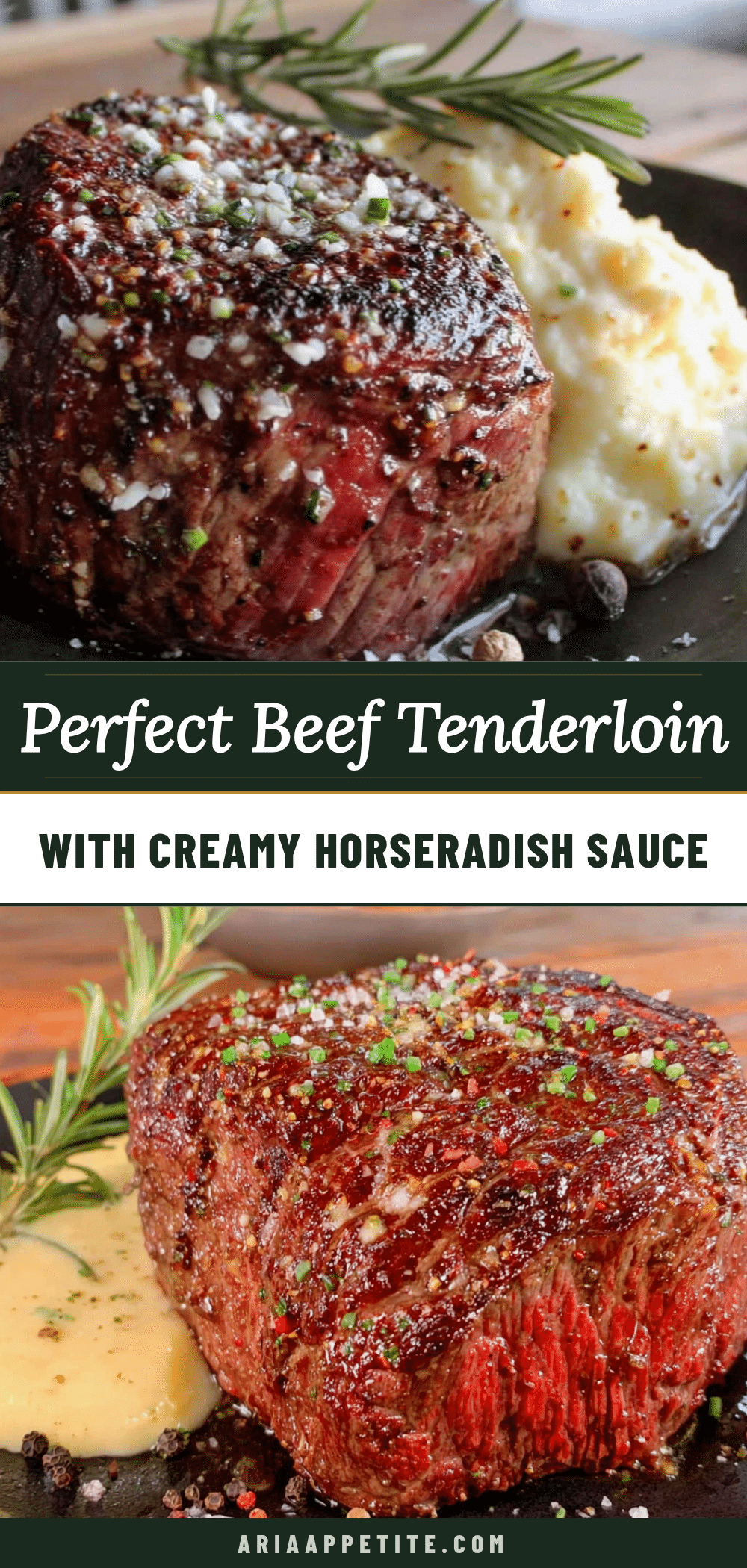
Perfect Beef Tenderloin with Easy Horseradish Sauce
A foolproof reverse-seared beef tenderloin with a creamy, tangy horseradish sauce. This restaurant-quality dish is surprisingly simple and perfect for special occasions.
- Prep Time: 15 minutes
- Cook Time: 1 hour 10 minutes
- Total Time: 1 hour 25 minutes
- Yield: 6 servings 1x
- Category: Main Course
- Cuisine: American
Ingredients
- 3–4 pounds beef tenderloin roast (center-cut preferred)
- 2 tablespoons olive oil
- 1 tablespoon kosher salt (Diamond Crystal preferred)
- 1 teaspoon freshly ground black pepper
- 2 teaspoons garlic powder (optional)
- 2 sprigs fresh rosemary
- 3 cloves garlic, smashed
- 1/2 cup sour cream (full-fat, room temperature)
- 1/4 cup prepared horseradish (drained if watery)
- 2 tablespoons mayonnaise (Duke’s preferred)
- 1 tablespoon fresh lemon juice
- 1 teaspoon Dijon mustard (Grey Poupon preferred)
- 1/2 teaspoon salt
- 1/4 teaspoon white pepper (or black pepper)
- 1 tablespoon chopped fresh chives (for garnish)
Instructions
- Remove the tenderloin from the refrigerator 45-60 minutes before cooking. Trim any silver skin, pat dry with paper towels, and season generously with kosher salt, black pepper, and garlic powder. Let sit at room temperature.
- Preheat oven to 275°F (135°C). Place the seasoned tenderloin on a wire rack set over a baking sheet. Roast for 45-55 minutes, or until internal temperature reaches 125°F (52°C) for medium-rare. Start checking at 40 minutes.
- Remove the roast from the oven and let it rest for 15-20 minutes. Meanwhile, heat a cast iron skillet over high heat for 3-4 minutes until smoking hot. Add olive oil and swirl to coat.
- Carefully place the roast in the hot skillet. Sear for 1-2 minutes per side, turning with tongs, until a deep brown crust forms. During the last minute, add smashed garlic and rosemary; tilt the pan and baste the roast with the hot oil.
- Transfer the roast to a cutting board and tent loosely with foil. Let rest another 5-10 minutes. The internal temperature should reach 130-135°F (54-57°C) for medium-rare.
- While the beef rests, whisk together sour cream, horseradish, mayonnaise, lemon juice, Dijon mustard, salt, and white pepper in a small bowl. Adjust seasoning to taste. Cover and refrigerate until ready to serve.
- Slice the tenderloin against the grain into 1/2-inch to 3/4-inch thick rounds. Arrange on a platter, drizzle with some sauce, and garnish with fresh chives. Serve remaining sauce on the side.
Notes
Don’t skip letting the beef come to room temperature before cooking. The reverse sear ensures even doneness. Resting is crucial for juicy meat. The horseradish sauce can be made up to 2 days ahead and improves overnight.
Nutrition
- Serving Size: 6 ounces beef with 2
- Calories: 475
- Sugar: 2
- Sodium: 800
- Fat: 30
- Saturated Fat: 10
- Carbohydrates: 4
- Protein: 44
Keywords: beef tenderloin, horseradish sauce, reverse sear, roast beef, special occasion, gluten-free, low-carb