Love this? Save it for later!
Share the inspiration with your friends
My neighbor Jen asked me why I couldn’t just tear up the cinnamon rolls and pour the custard over them the night before. I started to explain why that wouldn’t work—then stopped. I honestly had no good reason. I’d been making overnight French toast casseroles for years, but for some reason, I assumed cinnamon rolls needed to be baked fresh. That assumption, let me tell you, was keeping me from breakfast greatness.
It was a Tuesday evening when she caught me hauling groceries inside. I mentioned I was making cinnamon rolls for a weekend brunch and dreading the early morning rise-and-rise routine. “Why don’t you just make it like a bread pudding?” she asked. I opened my mouth to explain the difference between yeasted dough and brioche, but honestly, I had nothing. So I tried it. And I mean, I tried it with skepticism.
The next morning, I pulled that casserole out of the oven and felt genuinely foolish. The edges were caramelized, the center was pillowy soft, and the cream cheese glaze pooled into every nook and cranny. My neighbor, who barely cooks, had out-cooked me without touching a thing. That moment of being wrong turned into my most-requested breakfast recipe. Maybe you’ve been there—thinking a recipe needs to be complicated when the simplest version is actually the best.
This easy overnight cinnamon roll casserole is proof that sometimes the shortcut is the secret. It takes ten minutes to throw together, sits in your fridge overnight, and delivers a breakfast that tastes like you spent hours in the kitchen. Honestly, I’m still a little embarrassed it took a neighbor to show me.
Why You’ll Love This Recipe
This overnight cinnamon roll casserole isn’t just another breakfast dish—it’s the one that’ll make you the hero of every holiday morning, lazy Saturday, or brunch potluck. I’ve tested this recipe at least a dozen times, tweaking the custard ratio, experimenting with different cinnamon roll brands, and even trying a homemade version (which was delicious but absolutely not necessary). Here’s why this version wins every time:
- Quick & Easy: You need exactly 10 minutes of active prep time. That’s it. The refrigerator does all the work overnight while you sleep.
- Simple Ingredients: Two cans of refrigerated cinnamon rolls, eggs, heavy cream, vanilla, and a pinch of salt. You probably have everything except the rolls in your kitchen right now.
- Perfect for Holidays: Christmas morning, Easter brunch, or Thanksgiving breakfast—this casserole frees up your oven and your sanity. No waking up at 5 AM to proof dough.
- Crowd-Pleaser: I’ve served this to picky kids, breakfast-snob adults, and everyone in between. The pan comes back empty every single time.
- Unbelievably Delicious: The texture is what gets people. The edges get slightly crispy and caramelized while the center stays soft and almost custard-like. The cream cheese glaze melts into every bite.
What makes this recipe different from all the other cinnamon roll casseroles out there? It’s the custard-to-roll ratio. Most recipes use too much liquid, leaving you with soggy bread. I spent three batches getting it right—enough creaminess without turning your breakfast into pudding. Plus, I add a splash of vanilla bean paste (or extract, whatever you have) that elevates the flavor without any extra effort.
This is the kind of breakfast that makes you close your eyes after the first bite. It’s comfort food reimagined—faster, easier, but with the same soul-soothing satisfaction. Perfect for impressing guests without stress, or turning a simple Saturday morning into something memorable.
What Ingredients You Will Need
This recipe uses simple, store-bought ingredients to deliver big flavor without any fuss. The beauty is in the combination—canned cinnamon rolls get transformed into something that tastes completely homemade.
- 2 cans (12.4 oz each) refrigerated cinnamon rolls with cream cheese icing — I prefer Pillsbury Grands! for their fluffy texture. The key is getting the ones with the separate icing packet, not the pre-glazed variety. You’ll use the icing later.
- 4 large eggs, room temperature — Room temperature eggs blend more smoothly into the custard. If you forget to set them out, place them in a bowl of warm water for 5 minutes.
- 1 cup heavy cream — This creates that rich, custard-like texture. You can substitute half-and-half, but the result will be slightly less decadent. Whole milk works in a pinch, but reduce to ¾ cup.
- 2 tablespoons granulated sugar — Just a touch to balance the spices. Don’t skip it—the cinnamon rolls alone aren’t sweet enough for the custard base.
- 1 tablespoon vanilla extract or vanilla bean paste — Vanilla bean paste gives you those beautiful little specks, but extract works perfectly. I use Nielsen-Massey vanilla paste when I’m feeling fancy.
- 1 teaspoon ground cinnamon — Even though the rolls have cinnamon, this extra layer makes a difference. Fresh cinnamon is best—check your spice jar’s date.
- ½ teaspoon salt — Salt balances sweetness and enhances the vanilla. Use fine sea salt, not kosher, for even distribution.
- Optional: ½ cup chopped pecans or walnuts — Adds crunch on top. Toast them first for deeper flavor. I add these when serving my husband’s family—they’re nut people.
For the glaze:
- Reserved icing from cinnamon roll cans — This is non-negotiable. Don’t make your own glaze. The store-bought icing has the perfect consistency and sweetness for this casserole.
- Optional: 2 oz cream cheese, softened — If you want extra tangy glaze, beat the reserved icing with softened cream cheese. It’s a game-changer for cream cheese lovers.
Ingredient Selection Tips: Look for cinnamon roll cans that feel firm and cold at the store. Avoid cans that are dented or puffy—that means they’ve been temperature-abused. For the heavy cream, any brand works, but avoid ultra-pasteurized if you can find it (it doesn’t thicken as well).
Substitution Guidance: Use dairy-free heavy cream alternative for a lactose-friendly version. For egg-free, try ½ cup unsweetened applesauce per egg, but note the texture will be denser. Gluten-free cinnamon rolls work well—just check they’re the refrigerated kind, not frozen.
Equipment Needed
You don’t need a fancy kitchen to pull this off. Here’s what you’ll actually use:
- 9×13-inch baking dish — Glass or ceramic works best for even heat distribution. Metal pans can cause the edges to over-brown. I use my trusty Pyrex dish that’s seen a dozen holidays.
- Large mixing bowl — Any bowl big enough to whisk eggs without splashing. I use a stainless steel one because it’s lightweight.
- Whisk — For combining the custard ingredients. A fork works in a pinch, but you’ll get lumps.
- Sharp knife or kitchen shears — For cutting the cinnamon rolls into quarters. Shears are faster and less messy. I learned this after struggling with a dull knife for my first batch.
- Plastic wrap or aluminum foil — For covering the dish overnight. Make sure it’s tight so the casserole doesn’t absorb fridge odors.
- Small microwave-safe bowl — For warming the icing before drizzling. A 30-second zap makes it pourable.
Budget-friendly options: No whisk? Use a fork. No 9×13 dish? Use a 10-inch cast iron skillet (adjust baking time by 5 minutes). No plastic wrap? A clean shower cap works—I’m not kidding, I’ve done it.
Preparation Method
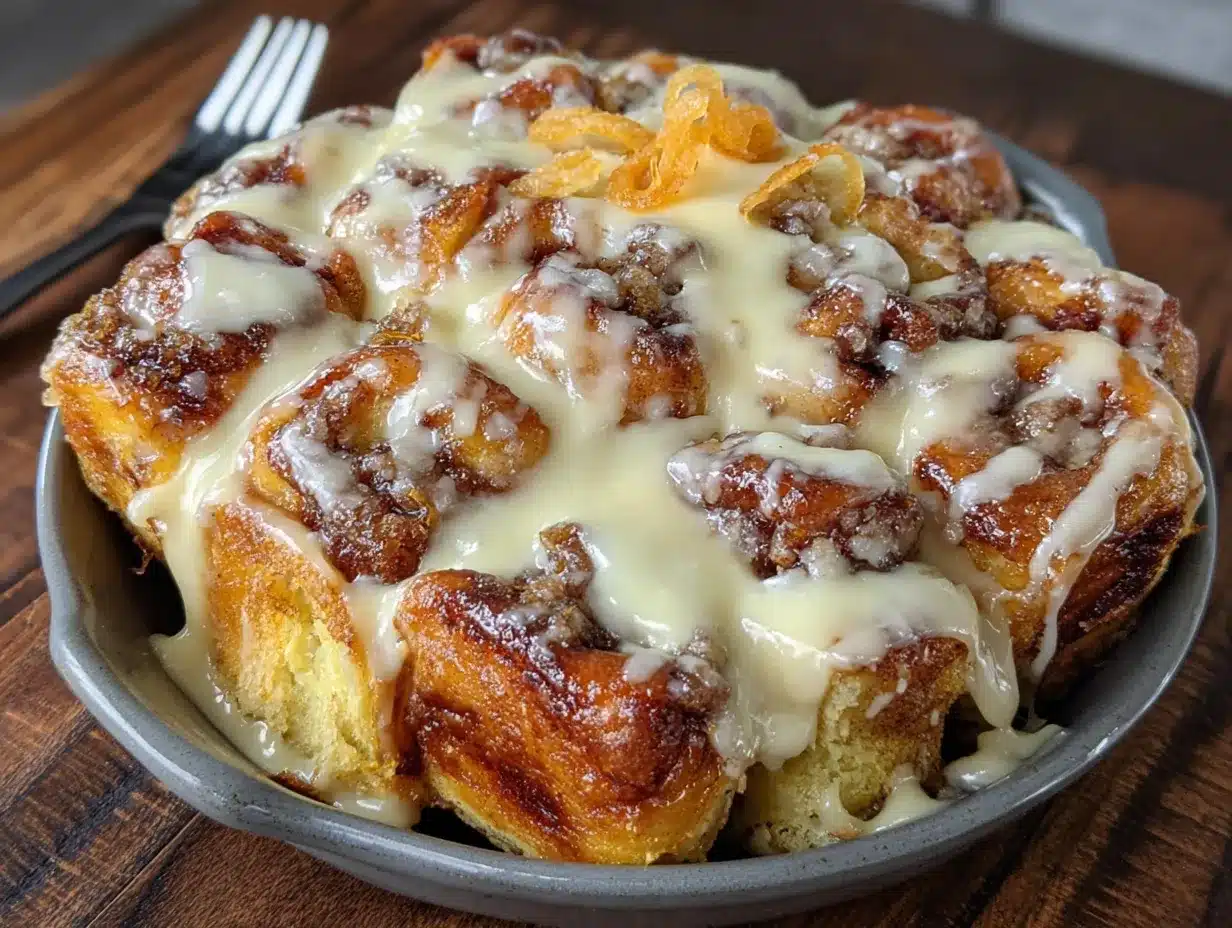
This overnight cinnamon roll casserole comes together in three simple stages: prep, rest, and bake. Here’s exactly how to nail each one.
- Prepare the baking dish (5 minutes): Grease your 9×13-inch baking dish with butter or non-stick spray. Don’t skip this—the caramelized sugar will stick otherwise. I use butter for flavor, but spray works fine.
- Cut the cinnamon rolls (3 minutes): Open both cans of cinnamon rolls. Set the icing packets aside—do not throw them away. Using a sharp knife or kitchen shears, cut each cinnamon roll into 4 equal pieces. You’ll have about 32 pieces total. They don’t need to be perfect—rustic is fine.
- Arrange in the dish (2 minutes): Scatter the cinnamon roll pieces evenly in the prepared dish. Don’t stack them—you want a single layer with some overlapping. The pieces should be touching but not piled up. Spread any extra icing from the cans over the pieces (the bits stuck to the inside of the can).
- Make the custard (5 minutes): In your large mixing bowl, whisk together the eggs, heavy cream, granulated sugar, vanilla extract, ground cinnamon, and salt. Whisk until the sugar dissolves and the mixture is smooth and pale yellow. This takes about 30 seconds of vigorous whisking. Don’t over-whisk—you don’t want air bubbles.
- Pour and press (2 minutes): Slowly pour the custard mixture evenly over the cinnamon roll pieces. Use a spatula to gently press down on the rolls so they absorb the liquid. Every piece should get some custard love. You’ll see the liquid pool around the edges—that’s perfect.
- Cover and refrigerate (8-12 hours): Cover the dish tightly with plastic wrap or aluminum foil. Refrigerate for at least 8 hours, up to 12. The longer rest allows the custard to fully soak into the rolls. Don’t go over 12 hours or the texture gets too soft. I usually prep this right after dinner and bake it the next morning.
- Bake the casserole (30-35 minutes): Preheat your oven to 350°F (175°C). Remove the casserole from the fridge while the oven heats—about 10 minutes. Bake uncovered for 30-35 minutes. The casserole is done when the edges are golden brown and the center is set but still slightly jiggly. A knife inserted in the center should come out clean. The top should look puffed and golden.
- Cool slightly (5 minutes): Let the casserole rest on a wire rack for 5 minutes. This allows the custard to finish setting. Don’t skip this—cutting too early results in a runny mess.
- Prepare the glaze (1 minute): While the casserole cools, microwave the reserved icing packets for 15-20 seconds. Stir until smooth. If you’re adding cream cheese, beat it into the warm icing until smooth.
- Drizzle and serve (2 minutes): Drizzle the warm glaze over the casserole. Use the back of a spoon to spread it evenly. Serve warm. The glaze will soak into the top layer slightly—that’s the best part.
Sensory cues: When you pour the custard, you should hear a slight sizzle as it hits the dish. The cinnamon rolls will look like they’re floating—that’s normal. After baking, the kitchen should smell like a cinnamon-sugar dream. The top should be golden with darker edges where the caramelization happens.
Troubleshooting: If the top browns too quickly, tent loosely with foil for the last 10 minutes. If the center is still liquid after 35 minutes, bake in 5-minute increments. Ovens vary—my old oven took 40 minutes, my new one takes 32.
Cooking Tips & Techniques
After making this casserole more times than I care to admit, I’ve collected some hard-won wisdom. Here’s what I wish someone had told me:
Don’t over-soak. I left a batch in the fridge for 14 hours once (I fell asleep late and woke up late), and the center was mushy. The sweet spot is 8-10 hours. Set a timer on your phone when you put it in the fridge.
Cut the rolls evenly. The first time I made this, I left some rolls whole and cut others into six pieces. The whole ones stayed doughy while the small pieces overcooked. Quartering each roll gives consistent results. Use kitchen shears for speed—I learned this after my knife got sticky halfway through.
Room temperature eggs matter. Cold eggs seize the cream and create a lumpy custard. I forgot this once and ended up with curdled-looking custard. It baked fine, but it wasn’t as smooth. Set your eggs out 30 minutes before starting.
Don’t over-bake. The casserole continues cooking as it cools. Pull it out when the center is just set—it should wobble slightly when you shake the dish. Over-baked casserole turns dry and rubbery. Trust the jiggle.
Double the glaze. The packets that come with the rolls are just enough, but barely. I always make extra by adding softened cream cheese to the reserved icing. It stretches the glaze and adds tanginess. My family fights over the corners with extra glaze.
Let it rest before cutting. I know you’re hungry. I know it smells incredible. But cutting into a hot casserole makes it fall apart. Five minutes of patience saves you from serving a sloppy mess. Use that time to make coffee.
Variations & Adaptations
This overnight cinnamon roll casserole is endlessly adaptable. Here are some variations I’ve tried and loved:
Apple Cinnamon Version: Peel and dice one large apple (Granny Smith or Honeycrisp). Toss the pieces with 1 tablespoon brown sugar and ½ teaspoon cinnamon. Layer half the cinnamon rolls, then the apples, then the remaining rolls. The apples soften during baking and add lovely tartness. I made this for a fall brunch and it disappeared fastest.
Pumpkin Spice Version: Replace the heavy cream with ¾ cup pumpkin puree and ¼ cup milk. Add 1 teaspoon pumpkin pie spice to the custard. This version is slightly denser but tastes like autumn in a dish. Great for Thanksgiving morning when you want something festive but easy.
Chocolate Lover’s Version: Add ½ cup mini chocolate chips scattered over the rolls before pouring the custard. Use chocolate cinnamon rolls if you can find them (Pillsbury makes a limited edition). Drizzle with chocolate ganache instead of cream cheese glaze. My kids request this for birthday breakfasts.
Dairy-Free Version: Use full-fat coconut cream instead of heavy cream. The coconut flavor is subtle and complements the cinnamon. Use dairy-free cinnamon rolls (Annie’s makes a good one). The texture is slightly less rich but still delicious.
Savory-Sweet Version: Add ½ cup cooked and crumbled bacon or breakfast sausage. The salty-sweet combination is incredible. Sprinkle the meat over the rolls before adding custard. I was skeptical until a friend insisted—now I’m converted.
Individual Serving Version: Divide the mixture among 8 greased ramekins. Reduce baking time to 20-25 minutes. Perfect for portion control or when you want to impress brunch guests with individual servings. Plus, everyone gets their own edge piece.
Serving & Storage Suggestions
Serving: Serve this casserole warm, straight from the oven. The ideal serving temperature is when the glaze is still slightly melty but the casserole has set for 5 minutes. Use a spatula to scoop out portions—the bottom caramelizes beautifully. I serve it on a large platter so everyone can see the golden top.
Complementary dishes: Fresh fruit salad balances the richness—think berries, citrus segments, or sliced mango. A side of crispy bacon or breakfast sausage adds savory contrast. For drinks, strong coffee or cold milk are classics. Mimosas work too, especially for holiday brunch.
Storage: Leftovers keep in an airtight container in the refrigerator for up to 3 days. The texture softens as it sits, but the flavor actually improves—the cinnamon and vanilla meld together overnight. I’ve eaten it cold straight from the fridge and it’s surprisingly good.
Reheating: The best way to reheat is in a 300°F oven for 10 minutes. This restores some of the crispy edges. The microwave works in a pinch (30 seconds per serving), but the texture gets softer. If you’re meal-prepping, reheat individual portions in a toaster oven for best results.
Freezing: You can freeze the baked casserole for up to 2 months. Cool completely, wrap tightly in plastic wrap and foil, then freeze. Thaw overnight in the fridge and reheat in a 300°F oven for 15 minutes. Don’t freeze unbaked—the custard separates during thawing.
Flavor development: The casserole is best the first day, but day-old leftovers have a deeper cinnamon flavor. The glaze soaks into the top layer overnight, creating a gooey texture that some people prefer. I’ve served day-old casserole to guests who didn’t notice it wasn’t fresh.
Nutritional Information & Benefits
Let’s be honest—this is a treat, not a health food. But here’s what you’re working with per serving (based on 8 servings):
- Calories: Approximately 420-480 per serving
- Protein: 8-10 grams (from eggs and dairy)
- Carbohydrates: 45-50 grams
- Fat: 24-28 grams
- Fiber: 1-2 grams
- Sugar: 25-30 grams
Health benefits of key ingredients: Eggs provide high-quality protein and choline, which supports brain health. Cinnamon has anti-inflammatory properties and may help regulate blood sugar. Heavy cream contains fat-soluble vitamins A, D, E, and K. The protein from eggs and dairy helps keep you full longer than a sugary cereal breakfast.
Dietary considerations: This recipe contains gluten, dairy, and eggs. For gluten-free, use gluten-free cinnamon rolls. For dairy-free, use coconut cream and dairy-free rolls. For lower sugar, use sugar-free cinnamon rolls and skip the extra sugar in the custard. The glaze is the biggest sugar source—you can reduce it or skip it.
Potential allergens: Wheat, dairy, eggs, and tree nuts (if you add pecans or walnuts). Always check your cinnamon roll packaging for allergen statements.
My wellness perspective: I believe in balance. This casserole is a celebration breakfast—Christmas morning, birthday brunch, lazy Saturday. It’s not an everyday meal, and that’s okay. Food is about joy, connection, and sometimes indulgence. Serve it with fresh fruit, enjoy every bite, and don’t feel guilty.
Conclusion
This easy overnight cinnamon roll casserole is the breakfast recipe you didn’t know you needed. It’s proof that the simplest approach often wins—no complicated techniques, no obscure ingredients, just ten minutes of prep and a night in the fridge. The result is a golden, caramelized, cream cheese-drizzled dish that tastes like you spent hours in the kitchen.
I love this recipe because it gave me back my mornings. No more waking up early to proof dough or stress over timing. I make it the night before, pour my coffee the next morning, and pull a showstopper out of the oven while everyone’s still in pajamas. That feeling of calm—that’s what this casserole gives me.
I encourage you to make this your own. Add apples in the fall, chocolate chips for the kids, or bacon for the savory lovers at your table. The base recipe is forgiving and adaptable. Start with the classic version, then experiment.
When you make this—and I hope you do—come back and tell me how it went. Did your family fight over the corner pieces? Did you add your own twist? Drop a comment below and share your experience. And if you loved it, share the recipe with a friend who deserves an easy, delicious morning.
Happy breakfast-making, friends. You’ve got this.
Frequently Asked Questions
Can I use homemade cinnamon rolls instead of canned?
Absolutely. If you have a favorite homemade cinnamon roll recipe, use it. The key is to slightly under-bake the rolls before assembling the casserole—about 10 minutes at 350°F. They’ll finish cooking in the custard. The texture will be slightly different (more bread-like), but it’s delicious. Just note that the prep time increases significantly.
Can I make this casserole the same day without the overnight rest?
Yes, but the texture won’t be as good. If you’re short on time, let the assembled casserole sit at room temperature for 30 minutes before baking. The custard won’t penetrate as deeply, so the rolls will be fluffier and less custard-like. It’s still tasty, just different. I’ve done this in a pinch and nobody complained.
How do I prevent the casserole from becoming soggy?
Sogginess happens when there’s too much custard or when the casserole rests too long (over 12 hours). Stick to the measurements in the recipe—1 cup of heavy cream for 2 cans of rolls is the sweet spot. Also, make sure your oven is fully preheated to 350°F before baking. A hot oven creates steam that helps the custard set properly.
Can I freeze the unbaked casserole?
I don’t recommend it. The custard separates during freezing and thawing, leaving you with a watery texture. If you want to prep ahead, bake the casserole first, then freeze the baked dish. Thaw overnight in the fridge and reheat in a 300°F oven for 15 minutes. The texture holds up much better this way.
What’s the best way to reheat individual servings?
For crispy edges, use a toaster oven or air fryer at 300°F for 5-7 minutes. For soft, gooey texture, microwave for 30-45 seconds. I prefer the toaster oven method—it brings back some of that caramelized crunch. If you’re reheating a whole casserole, cover with foil and bake at 300°F for 15 minutes, then uncover for 5 minutes to crisp the top.
Pin This Recipe!
Easy Overnight Cinnamon Roll Casserole: Best Breakfast

This easy overnight cinnamon roll casserole is proof that sometimes the shortcut is the secret. It takes ten minutes to throw together, sits in your fridge overnight, and delivers a breakfast that tastes like you spent hours in the kitchen.
- Prep Time: 10 minutes
- Cook Time: 30-35 minutes
- Total Time: 8 hours 40 minutes to 12 hours 45 minutes
- Yield: 8 servings 1x
- Category: Breakfast
- Cuisine: American
Ingredients
- 2 cans (12.4 oz each) refrigerated cinnamon rolls with cream cheese icing
- 4 large eggs, room temperature
- 1 cup heavy cream
- 2 tablespoons granulated sugar
- 1 tablespoon vanilla extract or vanilla bean paste
- 1 teaspoon ground cinnamon
- ½ teaspoon salt
- Optional: ½ cup chopped pecans or walnuts
- Reserved icing from cinnamon roll cans
- Optional: 2 oz cream cheese, softened
Instructions
- Grease a 9×13-inch baking dish with butter or non-stick spray.
- Open both cans of cinnamon rolls. Set the icing packets aside. Cut each cinnamon roll into 4 equal pieces (about 32 pieces total).
- Scatter the cinnamon roll pieces evenly in the prepared dish in a single layer with some overlapping. Spread any extra icing from the cans over the pieces.
- In a large mixing bowl, whisk together the eggs, heavy cream, granulated sugar, vanilla extract, ground cinnamon, and salt until smooth and pale yellow.
- Slowly pour the custard mixture evenly over the cinnamon roll pieces. Use a spatula to gently press down on the rolls so they absorb the liquid.
- Cover the dish tightly with plastic wrap or aluminum foil. Refrigerate for at least 8 hours, up to 12 hours.
- Preheat oven to 350°F (175°C). Remove the casserole from the fridge while the oven heats (about 10 minutes).
- Bake uncovered for 30-35 minutes, until edges are golden brown and center is set but still slightly jiggly. A knife inserted in the center should come out clean.
- Let the casserole rest on a wire rack for 5 minutes.
- Microwave the reserved icing packets for 15-20 seconds. Stir until smooth. If adding cream cheese, beat it into the warm icing until smooth.
- Drizzle the warm glaze over the casserole. Serve warm.
Notes
Don’t over-soak (8-10 hours is ideal). Cut rolls evenly into quarters. Use room temperature eggs. Don’t over-bake; pull when center is just set. Double the glaze by adding softened cream cheese. Let rest 5 minutes before cutting.
Nutrition
- Serving Size: 1 serving
- Calories: 420480
- Sugar: 2530
- Sodium: 500600
- Fat: 2428
- Saturated Fat: 1215
- Carbohydrates: 4550
- Fiber: 12
- Protein: 810
Keywords: overnight cinnamon roll casserole, easy breakfast, brunch, cinnamon rolls, overnight casserole, holiday breakfast