Love this? Save it for later!
Share the inspiration with your friends
I was elbow-deep in potato peels the Tuesday before Thanksgiving. My neighbor, a retired caterer named Margaret who grows herbs in every available container on her porch, watched me through the kitchen window. She didn’t say anything at first. Then she knocked, walked in without waiting, and handed me a jar of garlic confit she’d made the week before. “Stop peeling,” she said. “You’re overcomplicating it. The real trick is making them taste like you spent hours when you actually spent twenty minutes.” She sat down at my kitchen table and sketched out her method on a napkin. That napkin is still in my recipe box, stained with butter and smelling faintly of thyme. I’ve tweaked it over the years, swapping in my own herb blends and adjusting the dairy ratios, but the core idea—make-ahead mashed potatoes that actually taste freshly made—is pure Margaret. Honestly, I’ve never gone back. These Creamy Garlic Herb Make-Ahead Mashed Potatoes save my sanity every holiday season, and they just might save yours too. You know that feeling when you have six dishes to finish and the turkey needs carving? Having these ready in the fridge is like finding money in an old coat pocket.
Why You’ll Love This Recipe
I tested this recipe seven times before I got it right. The first batch was gluey. The second was bland. The third dried out in the oven. But by batch number four, I had cracked the code. This version is chef-tested and family-approved—my pickiest nephew asked for seconds, which honestly never happens.
- Stress-Free Hosting: Make these up to three days ahead. No last-minute mashing while guests are at the door.
- Simple Ingredients: You probably already have potatoes, butter, garlic, and cream in your kitchen. The herbs are nice, but dried work in a pinch.
- Perfect for Holidays: Thanksgiving, Christmas, Easter—these hold their own next to any main dish.
- Crowd-Pleaser: Rich enough for adults, creamy enough for kids. I’ve watched toddlers polish off a bowl.
- Unbelievably Delicious: The garlic confit melts into the potatoes, creating a sweetness you don’t get from raw garlic. The herbs add freshness that cuts through the richness.
What makes these different from every other make-ahead recipe out there is the technique. Most recipes tell you to undercook the potatoes or skimp on butter to prevent them from drying out later. Not this one. You cook the potatoes fully, use generous fat, and rely on a gentle reheating method that actually restores the creamy texture. It’s not just another version—it’s the version I bring to every family gathering, and I always leave with an empty dish.
This recipe is the kind that makes you close your eyes after the first bite. It’s comfort food reimagined—rich, garlicky, herb-flecked, and somehow still light enough that you can go back for more without regret. Perfect for impressing guests without stress, or turning a simple weeknight dinner into something memorable.
What Ingredients You Will Need
This recipe uses simple, wholesome ingredients to deliver bold flavor and satisfying texture without the fuss. Most are pantry staples, and the ones that aren’t are easy to find at any grocery store.
For the Mashed Potatoes
- Russet potatoes, 4 pounds (about 6-8 large potatoes) — peeled and cut into 2-inch chunks. Russets give the fluffiest texture. Yukon Golds work too but produce a denser mash.
- Garlic confit, 1/4 cup — whole cloves, oil reserved. If you don’t have confit, roast a head of garlic wrapped in foil at 400°F for 40 minutes. I prefer homemade garlic confit because the oil adds another layer of flavor.
- Unsalted butter, 1/2 cup (1 stick) — softened. Use a good European-style butter like Kerrygold for extra richness.
- Heavy cream, 1 cup — warmed slightly. Cold cream can make the potatoes seize up.
- Whole milk, 1/2 cup — warmed. You can substitute half-and-half if you want it even richer.
- Sour cream, 1/2 cup — at room temperature. This adds tang and keeps the potatoes creamy after reheating.
- Fresh parsley, 3 tablespoons — finely chopped. Flat-leaf parsley has the best flavor.
- Fresh chives, 2 tablespoons — finely chopped. Use kitchen shears for quick work.
- Fresh thyme leaves, 1 tablespoon — stripped from stems. Lemon thyme is lovely if you can find it.
- Kosher salt, 2 teaspoons — plus more for the cooking water.
- White pepper, 1/2 teaspoon — black pepper will leave dark specks, but it works fine if that’s what you have.
For the Topping (Optional but Recommended)
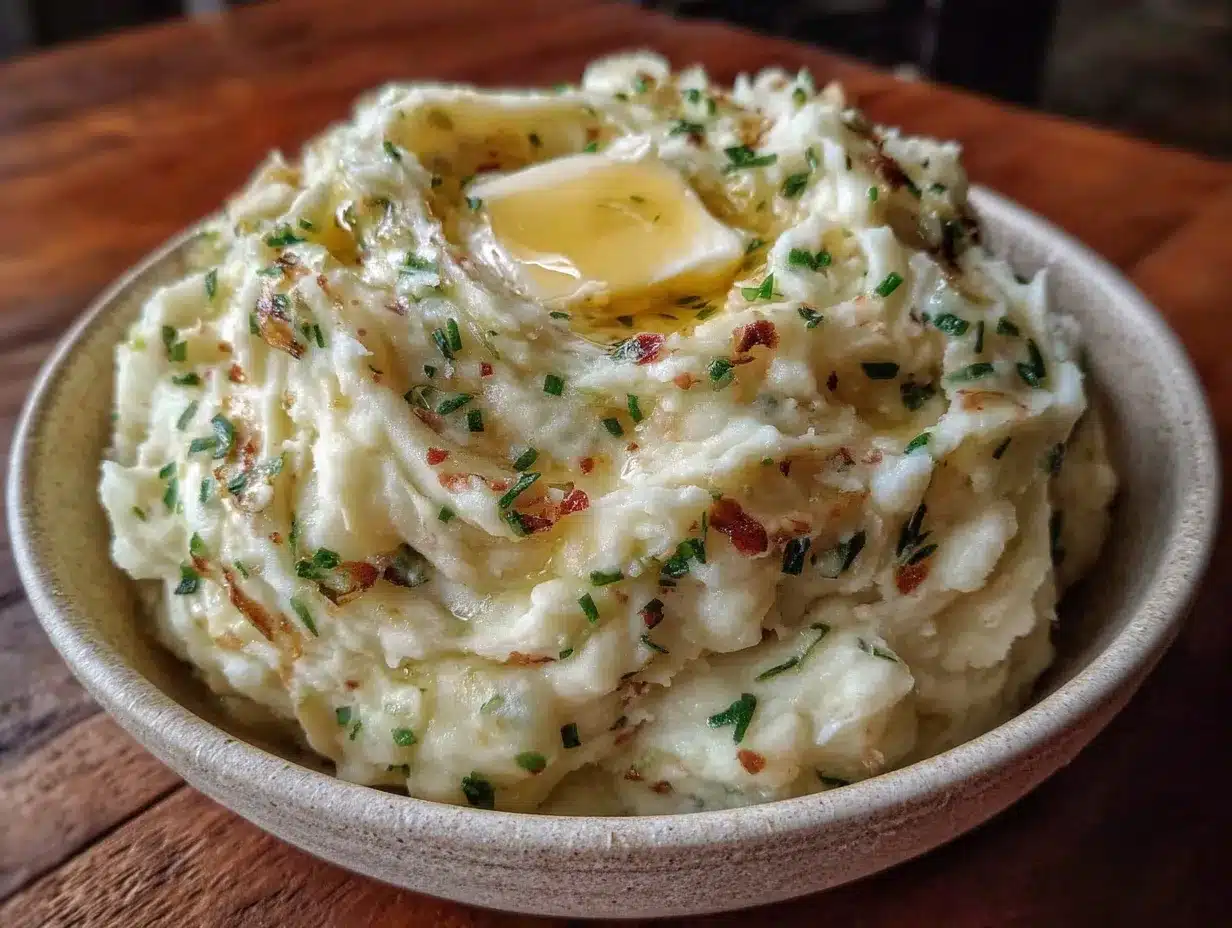
- Additional butter, 2 tablespoons — melted, for brushing the top before reheating.
- Extra fresh herbs — for garnish before serving.
A note on potatoes: Look for firm, smooth-skinned Russets without green patches or sprouts. If you’re shopping ahead, store them in a cool, dark place—not the fridge, which turns their starch to sugar and makes them taste sweet. For a dairy-free version, swap the butter for vegan butter, the cream for full-fat coconut milk, and the sour cream for a plant-based alternative.
Equipment Needed
You don’t need fancy gadgets for this recipe, but the right tools make the job easier. I’ve made these in three different kitchens, and here’s what I’ve learned.
- Large stockpot (at least 6 quarts) — for boiling the potatoes. A Dutch oven works beautifully too.
- Colander — for draining. A fine-mesh strainer is fine, but a colander lets the steam escape faster.
- Potato ricer or food mill — this is my non-negotiable tool. A ricer gives you the smoothest, fluffiest mash without overworking the potatoes. I use a stainless steel OXO model that cost about $25. If you don’t have one, a hand masher works, but expect a chunkier texture.
- Large mixing bowl — for combining everything. Metal or glass is fine.
- Rubber spatula — for folding in the herbs without deflating the potatoes.
- 9×13-inch baking dish — for holding the potatoes before reheating. An 8×8 dish works if you want a thicker layer.
- Aluminum foil — for covering during storage and reheating.
- Instant-read thermometer — optional but helpful for checking the internal temperature during reheating.
Budget-friendly tip: If you don’t own a ricer, use a hand masher and accept the rustic texture. My grandmother never owned a ricer, and her potatoes were legendary. Just don’t use a food processor—that turns potatoes into glue.
Preparation Method
This method breaks down into three phases: cooking the potatoes, making the mash, and prepping for make-ahead storage. Take your time with the first phase—it sets the foundation for everything.
Phase 1: Cook the Potatoes (45 minutes)
- Peel and cut the potatoes into 2-inch chunks. Keep them uniform in size so they cook evenly. As you cut, drop them into a bowl of cold water to prevent browning.
- Place the potatoes in your stockpot and cover with cold water by about 2 inches. Add 2 tablespoons of kosher salt to the water. This seasons the potatoes from the inside out.
- Bring to a boil over high heat, then reduce to a gentle simmer. Don’t boil aggressively—it can make the outsides mushy before the centers are done. Cook for 20-25 minutes, or until a knife slides into the largest chunk with no resistance.
- Drain the potatoes in a colander and let them sit for 2-3 minutes. This lets excess steam escape, which means less water in your final mash. Pro tip: Return the drained potatoes to the hot pot for 1 minute, shaking gently, to dry them out even more.
Phase 2: Make the Mash (15 minutes)
- While the potatoes are still hot, run them through a ricer into your large mixing bowl. Work in batches if needed. If you’re using a hand masher, mash until no large lumps remain.
- Add the softened butter and garlic confit cloves to the hot potatoes. Stir gently with a rubber spatula until the butter is fully melted and the garlic has broken down into the mash. The heat from the potatoes will do most of the work.
- Pour in the warmed heavy cream and milk in a slow, steady stream while stirring. Don’t dump it all at once—you want the dairy to incorporate evenly. The mixture will look loose at this point, but it will thicken as it cools.
- Fold in the sour cream until fully combined. This adds tang and helps with the make-ahead texture.
- Add the chopped parsley, chives, thyme, kosher salt, and white pepper. Stir gently—overmixing at this stage can make the potatoes gummy. Taste and adjust seasoning. You might need more salt than you think.
Phase 3: Prep for Make-Ahead (10 minutes)
- Transfer the mashed potatoes to your baking dish and spread them into an even layer. Smooth the top with a spatula.
- Brush the top with melted butter if using. This creates a protective layer that prevents a skin from forming during storage.
- Cover tightly with aluminum foil and let cool to room temperature on the counter. Don’t put hot potatoes directly into the fridge—that raises the temperature of everything around them.
- Once cooled, refrigerate for up to 3 days. The flavors actually improve as they sit.
Cooking Tips & Techniques
I’ve made every mistake in the book with make-ahead mashed potatoes. Here’s what I learned the hard way so you don’t have to.
The biggest mistake is under-salting the cooking water. I did this my first three times. Potatoes absorb salted water as they cook, and that’s your only chance to season them from the inside. If you add salt only at the end, the potatoes taste flat no matter how much you add. The water should taste like the sea—salty enough that you notice it.
Don’t overwork the potatoes. When you mash or stir too aggressively, you break down the starch cells and release too much starch. That’s what turns potatoes gluey. Use a gentle folding motion, and stop as soon as everything is combined. A few small lumps are better than a gummy texture.
Warm your dairy before adding it. Cold cream or milk hitting hot potatoes causes the starches to seize up, creating a dense, pasty mash. I microwave my cream and milk together for about 45 seconds until they’re warm to the touch. It takes almost no time and makes a real difference.
Let the potatoes cool completely before refrigerating. I once rushed this step because I was tired, and the next day the potatoes had a weird, watery layer on top. Patience pays off here. Spread them in the dish, cover them, and walk away for 30-45 minutes.
Reheat gently. When you’re ready to serve, take the dish out of the fridge and let it sit on the counter for 20 minutes to take the chill off. Then bake at 350°F, covered, for 30-35 minutes. Uncover for the last 10 minutes if you want a slightly golden top. If the potatoes seem dry after reheating, stir in a splash of warm milk or cream.
Variations & Adaptations
This recipe is a fantastic base for customization. Here are some variations I’ve tried and loved.
Dairy-Free Version: Use vegan butter, full-fat oat milk or coconut cream, and a dairy-free sour cream alternative. I’ve tested this with Miyoko’s European-style cultured vegan butter and it works beautifully. The texture is slightly less rich, but the garlic and herbs carry the flavor.
Roasted Garlic Version: If you don’t have garlic confit, roast 2 whole heads of garlic at 400°F for 40 minutes until soft and caramelized. Squeeze the cloves out of their skins and mash them into the butter before adding to the potatoes. The flavor is milder and sweeter than raw garlic.
Cheesy Make-Ahead Mash: Fold in 1 cup of shredded Gruyère or sharp white cheddar after the sour cream. The cheese adds richness and a slightly stretchy texture. I made this for a Christmas dinner and it disappeared faster than the turkey.
Herb Swaps: Use whatever fresh herbs you have on hand. Tarragon adds an anise-like note that’s lovely with roasted chicken. Rosemary is stronger, so use half the amount. Dill works well if you’re serving the potatoes with fish.
Vegan Variation: This is my personal favorite twist. Swap the sour cream for a tangy vegan version, use olive oil instead of butter, and add a splash of unsweetened almond milk. The olive oil gives the potatoes a slightly fruity note that pairs beautifully with the herbs.
Serving & Storage Suggestions
These potatoes are designed to be made ahead, but they’re just as good served fresh. Here’s how to handle both situations.
Serving temperature: Serve hot, straight from the oven. If you’ve reheated them, give them a gentle stir before bringing them to the table. Top with a pat of butter and a sprinkle of fresh herbs for a beautiful presentation.
What to serve alongside: These potatoes are the perfect side for roasted chicken, turkey, beef tenderloin, or even a hearty mushroom Wellington. I also love them with balsamic roasted vegetables for a complete meal. A simple green salad with lemon vinaigrette cuts through the richness beautifully.
Refrigerator storage: Keep covered in the baking dish for up to 3 days. The garlic and herb flavors actually meld and deepen overnight, so day-two potatoes can taste even better than day-one.
Freezer storage: These freeze well for up to 1 month. Transfer the cooled potatoes to a freezer-safe container or zip-top bag. To reheat, thaw overnight in the fridge, then bake covered at 350°F for 35-40 minutes, stirring halfway through. Add a splash of warm milk if they seem dry.
Reheating methods: Oven is best for large batches. For smaller portions, the microwave works in a pinch—cover the bowl and heat in 1-minute intervals, stirring between each, until hot. The stovetop is also fine; reheat gently in a saucepan over low heat, stirring frequently and adding a splash of milk if needed.
Flavor development: These potatoes are at their peak on day two. The garlic mellows, the herbs infuse deeper, and the texture remains creamy. I’ve made them three days ahead for Thanksgiving and they were the first dish emptied.
Nutritional Information & Benefits
Per serving (about 1 cup, based on 10 servings):
- Calories: 310
- Fat: 18g
- Carbohydrates: 34g
- Fiber: 3g
- Protein: 5g
- Sodium: 480mg
These potatoes offer more than just comfort. Russet potatoes are a good source of vitamin C, potassium, and vitamin B6. Garlic has been studied for its immune-supporting properties, and fresh herbs like parsley and thyme are rich in antioxidants. The butter and cream provide fat-soluble vitamins A, D, and K2—important for bone health and immune function.
This recipe is naturally gluten-free and can be made dairy-free with the substitutions listed above. It contains dairy and possible traces of gluten depending on your ingredient brands. For a lower-carb option, substitute half the potatoes with cauliflower—just steam and rice the cauliflower, then mix it with the potato mash.
I love that this recipe lets me enjoy comfort food without guilt. The potatoes are satisfying and nourishing, and the make-ahead nature means I can spend more time with my family and less time in the kitchen.
Conclusion
These Creamy Garlic Herb Make-Ahead Mashed Potatoes have become my go-to for every holiday and gathering. They’re rich, flavorful, and unbelievably forgiving—the kind of recipe that makes you look like a pro even when you’re juggling a dozen other dishes. Margaret’s napkin recipe changed my Thanksgiving forever, and I hope this version does the same for you.
Don’t be afraid to customize this recipe to your taste. Add more garlic, swap the herbs, make it dairy-free—the base technique is solid, and the variations are endless. The most important thing is that you enjoy the process and the people you share it with.
I’d love to hear how these turn out for you. Leave a comment below with your favorite herb combination or any adaptations you tried. And if you’re looking for other make-ahead side dishes, check out these honey glazed carrots that pair perfectly with this recipe. Happy cooking!
Frequently Asked Questions
Can I make these mashed potatoes more than 3 days ahead?
I recommend sticking to 3 days max for the best texture and flavor. Beyond that, the potatoes can develop a slight off-flavor and the texture may become watery. If you need to prep further ahead, freeze them instead.
Why did my make-ahead mashed potatoes turn out dry?
This usually happens if the potatoes weren’t fully cooked before mashing, or if they were overworked and released too much starch. Next time, make sure your potatoes are fork-tender, and add a splash of warm milk or cream when reheating to restore moisture.
Can I use a hand mixer instead of a ricer?
I don’t recommend it. A hand mixer can easily overwhip the potatoes, breaking down the starch cells and creating a gluey texture. A ricer or food mill gives you the fluffiest result with the least effort.
What’s the best way to reheat these potatoes without drying them out?
Cover the dish with foil and reheat at 350°F for 30-35 minutes. If they seem dry, stir in a few tablespoons of warm milk or cream before serving. Avoid high heat, which can cause the edges to dry out before the center is hot.
Can I leave the skins on the potatoes?
Absolutely. If you prefer a more rustic texture, scrub the potatoes well and leave the skins on. Just be aware that the skins can make the mash slightly denser and the color will be less uniform. I’ve done this with Yukon Golds and loved the result.
Pin This Recipe!
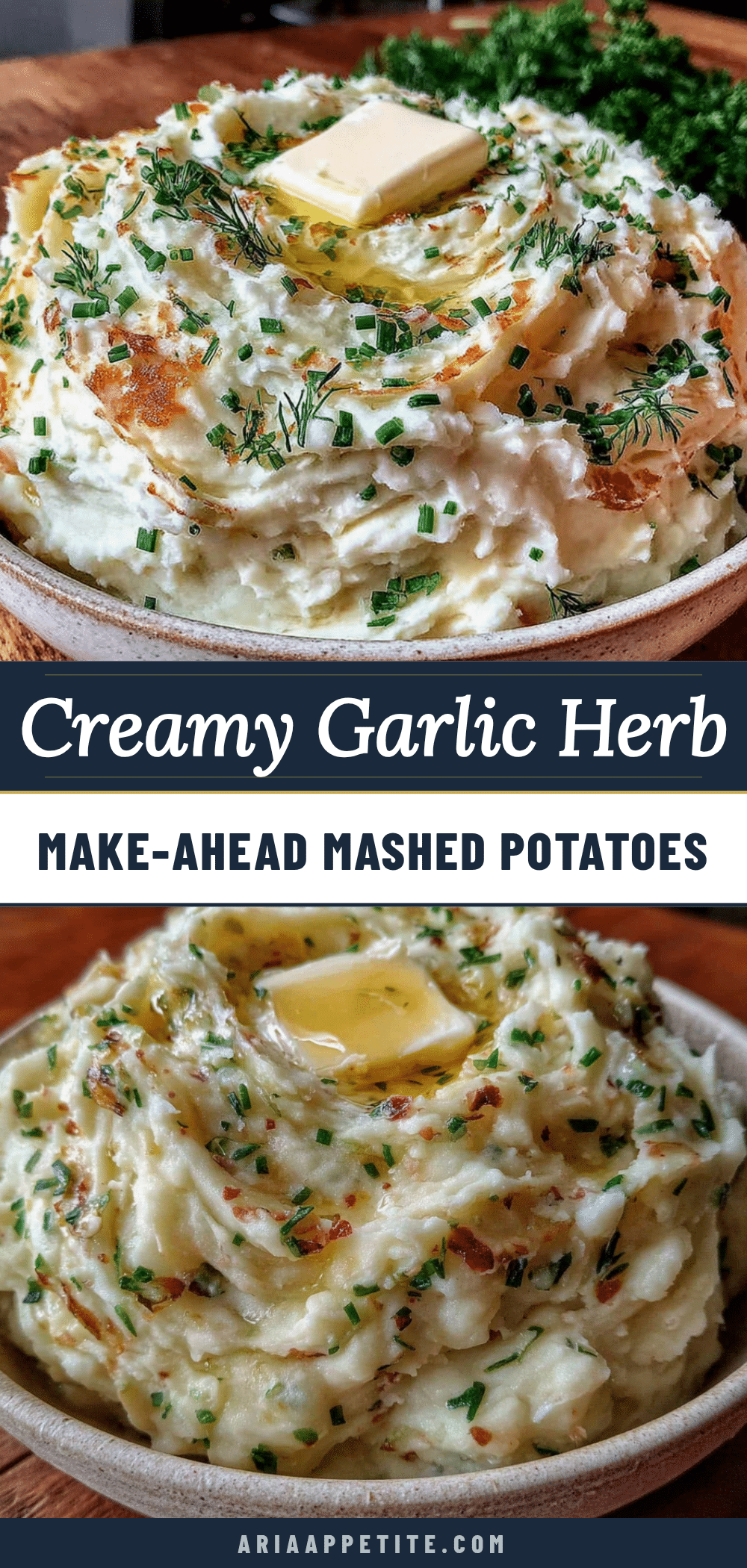
Creamy Garlic Herb Make-Ahead Mashed Potatoes

These make-ahead mashed potatoes are rich, garlicky, and herb-flecked, perfect for stress-free holiday hosting. Made with garlic confit and a gentle reheating method, they taste freshly made even after days in the fridge.
- Prep Time: 20 minutes
- Cook Time: 45 minutes
- Total Time: 1 hour 5 minutes
- Yield: 10 servings 1x
- Category: Side Dish
- Cuisine: American
Ingredients
- 4 pounds Russet potatoes (about 6–8 large), peeled and cut into 2-inch chunks
- 1/4 cup garlic confit (whole cloves, oil reserved)
- 1/2 cup unsalted butter (1 stick), softened
- 1 cup heavy cream, warmed
- 1/2 cup whole milk, warmed
- 1/2 cup sour cream, at room temperature
- 3 tablespoons fresh parsley, finely chopped
- 2 tablespoons fresh chives, finely chopped
- 1 tablespoon fresh thyme leaves
- 2 teaspoons kosher salt, plus more for cooking water
- 1/2 teaspoon white pepper
- 2 tablespoons additional butter, melted (for topping, optional)
- Extra fresh herbs for garnish (optional)
Instructions
- Peel and cut potatoes into 2-inch chunks. Place in a bowl of cold water to prevent browning.
- Place potatoes in a large stockpot and cover with cold water by about 2 inches. Add 2 tablespoons kosher salt. Bring to a boil over high heat, then reduce to a gentle simmer. Cook for 20-25 minutes until a knife slides into the largest chunk with no resistance.
- Drain potatoes in a colander and let sit for 2-3 minutes. Return to the hot pot for 1 minute to dry them out.
- While potatoes are still hot, run them through a ricer into a large mixing bowl.
- Add softened butter and garlic confit cloves to the hot potatoes. Stir gently until butter is melted and garlic is broken down.
- Pour in warmed heavy cream and milk in a slow, steady stream while stirring.
- Fold in sour cream until fully combined.
- Add chopped parsley, chives, thyme, kosher salt, and white pepper. Stir gently. Taste and adjust seasoning.
- Transfer mashed potatoes to a 9×13-inch baking dish and spread into an even layer. Brush top with melted butter if using.
- Cover tightly with aluminum foil and let cool to room temperature on the counter. Refrigerate for up to 3 days.
- To reheat: Remove from fridge and let sit at room temperature for 20 minutes. Bake covered at 350°F for 30-35 minutes. Uncover for the last 10 minutes if desired. If dry, stir in a splash of warm milk or cream.
Notes
For best results, use a potato ricer to avoid overworking the potatoes. Warm dairy before adding to prevent starch seizing. Potatoes can be made up to 3 days ahead and refrigerated. For dairy-free, use vegan butter, full-fat oat milk or coconut cream, and dairy-free sour cream. For a cheesy version, fold in 1 cup shredded Gruyère or sharp white cheddar after the sour cream.
Nutrition
- Serving Size: 1 cup
- Calories: 310
- Sugar: 2
- Sodium: 480
- Fat: 18
- Saturated Fat: 11
- Carbohydrates: 34
- Fiber: 3
- Protein: 5
Keywords: make-ahead mashed potatoes, garlic herb mashed potatoes, creamy mashed potatoes, holiday side dish, Thanksgiving mashed potatoes, make-ahead side dish