Love this? Save it for later!
Share the inspiration with your friends
“You know, it was the summer I turned fifty that I stumbled upon my neighbor’s garden gate wide open, the scent of fresh herbs and ripe tomatoes calling me in,” I recall with a smile. Mrs. Petrov, an immigrant grandma with the softest hands and the brightest laugh, was busy canning jars of sun-ripened goodness on her porch. She barely glanced up, humming an old folk tune, as she handed me a jar of her famous summer preserves—a recipe she’d carried all the way from her childhood home across the ocean.
Honestly, that unexpected invitation led me down a path of rediscovering the magic of cozy immigrant grandma summer recipes. These aren’t just any dishes; they’re warm, soulful treasures packed with history, sweat, and love. Mrs. Petrov’s methods—simple, unhurried, and steeped in tradition—felt like a bridge to a world where food wasn’t just sustenance but a story, a memory, a hug on a plate.
Maybe you’ve been there too—caught between the rush of modern life and a craving for something real, something that connects you to roots and family without the fuss. I remember fumbling with jars, almost dropping a batch of pickled cucumbers the first time I tried, getting interrupted by a curious cat, and laughing off my mess-ups. But each attempt brought me closer to that cozy, sunlit porch feeling.
This collection of recipes is my way of sharing those quiet, golden moments with you. These dishes, passed down through immigrant grandmas’ hands, are perfect for summer when the garden’s bounty begs to be preserved, celebrated, and savored. They’re not just food—they’re heritage in a jar and on the table, made easy to fit into your busy life but still full of soul.
Why You’ll Love These Cozy Immigrant Grandma Summer Recipes
After countless trials (and a few spills), these recipes have become my go-to for capturing summer’s fleeting flavors while honoring time-tested traditions. I’m not a professional chef, just someone who’s tasted the love and patience these recipes require—and trust me, it shows.
- Quick & Easy: Most recipes come together in under an hour, perfect for those summer afternoons when you’d rather be outside than stuck in the kitchen.
- Simple Ingredients: You won’t need exotic or hard-to-find items—just fresh, seasonal produce and pantry staples you likely have on hand.
- Perfect for Summer: These recipes make the most of the season’s bounty, whether it’s tomatoes, cucumbers, or fresh herbs, turning them into lasting treasures.
- Crowd-Pleaser: Every potluck or family gathering I’ve brought these to, the dishes vanish before I can sneak a second helping.
- Unbelievably Delicious: The delicate balance of flavors, like the tang of vinegar or the sweetness of summer fruits, honors the heritage while delighting modern palates.
What makes these recipes stand out is the way they blend heritage with ease. For instance, Mrs. Petrov’s pickling technique involves layering flavors gently—no rush, no fuss—resulting in a crisp bite with just the right hint of spice. Or the sun-dried tomato preserves that use a slow simmer, coaxing out intense flavors without overcomplicating the process.
Honestly, these recipes aren’t just about food—they’re about comfort. The kind of comfort that makes you close your eyes after the first bite and feel wrapped in a warm summer breeze from a distant home. Whether you’re preserving your own heritage or simply craving something soulful, this collection brings a little sunshine and a lot of heart to your kitchen.
What Ingredients You Will Need
This recipe collection uses straightforward, wholesome ingredients to create bold, nostalgic flavors that honor the past while fitting easily into your modern kitchen. Most are pantry staples or fresh garden finds, and substitutions are simple when needed.
- Fresh Summer Vegetables & Fruits: Tomatoes (preferably heirloom or Roma), cucumbers (pickling variety), summer squash, fresh herbs like dill and basil, and stone fruits such as peaches or plums. Look for firm, ripe produce for best results.
- Vinegars & Oils: White vinegar (5% acidity), apple cider vinegar, and extra virgin olive oil are essentials. I prefer Bragg’s apple cider vinegar for its bright flavor.
- Sweeteners: Granulated sugar, honey (local if possible), or brown sugar depending on the recipe’s balance.
- Spices & Seasonings: Mustard seeds, black peppercorns, garlic cloves, bay leaves, red pepper flakes, and coriander seeds. Keep these fresh in airtight containers to maintain their punch.
- Salt: Use kosher or sea salt—avoid iodized salt as it can cloud your preserves.
- Preserving Jars & Lids: Mason jars with new lids are crucial for safe storage and preserving that fresh-summer taste.
For dairy or gluten-free adaptations, many of these recipes are naturally friendly, but swapping honey for maple syrup or skipping any bread-based sides works well. In summer, I like to swap frozen berries for fresh in the jam recipes when they’re in season—it really brings out that garden-fresh vibe.
Equipment Needed
- Mason Jars and Lids: Essential for canning and preserving. I usually grab Ball brand jars—they’re reliable and widely available.
- Large Pot or Canning Pot: Needed for boiling water baths and simmering preserves. A stockpot with a lid works great too.
- Mixing Bowls: For preparing veggies and mixing ingredients.
- Sharp Knife and Cutting Board: Good knives make chopping quick and safe. I recommend investing in a sturdy chef’s knife if you don’t already have one.
- Measuring Cups and Spoons: Accuracy matters here—especially with vinegar and sugar ratios.
- Funnel: Helpful for filling jars without mess.
- Jar Lifter and Tongs: For safely handling hot jars during canning.
If you don’t have a canning pot, a large deep pot with a rack or folded kitchen towel to keep jars off the bottom will do. I’ve used a pasta pot successfully when in a pinch, though it can be a bit tight.
Preparation Method
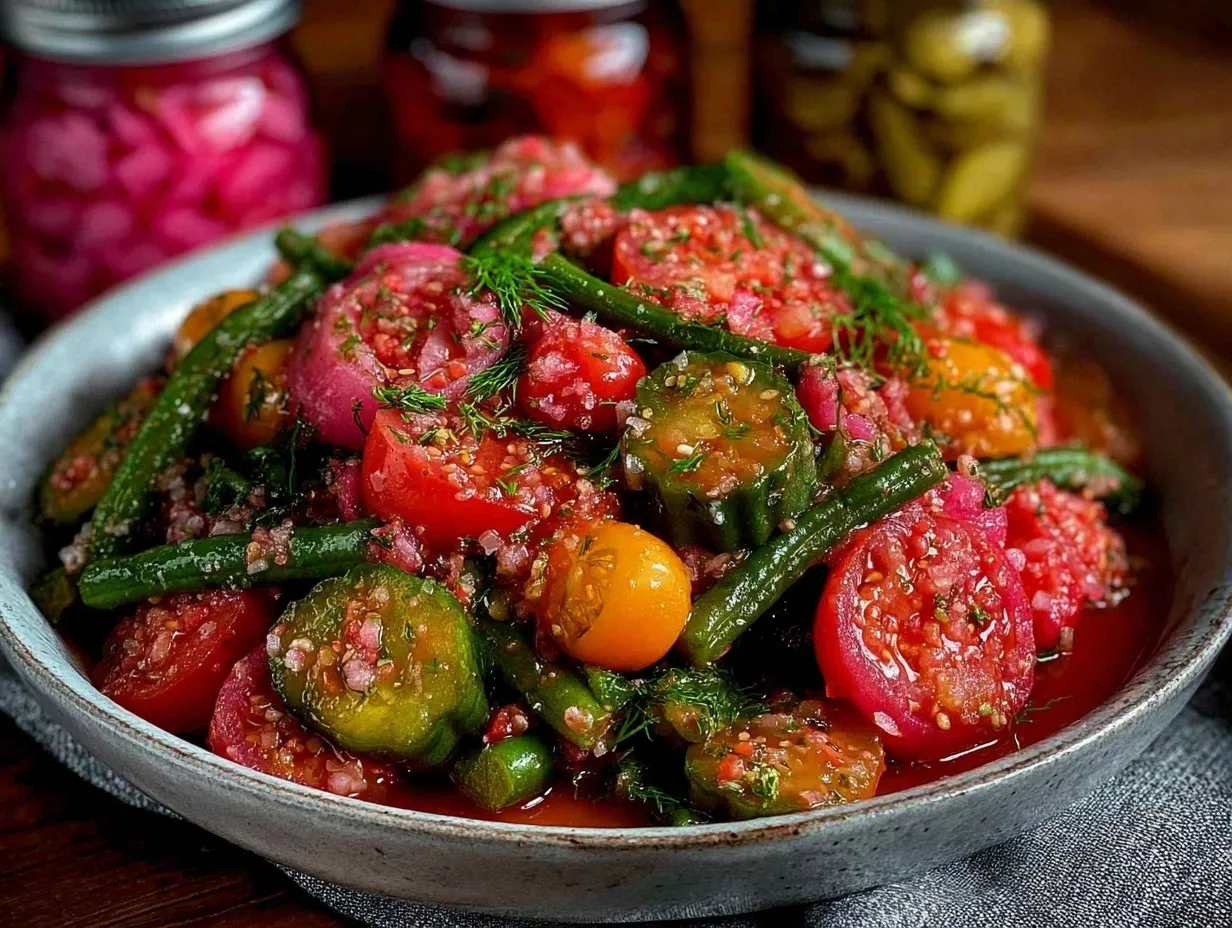
- Prepare Your Workspace: Clean your jars, lids, and tools with hot soapy water. Sterilize jars by boiling them in water for 10 minutes. This step is key to preventing spoilage.
- Wash and Chop Produce: Thoroughly rinse tomatoes, cucumbers, or fruits. Dice or slice according to the recipe—uniform pieces help everything cook evenly. For example, slicing cucumbers about 1/4 inch thick yields the perfect pickle crunch.
- Make the Brine or Syrup: Combine vinegar, water, sugar, and salt in a pot. Bring to a gentle boil, stirring to dissolve sugar and salt completely. This usually takes about 5-7 minutes.
- Pack Jars: Tightly pack your prepared veggies or fruits into sterilized jars. Tuck in spices like garlic cloves, dill sprigs, or peppercorns as the recipe calls for. Leave about 1/2 inch of headspace at the top to allow for expansion.
- Pour Hot Brine or Syrup: Carefully ladle the hot liquid over the produce, covering it completely. Remove air bubbles by gently tapping the jar or running a non-metallic spatula along the inside edges.
- Seal and Process: Wipe rims clean with a damp cloth. Place lids and screw bands on snugly but not overly tight. Process jars in a boiling water bath for the recommended time—typically 10-15 minutes—to seal and preserve.
- Cool and Store: Remove jars with a jar lifter and set on a towel to cool undisturbed for 12-24 hours. Check seals—lids should not flex when pressed. Store in a cool, dark place and wait at least a week before tasting to let flavors develop.
Pro tip: If your jars don’t seal immediately, don’t panic. Refrigerate and consume first. Also, the smell of vinegar and fresh herbs during boiling is oddly comforting—it’s like a gentle reminder of summers past.
Cooking Tips & Techniques
When I first started, I learned the hard way that rushing through the canning process leads to cloudy brine or soft pickles. Patience is your friend here—letting the jars cool undisturbed is crucial. Also, always double-check your vinegar acidity; less than 5% acidity can invite spoilage.
For crispier pickles, try soaking cucumbers in ice water for an hour before packing. It’s a trick Mrs. Petrov swore by, and honestly, it makes a huge difference. Another tip: layering garlic and dill between cucumber slices helps infuse flavor evenly.
Timing matters too—start early in the day to avoid rushing. Multitasking by prepping jars as you chop veggies keeps things flowing smoothly. I also recommend labeling jars with dates and contents, so you don’t accidentally open a year-old batch (been there, done that!).
Variations & Adaptations
- Spicy Pickles: Add extra red pepper flakes or a sliced jalapeño for a kick.
- Sweet Fruit Preserves: Swap stone fruits for summer berries and adjust sugar accordingly. I once tried peach-ginger preserves—unexpectedly delightful!
- Vegan-Friendly Glaze: Use maple syrup instead of honey in fruit preserves for a plant-based option.
- Low-Sodium Version: Reduce salt by half and add extra herbs for flavor compensation.
- Alternative Cooking Methods: For small batches, use the refrigerator pickle method—no boiling required, just patience!
One personal variation I adore is adding fresh mint to cucumber pickles. It gives a refreshing twist that’s perfect for summer salads or sandwiches.
Serving & Storage Suggestions
Serve these preserves chilled or at room temperature. Pickles are fantastic alongside grilled meats or hearty sandwiches, while fruit preserves shine on toast, yogurt, or even as a topping for cheesecake.
Store sealed jars in a cool, dark pantry for up to a year. Once opened, refrigerate and consume within 2-3 weeks for best flavor and safety. Reheating isn’t generally needed, but warming fruit preserves slightly enhances their aroma.
Flavors deepen over time—if you can resist opening a jar immediately! Some say the magic really happens after a month or two, when all those summer notes harmonize beautifully.
Nutritional Information & Benefits
These recipes are generally low in calories and fat but rich in flavor. The vinegar and salt content help preserve, but watch portions if you’re monitoring sodium intake. Fresh herbs add antioxidants and vitamins, making these preserves a smart choice for adding zest without guilt.
Using fresh garden produce means you’re getting fiber, vitamins A and C, and minerals like potassium. Plus, homemade preserves avoid the preservatives and additives found in many store-bought options.
For gluten-free or vegan diets, these recipes naturally fit right in—just be mindful of any sweetener substitutions if needed.
Conclusion
These cozy immigrant grandma summer recipes are more than just food—they’re a way to hold onto heritage, savor the season, and create moments of comfort and connection. Whether you’re new to preserving or a seasoned pro, these dishes invite you to slow down and taste the stories in every bite.
I love these recipes because they remind me that food is a kind of memory, a way to keep loved ones close no matter where life takes us. Try them out, tweak them to your taste, and make them your own. I’d love to hear how your kitchen adventures go—drop a comment or share your own heritage food stories!
Here’s to sunshine, jars full of summer, and the simple joy of good food made with love.
FAQs About Cozy Immigrant Grandma Summer Recipes
How long do these homemade preserves last?
Sealed jars stored in a cool, dark place typically last up to one year. Once opened, refrigerate and use within 2-3 weeks.
Can I use regular vinegar instead of apple cider vinegar?
Yes, white vinegar with 5% acidity works well in most recipes, but apple cider vinegar adds a milder, fruitier flavor.
Do I need special jars for preserving?
Standard Mason jars with new lids are best for safe preservation and sealing. Avoid reusing old lids to prevent spoilage.
Can I freeze these summer preserves instead of canning?
Freezing is possible for some fruit preserves but not recommended for pickles, as texture can suffer.
Is it okay to reduce the sugar in preserves?
You can reduce sugar slightly, but be cautious—sugar helps with preservation and flavor balance. Adjust carefully and refrigerate if unsure.
For more kitchen inspiration, you might appreciate the crispy garlic chicken recipe that pairs beautifully with fresh preserves or the hearty hearty vegetable stew that’s perfect for cozy nights after summer days.
Pin This Recipe!
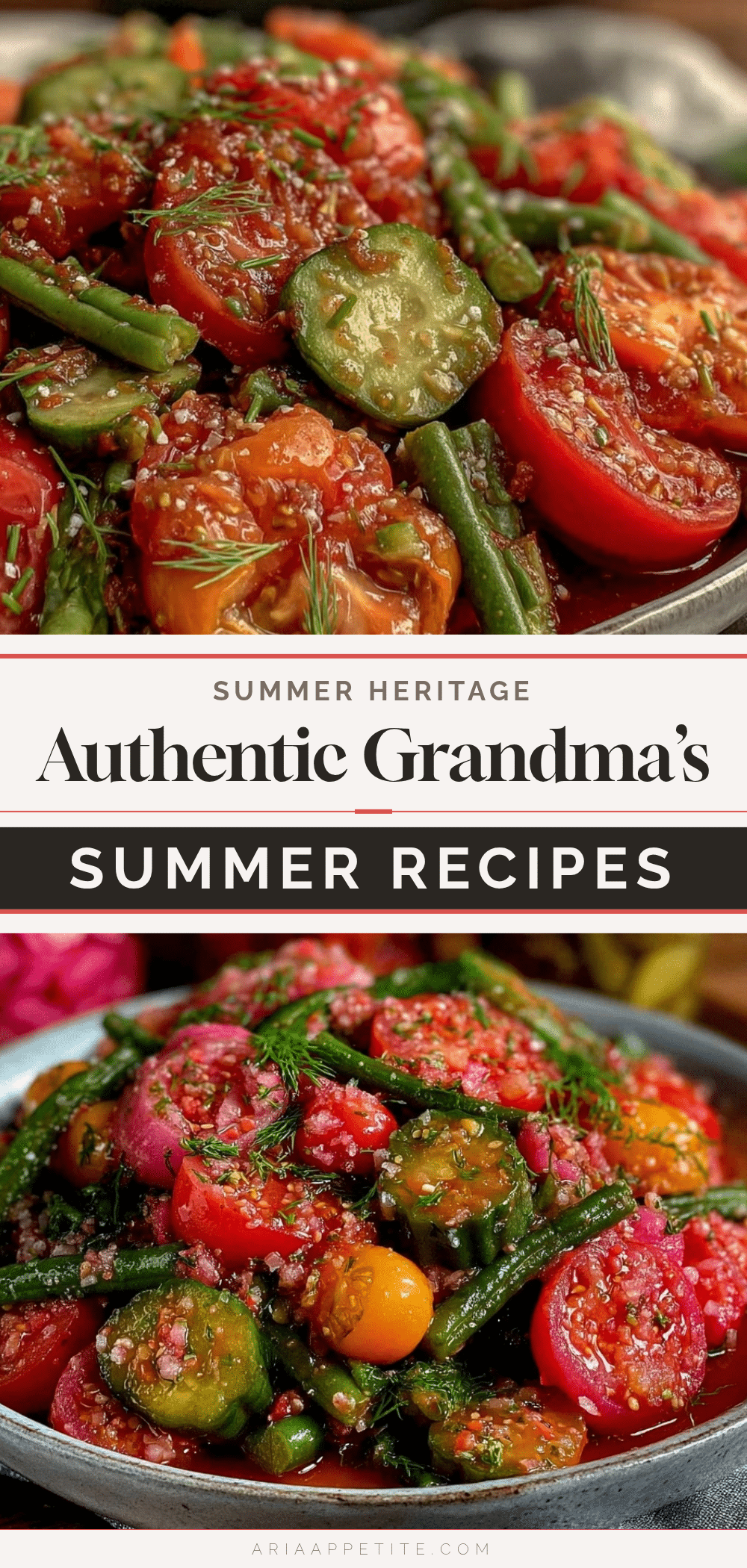
Cozy Immigrant Grandma Summer Recipes
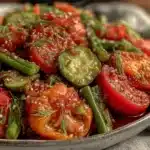
A collection of easy, heritage-inspired summer recipes focused on preserving fresh garden produce with traditional methods, perfect for capturing the season’s bounty and savoring soulful flavors.
- Prep Time: 20 minutes
- Cook Time: 15 minutes
- Total Time: 35 minutes
- Yield: About 4-6 jars (varies by recipe)
- Category: Preserves / Heritage Recipes
- Cuisine: Eastern European / Immigrant Heritage
Ingredients
- Fresh summer vegetables and fruits: heirloom or Roma tomatoes, pickling cucumbers, summer squash, fresh herbs like dill and basil, stone fruits such as peaches or plums
- White vinegar (5% acidity)
- Apple cider vinegar
- Extra virgin olive oil
- Granulated sugar
- Honey (local if possible)
- Brown sugar
- Mustard seeds
- Black peppercorns
- Garlic cloves
- Bay leaves
- Red pepper flakes
- Coriander seeds
- Kosher or sea salt
- Mason jars with new lids
Instructions
- Prepare your workspace by cleaning jars, lids, and tools with hot soapy water. Sterilize jars by boiling them in water for 10 minutes.
- Wash and chop produce thoroughly. Dice or slice according to the recipe, e.g., slicing cucumbers about 1/4 inch thick for pickles.
- Make the brine or syrup by combining vinegar, water, sugar, and salt in a pot. Bring to a gentle boil, stirring to dissolve sugar and salt completely (about 5-7 minutes).
- Pack jars tightly with prepared veggies or fruits, tucking in spices like garlic cloves, dill sprigs, or peppercorns. Leave about 1/2 inch of headspace at the top.
- Pour hot brine or syrup over the produce, covering completely. Remove air bubbles by gently tapping the jar or running a non-metallic spatula along the inside edges.
- Seal jars by wiping rims clean, placing lids and screw bands on snugly but not overly tight. Process jars in a boiling water bath for 10-15 minutes to seal and preserve.
- Cool jars undisturbed on a towel for 12-24 hours. Check seals; lids should not flex when pressed. Store in a cool, dark place and wait at least a week before tasting.
Notes
Use vinegar with at least 5% acidity to prevent spoilage. For crispier pickles, soak cucumbers in ice water for an hour before packing. Label jars with dates and contents. If jars don’t seal, refrigerate and consume first. Flavors improve after at least one week and deepen over time.
Nutrition
- Serving Size: 1/4 cup of preserves
- Calories: 3050
- Sugar: 510
- Sodium: 200400
- Fat: 1
- Carbohydrates: 712
- Fiber: 12
- Protein: 1
Keywords: summer recipes, heritage food, preserving, pickles, fruit preserves, canning, immigrant grandma recipes, easy summer cooking, traditional preserves