Love this? Save it for later!
Share the inspiration with your friends
“You know, I never thought a simple bowl of stew could carry so much history,” my neighbor, Mrs. Jenkins, said one chilly afternoon as she stirred her pot. That stew was one of those cozy depression era recipes grandma loved for simple comfort—nothing fancy, just honest food that warmed you up from the inside out. I first tasted it during a random visit to her house, the kind you don’t plan but end up remembering forever. The kitchen smelled like a mix of slow-cooked onions and a hint of something smoky, the kind of aroma that pulls you in even before you ring the doorbell.
Honestly, these recipes aren’t about impressing anyone with exotic ingredients or elaborate steps. They were born from necessity, from a time when every scrap of food was precious. But let me tell you, the flavor and heart behind them have stuck with me ever since. Maybe you’ve been there—craving something that feels like a warm hug after a long day. That’s exactly why these dishes have stayed relevant, passed down like a secret handshake through generations.
One afternoon, as Mrs. Jenkins accidentally dropped a cracked bowl (don’t ask me how—her kitchen can get a bit chaotic), she laughed and said, “This stew isn’t just food; it’s a memory.” And that’s the magic of these cozy depression era recipes grandma loved for simple comfort—they whisper stories of resilience, creativity, and love in every bite.
Why You’ll Love This Recipe
After years of testing and tweaking these depression era recipes, I can say with confidence that they’re absolute gems for your comfort food repertoire. These dishes have been family-approved and kitchen-tested, making them trustworthy options when you want something that’s both nostalgic and satisfying.
- Quick & Easy: Most of these recipes come together in under 45 minutes, perfect for busy weeknights or those evenings when you just want to curl up with a hearty meal.
- Simple Ingredients: You won’t need any fancy or hard-to-find items. These recipes rely on pantry staples like flour, potatoes, and canned goods—ingredients you probably have on hand already.
- Perfect for Cozy Evenings: Whether it’s a rainy Sunday or a chilly winter night, these meals feel like a warm blanket on the plate.
- Crowd-Pleaser: They’ve been known to satisfy both kids and adults alike—no complaints, just contented sighs.
- Unbelievably Delicious: The balance of flavors and textures is something you don’t expect from such humble ingredients. It’s comfort food, redefined by simplicity.
What really sets these recipes apart is their soul. For example, the way you slowly simmer a pot roast with just a few herbs and root vegetables creates a depth you won’t find in rushed meals. Or how a simple cornbread can have a crispy crust with a tender crumb, all without any fuss. These aren’t just recipes; they’re little time capsules that bring a slice of history to your table.
What Ingredients You Will Need
This collection of cozy depression era recipes grandma loved for simple comfort relies on humble, easy-to-find ingredients. They come together to create hearty, satisfying dishes without the fuss. Most items are pantry staples, and substitutions are simple if you need to make adjustments.
- For the Stew and Main Dishes:
- Beef chuck or stew meat (about 2 lbs / 900 g) – great for slow cooking and tender results
- Onions, diced (2 medium) – adds savory depth
- Carrots, peeled and chopped (3 medium) – for sweetness and texture
- Potatoes, peeled and cubed (4 medium) – the classic comfort filler
- Garlic cloves (3, minced) – brings a subtle punch
- Bay leaves (2) – for aroma
- Beef broth or stock (4 cups / 950 ml) – I prefer homemade or low-sodium brands like Swanson
- Salt and black pepper – to taste
- For the Breads and Sides:
- All-purpose flour (2 cups / 250 g) – I recommend King Arthur for consistent results
- Baking powder (1 tbsp) – helps with rise
- Granulated sugar (2 tbsp) – balances flavors
- Salt (1 tsp) – essential for seasoning
- Milk (1 cup / 240 ml) – whole or 2%, or use almond milk for dairy-free
- Butter or vegetable shortening (4 tbsp / 60 g), softened – adds tenderness
- Egg (1 large) – room temperature
- For the Simple Desserts:
- Apples (3 medium), peeled and sliced – perfect for cobblers or crisps
- Cinnamon (1 tsp) – warms up the flavor
- Brown sugar (½ cup / 100 g) – adds richness
- Old-fashioned oats (¾ cup / 75 g) – for topping texture
- Nutmeg (a pinch) – optional, but delightful
Seasonal swaps are easy: in summer, fresh berries can replace apples in desserts, and canned vegetables can substitute fresh when needed. For gluten-free versions, almond or oat flour works well for bread recipes, though the texture will differ slightly. Honestly, I’ve found that sticking close to the original ingredients keeps the nostalgic vibe, but feel free to experiment based on what you have!
Equipment Needed
Cooking these cozy depression era recipes grandma loved for simple comfort doesn’t require fancy gadgets, but a few kitchen tools will make the process smoother.
- Large Dutch Oven or Heavy Pot: Essential for simmering stews slowly. I’ve tried regular saucepans, but the Dutch oven’s heat retention is unbeatable.
- Mixing Bowls: For combining doughs and batters. Glass or stainless steel works fine, but avoid plastic if you want better mixing control.
- Wooden Spoon or Silicone Spatula: Durable and gentle on cookware. My old wooden spoon has seen better days but still does the job!
- Baking Dish (9×9 inches / 23×23 cm): Perfect for cobblers and baked sides. If you don’t have one, a cast-iron skillet can be a good alternative.
- Measuring Cups and Spoons: For accuracy, especially in baking. If you’re on a budget, inexpensive plastic sets work just fine.
- Knife and Cutting Board: A sharp chef’s knife makes prep faster and safer. Remember to keep your blades sharp—dull knives are more dangerous!
While these tools keep things authentic, I once made a stew in a slow cooker when I was pressed for time—it turned out delicious, but I missed the thick, caramelized edges the Dutch oven gives. So, if you have the chance, stick with classic cookware for that true cozy feel.
Preparation Method
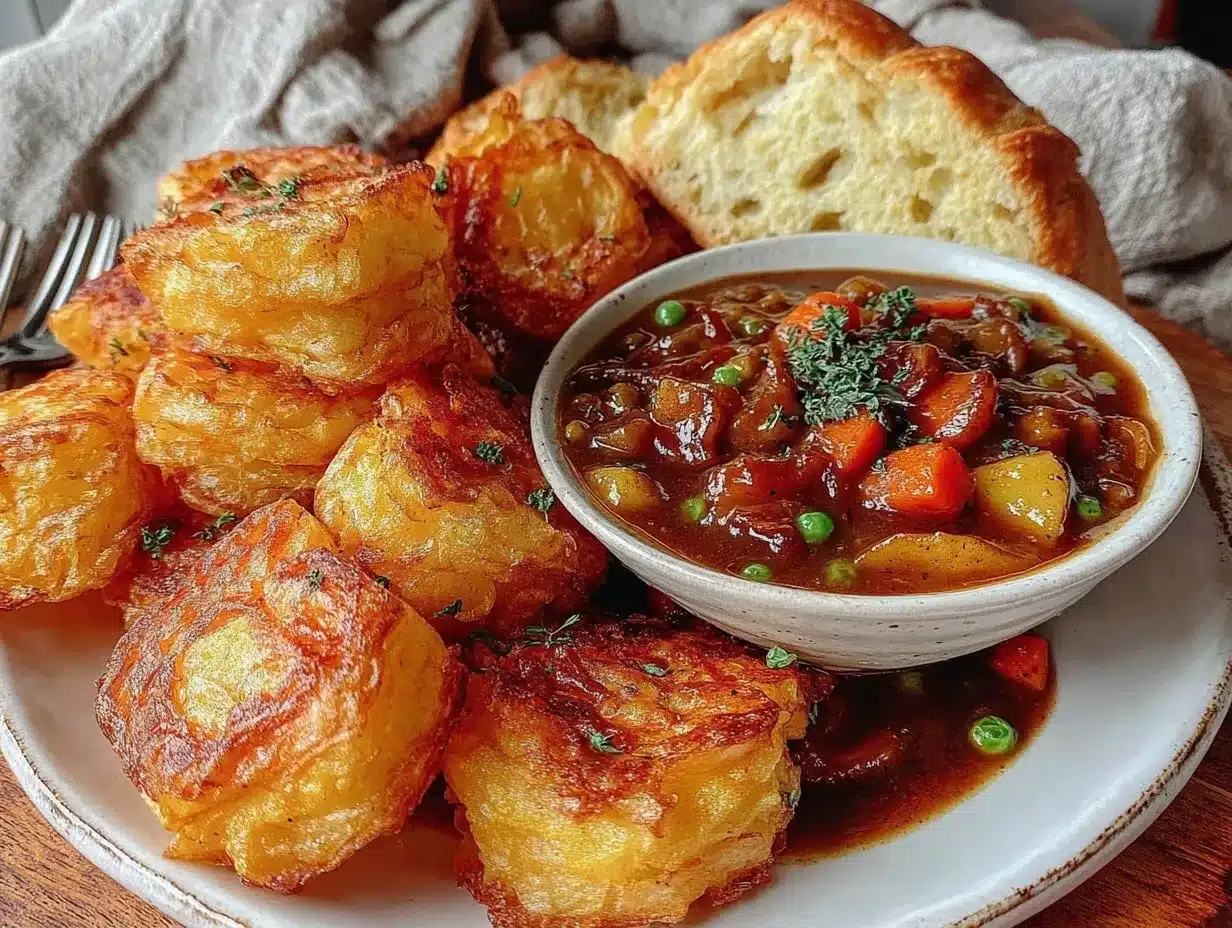
- Prepare the Meat and Vegetables (15 minutes): Pat the beef dry with paper towels, then cut into 1½-inch (3.8 cm) cubes. Peel and chop onions, carrots, and potatoes into similar bite-sized pieces. Mince garlic cloves. This step sets the stage for even cooking and flavor.
- Brown the Beef (10 minutes): Heat 2 tablespoons (30 ml) of oil or butter in your Dutch oven over medium-high heat. Add the beef cubes in batches, avoiding overcrowding. Brown all sides until a rich crust forms (about 3-4 minutes per batch). Don’t skip this—it locks in flavor and texture.
- Sauté Aromatics (5 minutes): Remove browned beef and set aside. In the same pot, add diced onions and garlic. Cook until translucent and fragrant, about 3-4 minutes. Scrape browned bits from the bottom—they’re flavor gold!
- Combine and Simmer (40 minutes): Return beef to pot. Add carrots, potatoes, bay leaves, beef broth, salt (start with 1 tsp), and pepper (½ tsp). Bring to a gentle boil, then reduce heat to low. Cover and simmer for 40 minutes, stirring occasionally. The stew should thicken and the meat tenderize.
- Prepare Bread Dough (10 minutes): While stew simmers, mix 2 cups (250 g) flour, 1 tbsp baking powder, 2 tbsp sugar, and 1 tsp salt in a bowl. Cut in 4 tbsp softened butter until mixture resembles coarse crumbs. Beat 1 egg with 1 cup (240 ml) milk, then stir into dry ingredients just until combined. Don’t overmix!
- Bake Cornbread (20-25 minutes): Pour batter into a greased 8-inch (20 cm) pan. Bake at 375°F (190°C) until golden brown and a toothpick inserted comes out clean. Cool slightly before slicing.
- Make Apple Crisp (15 minutes prep + 30 minutes bake): Toss sliced apples with ½ cup (100 g) brown sugar, 1 tsp cinnamon, and a pinch of nutmeg. Place in baking dish. Mix ¾ cup (75 g) oats with 3 tbsp butter and sprinkle over apples. Bake at 350°F (175°C) until bubbly and golden.
- Final Touches: Taste stew and adjust seasoning. Remove bay leaves before serving. Serve stew hot with cornbread and apple crisp on the side for a complete meal.
Pro tip: If your stew seems watery, uncover it during the last 10 minutes to help it thicken. Also, feel free to add a splash of Worcestershire sauce or tomato paste for extra depth—just don’t overdo it, or you’ll lose that classic simple charm.
Cooking Tips & Techniques
When working with these cozy depression era recipes grandma loved for simple comfort, a few tricks can make all the difference. First, never rush the browning of meat. I’ve learned the hard way that skipping this step leads to less flavor and a mushy texture.
Patience is key—low and slow simmering turns tough cuts tender. Stir occasionally but gently to keep the meat intact. Also, don’t be shy with seasoning; salt enhances flavors even in simple dishes.
For bread, cold butter cut into flour creates a tender, flaky crumb. When mixing wet and dry ingredients, fold gently—overmixing leads to dense, tough bread. I once ignored this and ended up with a brick, so trust me on this one!
Timing matters too. Start your dessert last so it’s fresh when served. Multitasking helps here—chop veggies while the meat browns, or mix dough during simmering. These small time savers keep everything flowing without chaos.
Finally, if you want a little extra flare, adding fresh herbs like thyme or parsley right before serving lifts the dish with brightness without complicating the core flavors.
Variations & Adaptations
These cozy depression era recipes grandma loved for simple comfort are incredibly flexible. Here are some ideas to tweak them to your taste or dietary needs:
- Vegetarian Stew: Replace beef with hearty mushrooms or lentils. Use vegetable broth and add a splash of soy sauce for umami.
- Gluten-Free Cornbread: Swap all-purpose flour with almond flour or a gluten-free blend. Expect a slightly different texture, but it works well!
- Seasonal Apple Crisp: In warmer months, use fresh peaches or berries instead of apples. Add a handful of chopped nuts for crunch.
- Slow Cooker Adaptation: For the stew, brown the beef and then transfer everything to a slow cooker. Cook on low for 6-8 hours for melt-in-your-mouth tenderness.
- Extra Comfort: Try stirring in a dollop of sour cream or plain yogurt into the stew when serving for creaminess.
Personally, I once added a touch of smoked paprika to the stew for a subtle smoky note that surprised my family. It’s small twists like these that keep the recipes feeling fresh while honoring their roots.
Serving & Storage Suggestions
These dishes are best served hot, ideally straight from the stove or oven to the table. The stew pairs beautifully with warm cornbread, which you can tear into chunks and dip right into the broth. For dessert, the apple crisp tastes amazing with a scoop of vanilla ice cream or a drizzle of cream.
Leftovers keep well. Store the stew in an airtight container in the fridge for up to 3 days. It actually tastes better the next day once the flavors meld. To reheat, warm gently on the stove or microwave, adding a splash of broth if it’s thickened too much.
Cornbread is best within a day or two but can be frozen wrapped tightly for up to 2 months. Reheat in a toaster oven to bring back the crispy edges. Apple crisp also freezes well, and reheating in the oven restores its lovely texture.
Serving tip: sprinkle fresh herbs on top before serving for a pop of color and freshness. A simple green salad or steamed greens complement these hearty meals nicely without stealing the spotlight.
Nutritional Information & Benefits
These cozy depression era recipes grandma loved for simple comfort offer a balanced mix of protein, carbohydrates, and fats with plenty of fiber from vegetables and whole ingredients. A typical serving of the beef stew with cornbread clocks in around 450-550 calories, depending on portion size.
Key benefits include:
- Protein: From beef or lentils, supporting muscle repair and energy.
- Complex Carbohydrates: Potatoes and cornbread provide long-lasting fuel.
- Fiber and Vitamins: Carrots, onions, and apples contribute antioxidants and aid digestion.
These recipes are naturally gluten-containing but easy to modify for gluten-free diets. They’re also free from added preservatives or artificial ingredients, making them wholesome comfort food you can feel good about.
Conclusion
Cozy depression era recipes grandma loved for simple comfort are more than just meals—they’re stories on a plate, reminders of simpler times when food was about nourishment and love. Whether you’re new to these dishes or revisiting old favorites, I hope you find the same joy and warmth I have in making and sharing them.
Feel free to tweak the recipes to your liking—add your favorite herbs, swap ingredients, or try a new cooking method. Cooking should be an adventure, even when the recipes come from a time of hardship.
I’d love to hear how your kitchen experiments go or any twists you come up with. Don’t hesitate to leave a comment or share your experience. Here’s to meals that comfort the body and soul, one cozy bite at a time!
FAQs
What makes depression era recipes so comforting?
They focus on simple, affordable ingredients cooked slowly to develop deep flavors, reminding us of home and warmth during tough times.
Can I prepare these recipes ahead of time?
Yes! Many of these dishes taste even better the next day as flavors blend. Just store them properly in the fridge and reheat gently.
Are these recipes suitable for beginners?
Absolutely. The steps are straightforward, and the ingredients are easy to find, making them great for cooks of all skill levels.
How can I make these recipes gluten-free?
Substitute all-purpose flour with almond flour or a gluten-free baking mix for breads. For stews and desserts, ensure any added ingredients are gluten-free.
What sides go well with these meals?
Simple salads, steamed greens, or roasted vegetables complement these hearty dishes nicely without overpowering their comforting flavors.
Pin This Recipe!
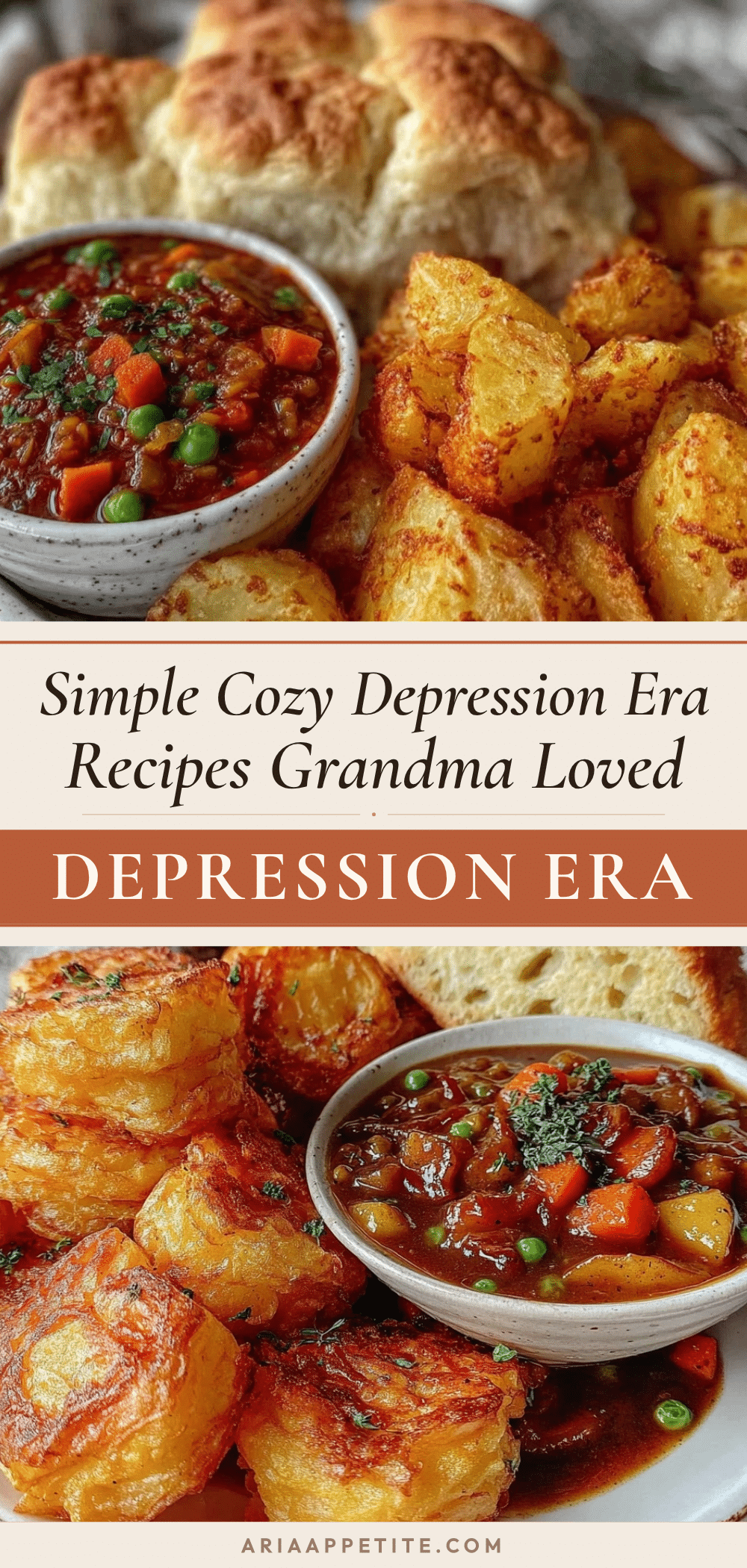
Cozy Depression Era Recipes Grandma Loved for Easy Comfort Food

These recipes are simple, nostalgic comfort foods from the Depression era, featuring hearty stews, cornbread, and apple crisp made with pantry staples and easy techniques.
- Prep Time: 25 minutes
- Cook Time: 1 hour 15 minutes
- Total Time: 1 hour 40 minutes
- Yield: 6 servings 1x
- Category: Main Course
- Cuisine: American
Ingredients
- 2 lbs beef chuck or stew meat
- 2 medium onions, diced
- 3 medium carrots, peeled and chopped
- 4 medium potatoes, peeled and cubed
- 3 garlic cloves, minced
- 2 bay leaves
- 4 cups beef broth or stock
- Salt and black pepper to taste
- 2 cups all-purpose flour
- 1 tbsp baking powder
- 2 tbsp granulated sugar
- 1 tsp salt
- 1 cup milk (whole or 2%, or almond milk for dairy-free)
- 4 tbsp butter or vegetable shortening, softened
- 1 large egg, room temperature
- 3 medium apples, peeled and sliced
- 1 tsp cinnamon
- ½ cup brown sugar
- ¾ cup old-fashioned oats
- Pinch of nutmeg
- 2 tbsp oil or butter (for browning beef)
- Optional: Worcestershire sauce or tomato paste for stew
- Optional: fresh herbs like thyme or parsley for garnish
Instructions
- Prepare the meat and vegetables: Pat beef dry and cut into 1½-inch cubes. Peel and chop onions, carrots, and potatoes into bite-sized pieces. Mince garlic.
- Brown the beef: Heat 2 tablespoons oil or butter in a Dutch oven over medium-high heat. Brown beef cubes in batches until crust forms, about 3-4 minutes per batch. Set aside.
- Sauté aromatics: In the same pot, add diced onions and garlic. Cook until translucent and fragrant, about 3-4 minutes, scraping browned bits from the bottom.
- Combine and simmer: Return beef to pot. Add carrots, potatoes, bay leaves, beef broth, 1 tsp salt, and ½ tsp pepper. Bring to a boil, then reduce heat to low. Cover and simmer for 40 minutes, stirring occasionally.
- Prepare bread dough: Mix flour, baking powder, sugar, and salt. Cut in softened butter until mixture resembles coarse crumbs. Beat egg with milk and stir into dry ingredients just until combined.
- Bake cornbread: Pour batter into greased 8-inch pan. Bake at 375°F (190°C) for 20-25 minutes until golden and toothpick comes out clean. Cool before slicing.
- Make apple crisp: Toss apples with brown sugar, cinnamon, and nutmeg. Place in baking dish. Mix oats with 3 tbsp butter and sprinkle over apples. Bake at 350°F (175°C) for about 30 minutes until bubbly and golden.
- Final touches: Taste stew and adjust seasoning. Remove bay leaves. Serve stew hot with cornbread and apple crisp.
Notes
If stew seems watery, uncover during last 10 minutes to thicken. Optional additions include Worcestershire sauce or tomato paste for extra depth. For gluten-free cornbread, substitute all-purpose flour with almond or gluten-free flour. Slow cooker adaptation: brown beef then cook on low 6-8 hours.
Nutrition
- Serving Size: 1 serving (approxima
- Calories: 500
- Sugar: 18
- Sodium: 600
- Fat: 18
- Saturated Fat: 7
- Carbohydrates: 55
- Fiber: 6
- Protein: 30
Keywords: depression era recipes, comfort food, stew, cornbread, apple crisp, easy recipes, nostalgic meals, simple ingredients