Love this? Save it for later!
Share the inspiration with your friends
I was standing in the spice aisle of a tiny bodega last Tuesday, looking for piloncillo, when the smell hit me. It wasn’t the cinnamon or the anise from the hanging bunches—it was the deep, earthy scent of Mexican chocolate, warm and almost smoky, wafting from a small display of Abuelita tablets near the register. And just like that, I was six years old, sitting cross-legged on the cold tile floor of my neighbor Mrs. Vega’s kitchen, watching her stir a wooden molinillo in a clay pot. The sound of that rhythmic twirling—clack, clack, clack—is still the most comforting noise I think I’ve ever heard.
Mrs. Vega wasn’t my grandmother, but she was the closest thing I had to one in that neighborhood. She’d call me in from the backyard when the air got crisp, her hands already dusted with masa harina. She’d pour the champurrado into little clay mugs, and I’d wrap my fingers around the warmth, waiting for the first sip. It was thick—almost like drinking warm pudding—and it had this way of making everything quiet and okay. I forgot, for a few minutes, that my mom was working late or that I’d lost my favorite jacket at school.
Honestly, I’ve spent years trying to get that exact taste back. The store-bought mixes are never right—too watery, too sweet, or missing that grainy, rustic texture. But last week, standing in that bodega, I grabbed a cone of piloncillo and a fresh disk of Mexican chocolate, and I decided I was going to figure it out. Maybe you’ve been there too—chasing a flavor from your past that feels just out of reach. Well, let me tell you, this recipe is the closest I’ve ever gotten. It’s the one I keep making, over and over, because it finally feels like coming home.
Why You’ll Love This Recipe
Let’s be real—there are a million hot chocolate recipes out there. But this champurrado is different. It’s not just a drink; it’s an experience. I’ve tested this recipe at least a dozen times, tweaking the ratios, trying different brands of masa harina, and even burning a batch or two (which, by the way, smells terrible and takes forever to clean off the stove). So trust me when I say this version is the one.
- Quick & Easy: You’ll have a steaming cup of comfort in under 30 minutes. Perfect for those chilly evenings when you need something warm, fast.
- Simple Ingredients: No trips to a specialty store required. You probably have most of this in your pantry already—milk, sugar, cinnamon. The piloncillo and masa harina are easy to find at most grocery stores now.
- Perfect for Cozy Nights: This is the drink you want when the rain is tapping on the windows, or when you’ve had a rough day and need a hug in a mug. It’s also amazing for holiday mornings or Dia de los Muertos gatherings.
- Crowd-Pleaser: Kids love the sweet, chocolatey flavor, and adults appreciate the rich, authentic taste. I’ve served this at family dinners and watched even the pickiest eaters ask for seconds.
- Unbelievably Delicious: The texture is what sets it apart—thick, velvety, and slightly grainy from the masa. It’s not watery like regular hot cocoa. It’s hearty enough to be a snack on its own.
What makes this recipe stand out is the technique. Most recipes just dump everything in a pot and hope for the best. But I’ve learned that blooming the masa harina in water first—letting it sit for a few minutes before adding the milk—makes all the difference. It prevents lumps and gives you that silky, smooth texture. Plus, I use a specific ratio of piloncillo to chocolate that’s not too sweet, with a little kick of cinnamon and vanilla. This isn’t just another version of champurrado. It’s the one that makes you close your eyes after the first sip.
What Ingredients You Will Need
This recipe uses simple, wholesome ingredients that come together to create something truly special. Most of these are pantry staples in my kitchen, and I bet they are in yours too—or at least, they should be! Here’s what you’ll need, along with a few notes from my own trials.
For the Champurrado Base
- 4 cups whole milk (adds richness; you can use 2% or oat milk for a lighter version, but whole milk gives the best creamy texture)
- 1 cup water (helps bloom the masa harina and prevents the milk from scorching)
- 1 disk (about 3.3 oz) Mexican chocolate, roughly chopped (I prefer Ibarra for its strong cinnamon notes, but Abuelita works too—just watch the sugar content)
- 1/2 cup piloncillo, grated or chopped (this unrefined cane sugar has a deep, molasses-like flavor. If you can’t find it, use 1/3 cup dark brown sugar, packed)
- 1/4 cup masa harina (not cornmeal! Look for Maseca or another fine-ground brand. This is the secret to the thick, comforting texture)
- 1 cinnamon stick (for infusing the milk; don’t skip this—it adds a warmth that ground cinnamon can’t replicate)
- 1/2 teaspoon vanilla extract (adds a floral note that rounds out the chocolate)
- Pinch of salt (trust me on this—it brightens all the flavors)
Optional Add-Ins
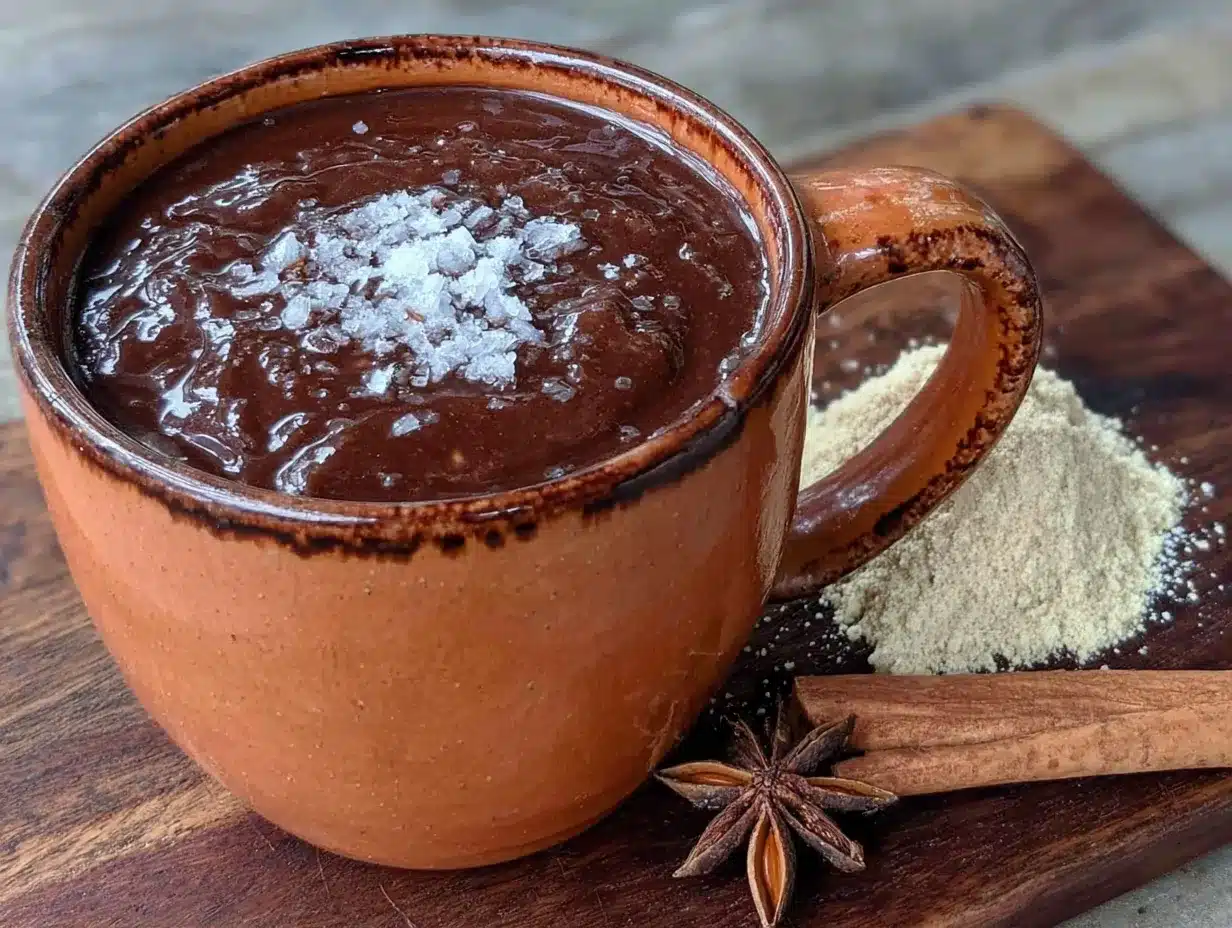
- 1 star anise (for a subtle licorice note that’s traditional in some regions)
- 1/4 teaspoon cayenne pepper or chili powder (if you like a little heat with your sweet)
- Whipped cream or marshmallows (for a more decadent, modern twist)
When choosing your Mexican chocolate, look for disks that are slightly grainy and have a strong cinnamon scent. I’ve tried a few brands, and I always come back to Ibarra—it has the perfect balance of sugar and cocoa. As for the masa harina, Maseca is my go-to. It’s finely ground and dissolves easily, which means fewer lumps. If you’re in a pinch, you can use cornstarch as a thickener, but the flavor and texture won’t be quite the same—it’ll be more like a pudding than a traditional champurrado.
Equipment Needed
You don’t need any fancy gadgets for this recipe, which is part of its charm. Here’s what I use, along with a few alternatives if you’re improvising.
- Medium saucepan (2-3 quart): A heavy-bottomed pot is best to prevent scorching. I use a stainless steel one, but enameled cast iron works beautifully too.
- Wooden spoon or molinillo: A molinillo is the traditional wooden whisk used to froth champurrado. It’s fun to use and creates a lovely foam, but a regular whisk or even a fork will do the job. I bought mine at a local Mexican market for $5, and it’s one of my favorite kitchen tools.
- Measuring cups and spoons: Precision matters here, especially with the masa harina. Too much and you’ll have glue; too little and it’ll be watery.
- Grater or knife: For the piloncillo. It’s rock-hard, so grating it is easier than chopping. I’ve cut my fingers more times than I’d like to admit trying to chop it with a chef’s knife—learn from my mistakes!
- Fine-mesh strainer (optional): If you end up with lumps (it happens), a quick strain will save the texture.
If you don’t have a molinillo, don’t worry. I’ve made this recipe dozens of times with just a whisk, and it turns out great. The key is to whisk vigorously at the end to incorporate some air and create that signature frothy top.
Preparation Method
Alright, let’s get to the good part. I’ve broken this down into clear steps, with all the little tricks I’ve picked up along the way. Take your time, and don’t rush—the best champurrado comes from patience.
- Bloom the masa harina. In a small bowl, whisk together the 1/4 cup masa harina and 1 cup of water until smooth. Let it sit for 5 minutes. This step is crucial—it allows the masa to hydrate and soften, which prevents lumps when you add it to the hot milk. I learned this the hard way after my first batch turned into a lumpy mess.
- Infuse the milk. In a medium saucepan, combine the 4 cups of whole milk and the cinnamon stick. Heat over medium heat until it’s steaming but not boiling—about 5 minutes. You want small bubbles around the edges, not a rolling boil. If it boils, the milk can scorch and get a weird, burnt taste. Trust me, I’ve ruined a few batches this way.
- Add the chocolate and piloncillo. Reduce the heat to low. Add the chopped Mexican chocolate and the grated piloncillo to the warm milk. Stir gently with your wooden spoon or molinillo until both are fully dissolved. This should take about 3-4 minutes. The mixture will look dark and rich—like liquid velvet.
- Incorporate the masa slurry. Give the masa mixture a quick stir (it settles at the bottom), then pour it into the saucepan in a slow, steady stream while whisking constantly. This is the most important step—if you dump it all in at once, you’ll get lumps. Keep whisking for about 2 minutes until the mixture thickens. You’ll notice it go from watery to a thick, pudding-like consistency. It should coat the back of a spoon.
- Simmer and stir. Continue cooking the champurrado over low heat for another 5-7 minutes, stirring frequently. Don’t walk away! The masa can settle at the bottom and burn easily. You want it to be thick but still pourable. If it gets too thick, add a splash of milk or water to thin it out.
- Add the vanilla and salt. Remove the saucepan from the heat. Fish out the cinnamon stick (and star anise if you used it). Stir in the 1/2 teaspoon of vanilla extract and the pinch of salt. The salt won’t make it salty—it just makes the chocolate taste more chocolatey. Give it a taste. Is it sweet enough? Add a little more piloncillo if needed. Is it thick enough? Simmer for another minute.
- Froth it up. If you have a molinillo, place it between your palms and spin it back and forth vigorously for about 30 seconds. If you’re using a whisk, do the same thing—whisk like crazy until a frothy foam forms on top. This is the hallmark of a good champurrado. It should look like a thick, creamy hot chocolate with a cap of foam.
- Serve immediately. Pour the champurrado into your favorite mugs. I like to use small clay mugs (called jarritos) if I have them—they keep the drink warm longer. Serve hot, with a sprinkle of cinnamon on top if you’re feeling fancy.
Cooking Tips & Techniques
I’ve made this recipe more times than I can count, and I’ve definitely made my share of mistakes. Here are the things I wish someone had told me when I started.
Don’t rush the blooming step. I know it’s tempting to skip it and just dump the masa in, but trust me—taking those extra 5 minutes to let it hydrate is the difference between a silky drink and a lumpy one. The first time I made champurrado, I was in a hurry and ended up with little balls of raw masa floating in my mug. Not cute.
Watch your heat. Milk is a diva—it scorches easily. Keep the heat at medium-low once you add the milk, and stir often. If you see the milk starting to bubble aggressively, turn the heat down immediately. I once got distracted by a phone call and came back to a pot of burnt milk that smelled like regret.
Grate the piloncillo. I cannot stress this enough. Trying to chop a rock-hard cone of piloncillo with a knife is a recipe for disaster (and possibly a trip to the ER). Use the large holes of a box grater instead. It takes a little elbow grease, but it dissolves so much faster. I keep a chunk of piloncillo in my pantry just for this recipe, and I grate it straight into the pot.
Multitask strategically. While the milk is infusing with the cinnamon, you can grate the piloncillo and chop the chocolate. That way, everything is ready to go when you need it. I’ve learned to prep all my ingredients before I start cooking—it makes the whole process so much smoother.
For a consistent result, use the same brand every time. Different brands of Mexican chocolate have different sugar and cocoa ratios. Ibarra is my favorite because it’s less sweet and has a stronger cinnamon flavor. If you switch to Abuelita, you might need to adjust the piloncillo amount. Keep notes on what works for you!
Variations & Adaptations
One of the best things about champurrado is how adaptable it is. Here are a few variations I’ve tried and loved.
- Dairy-Free Version: Swap the whole milk for oat milk or canned coconut milk. Oat milk gives a creamy texture that’s closest to dairy. Coconut milk adds a slight tropical note that pairs beautifully with the cinnamon. Just be aware that it will be thinner than the traditional version.
- Spicy Champurrado: Add a pinch of cayenne pepper or a small dried guajillo chile (seeds removed) while the milk is infusing. The heat sneaks up on you and lingers in the most pleasant way. I made this for a friend who loves spicy food, and she said it was the best hot chocolate she’d ever had.
- Extra Thick Version: Increase the masa harina to 1/3 cup for a pudding-like consistency. This is perfect for dipping churros or conchas into. It’s almost like a warm, drinkable pudding.
- Mocha Champurrado: Stir in 1-2 tablespoons of instant espresso powder along with the chocolate. The coffee deepens the chocolate flavor without making it taste like coffee. This is my go-to for lazy Sunday mornings when I need a little caffeine boost.
- Kid-Friendly Version: Skip the piloncillo and use 1/4 cup of brown sugar instead. Add a handful of mini marshmallows on top. My nephew calls this “hot chocolate soup,” and he asks for it every time he visits.
Serving & Storage Suggestions
Champurrado is best served fresh and hot, but there are ways to enjoy it later too. Here’s what I’ve learned.
Serving: Pour the champurrado into small mugs—it’s rich, so you don’t need a huge portion. Serve it with a side of authentic conchas for dipping, or with churros. The combination of the thick, chocolatey drink and the soft, sugary bread is pure heaven. I also love serving it alongside easy chicken tamales for a full, comforting meal.
Temperature: It should be served steaming hot. If it cools down, it will thicken significantly. You can reheat it gently on the stove with a splash of milk to thin it out.
Storage: Leftover champurrado will keep in an airtight container in the refrigerator for up to 3 days. The texture will change—it will get thicker and may separate slightly. Don’t worry, that’s normal! Just give it a good whisk or blitz it in a blender before reheating.
Reheating: Reheat on the stovetop over low heat, stirring constantly. Add a splash of milk or water to bring it back to the right consistency. You can also microwave it in 30-second bursts, stirring in between, but be careful—it can scorch easily. I usually add an extra splash of milk when reheating because it always thickens up overnight.
Freezing: I don’t recommend freezing champurrado. The texture becomes grainy and watery when thawed. It’s really best enjoyed fresh or within a few days.
Flavor Development: Interestingly, the flavors meld and deepen overnight. I actually prefer day-old champurrado sometimes—the cinnamon and chocolate get even more pronounced. Just reheat it gently and whisk it well.
Nutritional Information & Benefits
Let’s be honest—champurrado is a treat, not a health food. But it does have some surprising benefits, especially when made with traditional ingredients.
- Estimated per serving (1 cup): Calories: 280, Fat: 12g, Carbs: 38g, Protein: 8g, Fiber: 2g, Sugar: 28g. (Note: This varies based on the brand of chocolate and milk you use.)
- Mexican chocolate is rich in antioxidants from the cocoa. It also contains iron, magnesium, and zinc. The cinnamon adds anti-inflammatory properties.
- Masa harina is made from corn that’s been treated with lime (calcium hydroxide), which increases the bioavailability of niacin and calcium. So you’re getting a little bit of bone-supporting calcium with every sip.
- Dietary considerations: This recipe is naturally gluten-free (check your masa harina label to be sure). To make it dairy-free, use oat milk. To make it vegan, use a vegan Mexican chocolate (some brands contain milk solids).
- Potential allergens: Contains dairy (if using milk) and corn. Mexican chocolate may contain traces of nuts or soy.
I’m not one to count calories obsessively, but I do appreciate knowing what’s in my food. This champurrado is a comfort drink—it’s meant to be enjoyed mindfully, not chugged. One cup is plenty to warm you up and satisfy your sweet tooth.
Conclusion
This champurrado is more than just a recipe to me. It’s a way to slow down, to reconnect with a memory that I can almost touch, and to share a piece of my past with the people I love. Every time I make it, I think of Mrs. Vega’s kitchen—the smell of cinnamon and corn, the clacking of the molinillo, the feeling of a warm mug in my cold hands.
I hope you give this recipe a try. Don’t stress about getting it perfect the first time—cooking is about learning and tasting and adjusting. Maybe you’ll add a little more cinnamon, or a splash of vanilla, or a pinch of chili. Make it your own. That’s the beauty of recipes—they’re just starting points.
I’d love to hear how yours turns out. Did you try a variation? Did it bring back a memory for you? Drop a comment below and let me know. And if you loved it, share it with a friend who needs a little warmth in their life. Until next time, stay cozy.
Frequently Asked Questions
Can I use cornstarch instead of masa harina?
You can, but it won’t be the same. Cornstarch will thicken the drink, but it won’t give you that distinct corn flavor and grainy texture that makes champurrado unique. If you’re in a pinch, use 2 tablespoons of cornstarch mixed with 1/4 cup cold water, and add it at the same step as the masa slurry. It’ll be more like a pudding, but it’ll still be tasty.
What if I can’t find piloncillo?
No problem! Use 1/3 cup of packed dark brown sugar instead. It has a similar molasses flavor, though it’s a bit sweeter and less complex. You can also use regular granulated sugar with a tablespoon of molasses stirred in. I’ve done this in a pinch, and it works surprisingly well.
Why is my champurrado lumpy?
This usually happens if you didn’t bloom the masa harina long enough, or if you added it too quickly to the hot milk. Don’t panic—just whisk it vigorously, or pour the whole thing through a fine-mesh strainer into a clean pot. It’ll smooth right out. Also, make sure your masa harina is fresh—old masa can clump up.
Can I make this in a slow cooker?
Yes! This is great for parties. Bloom the masa harina as directed, then combine all the ingredients (except the vanilla) in a slow cooker. Cook on low for 2-3 hours, stirring occasionally. Stir in the vanilla at the end, then whisk to froth. It stays warm for hours, which is perfect for a gathering.
Is champurrado the same as hot chocolate?
Not exactly. Regular hot chocolate is usually made with milk and cocoa powder or chocolate, and it’s thin and drinkable. Champurrado is thickened with masa harina, giving it a much thicker, almost porridge-like consistency. It’s also traditionally made with Mexican chocolate, which has cinnamon and sometimes almonds. Think of it as the cozy, hearty cousin of hot chocolate.
Pin This Recipe!
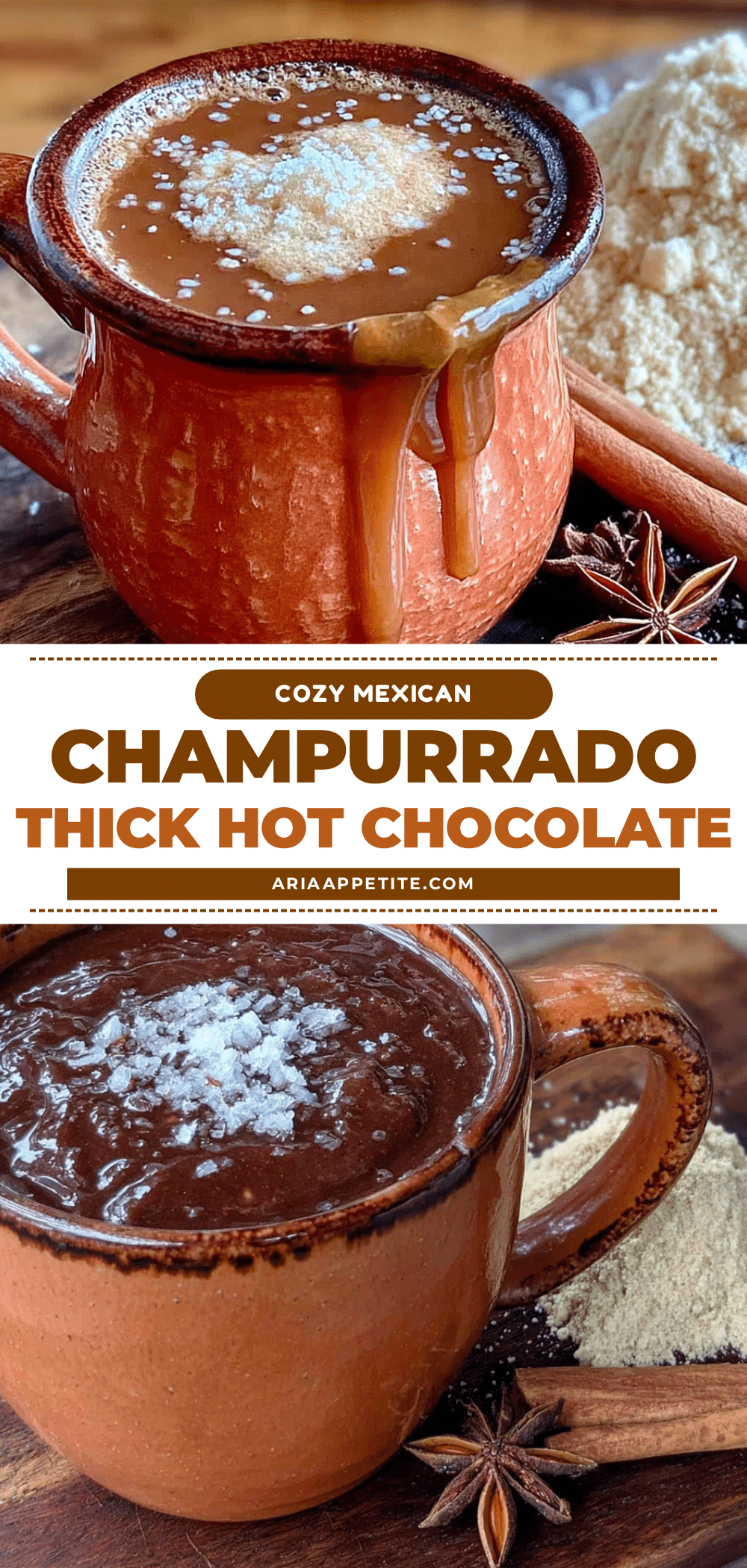
Cozy Champurrado: Best Thick Mexican Hot Chocolate Recipe
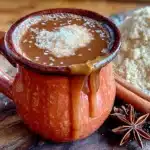
This thick, velvety Mexican hot chocolate is made with masa harina, piloncillo, and cinnamon for a comforting, authentic drink that’s like a hug in a mug.
- Prep Time: 10 minutes
- Cook Time: 20 minutes
- Total Time: 30 minutes
- Yield: 4 servings 1x
- Category: Beverage
- Cuisine: Mexican
Ingredients
- 4 cups whole milk
- 1 cup water
- 1 disk (about 3.3 oz) Mexican chocolate, roughly chopped
- 1/2 cup piloncillo, grated or chopped
- 1/4 cup masa harina
- 1 cinnamon stick
- 1/2 teaspoon vanilla extract
- Pinch of salt
- 1 star anise (optional)
- 1/4 teaspoon cayenne pepper or chili powder (optional)
- Whipped cream or marshmallows (optional)
Instructions
- In a small bowl, whisk together the 1/4 cup masa harina and 1 cup of water until smooth. Let it sit for 5 minutes to bloom.
- In a medium saucepan, combine the 4 cups of whole milk and the cinnamon stick. Heat over medium heat until steaming but not boiling, about 5 minutes.
- Reduce heat to low. Add the chopped Mexican chocolate and grated piloncillo to the warm milk. Stir until fully dissolved, about 3-4 minutes.
- Give the masa mixture a quick stir, then pour it into the saucepan in a slow, steady stream while whisking constantly. Continue whisking for about 2 minutes until the mixture thickens.
- Cook over low heat for another 5-7 minutes, stirring frequently, until thick but still pourable.
- Remove from heat. Remove the cinnamon stick (and star anise if used). Stir in the vanilla extract and salt.
- Froth the champurrado using a molinillo or whisk for about 30 seconds until a frothy foam forms on top.
- Serve immediately in small mugs, with a sprinkle of cinnamon on top if desired.
Notes
Bloom the masa harina first to prevent lumps. Grate the piloncillo instead of chopping it. Keep heat low to avoid scorching the milk. For a dairy-free version, use oat milk or coconut milk. Leftovers can be stored in the refrigerator for up to 3 days; reheat gently with a splash of milk.
Nutrition
- Serving Size: 1 cup
- Calories: 280
- Sugar: 28
- Sodium: 150
- Fat: 12
- Saturated Fat: 7
- Carbohydrates: 38
- Fiber: 2
- Protein: 8
Keywords: champurrado, Mexican hot chocolate, thick hot chocolate, masa harina, piloncillo, cozy drink, winter beverage