Love this? Save it for later!
Share the inspiration with your friends
The neighborhood block party was in three hours and I’d completely forgotten I signed up to bring a side dish. Everyone else would be showing up with their famous baked beans, grandma’s coleslaw, or those perfectly layered taco dips that take an hour to assemble. I had a box of rotini, a bell pepper that was starting to wrinkle, and half a bottle of Italian dressing that was probably a month past its prime. Let me tell you, I was in full panic mode. I mean, I’d seen my aunt make a classic pasta salad with Italian dressing a hundred times growing up, but I never actually wrote down her recipe. So I just started chopping and tossing, hoping for the best and bracing myself to be the person who brought the sad, dry pasta salad that everyone politely takes a spoonful of and then ignores. Honestly, I was already planning my apology.
But here’s the thing—that panicked, thrown-together bowl of pasta ended up being the first dish to disappear. People were coming back for seconds, asking for the recipe, and I had to sheepishly admit I just kind of made it up on the spot. It was one of those accidental wins that makes you feel like a culinary genius even though you were actually just desperate. The secret, I’ve since learned, is in the balance of textures and letting the simple ingredients do the talking. That classic pasta salad with Italian dressing has now become my go-to for every potluck, picnic, and lazy Sunday meal prep. It’s forgiving, it’s flexible, and it tastes even better the next day. Maybe you’ve been in that same spot—staring at your pantry with no plan and a hungry crowd to feed. If you have, this recipe is for you. It’s the kind of dish that saves the day without any fancy tricks or complicated steps.
Why You’ll Love This Recipe
After making this classic pasta salad with Italian dressing dozens of times—for everything from casual weeknight dinners to holiday barbecues—I can confidently say it’s a recipe that delivers every single time. It’s not just another pasta salad; it’s the one that people remember and request. Here’s why it stands out:
- Quick & Easy: From start to finish, this comes together in about 20 minutes. The only real cooking is boiling pasta, and the rest is just chopping and tossing. Perfect for those days when you need a dish fast.
- Simple Ingredients: You likely have most of these ingredients in your fridge and pantry right now. No special trips to the store for obscure items—just real, recognizable food.
- Perfect for Any Occasion: Whether it’s a summer BBQ, a potluck at work, a church picnic, or a simple side for grilled chicken, this salad fits right in. It’s versatile enough for any gathering.
- Crowd-Pleaser: I’ve served this to picky eaters, health-conscious friends, and kids who claim they don’t like vegetables. It always gets rave reviews. There’s something about that tangy dressing and the mix of textures that wins everyone over.
- Unbelievably Delicious: The key is letting the pasta absorb the dressing. It’s not just coated—it’s infused. The result is a pasta salad that’s flavorful, satisfying, and honestly, way better than anything you’d buy at the deli counter.
What makes this version different from the rest? It’s the technique of marinating the pasta while it’s still warm. This simple step allows the Italian dressing to soak into the pasta, creating a depth of flavor that cold-mixed salads just can’t match. Plus, I’ve balanced the vegetables and cheese perfectly so every bite has a little bit of everything. It’s comfort food that feels fresh and bright, and it’s the kind of recipe that makes you look like you spent way more effort than you actually did.
What Ingredients You Will Need
This recipe uses simple, wholesome ingredients that come together to create something truly special. The magic is in the combination of textures and the way the dressing brings everything together. Here’s what you’ll need:
For the Salad
- 1 pound (16 oz) rotini pasta – I prefer rotini because the spirals catch the dressing and the small vegetable pieces perfectly. Fusilli or penne work great too.
- 1 cup cherry tomatoes, halved – Use grape tomatoes if that’s what you have. They add a burst of sweetness and color.
- 1 medium cucumber, diced – I like to use English cucumbers because they have fewer seeds and a crisp texture. No need to peel them.
- 1 bell pepper, diced – Any color works, but I usually go with red or yellow for sweetness and visual appeal. Green bell peppers add a nice peppery bite.
- 1/2 cup red onion, finely diced – Red onion gives a mild, sweet onion flavor. If you’re sensitive to raw onion, soak the diced pieces in cold water for 10 minutes before adding.
- 1 cup black olives, sliced – Canned black olives are classic here. Kalamata olives would work for a more intense, briny flavor.
- 1 cup mozzarella pearls or cubed mozzarella – Fresh mozzarella adds a creamy, milky contrast to the tangy dressing. You can also use provolone or even cheddar in a pinch.
- 1/2 cup grated Parmesan cheese – The real stuff, not the green can. Freshly grated Parmesan adds a salty, nutty depth that’s irreplaceable.
For the Dressing
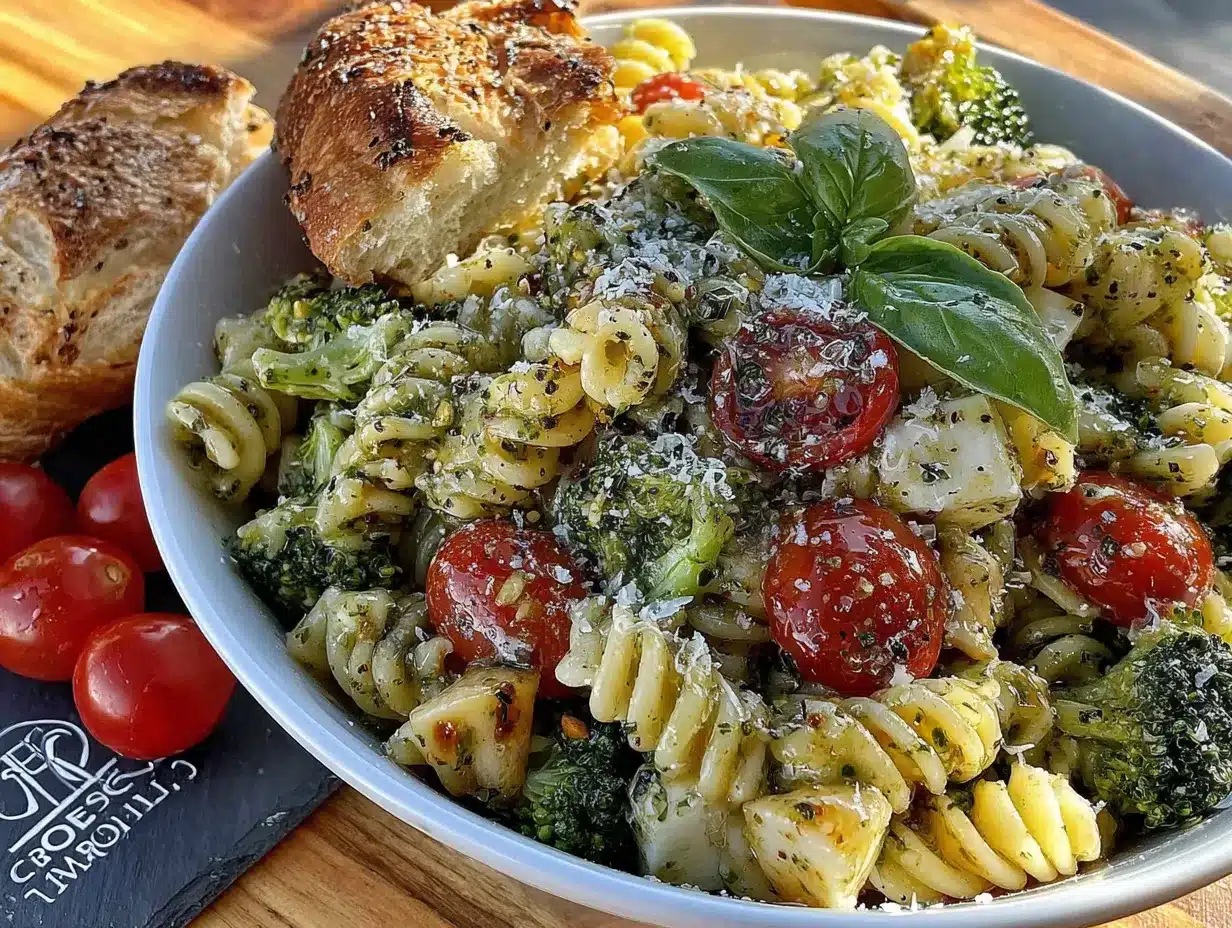
- 1 cup store-bought Italian dressing – I recommend a good quality brand like Newman’s Own or Ken’s Steakhouse. Look for one with visible herbs and no high-fructose corn syrup.
- 2 tablespoons red wine vinegar – This adds an extra punch of acidity that brightens the whole dish.
- 1 teaspoon dried oregano – For that classic Italian flavor profile. You can also use Italian seasoning blend.
- 1/2 teaspoon garlic powder – Not fresh garlic, which can be too sharp. Garlic powder blends seamlessly into the dressing.
- Salt and black pepper to taste – Go easy on the salt since the Parmesan and olives are already salty.
If you want to make your own Italian dressing from scratch, you absolutely can. Mix together 1/2 cup olive oil, 1/4 cup red wine vinegar, 1 tablespoon lemon juice, 1 teaspoon dried oregano, 1 teaspoon dried basil, 1/2 teaspoon garlic powder, 1/2 teaspoon onion powder, and salt and pepper to taste. Shake it up in a jar and you’re good to go. But honestly? The bottled stuff works beautifully for this recipe, and it saves time.
Equipment Needed
You don’t need a fancy kitchen to make this classic pasta salad with Italian dressing. Here’s what you’ll need:
- Large pot – For boiling the pasta. A 6-quart pot works well.
- Colander – For draining the pasta.
- Cutting board and sharp knife – For dicing the vegetables. A good chef’s knife makes the prep work quick and easy.
- Large mixing bowl – Big enough to hold all the ingredients and allow room for tossing. I use a 4-quart bowl.
- Measuring cups and spoons – For the dressing and ingredients.
- Wooden spoon or spatula – For mixing everything together.
- Optional: Salad spinner – If you’re washing fresh herbs or lettuce to serve alongside.
If you don’t have a large mixing bowl, you can use a Dutch oven or even a clean stockpot. The key is having enough space to toss everything without spilling. I’ve made this in a pinch using a disposable aluminum roasting pan for a big cookout, and it worked just fine. Don’t let the lack of fancy equipment stop you from making this.
Preparation Method
Let’s get into the nitty-gritty of making this pasta salad. Follow these steps, and you’ll have a dish that’s bursting with flavor and perfectly textured.
- Cook the pasta: Fill your large pot with water and bring it to a rolling boil. Add a generous tablespoon of salt—this is your only chance to season the pasta from the inside out. Add the rotini and cook according to package directions until al dente, usually about 8-10 minutes. For pasta salad, I like to cook it just a touch past al dente so it’s tender but still has a little bite. Overcooked pasta will get mushy once it absorbs the dressing.
- Prepare the dressing while the pasta cooks: In a small bowl or a jar with a tight-fitting lid, combine the store-bought Italian dressing, red wine vinegar, dried oregano, garlic powder, and a few grinds of black pepper. Shake or whisk until well combined. Set aside. This extra boost of flavor makes the dressing taste homemade.
- Drain and rinse the pasta: Once the pasta is cooked, drain it in a colander. Here’s a crucial step—rinse the pasta with cold water until it’s cool to the touch. This stops the cooking process immediately and removes excess starch that can make the salad gummy. Shake the colander well to remove as much water as possible.
- Marinate the warm pasta: Transfer the drained, cool pasta to your large mixing bowl. While it’s still slightly warm, pour about three-quarters of the dressing over it. Toss well to coat every piece. This is the secret step! Warm pasta absorbs the dressing like a sponge, creating a flavor base that cold pasta just can’t achieve. Let it sit for 5-10 minutes while you prep the vegetables.
- Prep the vegetables: While the pasta is marinating, dice your cucumber, bell pepper, and red onion. Halve the cherry tomatoes and slice the black olives. If you’re using mozzarella pearls, leave them whole. If you’re using a block of mozzarella, cut it into small cubes, about the same size as your vegetable pieces.
- Combine everything: Add the prepared vegetables, olives, mozzarella, and grated Parmesan to the bowl with the marinated pasta. Pour the remaining dressing over the top. Use a wooden spoon or spatula to gently fold everything together until it’s evenly distributed. Be careful not to break up the mozzarella too much.
- Season and adjust: Taste the pasta salad and adjust the seasoning. You might want a pinch more salt, some extra black pepper, or a splash more vinegar for acidity. Remember that the flavors will continue to develop as it sits, so don’t over-season now.
- Chill before serving (if time allows): Cover the bowl with plastic wrap or a lid and refrigerate for at least 30 minutes. This allows the flavors to meld together beautifully. If you’re in a rush, you can serve it immediately—it will still be delicious. But if you can wait, it’s worth it.
One thing I’ve learned the hard way: don’t add all the dressing at once if you’re making this ahead of time. The pasta will absorb the dressing as it sits, so you might need to add a splash more right before serving to revive it. Reserve a little extra dressing for that purpose.
Cooking Tips & Techniques
Over the years, I’ve made plenty of mistakes with pasta salad. Here are the lessons I’ve learned so you don’t have to repeat them:
- Don’t skip the rinse: I know some pasta purists say never to rinse pasta, but for cold pasta salad, it’s essential. Rinsing stops the cooking and removes the surface starch that would make your salad gluey. Trust me on this one.
- Salt your pasta water: This is non-negotiable. The pasta water should taste like the sea. If you don’t salt it, your pasta will be bland no matter how much dressing you add.
- Cut vegetables uniformly: Aim for bite-sized pieces that are all roughly the same size. This ensures every forkful has a balanced mix of ingredients. Nobody wants a huge chunk of onion in one bite and nothing but pasta in the next.
- Let it rest: Pasta salad is always better after it’s had time to sit. The flavors meld, the pasta absorbs the dressing, and the whole thing becomes cohesive. If you can, make it a few hours ahead or even the night before.
- Add cheese last: If you’re making this ahead, add the mozzarella and Parmesan just before serving. They can get soggy or weird if they sit in the dressing for too long. Keep them separate and fold them in at the last minute.
- Revive with a splash: If your pasta salad looks dry after sitting in the fridge, don’t panic. Just add a tablespoon or two of Italian dressing or a splash of red wine vinegar and toss well. It will come back to life.
I once made a double batch for a family reunion and forgot to rinse the pasta. It turned into a starchy, clumpy mess that I had to frantically try to fix by adding more dressing and oil. It was salvageable, but not my finest moment. Now I always, always rinse.
Variations & Adaptations
This classic pasta salad with Italian dressing is incredibly versatile. Here are some ways to make it your own:
- Add Protein: Turn this into a main dish by adding grilled chicken, salami, pepperoni, or even canned tuna. For a vegetarian option, add chickpeas or white beans. I love adding diced salami for an extra layer of savory flavor.
- Make it Gluten-Free: Simply swap the regular pasta for your favorite gluten-free pasta. Brown rice pasta or chickpea pasta work well. Just be careful not to overcook it, as gluten-free pasta can get mushy quickly.
- Go Dairy-Free: Omit the mozzarella and Parmesan, or use dairy-free alternatives. You can add more vegetables, like artichoke hearts or roasted red peppers, to compensate for the lost texture and flavor.
- Seasonal Swaps: In the summer, add fresh corn kernels, zucchini, or basil. In the fall, try roasted butternut squash cubes or chopped kale. The base recipe is a canvas for whatever vegetables you have on hand.
- Spice It Up: Add a pinch of red pepper flakes or a diced jalapeño for some heat. A drizzle of sriracha in the dressing gives it a nice kick too.
- Herb Boost: Fresh herbs take this to another level. Stir in a handful of chopped fresh basil, parsley, or oregano just before serving. It adds a brightness that dried herbs can’t match.
My personal favorite variation is adding a cup of chopped salami and a handful of fresh basil. It transforms the salad into something that feels more like an antipasto platter in a bowl. I’ve brought that version to several gatherings and it always disappears first.
Serving & Storage Suggestions
This pasta salad is best served cold or at room temperature. Here’s how to make the most of it:
- Serving Temperature: Take the salad out of the fridge about 15-20 minutes before serving. This takes the chill off and allows the flavors to open up. It shouldn’t be warm, just not ice-cold.
- Presentation: Serve it in a large, shallow bowl so the ingredients are visible. Garnish with a sprinkle of fresh parsley, a few extra Parmesan shavings, or a drizzle of olive oil. It looks beautiful and appetizing.
- What to Serve With: This salad pairs perfectly with grilled meats like chicken, steak, or burgers. It’s also great alongside sandwiches, wraps, or a simple green salad. For a summer BBQ, I serve it with grilled sausages and corn on the cob.
- Storage: Store leftovers in an airtight container in the refrigerator for up to 4 days. The flavors will continue to develop, and it often tastes even better on day two or three.
- Reheating: Don’t reheat this pasta salad! It’s meant to be served cold. If it seems dry after storage, just add a splash of Italian dressing or a little olive oil and toss well.
- Freezing: I don’t recommend freezing this salad. The vegetables will become watery and the pasta will turn mushy upon thawing. It’s best enjoyed fresh or within a few days of making.
One thing I love about this recipe is that it actually improves with time. The pasta continues to absorb the dressing, and the flavors meld together beautifully. I often make a big batch on Sunday and enjoy it for lunches throughout the week. It’s one of those rare dishes that’s just as good—if not better—on day four as it was on day one.
Nutritional Information & Benefits
While this is a comfort food dish, it does have some redeeming nutritional qualities. Here’s a rough estimate per serving (about 1 cup, assuming 8 servings):
- Calories: Approximately 320-350
- Protein: 10-12 grams
- Carbohydrates: 35-40 grams
- Fat: 15-18 grams
- Fiber: 3-4 grams
- Sugar: 5-7 grams
- Sodium: 600-700 mg (varies based on dressing and cheese)
The vegetables in this salad provide vitamins A and C, as well as antioxidants. The olive oil in the dressing offers heart-healthy monounsaturated fats. The mozzarella and Parmesan contribute calcium and protein. If you’re watching your sodium, use a low-sodium Italian dressing and go easy on the Parmesan.
For a lighter version, you can use whole wheat pasta for more fiber, reduce the cheese, and add extra vegetables. I’ve made it with zucchini noodles mixed with regular pasta for a veggie boost, and it was surprisingly good. This isn’t a health food, but it’s a balanced dish that can fit into a healthy lifestyle when enjoyed in moderation.
Regarding allergens: this recipe contains gluten (pasta) and dairy (cheese). It can be made gluten-free and dairy-free with the substitutions mentioned earlier. Always check the labels on your Italian dressing, as some brands may contain allergens like soy or mustard.
Conclusion
This classic pasta salad with Italian dressing has become a staple in my kitchen for good reason. It’s the recipe I turn to when I need something reliable, delicious, and crowd-pleasing. Whether I’m rushing to a last-minute gathering or planning a relaxed weekend meal, it never lets me down. The beauty of this dish is its simplicity—it doesn’t try to be fancy or complicated. It just delivers on flavor, texture, and that comforting feeling of a well-made side dish.
I encourage you to make this recipe your own. Add your favorite vegetables, swap in different cheeses, or pile on the protein. The base is forgiving and adaptable, so don’t be afraid to experiment. And if you discover a variation you love, I’d genuinely love to hear about it. Drop a comment below and let me know how it turned out, or share your own twist on this classic. Your feedback helps other home cooks discover new ideas, and it keeps this recipe community vibrant and growing.
So go ahead—boil that pasta, chop those veggies, and toss it all together. You’re about to make a pasta salad that will become a requested favorite. And honestly? That’s a pretty wonderful thing to be known for. Happy cooking!
Frequently Asked Questions
Can I make this pasta salad the night before?
Absolutely! In fact, it’s often better the next day. The flavors have more time to meld together. Just be sure to reserve a little extra dressing to toss in right before serving, as the pasta will absorb some of the dressing overnight.
What’s the best pasta shape for pasta salad?
I prefer rotini because the spirals catch the dressing and small vegetable pieces. Other great options include fusilli, penne, farfalle, or orzo. Avoid long, thin pasta like spaghetti or angel hair, as they don’t hold up well in a cold salad.
How do I keep the pasta from getting mushy?
Cook the pasta just until al dente, then rinse it immediately with cold water to stop the cooking process. Also, don’t overdress the salad—add just enough dressing to coat everything, and add more later if needed. Over-saturating the pasta will make it soft.
Can I use homemade Italian dressing instead of store-bought?
Yes, definitely! Homemade dressing can be even better because you can control the ingredients. A simple mix of olive oil, red wine vinegar, lemon juice, dried herbs, garlic powder, and salt and pepper works beautifully. Just shake it up in a jar and use it as directed.
How long will this pasta salad keep in the fridge?
Stored in an airtight container, it will keep for 3-4 days. The vegetables may lose some of their crunch after a couple of days, but the flavor will still be great. I don’t recommend freezing it, as the texture will suffer significantly upon thawing.
Pin This Recipe!
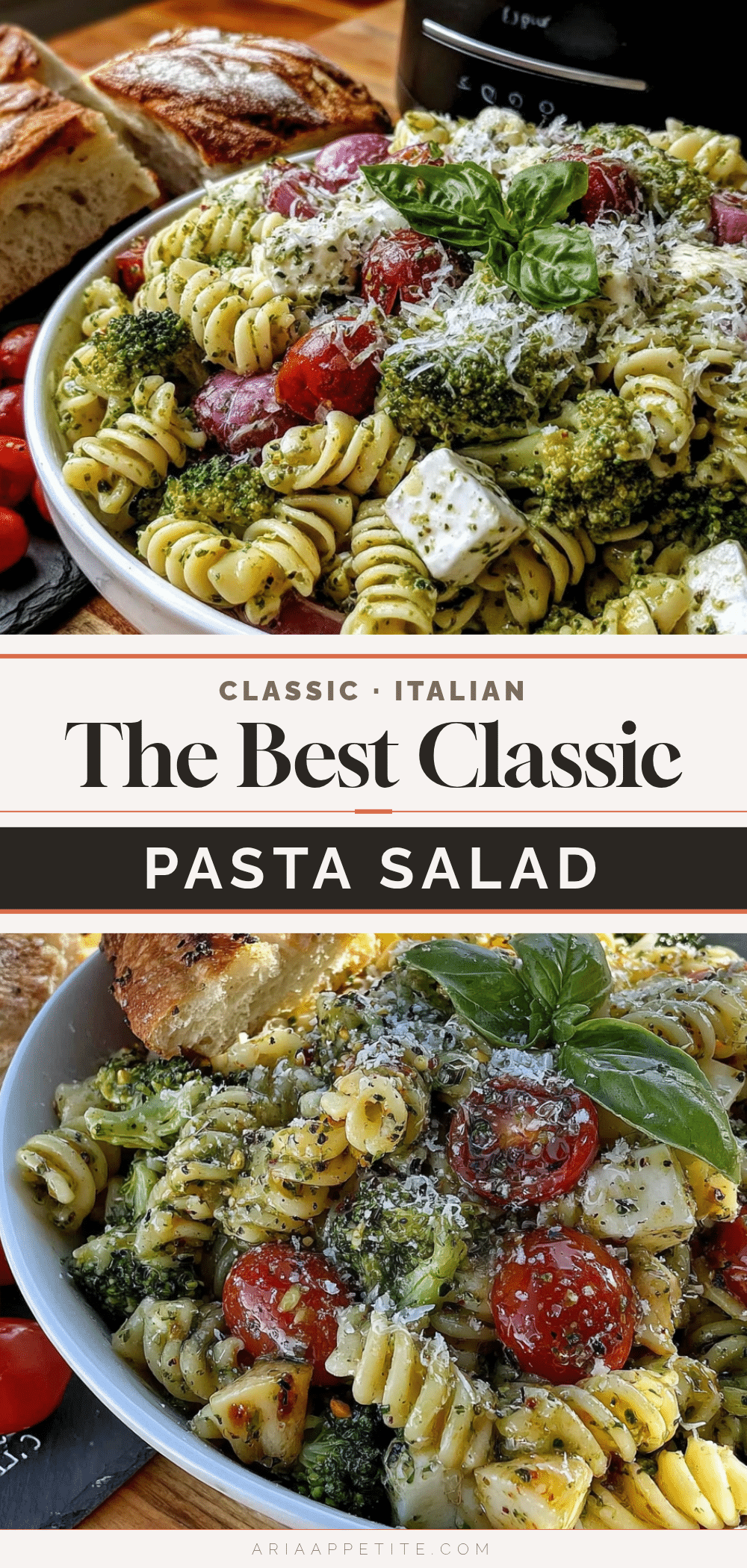
Classic Pasta Salad with Italian Dressing: Easy 20-Minute Recipe
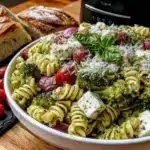
This classic pasta salad with Italian dressing is a quick, crowd-pleasing side dish perfect for potlucks, BBQs, and weeknight dinners. The secret is marinating the warm pasta in the dressing for incredible flavor.
- Prep Time: 10 minutes
- Cook Time: 10 minutes
- Total Time: 20 minutes
- Yield: 8 servings 1x
- Category: Side Dish
- Cuisine: Italian-American
Ingredients
- 1 pound (16 oz) rotini pasta
- 1 cup cherry tomatoes, halved
- 1 medium cucumber, diced
- 1 bell pepper, diced
- 1/2 cup red onion, finely diced
- 1 cup black olives, sliced
- 1 cup mozzarella pearls or cubed mozzarella
- 1/2 cup grated Parmesan cheese
- 1 cup store-bought Italian dressing
- 2 tablespoons red wine vinegar
- 1 teaspoon dried oregano
- 1/2 teaspoon garlic powder
- Salt and black pepper to taste
Instructions
- Cook the pasta: Fill a large pot with water and bring to a rolling boil. Add a generous tablespoon of salt. Add the rotini and cook according to package directions until al dente, about 8-10 minutes.
- Prepare the dressing: In a small bowl or jar, combine the store-bought Italian dressing, red wine vinegar, dried oregano, garlic powder, and a few grinds of black pepper. Shake or whisk until well combined. Set aside.
- Drain and rinse the pasta: Drain the cooked pasta in a colander. Rinse with cold water until cool to the touch. Shake well to remove excess water.
- Marinate the warm pasta: Transfer the drained pasta to a large mixing bowl. While still slightly warm, pour about three-quarters of the dressing over it. Toss well to coat. Let sit for 5-10 minutes while prepping vegetables.
- Prep the vegetables: Dice the cucumber, bell pepper, and red onion. Halve the cherry tomatoes and slice the black olives. If using mozzarella pearls, leave whole; if using a block, cut into small cubes.
- Combine everything: Add the prepared vegetables, olives, mozzarella, and grated Parmesan to the bowl with the marinated pasta. Pour the remaining dressing over the top. Gently fold everything together until evenly distributed.
- Season and adjust: Taste and adjust seasoning with salt, pepper, or extra vinegar as needed.
- Chill before serving (if time allows): Cover and refrigerate for at least 30 minutes to allow flavors to meld. Serve cold or at room temperature.
Notes
For best results, marinate the pasta while warm to allow it to absorb the dressing. If making ahead, reserve extra dressing to revive the salad before serving. Add cheese last if making ahead to prevent sogginess. Store in an airtight container in the refrigerator for up to 4 days. Do not freeze.
Nutrition
- Serving Size: 1 cup
- Calories: 335
- Sugar: 6
- Sodium: 650
- Fat: 16
- Saturated Fat: 4
- Carbohydrates: 38
- Fiber: 3
- Protein: 11
Keywords: pasta salad, Italian dressing, easy pasta salad, potluck recipe, summer side dish, cold pasta salad