Love this? Save it for later!
Share the inspiration with your friends
A woman at the community garden watched me wrestling with a butternut squash for what felt like forever. I was trying to peel the thing with a regular vegetable peeler, and it was not going well. She finally walked over, handed me a serrated peeler, and said, “You don’t have to fight it, you know. The skin is edible if you roast it right.” Her name was Della, and she had been growing squash in that plot for fifteen years. She didn’t offer me a recipe that day, just that one piece of advice and a few of her smallest squashes to practice on.
That conversation changed how I cook this vegetable completely. I used to think peeling was mandatory, and honestly, it made me avoid making butternut squash on busy weeknights. But Della was right. When you roast it with the skin on and get that caramelization going, the texture becomes something special. This quick maple roasted butternut squash with pecans is my adaptation of her no-fuss philosophy. It is the side dish that finally made me stop skipping the squash aisle at the grocery store.
I will be the first to admit I burnt my first batch of this. I got distracted by a phone call and walked back to a kitchen that smelled more like a campfire than a cozy dinner. But that failure taught me something important about timing and heat distribution. Now I have it down to a reliable, twenty-five-minute process that works even on nights when you are tired and hungry. Maybe you have been there too, standing in front of the oven wondering if dinner is worth the effort. Let me tell you, this one absolutely is.
Why You’ll Love This Recipe
This recipe earns its place in your weekly rotation for some very practical reasons. I have tested it on countless weeknights, and it delivers every single time without demanding too much from you.
- Quick & Easy : From cutting board to table in about thirty minutes. No marinating, no complicated steps, just straightforward cooking that respects your time.
- Simple Ingredients : You need a butternut squash, maple syrup, pecans, and a few pantry staples. Nothing exotic, nothing that requires a special trip across town.
- Perfect for Busy Weeknights : This side dish comes together while your main protein rests or finishes cooking. It fills that awkward window when you need something delicious but have zero energy left.
- Crowd-Pleaser : I have served this to picky kids, skeptical in-laws, and friends who claimed they did not like squash. The maple glaze and toasted pecans win everyone over.
- Unbelievably Delicious : The contrast between the tender, caramelized squash and the crunchy, buttery pecans is honestly addictive. You will find yourself eating it straight from the baking sheet.
What makes this version different from others you might have tried? It is the technique. Most recipes tell you to peel the squash first, which wastes time and removes valuable fiber. By leaving the skin on and cutting the squash into smaller pieces, you get faster cooking and better texture. The maple syrup caramelizes beautifully on the surface while the inside stays tender. It is not just another roasted vegetable recipe. It is the version that makes you wonder why you ever bothered peeling squash in the first place.
This recipe connects with something deeper too. It is the kind of food that makes a regular Tuesday feel a little more special. You deserve a side dish that brings comfort without stress, and this one delivers exactly that.
What Ingredients You Will Need
This recipe relies on simple, wholesome ingredients that work together to create something greater than the sum of their parts. Most of these are pantry staples, and the ones that are not are easy to find at any grocery store.
- Butternut Squash (1 medium, about 2 pounds or 900 grams) : Look for a squash that feels heavy for its size with firm, unblemished skin. The neck portion has fewer seeds and cuts more easily. I prefer smaller squashes because they tend to be sweeter and more tender. You will not peel this, so give it a good scrub under running water before cutting.
- Maple Syrup (3 tablespoons, 60 milliliters) : Use real maple syrup, not pancake syrup. The grade does not matter much here, though darker grades like Amber or Dark have a more robust flavor that stands up to roasting. I like using Grade A Dark for its deeper caramel notes. The syrup creates that gorgeous glaze that makes this dish so memorable.
- Pecans (1/2 cup, 60 grams) : Raw pecan halves work best here. They toast during roasting and add that essential crunch. You can chop them roughly or leave them whole, depending on your preference. I usually leave them whole for bigger pieces that make a satisfying crunch. Store pecans in the freezer if you do not use them often, as their high oil content can cause them to go rancid at room temperature.
- Olive Oil (2 tablespoons, 30 milliliters) : A good quality extra virgin olive oil adds richness and helps the squash caramelize properly. You can substitute avocado oil if you prefer a neutral flavor, but do not skip the oil entirely. It is essential for getting that golden-brown exterior.
- Salt (1/2 teaspoon, 3 grams) : Fine sea salt or kosher salt works well. Salt is crucial here because it balances the sweetness of the maple syrup and brings out the natural flavor of the squash. Do not skip it.
- Black Pepper (1/4 teaspoon, 1 gram) : Freshly ground black pepper adds a subtle warmth that complements the sweetness. I grind it directly over the baking sheet for the freshest flavor.
- Cinnamon (1/2 teaspoon, 1 gram) : Ground cinnamon adds warmth and depth that pairs beautifully with both the squash and the pecans. It is optional but highly recommended. You can substitute pumpkin pie spice if you want a more complex flavor profile.
- Optional Garnishes : Fresh thyme leaves or a sprinkle of flaky sea salt right before serving. These are not necessary but add a nice finishing touch that makes the dish look restaurant-quality.
I recommend using a brand like Coombs Family Farms for maple syrup if you can find it. Their syrup has a consistent quality that I trust for roasting. For pecans, I prefer buying from bulk bins at stores with high turnover to ensure freshness. Stale pecans can ruin the texture of this dish, so give them a sniff before using.
Equipment Needed
You do not need a fully stocked kitchen to make this recipe work. Here is what you will need:
- Large Baking Sheet (18×13 inches or similar) : A rimmed baking sheet is ideal because it catches any syrupy drips and prevents mess. Avoid overcrowding by using one large sheet instead of two smaller ones.
- Sharp Chef’s Knife (8-inch or larger) : Butternut squash is dense and requires a sturdy knife. A sharp blade makes cutting safer and easier. I learned this the hard way after struggling with a dull knife for years.
- Cutting Board : Use a large, stable cutting board. Place a damp paper towel underneath to prevent slipping while you cut the squash.
- Mixing Bowl : A medium bowl for tossing the squash with oil and seasonings before roasting.
- Measuring Spoons and Cups : For accurate measurements, especially with the maple syrup and oil.
- Parchment Paper or Silicone Baking Mat (optional) : These make cleanup significantly easier. The maple syrup can caramelize onto the pan and create a sticky mess. Parchment paper eliminates that problem entirely.
- Vegetable Brush : For scrubbing the squash skin clean since you will not be peeling it.
If you do not have a rimmed baking sheet, a large oven-safe skillet or a roasting pan works as a substitute. Just keep an eye on the cooking time, as different materials conduct heat differently. A silicone baking mat is one of my favorite budget-friendly investments because it saves money on parchment paper over time and makes cleanup almost effortless.
Preparation Method
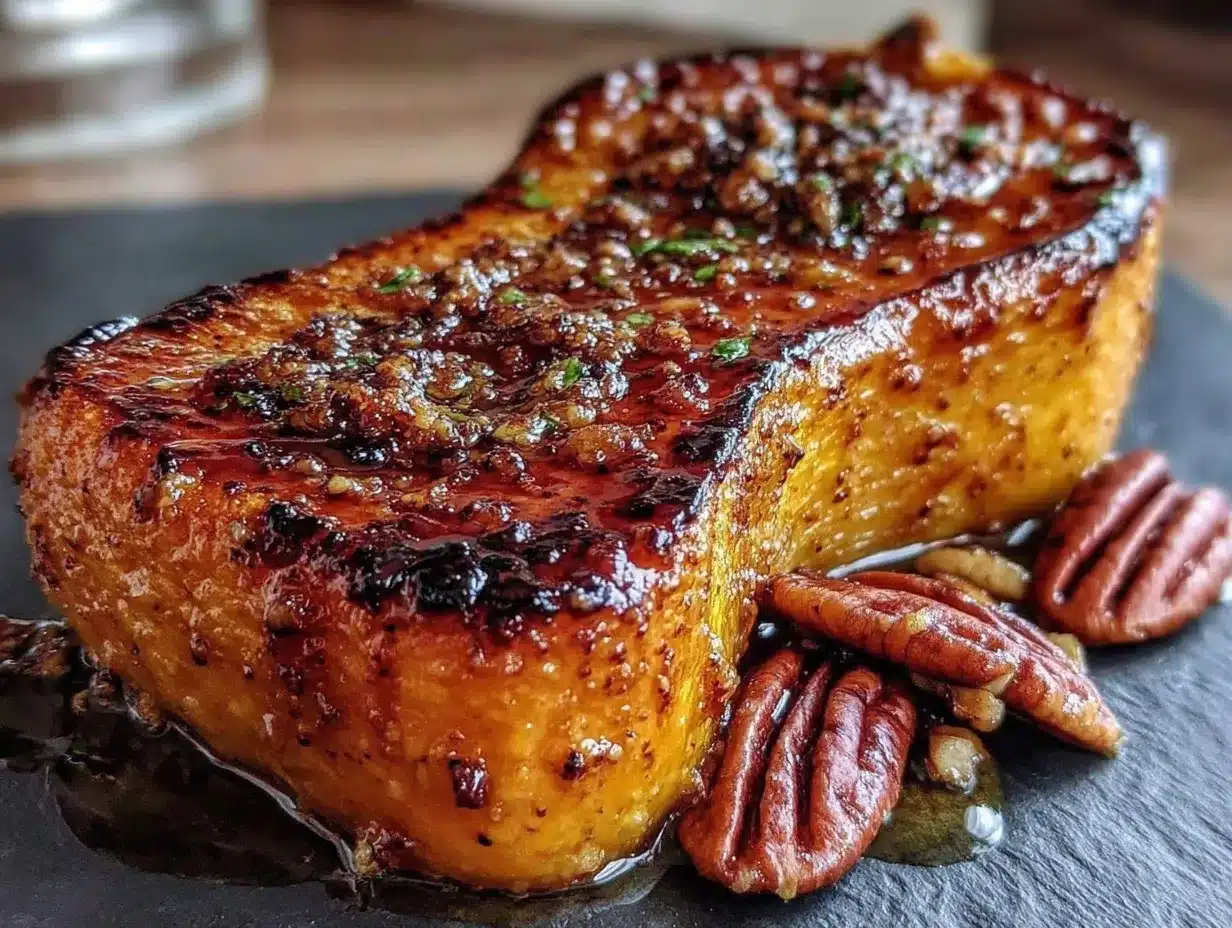
Follow these steps carefully, and you will have perfect roasted squash every time. I have included sensory cues and troubleshooting notes to help you navigate each stage.
- Preheat your oven to 400°F (200°C). Getting the oven hot before you start preparing the squash ensures even cooking. If your oven runs hot or cold, use an oven thermometer to check. I have a finicky oven that runs about 25 degrees cool, so I set it slightly higher to compensate.
- Prepare the butternut squash. Scrub the squash thoroughly under running water to remove any dirt or residue. Pat it dry with a clean kitchen towel. Using a sharp chef’s knife, carefully cut off the stem end and the bottom tip. Stand the squash upright on your cutting board and slice it in half lengthwise from top to bottom. Use a sturdy spoon to scoop out the seeds and stringy fibers from the cavity. Discard the seeds or save them for roasting separately.
- Cut the squash into uniform pieces. Place each half flat-side down on the cutting board. Slice crosswise into 1-inch (2.5 cm) thick half-moons. Then cut each half-moon into 1-inch cubes. Keeping the pieces uniform in size is crucial for even cooking. Smaller pieces will cook faster and become more caramelized, while larger pieces will be softer and more tender. I aim for pieces that are roughly the same size, about the size of a large dice. Do not worry about perfection here, but try to keep them consistent.
- Combine the glaze ingredients. In your mixing bowl, whisk together the maple syrup, olive oil, salt, black pepper, and cinnamon until well combined. The mixture should look emulsified and slightly thickened. Taste it if you want, but remember it will concentrate as it roasts. The salt should be noticeable but not overwhelming.
- Toss the squash with the glaze. Add the cubed squash to the bowl with the glaze. Use your hands or a spatula to toss everything together until every piece is evenly coated. The squash should look glossy and well-seasoned. Make sure there are no dry spots. This step ensures every bite is flavorful.
- Arrange the squash on the baking sheet. Line your baking sheet with parchment paper if using. Spread the glazed squash pieces in a single layer, making sure they are not touching or overlapping too much. Overcrowding causes steaming instead of roasting, which prevents caramelization. If necessary, use two baking sheets or work in batches. Leave a little space between each piece for air to circulate.
- Roast for 20 minutes. Place the baking sheet on the middle rack of your preheated oven. Roast for 20 minutes without disturbing. The squash should start to brown on the edges and the glaze should be bubbling. You will smell a sweet, nutty aroma when it is getting close.
- Add the pecans and finish roasting. After 20 minutes, remove the baking sheet from the oven. Sprinkle the pecans evenly over the squash. Gently toss everything together with a spatula to redistribute the pecans and glaze. Return the sheet to the oven and roast for another 5 to 10 minutes, or until the pecans are toasted and fragrant and the squash is tender when pierced with a fork. The total roasting time should be about 25 to 30 minutes. Keep a close eye on the pecans during the last few minutes, as they can burn quickly.
- Rest and serve. Remove the baking sheet from the oven and let the squash rest for 2 to 3 minutes. This allows the glaze to set slightly and makes the pieces easier to handle. Transfer to a serving dish, garnish with fresh thyme leaves or a sprinkle of flaky sea salt if desired, and serve warm.
If you notice the squash is not browning after 20 minutes, your oven might not be hot enough. Increase the temperature to 425°F (220°C) for the final few minutes. Conversely, if the pecans are browning too quickly, cover them loosely with a piece of foil while the squash finishes cooking.
Cooking Tips & Techniques
Over the years, I have learned a few tricks that make this recipe even more reliable. These come from personal trial and error, and they will save you from some of the mistakes I made.
Cut the squash safely. Butternut squash is notoriously hard to cut. I have had a few close calls with slipping knives. To stabilize the squash, cut a thin slice off one side to create a flat surface before cutting it in half. This prevents the squash from rolling around on your cutting board. Always use a sharp knife, as dull blades require more force and are more likely to slip.
Do not skip the parchment paper. I cannot stress this enough. The maple syrup caramelizes into a sticky, almost-burnt coating on the pan that is a nightmare to scrub. Parchment paper or a silicone mat eliminates this problem completely. Your future self will thank you.
Watch the pecans carefully. Pecans contain natural oils that make them toast quickly and burn even faster. I have ruined more than one batch by walking away for a minute too long. Set a timer for the final 5 minutes and check on them frequently. They are done when they smell nutty and look slightly darker, not when they turn black.
Use room temperature ingredients. If your maple syrup has been sitting in the fridge, let it come to room temperature before mixing. Cold syrup does not emulsify well with the oil and can create a clumpy glaze. Same goes for the olive oil. A quick 10-minute rest on the counter is all it needs.
Multitask smartly. While the squash roasts, use that time to prepare your main dish. I often make this alongside a quick roasted chicken breast or a pan-seared salmon fillet. The oven is already hot, so you can cook everything together. Just make sure your main dish does not require a different temperature that would compromise the squash.
Avoid overcrowding at all costs. This is the most common mistake people make with roasted vegetables. If you pile the squash too high, it steams instead of roasts, and you end up with mushy, pale pieces instead of caramelized gems. Use two baking sheets if needed, and rotate them halfway through for even cooking.
Variations & Adaptations
This recipe is wonderfully flexible, and I have tried several variations over the years. Here are some of my favorites that still deliver the same quick, delicious results.
Spicy Maple Roasted Squash. Add 1/4 teaspoon of cayenne pepper or red pepper flakes to the glaze for a sweet-and-spicy kick. The heat balances the sweetness beautifully and adds a surprising depth. I tried this after a friend suggested it, and now it is my go-to version when I want something a little more exciting.
Herb-Infused Version. Swap the cinnamon for 1 teaspoon of dried rosemary or thyme. The earthy herbs pair wonderfully with the maple syrup and create a more savory dish. Fresh herbs work too, but use about three times as much since dried herbs are more concentrated. This variation is excellent alongside roasted pork or chicken.
Nut-Free Alternative. If you have a nut allergy or just want to change things up, substitute the pecans with pumpkin seeds or sunflower seeds. Toast them separately in a dry skillet for 2 to 3 minutes before adding to the squash, or add them during the last 5 minutes of roasting. Both options provide a satisfying crunch without the nuts.
Vegan and Gluten-Free. This recipe is already naturally vegan and gluten-free, so no adjustments are needed. Just make sure your maple syrup is certified vegan if that matters to you. Some commercial syrups use processing agents that may not be vegan-friendly, though this is rare.
Different Squash Options. You can substitute butternut squash with other winter squashes like acorn, delicata, or kabocha. Delicata squash has edible skin that roasts beautifully, making it an especially easy swap. Acorn squash has a slightly milder flavor and benefits from a touch more maple syrup. Adjust cooking times based on the size and density of the squash you choose.
I personally love the spicy version for fall gatherings. It adds an unexpected twist that always gets compliments, and it pairs perfectly with a glass of crisp apple cider.
Serving & Storage Suggestions
This dish is incredibly versatile and works well in many contexts. Here is how to serve it and keep it fresh for later.
Serving Temperature and Presentation. Serve this squash warm, right after it comes out of the oven. The glaze is at its stickiest and most flavorful at this point. Transfer the roasted squash and pecans to a shallow serving bowl or a wooden platter. Garnish with fresh thyme leaves, a sprinkle of flaky sea salt, or a drizzle of extra maple syrup for a beautiful presentation. The deep orange of the squash against the dark green thyme looks stunning on a holiday table.
Complementary Dishes. This squash pairs beautifully with roasted chicken, grilled pork chops, seared duck breast, or a simple pan-fried fish like trout or cod. It also works as a hearty addition to grain bowls with quinoa, farro, or wild rice. For a vegetarian meal, serve it alongside a lentil stew or a chickpea curry. The sweetness of the squash balances savory and spicy dishes perfectly.
Storage Instructions. Store any leftovers in an airtight container in the refrigerator for up to 4 days. The squash will soften slightly as it sits, but the flavor actually deepens overnight. The pecans may lose some of their crunch. To restore crispness, reheat the squash in a 350°F (175°C) oven for 5 to 7 minutes, or until warmed through. Avoid microwaving, as it makes the squash mushy and the pecans rubbery.
Freezing Tips. You can freeze this dish for up to 3 months. Spread the cooled squash and pecans on a baking sheet lined with parchment paper and freeze until solid. Transfer to a freezer-safe bag or container. To reheat, spread the frozen pieces on a baking sheet and roast at 375°F (190°C) for 10 to 12 minutes, or until heated through. The texture will be slightly softer than fresh, but the flavor remains excellent.
Flavor Development. The flavors in this dish meld and deepen over time. Leftovers often taste even better the next day because the maple glaze has had time to penetrate the squash more fully. This makes it an excellent make-ahead side dish for busy holiday meals. Just prepare it a day in advance and reheat before serving.
Nutritional Information & Benefits
This recipe is not just delicious, it also offers some solid nutritional benefits that make it a smart choice for a weeknight side dish.
Estimated Nutritional Values (per serving, about 1 cup):
- Calories: 220
- Total Fat: 12g
- Saturated Fat: 1.5g
- Carbohydrates: 28g
- Fiber: 4g
- Sugar: 14g
- Protein: 3g
- Sodium: 300mg
Health Benefits of Key Ingredients: Butternut squash is an excellent source of vitamin A in the form of beta-carotene, which supports eye health and immune function. It also provides vitamin C, potassium, and fiber. Pecans are rich in healthy monounsaturated fats, magnesium, and antioxidants that support heart health. Maple syrup contains antioxidants and minerals like zinc and manganese, though it should be used in moderation due to its sugar content.
Dietary Considerations: This recipe is naturally gluten-free, dairy-free, and vegan. It is also relatively low in saturated fat and contains no cholesterol. The fiber content helps promote digestive health and keeps you feeling full longer. If you are watching your sugar intake, you can reduce the maple syrup to 2 tablespoons without sacrificing too much flavor.
Potential Allergens: This recipe contains tree nuts (pecans). If you have a nut allergy, substitute with seeds as mentioned in the variations section. Always check your maple syrup label for any added ingredients if you have specific dietary concerns.
I personally appreciate that this dish feels indulgent while still being nutrient-dense. It satisfies that craving for something sweet and comforting without derailing your healthy eating goals. That balance is hard to find in weeknight cooking, and this recipe delivers it consistently.
Conclusion
This quick maple roasted butternut squash with pecans has become a staple in my kitchen for good reason. It delivers incredible flavor with minimal effort, respects your time on busy weeknights, and uses ingredients you likely already have on hand. The technique of leaving the skin on saves you a frustrating step and adds texture and nutrients you would otherwise lose.
I encourage you to make this recipe your own. Adjust the spices, swap the nuts, or add a pinch of heat if that is your style. The beauty of this dish is its flexibility. It works as a side dish for a simple dinner or as part of a larger holiday spread. Every time I make it, I think of Della and her simple advice about not fighting the squash. Sometimes the best cooking wisdom comes from the most unexpected places.
I would love to hear how this recipe turns out for you. Did you try a variation? Did your family love it? Share your experience in the comments below, and do not forget to pin this recipe for later. Happy cooking, and remember, you do not have to fight your vegetables to make them delicious.
Frequently Asked Questions
Can I use frozen butternut squash for this recipe?
Frozen squash works in a pinch, but it will not caramelize as well because it releases more moisture during cooking. If you use frozen squash, thaw it first and pat it dry with paper towels. Reduce the roasting time by about 5 minutes since frozen squash tends to cook faster. The texture will be softer, but the flavor will still be good.
How do I prevent the pecans from burning?
Add the pecans during the last 5 to 10 minutes of roasting rather than at the beginning. This gives them enough time to toast without burning. Keep a close eye on them during this final stage, and if they start browning too quickly, cover them loosely with a piece of aluminum foil.
Can I make this recipe ahead of time?
Yes, you can prepare this dish up to 2 days in advance. Roast the squash and pecans as directed, let them cool completely, and store in an airtight container in the refrigerator. Reheat in a 350°F (175°C) oven for 5 to 7 minutes before serving. The texture will be slightly softer, but the flavor will be just as delicious.
What can I use instead of maple syrup?
Honey, agave nectar, or brown sugar mixed with a tablespoon of water work as substitutes. Honey has a similar consistency and sweetness, though it will change the flavor slightly. Brown sugar creates a deeper, more molasses-like taste. Use the same amount as you would maple syrup.
Is it necessary to use cinnamon?
No, cinnamon is optional. You can omit it entirely or substitute it with other warm spices like nutmeg, allspice, or pumpkin pie spice. For a savory twist, try using smoked paprika or cumin instead. The recipe is flexible enough to accommodate your taste preferences.
Pin This Recipe!
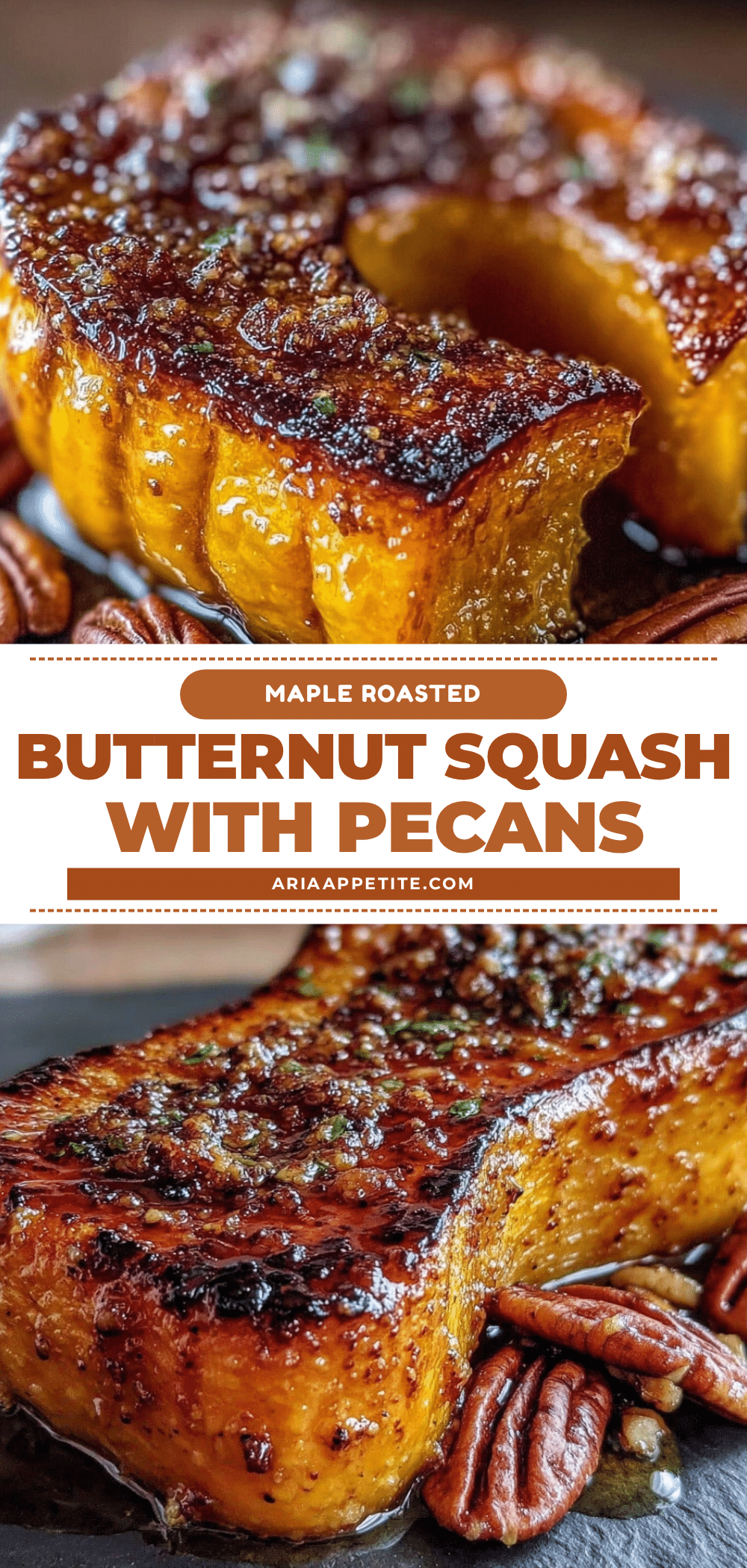
Easy Maple Roasted Butternut Squash with Pecans
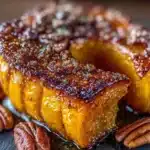
This quick and easy roasted butternut squash with maple syrup and pecans is a no-fuss side dish that delivers incredible flavor with minimal effort. The skin is left on for faster prep and better texture, making it perfect for busy weeknights.
- Prep Time: 10 minutes
- Cook Time: 25 minutes
- Total Time: 35 minutes
- Yield: 4 servings 1x
- Category: Side Dish
- Cuisine: American
Ingredients
- 1 medium butternut squash (about 2 pounds or 900 grams)
- 3 tablespoons (60 ml) maple syrup
- 1/2 cup (60 grams) raw pecan halves
- 2 tablespoons (30 ml) olive oil
- 1/2 teaspoon (3 grams) fine sea salt or kosher salt
- 1/4 teaspoon (1 gram) freshly ground black pepper
- 1/2 teaspoon (1 gram) ground cinnamon
- Optional: fresh thyme leaves or flaky sea salt for garnish
Instructions
- Preheat your oven to 400°F (200°C).
- Scrub the butternut squash thoroughly under running water and pat dry. Cut off the stem end and bottom tip. Stand the squash upright and slice it in half lengthwise. Scoop out the seeds and stringy fibers.
- Place each half flat-side down and slice crosswise into 1-inch (2.5 cm) thick half-moons, then cut into 1-inch cubes.
- In a mixing bowl, whisk together the maple syrup, olive oil, salt, black pepper, and cinnamon until well combined.
- Add the cubed squash to the bowl and toss until every piece is evenly coated.
- Line a large baking sheet with parchment paper. Spread the glazed squash in a single layer, ensuring pieces are not touching or overlapping.
- Roast for 20 minutes without disturbing.
- Remove the baking sheet from the oven. Sprinkle the pecans evenly over the squash and gently toss. Return to the oven and roast for another 5 to 10 minutes, until the pecans are toasted and the squash is tender when pierced with a fork.
- Remove from the oven and let rest for 2 to 3 minutes. Transfer to a serving dish, garnish with fresh thyme or flaky sea salt if desired, and serve warm.
Notes
For even cooking, cut squash into uniform pieces. Do not overcrowd the baking sheet to ensure caramelization. Watch pecans closely during the last few minutes to prevent burning. Leftovers can be stored in an airtight container in the refrigerator for up to 4 days. Reheat in a 350°F (175°C) oven for 5-7 minutes.
Nutrition
- Serving Size: 1 cup
- Calories: 220
- Sugar: 14
- Sodium: 300
- Fat: 12
- Saturated Fat: 1.5
- Carbohydrates: 28
- Fiber: 4
- Protein: 3
Keywords: maple roasted butternut squash, roasted butternut squash with pecans, easy butternut squash recipe, quick side dish, vegan, gluten-free, fall recipe, Thanksgiving side dish