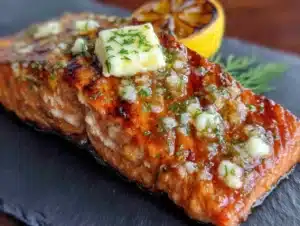
Love this? Save it for later!
Share the inspiration with your friends
I wasn’t expecting cooking advice from the man installing my new dishwasher, but there I was, standing in my own kitchen on a random Tuesday morning, listening to Tony, the appliance guy, describe exactly how to make his grandmother’s baked salmon. He was mid-installation, water line in one hand, and he just started talking about lemon and dill and butter like he was reciting poetry. I had just mentioned I was tired of my usual chicken routine, and he stopped, looked at me, and said, “You need my Nonna’s salmon. It’s not fancy, but it’s the kind of meal that fixes a bad day.” I almost laughed—I mean, who gets a recipe from the dishwasher repairman? But something about the way he said it, with this quiet certainty, made me grab a sticky note from the junk drawer. He scribbled down the ingredients, his handwriting all squished together because the note was tiny. I honestly thought I’d lose the scrap of paper, but I didn’t. I stuck it to my fridge, and it sat there for three days before I finally gave it a shot. That first bite? Let me tell you, I called my mom to tell her about it. That’s how good it was. The salmon came out flaky and tender, swimming in this buttery, citrusy sauce that felt like a hug on a plate. Tony’s grandmother wasn’t a chef or a food blogger—she was just a woman who knew how to make people feel loved through food. And now, every time I make this Cozy Lemon Dill Butter Baked Salmon, I think of that random Tuesday and the surprise recipe that turned into a weeknight staple. Maybe you’ve had a moment like that, where a recipe finds you when you least expect it. This is that recipe for me.
Why You’ll Love This Recipe
This isn’t just another salmon recipe you’ll scroll past. I’ve tested this one at least a dozen times—sometimes with the wrong lemon-to-dill ratio, once with butter that burned because I wasn’t paying attention—and every time, I learned something new. What makes this version stand out is how forgiving it is. You don’t need to be a pro to nail it. The butter creates this rich, velvety sauce that keeps the salmon moist, while the lemon and dill work together to cut through the richness without overpowering the fish. It’s a balance that took me a few tries to get right, but now I’ve got it down to a science. Here’s why this recipe deserves a spot in your regular rotation:
- Quick & Easy : From prep to plate in under 20 minutes. Seriously. This is the kind of dinner you can pull off on a busy weeknight when you’re short on time but still want something that feels special.
- Simple Ingredients : No need to hunt down exotic spices or hard-to-find items. You probably have lemon, butter, and dill in your kitchen right now. If not, they’re a quick trip to the store away.
- Perfect for Cozy Nights : Whether it’s a cold winter evening, a rainy spring day, or just one of those weeks where you need a little comfort, this salmon delivers. It’s warm, soothing, and feels like a reward after a long day.
- Crowd-Pleaser : I’ve served this to picky eaters, seafood skeptics, and even my uncle who “doesn’t do fish,” and everyone went back for seconds. The buttery lemon dill flavor is mild and approachable.
- Unbelievably Delicious : The texture is what gets me every time. The salmon comes out perfectly flaky, and the sauce—oh, that sauce—it coats every bite with this bright, buttery goodness that makes you close your eyes after the first forkful.
What makes this recipe different from the rest is the technique. Instead of just throwing the salmon in the oven, you create a quick compound butter with lemon zest and fresh dill, then let it melt over the fillets as they bake. This isn’t just another version of baked salmon—it’s the best version. It’s comfort food reimagined: faster, simpler, but with the same soul-soothing satisfaction that makes you feel like everything is going to be okay.
What Ingredients You Will Need
This recipe uses simple, wholesome ingredients to deliver bold flavor and satisfying texture without the fuss. Most of these are pantry staples or easy to find at any grocery store. Here’s what you’ll need and why each one matters:
- 4 (6-ounce) salmon fillets – Skin-on or skin-off, both work. I prefer skin-on because it helps keep the fish moist and adds a little extra flavor. Look for fillets that are evenly thick so they cook at the same rate. Wild-caught salmon is my go-to, but farm-raised works fine too.
- 4 tablespoons unsalted butter, softened – The star of the show. Using unsalted butter lets you control the salt level. Soften it to room temperature so it mixes easily with the other ingredients. I use Kerrygold when I want a richer flavor, but any good-quality butter will do.
- 2 tablespoons fresh dill, finely chopped – Fresh dill is non-negotiable here. Dried dill just doesn’t have the same bright, grassy flavor. If you can’t find fresh dill, you can substitute with fresh parsley or tarragon for a different but still delicious twist.
- 1 tablespoon lemon zest – About 1 large lemon. Zest it before you juice it—it’s so much easier that way. The zest carries all the aromatic oils from the lemon peel, giving the butter a burst of citrus flavor without the acidity of the juice.
- 2 tablespoons fresh lemon juice – Adds brightness and helps balance the richness of the butter. Use freshly squeezed juice; the bottled stuff has a flat, artificial taste.
- 2 cloves garlic, minced – Garlic and butter are a classic duo. Fresh garlic is best, but you can use 1/2 teaspoon of garlic powder in a pinch. Just don’t use garlic salt—it’ll make the dish too salty.
- 1/2 teaspoon salt – Fine sea salt is my preference. It dissolves easily and seasons the fish evenly. Adjust to taste depending on your dietary needs.
- 1/4 teaspoon black pepper – Freshly ground is always better. It adds a subtle warmth that complements the dill and lemon.
- Optional: Lemon slices, for garnish – Not necessary, but they make the dish look beautiful and add a little extra lemony aroma when you serve it.
For the butter mixture, I recommend using a microplane for the lemon zest—it gives you the finest texture and releases the most oils. If you don’t have one, a fine grater works too. And a quick note on dill: don’t skip it. I know some people find dill a little strong, but in this recipe, it’s mellowed out by the butter and lemon, so it’s not overpowering. Trust me on this one.
Equipment Needed
You don’t need a fancy kitchen to make this recipe. Here’s what you’ll need:
- Baking dish – A 9×13-inch dish works perfectly. Glass, ceramic, or metal all work, but glass helps the salmon cook more evenly. I’ve used a cast iron skillet too, and it gives the bottom of the fillets a nice golden crust.
- Small bowl – For mixing the compound butter. Any small bowl will do.
- Microplane or fine grater – For zesting the lemon. A regular box grater works in a pinch, but the zest won’t be as fine.
- Chef’s knife and cutting board – For chopping the dill and mincing the garlic. A sharp knife makes all the difference.
- Measuring spoons – For accuracy, especially with the salt and lemon juice. Eyeballing it can lead to a too-salty or too-sour dish.
- Fork or spatula – For flaking the salmon to check doneness. A fork is the most reliable tool for this.
If you don’t have a microplane, don’t stress. I’ve used the small holes on a box grater before, and it worked fine—just took a little more effort. And if you’re using a metal baking dish, keep an eye on the cooking time; metal conducts heat faster, so your salmon might be done a minute or two earlier.
Preparation Method
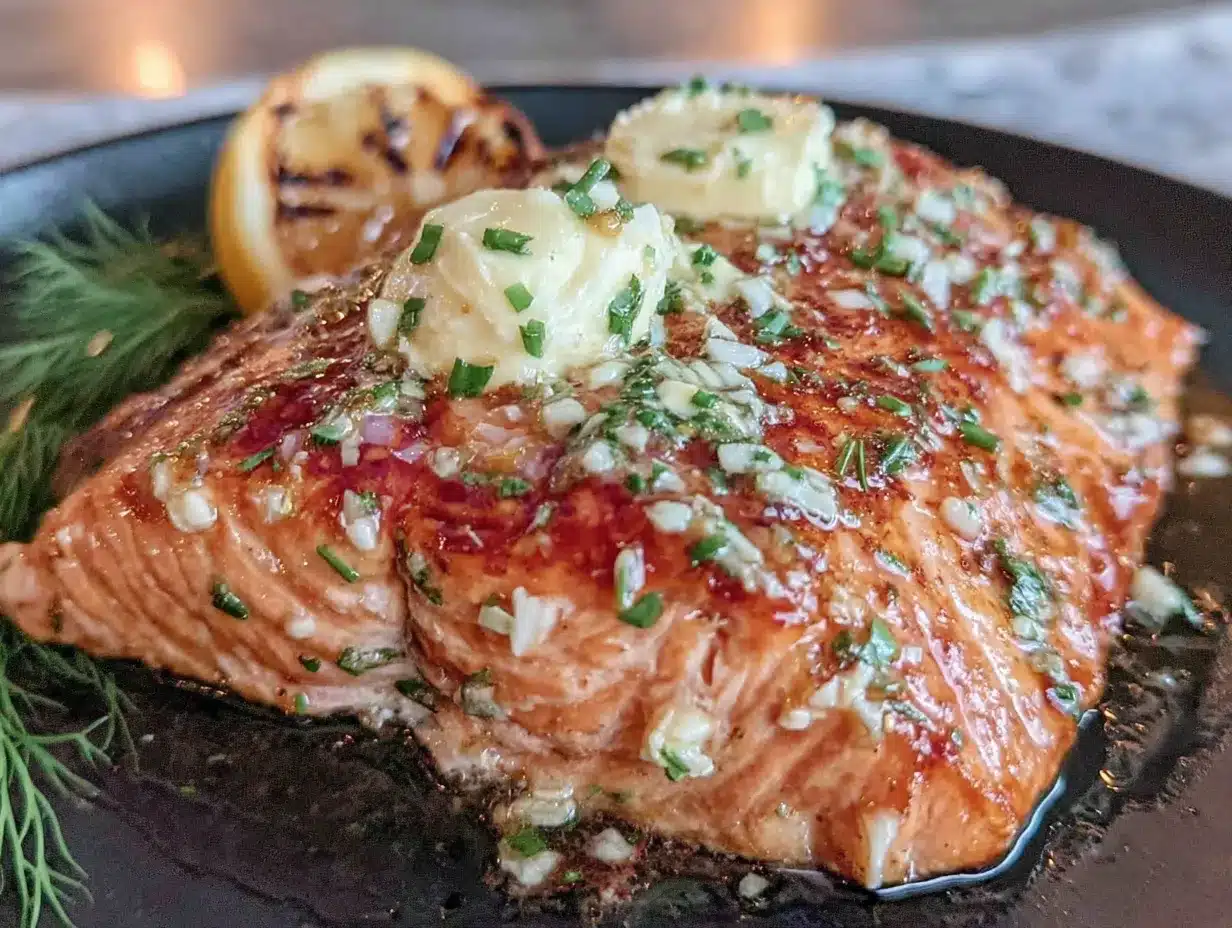
Let’s get cooking. This recipe comes together in about 20 minutes, so have everything prepped and ready before you start. Trust me, it makes the process so much smoother.
- Preheat your oven to 400°F (200°C). While it’s heating up, take your salmon fillets out of the fridge and let them sit at room temperature for about 10 minutes. This helps them cook more evenly.
- Make the compound butter. In a small bowl, combine 4 tablespoons of softened unsalted butter, 2 tablespoons of chopped fresh dill, 1 tablespoon of lemon zest, 2 tablespoons of fresh lemon juice, 2 minced garlic cloves, 1/2 teaspoon of salt, and 1/4 teaspoon of black pepper. Mix everything together with a fork until it’s well combined. The butter should be soft and spreadable but not melted. If it’s too hard, let it sit out for another 5 minutes.
- Prepare the baking dish. Lightly grease your 9×13-inch baking dish with a little butter or non-stick spray. Place the salmon fillets in the dish, skin-side down if they have skin. Make sure there’s a little space between each fillet so they cook evenly.
- Top the salmon with the butter mixture. Divide the compound butter evenly among the fillets. Use the back of a spoon or a small spatula to spread it over the top of each fillet. Don’t worry if it’s not perfectly smooth—it will melt and spread as it bakes. If you have extra butter, you can add a little more to one fillet; no one will complain.
- Bake the salmon. Place the dish in the preheated oven and bake for 12-15 minutes, depending on the thickness of your fillets. For 1-inch thick fillets, 13 minutes is usually perfect. The salmon is done when it flakes easily with a fork and the internal temperature reaches 145°F (63°C). The butter will be bubbly and golden around the edges.
- Let it rest. Once the salmon is done, remove it from the oven and let it rest in the dish for 2-3 minutes. This allows the juices to redistribute and the butter sauce to settle. Don’t skip this step—it makes a big difference in texture.
- Serve and enjoy. Use a spatula to transfer the salmon to plates or a serving platter. Spoon any remaining butter sauce from the dish over the top. Garnish with fresh lemon slices and a sprinkle of extra dill if you’re feeling fancy. Serve immediately.
A quick tip: if your fillets are different thicknesses, check the thinner ones a minute or two earlier to avoid overcooking. I learned this the hard way when I ended up with one perfectly cooked fillet and one that was a little dry. Not the end of the world, but not ideal.
Cooking Tips & Techniques
I’ve made this salmon enough times to know where things can go sideways. Here are some lessons I learned the hard way so you don’t have to:
- Don’t skip the room temperature step. I know it’s tempting to throw cold salmon straight into the oven, but it leads to uneven cooking. The outside will be done before the inside, and you’ll end up with a dry edge and a raw center. Let it sit out for 10 minutes—it’s worth it.
- Watch the garlic. Fresh garlic can burn if it’s left in the oven too long. If you’re using larger fillets that need more than 15 minutes, consider adding the garlic to the butter just before baking, not earlier. I once prepped the butter an hour ahead, and the garlic started to turn bitter in the fridge.
- Use a thermometer. I’m a big fan of instant-read thermometers. They take the guesswork out of cooking fish. Salmon is perfectly cooked at 145°F (63°C). If you don’t have one, look for the flake test: insert a fork into the thickest part and twist gently. If it flakes easily, it’s done.
- Don’t overcrowd the dish. If you’re cooking more than 4 fillets, use a larger dish or two smaller ones. Overcrowding traps steam and prevents the butter from caramelizing properly. You want that golden, bubbly sauce, not a watery mess.
- Multitask wisely. While the salmon is baking, you can prep a quick side dish like roasted asparagus or a simple green salad. The salmon only takes 12-15 minutes, so keep an eye on the clock. I’ve lost track of time before and ended up with overcooked fish—not my finest moment.
One more thing: if your butter sauce separates and looks greasy, don’t panic. It usually comes back together when you spoon it over the salmon. A little whisking in the dish before serving can also help emulsify it.
Variations & Adaptations
This recipe is a great base, but don’t be afraid to make it your own. Here are some variations I’ve tried and loved:
- Dairy-Free Option : Swap the butter for a high-quality vegan butter or ghee (if you tolerate dairy). I’ve used Miyoko’s European Style Cultured Vegan Butter, and it worked beautifully. The flavor is slightly different but still rich and delicious.
- Herb Swap : If dill isn’t your thing, try fresh parsley, chives, or tarragon. Each herb brings a different vibe—parsley is bright and fresh, chives are mild and oniony, and tarragon adds an anise-like sweetness. I’ve done a parsley-chive combo that was fantastic.
- Citrus Twist : Lemon is classic, but lime or orange zest works too. Lime gives it a zesty, almost tropical feel, while orange adds a subtle sweetness that pairs well with the dill. Just use the same amount—1 tablespoon of zest and 2 tablespoons of juice.
- Spicy Kick : Add a pinch of red pepper flakes or a little cayenne to the butter mixture. It doesn’t make the dish spicy, just adds a gentle warmth that complements the lemon. I did this for a friend who loves heat, and she raved about it.
- Different Fish : This butter works on other fish too. Try it on trout, cod, or even thick white fish like halibut. Adjust the cooking time based on thickness. Cod, for example, cooks faster than salmon, so check it at 10 minutes.
I once made a version with smoked paprika and a touch of honey in the butter—it was incredible. The sweetness balanced the lemon perfectly. Don’t be afraid to experiment; that’s half the fun of cooking.
Serving & Storage Suggestions
This salmon is best served warm, straight from the oven. The butter sauce is at its most luscious when it’s fresh and bubbly. Here are some ideas for sides and storage:
- Serving Temperature : Serve the salmon immediately after resting. It’s delicious hot, but it’s also surprisingly good at room temperature. If you’re making it for a gathering, you can let it sit for up to 30 minutes without losing quality.
- Pairing Suggestions : This salmon pairs beautifully with roasted vegetables like asparagus, green beans, or broccoli. A side of fluffy rice, quinoa, or crusty bread is perfect for soaking up the extra butter sauce. For a lighter meal, serve it over a bed of arugula with a simple lemon vinaigrette.
- Beverage Pairings : A crisp white wine like Sauvignon Blanc or a light Pinot Grigio complements the lemon and dill. If you prefer non-alcoholic, sparkling water with a slice of lemon works wonderfully.
- Storage : Store leftover salmon in an airtight container in the refrigerator for up to 3 days. The flavors actually meld together overnight, so leftovers are delicious cold or reheated.
- Reheating : The best way to reheat salmon is in the oven at 300°F (150°C) for about 5-7 minutes. Cover it loosely with foil to prevent drying out. You can also reheat it in a skillet over low heat with a splash of water or lemon juice. Avoid the microwave—it tends to make the fish rubbery.
One thing I love about this recipe is that the flavors develop over time. The dill and lemon infuse the butter even more as it sits, so leftovers often taste even better the next day. I’ve been known to make extra just for lunch the next day.
Nutritional Information & Benefits
This recipe is as nourishing as it is comforting. Here’s a rough breakdown per serving (based on 4 servings):
- Calories : Approximately 380-420 calories per fillet
- Protein : 34-38 grams
- Fat : 26-30 grams (mostly from healthy salmon fats and butter)
- Carbohydrates : 1-2 grams
- Fiber : 0 grams
- Vitamin D : High (salmon is one of the best natural sources)
- Omega-3 Fatty Acids : Excellent source, supporting heart and brain health
Salmon is packed with high-quality protein and essential omega-3 fatty acids, which are known to reduce inflammation and support brain function. The lemon and dill add a boost of vitamin C and antioxidants, while the butter provides fat-soluble vitamins like A and E. This dish is naturally low-carb and gluten-free, making it suitable for a variety of dietary needs. If you’re watching your sodium, you can reduce the salt to 1/4 teaspoon without sacrificing too much flavor.
From a wellness perspective, this recipe is a great example of how comfort food can also be good for you. It’s satisfying without being heavy, and it leaves you feeling nourished, not sluggish. That’s the kind of meal I love to end a long day with.
Conclusion
This Cozy Lemon Dill Butter Baked Salmon is more than just a quick dinner—it’s a reminder that the best recipes often come from the most unexpected places. Tony the dishwasher guy probably has no idea that his grandmother’s recipe has become a staple in my kitchen, but I think about him every time I make it. It’s the kind of meal that turns an ordinary Tuesday into something a little bit special. The butter sauce is rich and velvety, the lemon and dill are bright and fresh, and the salmon comes out perfectly flaky every single time. I honestly can’t recommend it enough.
I’d love for you to try it and make it your own. Maybe you’ll add a little extra dill or swap the lemon for lime. Maybe you’ll serve it with roasted potatoes instead of rice. Whatever you do, I hope it brings you the same comfort it brings me. If you make it, drop a comment below and let me know how it turned out—I read every single one. And if you have a story about where you got a recipe from, I’d love to hear that too. Happy cooking, friends!
Frequently Asked Questions
Can I use frozen salmon for this recipe?
Yes, you can. Just make sure to thaw it completely in the refrigerator overnight before cooking. Pat it dry with paper towels to remove excess moisture. Frozen salmon tends to release more water, so your butter sauce might be a little thinner, but it will still be delicious.
How do I know when the salmon is fully cooked?
The most reliable way is to use an instant-read thermometer. Insert it into the thickest part of the fillet, and it should read 145°F (63°C). If you don’t have a thermometer, use a fork to gently flake the thickest part. If it flakes easily and is opaque throughout, it’s done.
Can I make the compound butter ahead of time?
Absolutely. You can prepare the butter mixture up to 2 days in advance and store it in the refrigerator. Just let it come to room temperature for about 10-15 minutes before spreading it on the salmon, so it’s soft enough to work with. You can also freeze the butter for up to a month—just wrap it tightly in plastic wrap.
What if I don’t have fresh dill?
Fresh dill is ideal, but if you can’t find it, you can substitute with 1 teaspoon of dried dill. Keep in mind that dried dill is more concentrated, so you’ll need less. Alternatively, fresh parsley or tarragon are excellent substitutes that will still give you a bright, herby flavor.
Can I grill this salmon instead of baking it?
Yes, you can! Preheat your grill to medium-high heat and lightly oil the grates. Place the salmon fillets skin-side down on the grill and cook for about 6-8 minutes per side, depending on thickness. The butter mixture will melt and create a nice crust. Just watch it closely to prevent flare-ups from the butter dripping.
Pin This Recipe!
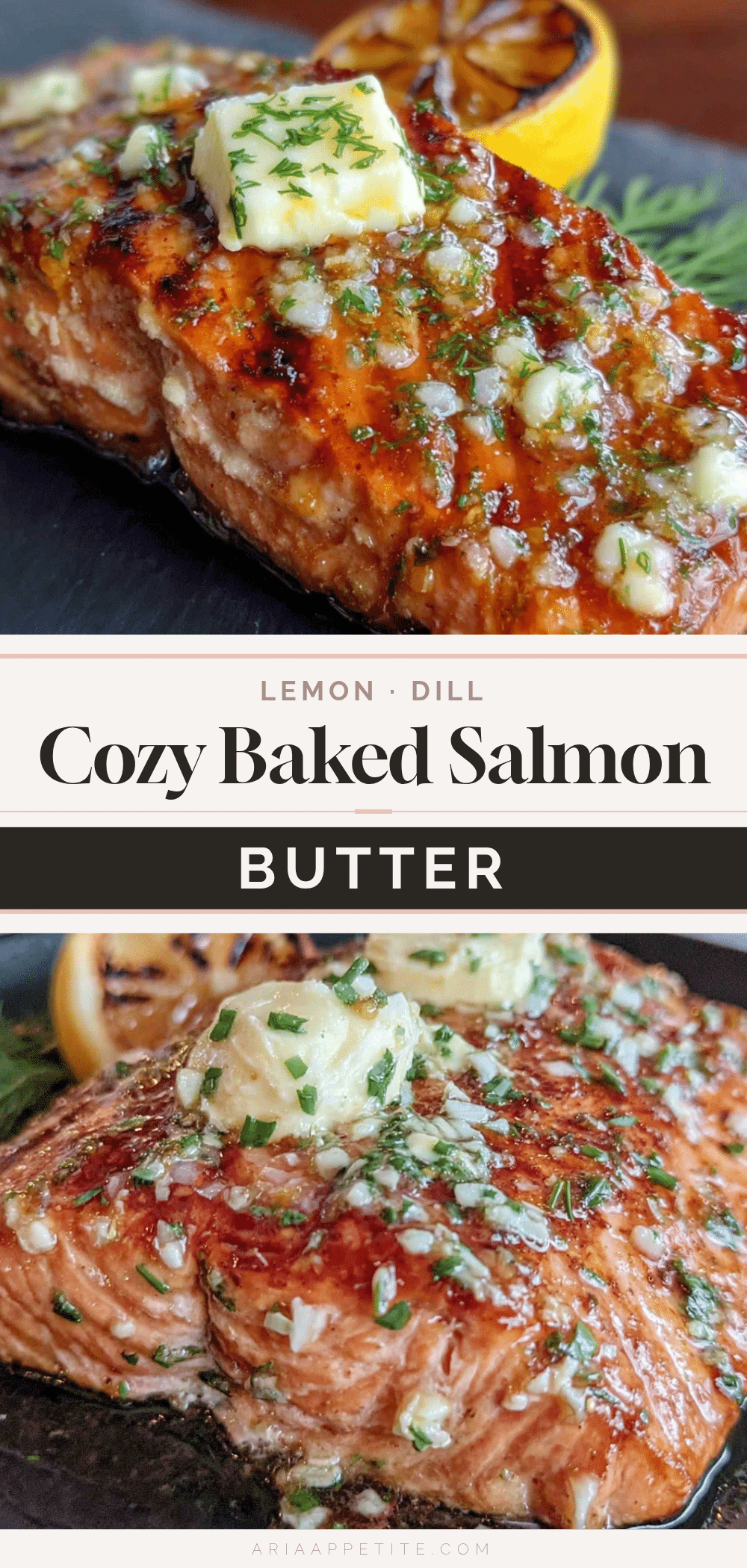
Cozy Lemon Dill Butter Baked Salmon: Easy 20-Minute Dinner
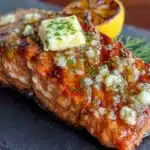
This baked salmon is flaky and tender, swimming in a buttery, citrusy sauce that feels like a hug on a plate. It’s a quick and easy weeknight dinner that comes together in under 20 minutes.
- Prep Time: 5 minutes
- Cook Time: 15 minutes
- Total Time: 20 minutes
- Yield: 4 servings 1x
- Category: Main Course
- Cuisine: American
Ingredients
- 4 (6-ounce) salmon fillets
- 4 tablespoons unsalted butter, softened
- 2 tablespoons fresh dill, finely chopped
- 1 tablespoon lemon zest
- 2 tablespoons fresh lemon juice
- 2 cloves garlic, minced
- 1/2 teaspoon salt
- 1/4 teaspoon black pepper
- Optional: Lemon slices, for garnish
Instructions
- Preheat your oven to 400°F (200°C). Let salmon fillets sit at room temperature for about 10 minutes.
- In a small bowl, combine softened butter, chopped dill, lemon zest, lemon juice, minced garlic, salt, and pepper. Mix until well combined.
- Lightly grease a 9×13-inch baking dish. Place salmon fillets in the dish, skin-side down if they have skin.
- Divide the compound butter evenly among the fillets and spread over the top.
- Bake for 12-15 minutes, until salmon flakes easily with a fork and internal temperature reaches 145°F (63°C).
- Let rest in the dish for 2-3 minutes.
- Serve immediately, spooning any remaining butter sauce over the top. Garnish with lemon slices and extra dill if desired.
Notes
For best results, let salmon sit at room temperature for 10 minutes before baking. Use an instant-read thermometer to check doneness (145°F). If fillets are different thicknesses, check thinner ones earlier. The butter sauce may separate; whisk before serving to re-emulsify.
Nutrition
- Serving Size: 1 fillet
- Calories: 400
- Sodium: 450
- Fat: 28
- Saturated Fat: 12
- Carbohydrates: 2
- Protein: 36
Keywords: baked salmon, lemon dill salmon, easy salmon recipe, quick dinner, weeknight dinner, healthy salmon, butter salmon