Love this? Save it for later!
Share the inspiration with your friends
There used to be a tiny French bistro tucked away on a side street in Portland called Le Petit Coin that made a beef stew I still dream about. When they closed their doors three winters ago—a “for lease” sign taped to the foggy window—I actually stood there for a minute, feeling like I’d lost an old friend. After twelve tries—some so tough you could have soled a shoe with them, others so watery they were basically sad soup—I finally got it. This cozy red wine beef stew for chilly nights is that exact memory, captured in a pot.
I still remember the first spoonful I managed to get right. It was a Tuesday, pouring rain outside, and I had been simmering this batch for nearly three hours. The smell alone had my neighbor knocking on the door asking what I was cooking. That first bite brought me right back to Le Petit Coin’s cramped little dining room with its flickering candle and cracked wine glasses. Honestly, it was a little emotional. I might have teared up, but let’s blame the steam from the pot.
You know that feeling when a dish just wraps around you like a warm blanket? That’s what this stew does. It’s not just dinner—it’s an experience. The beef gets fall-apart tender, the vegetables soak up all that rich, wine-infused broth, and the whole thing comes together in one pot with minimal fuss. I’ve made this for dinner parties where people went quiet after the first bite, and I’ve made it on lonely Wednesday nights when I needed something to remind me that good things take time. This cozy red wine beef stew for chilly nights is the kind of recipe that makes you believe in slow cooking again.
Why You’ll Love This Recipe
- Deep, Complex Flavor : The red wine and slow simmer create layers of richness that taste like you spent all day in the kitchen—but the hands-on time is only about 30 minutes.
- Simple Ingredients : No fancy grocery trips needed. Chuck roast, carrots, onions, garlic, red wine, and a few pantry staples are all you need.
- Perfect for Chilly Nights : This is the definition of cold-weather comfort food. It’s made for rainy evenings, snowy afternoons, and those days when you just need something warm and satisfying.
- One-Pot Wonder : Everything cooks in a single Dutch oven, which means less cleanup and more time curled up on the couch.
- Crowd-Pleaser : I’ve served this to picky eaters, fancy dinner guests, and my dad who “doesn’t really like stew”—and every single person asked for seconds.
What makes this cozy red wine beef stew for chilly nights different from every other beef stew recipe out there? It’s the technique of browning the beef in batches and deglazing the pan with wine twice. Most recipes skip this step or rush through it, but taking the time to build that fond on the bottom of the pot is what gives this stew its incredible depth. I learned this the hard way after my first few attempts came out tasting flat and one-dimensional. Trust me, that extra ten minutes makes all the difference.
This recipe isn’t just good—it’s the kind that makes you close your eyes after the first bite. It’s comfort food reimagined: richer, deeper, but with the same soul-soothing satisfaction you remember from childhood stews. Perfect for impressing guests without stress, or turning a simple Thursday night into something memorable.
What Ingredients You Will Need
This cozy red wine beef stew for chilly nights uses simple, hearty ingredients that work together to create something truly special. Most of these are pantry staples or easy to find at any grocery store.
For the Stew Base
- 2 pounds beef chuck roast, cut into 1.5-inch cubes (look for good marbling—it adds flavor and tenderness)
- 2 tablespoons olive oil, divided (use a good quality one for browning)
- 1 large yellow onion, diced (about 1.5 cups)
- 3 cloves garlic, minced (fresh is best, but jarred works in a pinch)
- 2 tablespoons tomato paste (I prefer the tube kind—easier to use and no waste)
- 1/4 cup all-purpose flour (for coating the beef and thickening the stew)
For the Liquid & Flavor
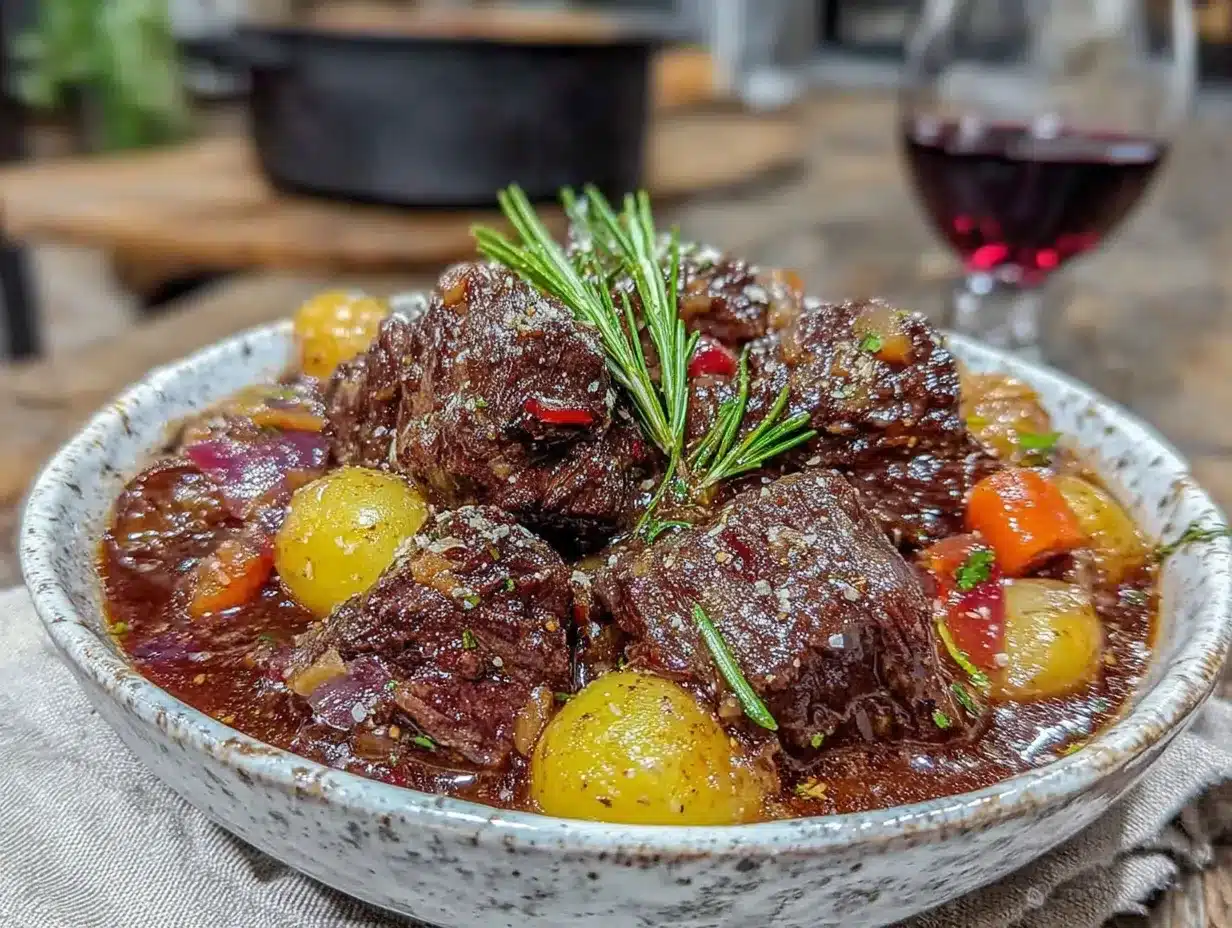
- 1.5 cups dry red wine (I recommend a Cabernet Sauvignon or Merlot—something you’d actually drink)
- 3 cups beef broth, low sodium (Better Than Bouillon is my go-to for depth of flavor)
- 1 tablespoon Worcestershire sauce (adds umami and complexity)
- 2 bay leaves (fresh or dried both work)
- 2 sprigs fresh thyme (or 1 teaspoon dried thyme)
- 1 teaspoon salt, plus more to taste
- 1/2 teaspoon black pepper, freshly ground
For the Vegetables
- 4 large carrots, peeled and cut into 1-inch chunks (about 2 cups)
- 3 celery stalks, cut into 1-inch pieces (about 1 cup)
- 1.5 pounds Yukon Gold potatoes, cut into 1.5-inch chunks (they hold their shape better than russets)
- 1 cup frozen peas (add them at the very end for a pop of color and sweetness)
Ingredient Tips: For the best texture, look for beef chuck that has visible fat marbling—this breaks down during the long simmer and makes the meat incredibly tender. I’ve tried this with stew meat from the store, and while it works, chuck roast cut into cubes gives much better results. For the wine, don’t use anything labeled “cooking wine”—it’s full of salt and preservatives. A $10 bottle of Cabernet works perfectly. If you’re avoiding alcohol, you can substitute with an equal amount of beef broth plus 2 tablespoons of balsamic vinegar for acidity.
Equipment Needed
You don’t need a fancy kitchen to make this cozy red wine beef stew for chilly nights, but a few key tools make the process much smoother.
- Dutch oven or heavy-bottomed pot (5-6 quart size is ideal—I use my trusty Le Creuset, but a Lodge enameled cast iron works beautifully too)
- Sharp chef’s knife (a dull knife makes cutting beef and vegetables frustrating and dangerous)
- Cutting board (preferably wood or plastic—glass boards are too hard on knives)
- Wooden spoon or silicone spatula (for scraping up those delicious browned bits)
- Measuring cups and spoons
- Tongs (for flipping the beef while browning)
- Small bowl (for mixing the flour coating)
If you don’t have a Dutch oven, a heavy-bottomed stockpot or even a slow cooker will work. For the slow cooker method, brown the beef and sauté the vegetables on the stovetop first, then transfer everything to the slow cooker and cook on low for 8 hours. I’ve done it both ways, and honestly, the Dutch oven gives you better browning and deeper flavor, but the slow cooker is great for busy days when you want dinner waiting for you.
Preparation Method
Making this cozy red wine beef stew for chilly nights takes time, but most of it is hands-off simmering. Here’s how to do it right.
- Prep your ingredients first. Cut the beef into 1.5-inch cubes, chop all the vegetables, and measure out your wine and broth. Having everything ready before you start cooking makes the process so much less stressful. Pat the beef dry with paper towels—this is crucial for good browning.
- Season and coat the beef. In a small bowl, mix 1/4 cup flour, 1 teaspoon salt, and 1/2 teaspoon pepper. Toss the beef cubes in the flour mixture until evenly coated. Shake off any excess flour—you want a light coating, not a thick paste.
- Brown the beef in batches. Heat 1 tablespoon olive oil in your Dutch oven over medium-high heat until it shimmers. Add the beef in a single layer—don’t overcrowd the pot. Work in batches if needed. Brown each side for 3-4 minutes until deeply golden. Use tongs to flip the pieces. Transfer the browned beef to a plate and repeat with remaining beef. This step takes about 10-12 minutes total, but it’s the most important part of the recipe. Those brown bits on the bottom of the pot? That’s flavor gold.
- Sauté the aromatics. Reduce the heat to medium. Add the remaining 1 tablespoon olive oil. Add the diced onion and cook for 4-5 minutes until softened and translucent, scraping up any browned bits from the bottom of the pot. Add the minced garlic and cook for 30 seconds until fragrant—don’t let it burn.
- Add tomato paste and deglaze. Stir in the tomato paste and cook for 1 minute, stirring constantly. It should darken slightly and smell rich. Pour in about 1/2 cup of the red wine and use your wooden spoon to scrape up all those browned bits from the bottom. This is called deglazing, and it’s where all the flavor lives.
- Return the beef and add liquids. Add the browned beef back to the pot, along with any juices that accumulated on the plate. Pour in the remaining 1 cup of red wine, the beef broth, and the Worcestershire sauce. Add the bay leaves and thyme sprigs. Stir everything together.
- Simmer low and slow. Bring the stew to a gentle boil, then reduce the heat to low. Cover the pot with the lid slightly ajar—you want some steam to escape. Let it simmer for 1.5 hours, stirring occasionally. The liquid should be gently bubbling, not boiling vigorously. If it’s boiling too hard, the beef will get tough instead of tender.
- Add the vegetables. After 1.5 hours, add the carrots, celery, and potatoes to the pot. Stir to combine. Cover again and continue simmering for another 45 minutes to 1 hour, until the vegetables are tender and the beef is fork-tender. The stew should have thickened nicely by now.
- Finish with peas and adjust seasoning. Remove the bay leaves and thyme sprigs. Stir in the frozen peas and cook for 2-3 minutes until heated through. Taste the broth and adjust salt and pepper as needed. I usually add another 1/2 teaspoon of salt at this point.
- Rest before serving. Turn off the heat and let the stew sit for 10-15 minutes before serving. This allows the flavors to meld and the stew to thicken slightly more. The waiting is the hardest part, I know, but it’s worth it.
Sensory Cues: When the stew is ready, the broth should be rich and dark, almost like a thin gravy. The beef should pull apart easily with a fork—no sawing required. The carrots should be tender but not mushy, and the potatoes should hold their shape while being soft in the center. The smell will fill your entire kitchen with warmth and comfort.
Cooking Tips & Techniques
After twelve attempts at recreating that bistro stew, I learned a few things the hard way. Here are my best tips for perfecting this cozy red wine beef stew for chilly nights.
Don’t skip the browning step. I know it’s tempting to just dump everything in the pot and walk away, but browning the beef creates the Maillard reaction—that chemical process that gives meat its deep, savory flavor. If you rush this step, your stew will taste flat. I learned this lesson after my third attempt came out tasting like boiled meat. Never again.
Use the right wine. I once made the mistake of using a cheap white wine because that’s all I had on hand. Don’t do it. The wine is a major flavor component here, so use something you’d actually enjoy drinking. A dry red like Cabernet Sauvignon, Merlot, or even a Zinfandel works beautifully. If the wine tastes good in a glass, it’ll taste good in your stew.
Low and slow is the way to go. I know it’s tempting to crank up the heat to speed things up, but patience is key here. Simmering too fast will make the beef tough and stringy instead of tender and melt-in-your-mouth. Keep the heat low enough that you see gentle bubbles, not a rolling boil. Trust the process—your patience will be rewarded.
Make it ahead of time. This is one of those magical recipes that tastes even better the next day. The flavors have time to meld and deepen overnight in the fridge. I often make this stew on a Sunday and serve it on Monday. It’s like the stew version of letting a good wine breathe.
Thicken if needed. If your stew is thinner than you’d like after the full cooking time, mix 1 tablespoon cornstarch with 2 tablespoons cold water to make a slurry. Stir it into the simmering stew and cook for 2-3 minutes until thickened. I’ve only needed to do this once or twice, but it’s a good trick to have in your back pocket.
Variations & Adaptations
One of the best things about this cozy red wine beef stew for chilly nights is how adaptable it is. Here are some ways to make it your own.
Vegetarian Version: Swap the beef for portobello mushrooms and add an extra can of chickpeas for protein. Use vegetable broth instead of beef broth, and skip the Worcestershire sauce (or use a vegan version). The mushrooms provide that same meaty, umami flavor that makes this stew so satisfying. I tried this version for a vegetarian friend and honestly, I didn’t miss the meat at all.
Slow Cooker Method: Brown the beef and sauté the vegetables on the stovetop first, then transfer everything to a slow cooker. Cook on low for 8 hours or high for 4 hours. Add the peas in the last 30 minutes of cooking. This version is perfect for busy days when you want to come home to dinner already made.
Herb Variations: Try swapping the thyme for rosemary or adding a sprig of sage for a different flavor profile. I once added a cinnamon stick and star anise for a Moroccan-inspired twist—it was incredible, though definitely not traditional. Experiment with what you have on hand.
Gluten-Free Adaptation: Use gluten-free all-purpose flour or cornstarch to coat the beef. Most gluten-free flours work well here—I’ve had good results with Bob’s Red Mill 1-to-1 Baking Flour. The stew will thicken just as nicely.
Add More Vegetables: Feel free to throw in parsnips, turnips, or even sweet potatoes along with the carrots and potatoes. Mushrooms are another great addition—add them when you sauté the onions for extra depth. I’ve also added a cup of frozen corn in the summer for a pop of sweetness.
Serving & Storage Suggestions
This cozy red wine beef stew for chilly nights deserves to be served with love. Here’s how to make the most of it.
Serving Suggestions: Ladle the stew into deep bowls and serve with crusty bread for dipping—I’m partial to a good sourdough or a warm baguette. A sprinkle of fresh parsley on top adds color and freshness. For a complete meal, serve alongside a simple green salad with a tangy vinaigrette to cut through the richness. And honestly, a glass of the same red wine you used in the stew is the perfect pairing.
Storage Instructions: Let the stew cool completely before storing. Transfer to an airtight container and refrigerate for up to 4 days. The flavors actually improve over time, so don’t be afraid to make it a day or two ahead. I’ve found that day-old stew is even more delicious than fresh—something magical happens overnight in the fridge.
Freezing Instructions: This stew freezes beautifully. Portion it into freezer-safe containers or zip-top bags, leaving some room for expansion. It will keep for up to 3 months. Thaw overnight in the refrigerator before reheating. I like to freeze individual portions for easy lunches on busy days.
Reheating Tips: Reheat gently on the stovetop over medium-low heat, stirring occasionally. Add a splash of beef broth or water if the stew has thickened too much during storage. You can also reheat individual portions in the microwave for 2-3 minutes, stirring halfway through. The stew will be just as comforting the second time around.
Nutritional Information & Benefits
While this cozy red wine beef stew for chilly nights is definitely comfort food, it also packs some surprising nutritional benefits.
Estimated Nutritional Values (per serving, serves 6):
- Calories: 420
- Protein: 35g
- Fat: 18g
- Carbohydrates: 28g
- Fiber: 5g
- Iron: 25% DV
- Vitamin A: 80% DV
- Vitamin C: 20% DV
Health Benefits: Beef is an excellent source of high-quality protein and iron, which helps carry oxygen through your blood. The carrots provide a hefty dose of vitamin A for healthy vision and immune function. Potatoes offer potassium and vitamin C, while the red wine contains antioxidants called polyphenols that support heart health. This stew is also naturally gluten-free if you use a gluten-free flour alternative, making it accessible for many dietary needs.
Dietary Considerations: This recipe contains gluten (from the flour) and dairy (if served with buttered bread). To make it dairy-free, simply skip the butter on your bread. For a lower-sodium version, use low-sodium beef broth and reduce the added salt. The stew is naturally nut-free and egg-free.
Conclusion
This cozy red wine beef stew for chilly nights has become a staple in my kitchen, and I have a feeling it’ll become one in yours too. It’s the kind of recipe that feels special enough for company but simple enough for a regular Tuesday night. The rich, wine-infused broth, the tender beef, the perfectly cooked vegetables—every spoonful is a reminder that good food doesn’t have to be complicated.
I hope you’ll give this stew a try and make it your own. Maybe you’ll add extra garlic like my neighbor does, or throw in some mushrooms like my sister prefers. That’s the beauty of a good recipe—it’s a starting point, not a rulebook. I’d love to hear how yours turns out. Drop a comment below and let me know if this stew warmed your chilly night the way it’s warmed so many of mine.
Happy cooking, and stay warm out there!
Frequently Asked Questions
Can I use a different cut of beef for this stew?
Absolutely. While chuck roast is my top recommendation for its marbling and tenderness, you can also use bottom round, brisket, or even stew meat from the store. Just keep in mind that leaner cuts may need a slightly longer simmer to become tender. If you’re using a tougher cut, add an extra 30 minutes to the cooking time.
Can I make this stew in an Instant Pot?
Yes! Use the sauté function to brown the beef and cook the vegetables, then add all the liquid and cook on high pressure for 35 minutes. Quick release the pressure, add the vegetables, and cook for another 10 minutes. The Instant Pot version is faster but still delivers that deep, slow-cooked flavor.
What’s the best wine to use for beef stew?
A dry red wine like Cabernet Sauvignon, Merlot, or Zinfandel works beautifully. The key is to use a wine you’d actually drink—avoid “cooking wine” at all costs. If you’re unsure, ask your local wine shop for a budget-friendly red that’s good for cooking. A $10 bottle will do the trick.
Can I freeze leftover beef stew?
Definitely. Let the stew cool completely, then transfer to freezer-safe containers or zip-top bags. It will keep for up to 3 months. Thaw overnight in the refrigerator before reheating. The stew might thicken a bit during freezing, so add a splash of broth when reheating if needed.
How can I thicken the stew if it’s too thin?
If your stew is thinner than you’d like after cooking, mix 1 tablespoon cornstarch with 2 tablespoons cold water to make a slurry. Stir it into the simmering stew and cook for 2-3 minutes until thickened. Alternatively, you can mash a few of the cooked potatoes against the side of the pot to naturally thicken the broth.
Pin This Recipe!
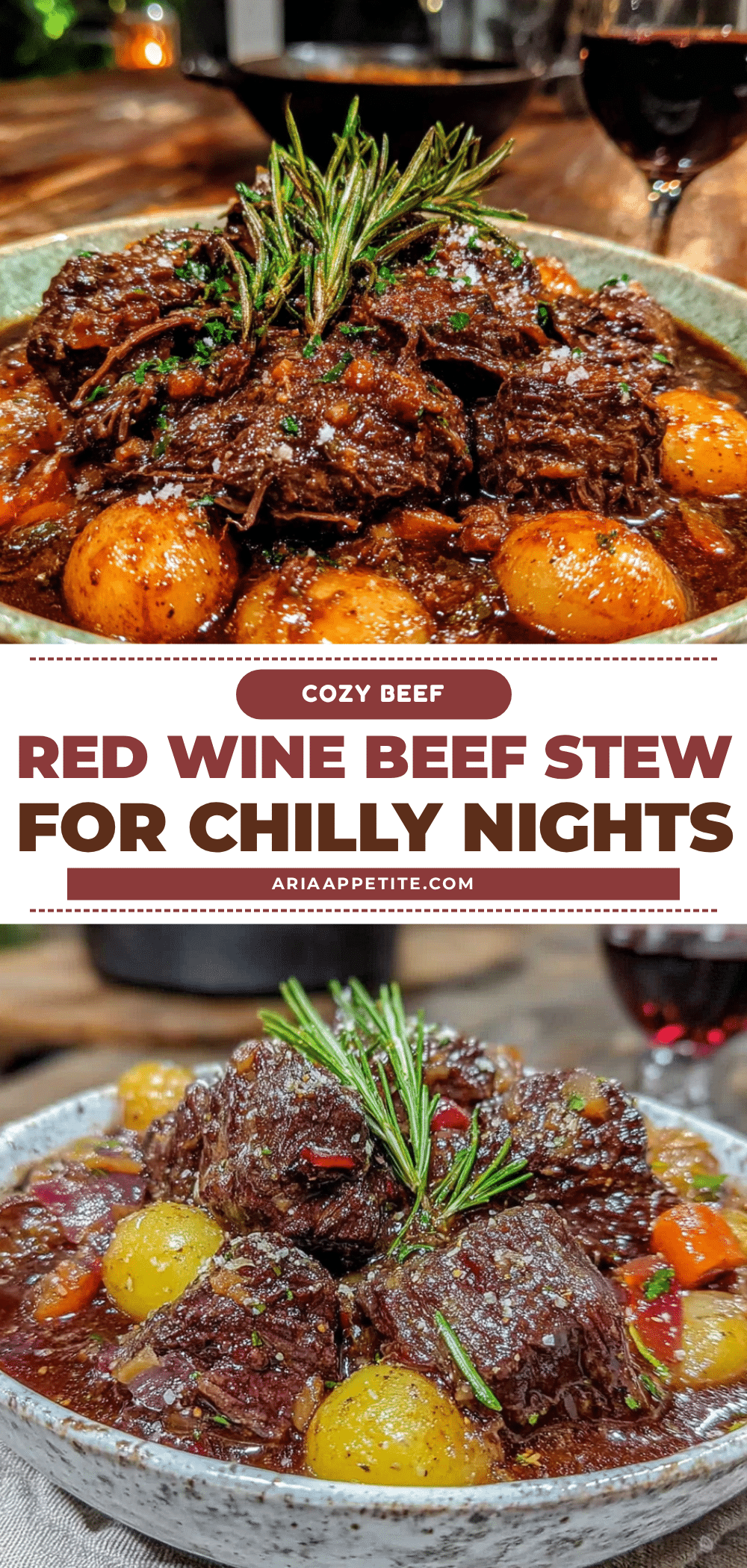
Cozy Red Wine Beef Stew for Chilly Nights

A rich, slow-simmered beef stew with red wine, tender vegetables, and fall-apart beef that captures the memory of a beloved French bistro. Perfect for cold evenings and impressing guests with minimal fuss.
- Prep Time: 30 minutes
- Cook Time: 2 hours 30 minutes
- Total Time: 3 hours
- Yield: 6 servings 1x
- Category: Main Course
- Cuisine: French
Ingredients
- 2 pounds beef chuck roast, cut into 1.5-inch cubes
- 2 tablespoons olive oil, divided
- 1 large yellow onion, diced (about 1.5 cups)
- 3 cloves garlic, minced
- 2 tablespoons tomato paste
- 1/4 cup all-purpose flour
- 1.5 cups dry red wine (Cabernet Sauvignon or Merlot)
- 3 cups low-sodium beef broth
- 1 tablespoon Worcestershire sauce
- 2 bay leaves
- 2 sprigs fresh thyme (or 1 teaspoon dried thyme)
- 1 teaspoon salt, plus more to taste
- 1/2 teaspoon black pepper, freshly ground
- 4 large carrots, peeled and cut into 1-inch chunks (about 2 cups)
- 3 celery stalks, cut into 1-inch pieces (about 1 cup)
- 1.5 pounds Yukon Gold potatoes, cut into 1.5-inch chunks
- 1 cup frozen peas
Instructions
- Prep your ingredients first. Cut the beef into 1.5-inch cubes, chop all the vegetables, and measure out your wine and broth. Pat the beef dry with paper towels.
- Season and coat the beef. In a small bowl, mix 1/4 cup flour, 1 teaspoon salt, and 1/2 teaspoon pepper. Toss the beef cubes in the flour mixture until evenly coated. Shake off any excess flour.
- Brown the beef in batches. Heat 1 tablespoon olive oil in your Dutch oven over medium-high heat until it shimmers. Add the beef in a single layer—don’t overcrowd the pot. Brown each side for 3-4 minutes until deeply golden. Transfer the browned beef to a plate and repeat with remaining beef.
- Sauté the aromatics. Reduce the heat to medium. Add the remaining 1 tablespoon olive oil. Add the diced onion and cook for 4-5 minutes until softened and translucent. Add the minced garlic and cook for 30 seconds until fragrant.
- Add tomato paste and deglaze. Stir in the tomato paste and cook for 1 minute. Pour in about 1/2 cup of the red wine and use your wooden spoon to scrape up all the browned bits from the bottom.
- Return the beef and add liquids. Add the browned beef back to the pot, along with any juices. Pour in the remaining 1 cup of red wine, the beef broth, and the Worcestershire sauce. Add the bay leaves and thyme sprigs. Stir everything together.
- Simmer low and slow. Bring the stew to a gentle boil, then reduce the heat to low. Cover the pot with the lid slightly ajar. Let it simmer for 1.5 hours, stirring occasionally.
- Add the vegetables. After 1.5 hours, add the carrots, celery, and potatoes to the pot. Stir to combine. Cover again and continue simmering for another 45 minutes to 1 hour, until the vegetables are tender and the beef is fork-tender.
- Finish with peas and adjust seasoning. Remove the bay leaves and thyme sprigs. Stir in the frozen peas and cook for 2-3 minutes until heated through. Taste the broth and adjust salt and pepper as needed.
- Rest before serving. Turn off the heat and let the stew sit for 10-15 minutes before serving.
Notes
For best results, brown the beef in batches and deglaze the pan with wine twice. The stew tastes even better the next day. If the stew is too thin, mix 1 tablespoon cornstarch with 2 tablespoons cold water and stir in while simmering.
Nutrition
- Serving Size: 1 serving (about 1.5
- Calories: 420
- Sugar: 8
- Sodium: 800
- Fat: 18
- Saturated Fat: 6
- Carbohydrates: 28
- Fiber: 5
- Protein: 35
Keywords: beef stew, red wine stew, cozy stew, winter comfort food, one-pot meal, French bistro stew