Love this? Save it for later!
Share the inspiration with your friends
My neighbor wasn’t trying to impress anyone. I’d stopped by to borrow a corkscrew—our power had flickered during a storm, and I figured a bottle of red was the civilized response—and the smell hit me before I even got past her porch. It was rich, beefy, wrapped in something herbal and warm, like garlic had been slow-roasting for hours. I stood there, corkscrew forgotten, as she pulled this massive, gorgeous roast out of the oven. She just shrugged and said, “Oh, it’s nothing. Just a little reverse sear thing I do.”
Honestly, that moment changed how I think about cooking a special meal. Here was this woman, in her cozy kitchen with a chipped mug and a dog sleeping under the table, casually producing the most beautiful prime rib I’d ever seen. It wasn’t a holiday. There was no fanfare. She was just making dinner on a random Tuesday because she felt like it. And the casualness of it all—that’s what got me. She wasn’t stressed, she wasn’t showing off. She just knew a trick that made everything easy.
That’s the magic of this recipe. It’s a cozy garlic herb prime rib roast made with the reverse sear method, and it turns what could be a stressful, expensive centerpiece into something almost… relaxing. The method is forgiving, the result is stunning, and you get that incredible crust without any of the anxiety. Maybe you’ve been there, staring at a beautiful piece of meat, terrified of ruining it. I know I have. But this technique? It takes the pressure off and gives you the best roast you’ve ever made. Let me tell you, I haven’t cooked a prime rib any other way since that night.
Why You’ll Love This Recipe
This isn’t just another prime rib recipe. After testing this method more times than I care to count, I can tell you it’s the one that works every single time. Here’s why this cozy garlic herb prime rib roast will become your go-to for every special occasion:
- Foolproof Reverse Sear: This method guarantees an evenly cooked, perfectly pink interior from edge to edge. No more gray bands of overcooked meat.
- Simple, Pantry Ingredients: You don’t need a fancy spice blend. Garlic, fresh herbs, salt, and pepper do all the heavy lifting.
- Perfect for Cozy Gatherings: Whether it’s Christmas dinner, a birthday, or just a Sunday that needs fixing, this roast makes any night feel special.
- Stress-Free for the Cook: The low-and-slow first stage gives you tons of wiggle room. You can hold the roast at temp for an hour or more without ruining it.
- Unbelievably Tender: The slow roasting breaks down the connective tissue, giving you a buttery, melt-in-your-mouth texture that’s pure comfort.
What makes this recipe different from the rest is the technique. The reverse sear—roasting low and slow first, then blasting it with high heat at the end—isn’t just a trend. It’s a game-changer. I’ve tested it against traditional high-heat roasting, and I’ll never go back. This version gives you that gorgeous, crispy, herb-crusted exterior with a perfectly rosy interior that’s impossible to mess up.
This recipe is the kind that makes you close your eyes after the first bite. It’s comfort food at its finest—rich, savory, and deeply satisfying. Perfect for impressing guests without the stress, or turning a simple evening into something memorable. Honestly, it’s the kind of meal that makes you want to light a fire, pour a glass of wine, and just breathe.
What Ingredients You Will Need
This recipe uses simple, quality ingredients to build layers of flavor. The magic is in the herb crust and the quality of the beef. Here’s what you’ll need to gather for your cozy garlic herb prime rib roast.
- Prime Rib Roast (bone-in, 4-6 lbs): A bone-in roast is preferred for maximum flavor and moisture. The bones act as a natural rack and add incredible depth. Look for one with good marbling—that’s where the flavor is. I usually ask my butcher for a “Choice” or “Prime” grade roast.
- Fresh Garlic (6-8 cloves, minced): Don’t skimp here. Fresh garlic is non-negotiable for that pungent, aromatic kick that perfumes the whole kitchen. I like to mince it super fine so it melts into the butter.
- Fresh Rosemary (2 tablespoons, chopped): The piney, woodsy notes of rosemary are a classic pairing with beef. Fresh is miles ahead of dried here for that bright, herbal pop.
- Fresh Thyme (1 tablespoon, leaves stripped): Thyme adds a subtle, earthy warmth that rounds out the rosemary. I always run my fingers down the stem to release the leaves.
- Unsalted Butter (4 tablespoons, softened): The butter acts as a carrier for all the herbs and garlic, helping them stick to the roast and creating a rich, flavorful crust. Use unsalted so you can control the salt level.
- Coarse Kosher Salt (2 tablespoons): This is your most important seasoning. Kosher salt’s large flakes adhere well and season the meat evenly. Don’t use table salt—it’s too fine and can make the roast salty.
- Freshly Ground Black Pepper (1 tablespoon): Freshly ground pepper adds a warm, spicy bite that you just can’t get from pre-ground. Be generous with it.
- Olive Oil (2 tablespoons): A little oil helps the salt and pepper stick and aids in browning during the final sear. A good extra-virgin is fine, but a standard olive oil works perfectly.
- Optional: Beef Broth (1 cup) for au jus: While the roast rests, I like to deglaze the pan with some beef broth. It picks up all those delicious browned bits and makes a simple, savory jus to serve alongside.
For the best results, I recommend using a high-quality butter like Kerrygold for the herb paste—it adds a richness that’s hard to beat. And if you can find fresh herbs from a local farmer’s market, even better. They’ll be more fragrant and flavorful. You could also swap the rosemary for fresh oregano or marjoram for a slightly different herbal profile.
Equipment Needed
You don’t need a professional kitchen to pull off this cozy garlic herb prime rib roast, but a few key tools will make your life a lot easier. Here’s what you’ll want to have on hand:
- Roasting Pan with a Wire Rack: A sturdy roasting pan is essential. The wire rack lifts the roast off the bottom, allowing hot air to circulate evenly for that perfect crust. If you don’t have a rack, you can use a bed of thick-cut onions or carrots.
- Instant-Read Meat Thermometer: This is non-negotiable. I’ve ruined more roasts than I care to admit by guessing the temperature. A good digital thermometer takes the guesswork out and ensures perfect doneness every time. I love my Thermapen for its speed.
- Chef’s Knife: A sharp, heavy knife makes mincing garlic and chopping herbs a breeze. It’s also great for carving the finished roast into beautiful slices.
- Small Bowl: For mixing your herb butter paste. Nothing fancy needed here.
- Aluminum Foil: You’ll need this for tenting the roast while it rests. It helps retain heat and allows the juices to redistribute.
- Stovetop-Safe Skillet (optional): If you prefer to sear the roast on the stovetop instead of using the oven’s broiler, a large cast-iron skillet is perfect for the job.
If you don’t own a roasting pan, don’t worry. A heavy-duty baking sheet lined with a rack works just as well. I’ve even used a disposable aluminum pan in a pinch—just be careful it doesn’t buckle under the weight. As for the thermometer, a simple $15 instant-read from the grocery store will do the job. You don’t need to spend a fortune.
Preparation Method
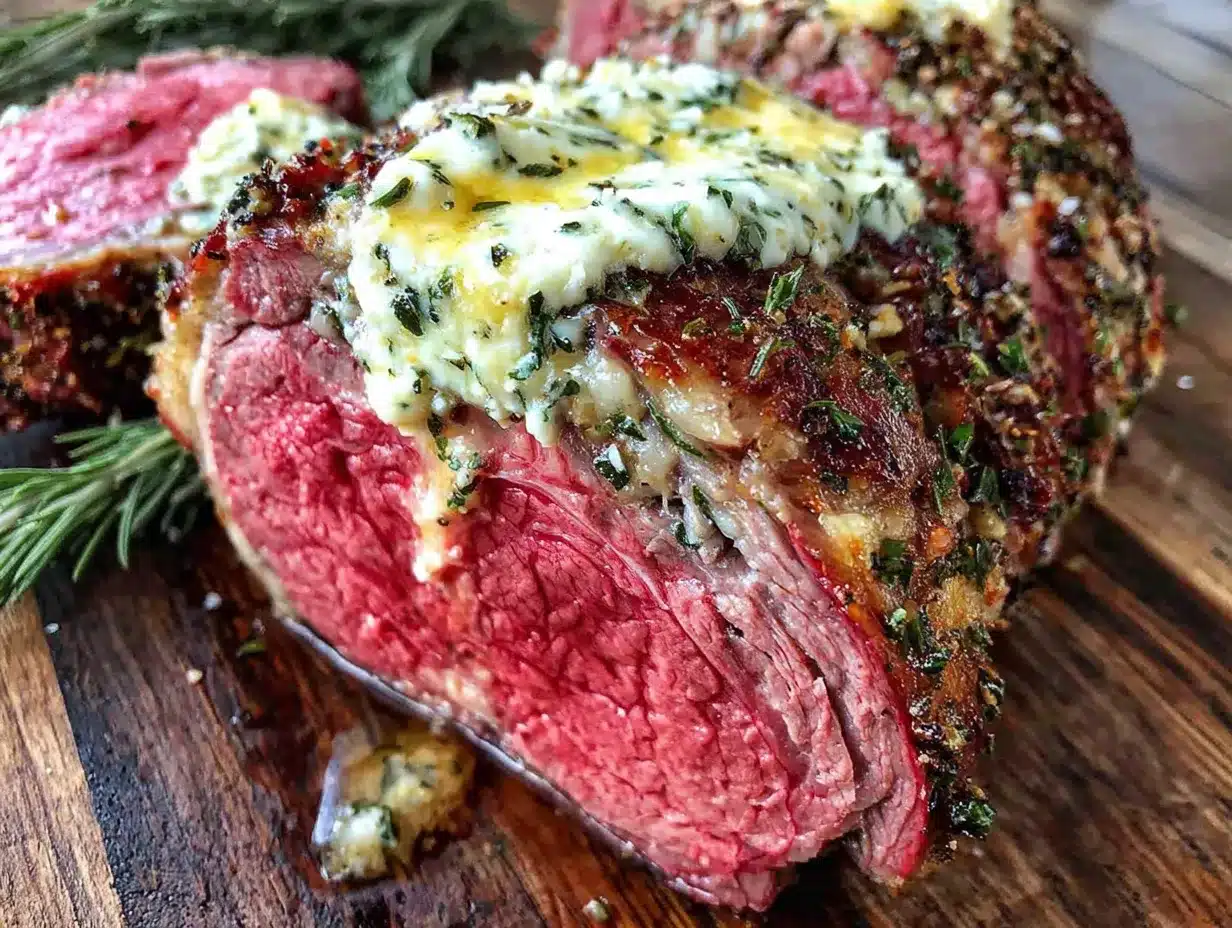
This is where the magic happens. Follow these steps carefully, and you’ll have a cozy garlic herb prime rib roast that’s tender, juicy, and perfectly cooked every single time.
- Prep the Roast (30 minutes before cooking): Take your prime rib out of the refrigerator and let it sit at room temperature for at least 30 minutes. This takes the chill off and ensures more even cooking. Pat it completely dry with paper towels—moisture is the enemy of a good crust.
- Make the Herb Butter: In a small bowl, combine the softened butter, minced garlic, chopped rosemary, and thyme leaves. Mix until everything is well incorporated. This is your flavor bomb.
- Season the Roast: Rub the entire roast with olive oil. Then, generously season all sides with kosher salt and freshly ground black pepper. Don’t be shy—you need a good coating. Now, slather that herb butter all over the roast, making sure to get it into every nook and cranny. The butter will melt and baste the meat as it cooks.
- Preheat the Oven: Preheat your oven to 250°F (120°C). This low temperature is the key to the reverse sear. It gently brings the meat up to temp without overcooking the outside.
- Roast Low and Slow: Place the seasoned roast on the wire rack inside your roasting pan, bone-side down. Insert your meat thermometer into the thickest part of the meat, avoiding the bone. Roast for approximately 2.5 to 3.5 hours, or until the internal temperature reaches 125°F (52°C) for medium-rare. Start checking the temperature about 30 minutes before you think it’ll be done. The roast will continue to cook as it rests.
- Rest and Raise the Heat: Once the roast hits 125°F, remove it from the oven. Tent it loosely with aluminum foil and let it rest for at least 20 minutes. Meanwhile, increase your oven temperature to 500°F (260°C) or as high as it will go. This high heat is what creates that incredible crust.
- The Final Sear: After the roast has rested and your oven is screaming hot, remove the foil. Return the roast to the oven (still on the rack) and sear for 5 to 10 minutes, watching it closely. You’re looking for a deep, golden-brown crust. Don’t walk away—it can burn quickly.
- Rest Again (Crucial!): Remove the roast from the oven and let it rest for another 10 minutes. This second rest allows the juices to settle after the high-heat blast. If you skip this, all those beautiful juices will run out onto your cutting board.
- Carve and Serve: Transfer the roast to a cutting board. Using a sharp knife, slice against the grain into thick, beautiful pieces. Serve immediately with your favorite sides and a drizzle of au jus.
Troubleshooting Tip: If your roast is taking longer than expected to reach temperature, don’t panic. The low oven is very forgiving. Just be patient. If it’s cooking too fast, your oven might run hot—double-check with an oven thermometer. And if you hit your target temp early, you can hold the roast in the oven at 140°F (60°C) for up to an hour without any issues.
Cooking Tips & Techniques
After making this cozy garlic herb prime rib roast more times than I can count, I’ve learned a few things the hard way. Here are my best tips to help you nail it on the first try.
Don’t Skip the Dry Brine: If you have time, salt the roast the night before and leave it uncovered in the fridge. This dry brines the meat, drawing the salt deep into the fibers for better flavor and a drier surface for an even better crust. I learned this after my first few roasts came out a little bland on the inside.
Patience is a Virtue: The biggest mistake I see is rushing the low-and-slow part. I once cranked the oven to 300°F because I was hungry, and the roast came out unevenly cooked—gray on the outside, rare in the center. Trust the process. Low and slow is the whole point of the reverse sear.
Use a Timer for the Final Sear: That 500°F oven is intense. I’ve burned more than one crust because I got distracted by a side dish. Set a timer for 5 minutes, then check it every minute after that. You want it deep brown, not black.
Let It Rest Twice: I know it feels wasteful to rest it twice, but trust me on this. The first rest after the low roast allows the internal temperature to equalize. The second rest after the sear lets the juices settle. I once skipped the second rest and ended up with a puddle of juice on my cutting board. Never again.
Slice It Thick: Prime rib is a special occasion roast. Don’t slice it thin like deli meat. Aim for 1-inch thick slices. It looks more impressive and feels more luxurious. Plus, it holds its temperature better on the plate.
Variations & Adaptations
This cozy garlic herb prime rib roast is wonderfully adaptable. Here are a few ways to make it your own.
- Herb Swap: Not a fan of rosemary? Try using fresh oregano or tarragon instead. Tarragon has a lovely anise-like flavor that pairs beautifully with beef. I’ve also used a mix of parsley and chives for a lighter, fresher taste.
- Garlic Lovers’ Version: If you’re like me and can’t get enough garlic, roast a whole head of garlic alongside the beef. Squeeze the soft, caramelized cloves into your herb butter for a sweeter, more mellow garlic flavor. It’s divine.
- Peppercorn Crust: For a bolder, spicier crust, coarsely crush a mix of black, green, and pink peppercorns. Press them into the herb butter before roasting. The pink peppercorns add a subtle fruity sweetness that’s unexpected and wonderful.
- Horseradish Cream Sauce: While the roast rests, mix ½ cup sour cream with 2 tablespoons prepared horseradish, a squeeze of lemon juice, and a pinch of salt. This tangy, creamy sauce cuts through the richness of the beef perfectly.
- Dietary Adaptations: This recipe is naturally gluten-free and low-carb. For a dairy-free version, simply swap the butter for a high-quality olive oil or a dairy-free butter alternative. The texture will be slightly different, but it’s still delicious.
Serving & Storage Suggestions
This cozy garlic herb prime rib roast is a showstopper, and how you serve it can make all the difference. Here’s how to get the most out of every bite.
Serving Temperature: Serve the roast immediately after the final rest. It should be warm, with the interior still perfectly pink. I like to arrange the slices on a warm platter and spoon a little au jus over the top just before serving.
What to Serve With It: This roast pairs beautifully with creamy mashed potatoes, roasted root vegetables, or a simple green salad with a tangy vinaigrette. A rich red wine, like a Cabernet Sauvignon or a Syrah, is the perfect companion. For a cozy winter meal, I love serving it with roasted Brussels sprouts and a side of creamed spinach.
Storage: Leftover prime rib is a gift. Store any leftover slices in an airtight container in the refrigerator for up to 4 days. The flavors actually deepen overnight, making for incredible sandwiches the next day.
Reheating: The best way to reheat prime rib without drying it out is to place the slices in a baking dish with a splash of beef broth, cover with foil, and warm in a 300°F (150°C) oven for about 10 minutes. You can also sear slices quickly in a hot skillet for a crispy exterior. Avoid the microwave—it will turn your beautiful roast into shoe leather.
Freezing: You can freeze cooked prime rib for up to 3 months. Wrap individual slices tightly in plastic wrap, then place them in a freezer bag. Thaw overnight in the refrigerator before reheating using the method above.
Nutritional Information & Benefits
While this cozy garlic herb prime rib roast is an indulgence, it does offer some nutritional benefits. Here’s a rough estimate per serving (based on a 6-ounce portion, excluding sides):
- Calories: ~450
- Protein: 45g
- Fat: 30g
- Carbohydrates: 1g
- Iron: 15% of the Daily Value
- Vitamin B12: 100% of the Daily Value
Health Benefits: Beef is an excellent source of high-quality protein, which is essential for muscle repair and growth. It’s also rich in iron, which helps carry oxygen in your blood, and Vitamin B12, which supports nerve function. The garlic and herbs in this recipe are packed with antioxidants that can help reduce inflammation. Of course, this is a rich dish, so enjoy it in moderation as part of a balanced diet.
Dietary Considerations: This recipe is naturally gluten-free and low-carb, making it suitable for those on a keto or paleo diet. As mentioned, it can be made dairy-free with a simple butter swap. The main allergen to be aware of is dairy from the butter.
Conclusion
This cozy garlic herb prime rib roast is more than just a recipe—it’s a ritual. It’s the meal you make when you want to slow down, savor the moment, and share something truly special with the people you love. The reverse sear method takes the fear out of cooking an expensive cut of meat, leaving you with a perfectly cooked, beautifully crusted roast that looks like it came from a fancy steakhouse.
I’ve made this roast for Christmas dinners, New Year’s celebrations, and quiet Sunday nights when I just needed something warm and comforting. Every time, it delivers. The smell of garlic and herbs filling the house, the anticipation as you pull it from the oven, that first bite that makes everything else fade away—it’s pure magic.
I’d love to hear how yours turns out! Did you try any of the variations? What sides did you serve with it? Drop a comment below and let me know. And if you’re looking for more cozy, comforting recipes, be sure to check out my garlic herb roasted potatoes—they’re the perfect sidekick to this roast. Happy cooking, friends!
Frequently Asked Questions
Can I use a boneless prime rib roast for this recipe?
Absolutely! A boneless roast works just as well. The cooking time may be slightly shorter since there’s no bone to slow down heat transfer. Just use your meat thermometer to check for doneness, and you’ll be fine.
What if I don’t have fresh herbs?
You can use dried herbs in a pinch, but reduce the amount by about half. Dried herbs are more concentrated. I recommend using 1 teaspoon of dried rosemary and ½ teaspoon of dried thyme instead of the fresh amounts listed.
How do I know when the roast is done without a thermometer?
Honestly, I wouldn’t risk it without a thermometer. Prime rib is too expensive to guess. If you absolutely have to, you can use the “touch test” (comparing the firmness of the meat to the fleshy part of your palm), but it’s not very reliable. A $15 thermometer is a worthy investment.
Can I prepare this roast ahead of time?
You can season the roast and make the herb butter up to 24 hours in advance. Keep the seasoned roast uncovered in the fridge (this helps dry the surface for a better crust) and the butter covered at room temperature. On the day of, just let the roast come to room temp and proceed with the recipe.
What’s the best way to carve a prime rib roast?
If you have a bone-in roast, first remove the bones by slicing along the bone line. Then, place the boneless roast flat-side down and slice against the grain into 1-inch thick pieces. A sharp carving knife makes this much easier and gives you cleaner slices.
Pin This Recipe!
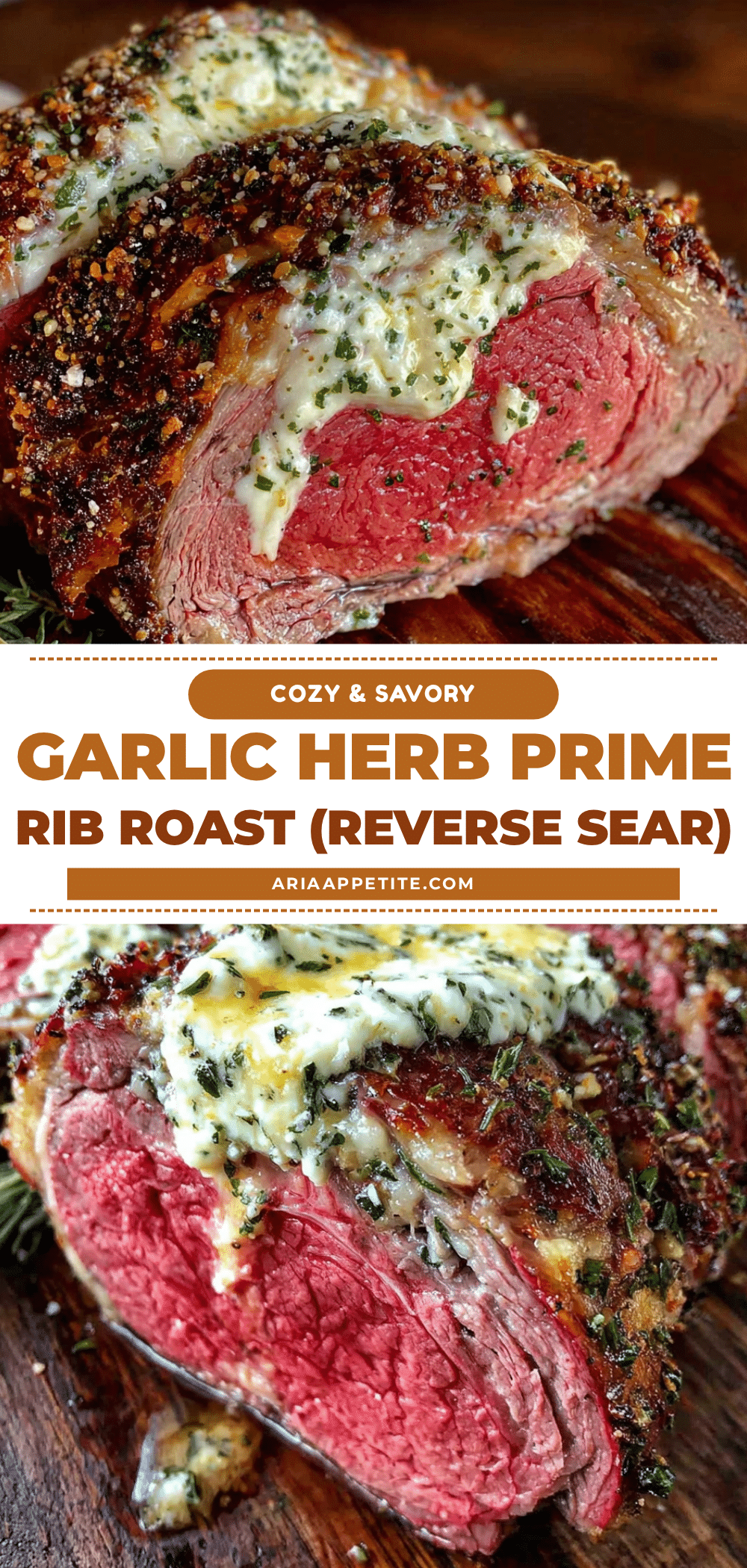
Cozy Garlic Herb Prime Rib Roast: Best Reverse Sear Recipe
A foolproof reverse sear method for a perfectly cooked prime rib roast with a garlic herb crust, resulting in a tender, juicy, and beautifully browned centerpiece for any special occasion.
- Prep Time: 30 minutes
- Cook Time: 2 hours 45 minutes
- Total Time: 3 hours 45 minutes
- Yield: 8 servings
- Category: Main Course
- Cuisine: American
Ingredients
- Prime rib roast (bone-in, 4-6 lbs)
- Fresh garlic (6-8 cloves, minced)
- Fresh rosemary (2 tablespoons, chopped)
- Fresh thyme (1 tablespoon, leaves stripped)
- Unsalted butter (4 tablespoons, softened)
- Coarse kosher salt (2 tablespoons)
- Freshly ground black pepper (1 tablespoon)
- Olive oil (2 tablespoons)
- Beef broth (1 cup, optional for au jus)
Instructions
- Prep the Roast (30 minutes before cooking): Take your prime rib out of the refrigerator and let it sit at room temperature for at least 30 minutes. Pat it completely dry with paper towels.
- Make the Herb Butter: In a small bowl, combine the softened butter, minced garlic, chopped rosemary, and thyme leaves. Mix until well incorporated.
- Season the Roast: Rub the entire roast with olive oil. Generously season all sides with kosher salt and freshly ground black pepper. Slather the herb butter all over the roast.
- Preheat the Oven: Preheat your oven to 250°F (120°C).
- Roast Low and Slow: Place the seasoned roast on a wire rack inside a roasting pan, bone-side down. Insert a meat thermometer into the thickest part, avoiding the bone. Roast for approximately 2.5 to 3.5 hours, or until the internal temperature reaches 125°F (52°C) for medium-rare.
- Rest and Raise the Heat: Once the roast hits 125°F, remove it from the oven. Tent it loosely with aluminum foil and let it rest for at least 20 minutes. Meanwhile, increase your oven temperature to 500°F (260°C) or as high as it will go.
- The Final Sear: After the roast has rested and the oven is hot, remove the foil. Return the roast to the oven and sear for 5 to 10 minutes, watching closely for a deep golden-brown crust.
- Rest Again: Remove the roast from the oven and let it rest for another 10 minutes.
- Carve and Serve: Transfer the roast to a cutting board. Slice against the grain into 1-inch thick pieces. Serve immediately with your favorite sides and a drizzle of au jus.
Notes
For best results, dry brine the roast overnight by salting it and leaving it uncovered in the fridge. Patience is key during the low-and-slow stage. Use a timer for the final sear to prevent burning. Let the roast rest twice for optimal juiciness. Slice thick (1-inch) for a luxurious presentation.
Nutrition
- Serving Size: 6 ounces
- Calories: 450
- Sodium: 800
- Fat: 30
- Saturated Fat: 12
- Carbohydrates: 1
- Protein: 45
Keywords: prime rib, reverse sear, garlic herb, roast beef, holiday dinner, special occasion