Love this? Save it for later!
Share the inspiration with your friends
I wasn’t expecting cooking advice from my accountant, but there I was, sitting in his cramped office last December, watching him sort through a pile of receipts while he told me exactly how to make lucky black-eyed pea soup for New Year’s Day. He had this old coffee mug with a faded rooster on it, and he kept sipping from it between sentences. “You gotta soak them overnight,” he said, not looking up from his calculator. “And don’t you dare skip the ham hock.” I nodded along, honestly thinking this was just one of those random conversations you have when you’re stuck waiting for your tax return. But then he pulled out a handwritten recipe from his desk drawer—the paper was yellowed and splattered with something that looked suspiciously like gravy—and handed it to me. “My grandmother made this every single New Year’s for sixty years,” he said. “We never missed it. Not once.”
Now, I’m not a superstitious person, you know. I don’t knock on wood or throw salt over my shoulder. But there’s something about the ritual of making lucky black-eyed pea soup on January first that feels right. Maybe it’s the way the kitchen fills with that smoky, earthy smell while the rest of the world is still recovering from the night before. Or maybe it’s the fact that my accountant—of all people—cared enough to share his family tradition with a client who was fifteen minutes late to their appointment. I mean, the man barely knew me, and yet he trusted me with his grandmother’s recipe. That kind of thing stays with you.
So I made it that year. And the next. And the one after that. And now it’s become my little New Year’s ritual too. This lucky black-eyed pea soup is hearty, warming, and packed with all the good-luck ingredients—black-eyed peas for prosperity, greens for wealth, and cornbread on the side for gold. It’s the kind of meal that makes you feel like you’re starting the year off right, even if you’re still in your pajamas at two in the afternoon. Let me tell you, if you’ve never had a bowl of this stuff while watching the Rose Parade, you’re missing out.
Why You’ll Love This Recipe
I’ve tested this lucky black-eyed pea soup more times than I can count, and I can honestly say it’s the best version I’ve ever made. It’s not just another soup recipe—it’s the one I turn to year after year, and here’s why you’ll love it too:
- Quick & Easy: Despite its rich, slow-cooked flavor, this soup comes together in about an hour and a half. Most of that time is hands-off simmering, so you can relax and enjoy your New Year’s Day.
- Simple Ingredients: No fancy grocery trips needed here. You probably already have onions, garlic, and broth in your kitchen. The black-eyed peas and ham hock are easy to find at any grocery store.
- Perfect for New Year’s Day: This soup was practically made for January first. It’s comforting, filling, and follows all those Southern traditions for good luck and prosperity. Plus, it tastes even better the next day—if you have any left.
- Crowd-Pleaser: Every time I serve this, people go back for seconds. It’s one of those rare dishes that both kids and adults love. My picky nephew asked for thirds last year, and that never happens.
- Unbelievably Delicious: The combination of smoky ham, tender peas, and savory broth is pure comfort food magic. The texture is creamy without being heavy, and each spoonful has that deep, satisfying flavor that only comes from slow simmering.
What makes this lucky black-eyed pea soup different from all the others? It’s the little things. I use a trick my accountant’s grandmother swore by—adding a splash of apple cider vinegar at the end to brighten everything up. And I don’t skimp on the aromatics. This isn’t just another version of black-eyed pea soup; it’s the version you’ll want to make every single year. It’s comfort food reimagined—healthier than the heavy cream versions, faster than the all-day simmer recipes, but with the same soul-soothing satisfaction that makes you close your eyes after the first bite.
What Ingredients You Will Need
This lucky black-eyed pea soup uses simple, wholesome ingredients to deliver bold flavor and satisfying texture without any fuss. Most of these are pantry staples or easy to find at your local grocery store. Here’s what you’ll need:
For the Soup Base
- 1 tablespoon olive oil – for sautéing the vegetables. You can use vegetable oil if that’s what you have.
- 1 large yellow onion, diced – this forms the flavor foundation. Sweet onions work too.
- 3 cloves garlic, minced – fresh is best, but jarred minced garlic works in a pinch.
- 2 celery stalks, diced – adds that classic savory depth.
- 2 large carrots, diced – for sweetness and color. I recommend [brand] organic carrots for the best flavor.
- 1 green bell pepper, diced – this is my little twist. Most recipes skip it, but it adds a subtle freshness that balances the richness.
For the Protein & Flavor
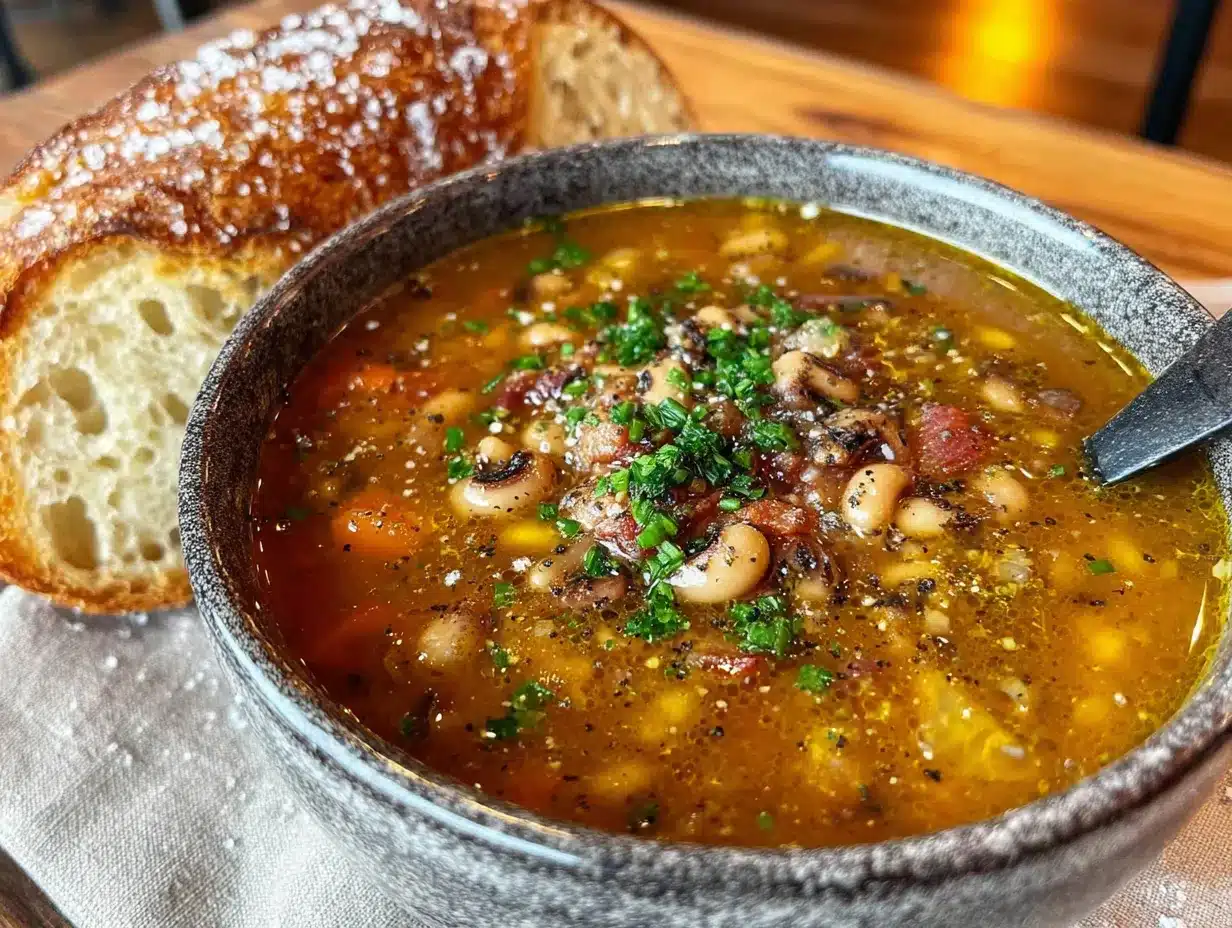
- 1 meaty ham hock (about 1 pound) – this is the secret to that deep, smoky flavor. Look for one with plenty of meat on it. You can substitute with a smoked turkey leg if preferred.
- 1 pound dried black-eyed peas – do not use canned for this recipe. Dried peas hold their shape better and absorb the broth flavors more deeply. I prefer [brand] dried black-eyed peas for consistent results.
- 6 cups low-sodium chicken broth – you can use vegetable broth for a lighter version, but chicken broth adds more richness.
- 2 cups water – for thinning the soup as it simmers. Add more if needed.
For Seasoning
- 1 teaspoon smoked paprika – this adds a subtle smokiness that complements the ham hock beautifully.
- 1 teaspoon dried thyme – a classic pairing with black-eyed peas.
- 1/2 teaspoon black pepper – freshly ground is best.
- 1/2 teaspoon salt – add more to taste at the end, as the ham hock can be salty.
- 2 bay leaves – for that background aromatic note.
- 1 tablespoon apple cider vinegar – this is the secret ingredient! It brightens the whole soup and cuts through the richness.
For Serving
- Fresh parsley, chopped – for garnish and a pop of color.
- Hot sauce – optional, but I love a few dashes of Tabasco for heat.
- Cornbread – this is non-negotiable in my house. The sweetness of cornbread pairs perfectly with the savory soup.
Substitution Guidance: If you’re vegetarian, skip the ham hock and use vegetable broth with a teaspoon of liquid smoke for that smoky flavor. For a gluten-free option, this soup is naturally gluten-free as written. Just make sure your broth is certified gluten-free.
Equipment Needed
You don’t need any fancy equipment for this lucky black-eyed pea soup, which is part of why I love it. Here’s what you’ll need:
- Large Dutch oven or heavy-bottomed pot (6-8 quart) – this is my go-to for soups. The heavy bottom prevents burning and distributes heat evenly. Le Creuset is amazing if you have the budget, but a good old-fashioned Lodge cast iron pot works just as well.
- Sharp chef’s knife – for dicing all those vegetables. A dull knife makes prep take twice as long and is honestly more dangerous.
- Cutting board – any sturdy board will do. I prefer wood because it’s gentler on knives.
- Wooden spoon – for stirring. Metal spoons can scratch your pot, especially if it’s enameled.
- Measuring cups and spoons – accuracy matters, especially with the broth and seasonings.
- Colander – for rinsing the black-eyed peas. Speaking of which, don’t skip rinsing them. You’d be surprised how much dust and debris can hide in dried peas.
- Large bowl – for soaking the peas overnight. A glass or ceramic bowl works best.
- Tongs – for removing the ham hock once it’s tender. Your fingers will thank you.
If you don’t have a Dutch oven, any large soup pot will work. Just keep an eye on the heat and stir occasionally to prevent sticking. And if you’re using a new pot for the first time, do a test run with water first to make sure it heats evenly. I learned that one the hard way after burning my first batch of soup because my cheap pot had hot spots.
Preparation Method
Making this lucky black-eyed pea soup is a labor of love, but I promise it’s worth every minute. Here’s how to do it:
- Soak the black-eyed peas overnight. The night before you plan to make the soup, place the dried peas in a large bowl and cover them with at least 3 inches of cold water. Leave them on the counter overnight. This softens them and reduces cooking time significantly. If you forget, you can do a quick soak: cover the peas with water, bring to a boil, then remove from heat and let sit for 1 hour. Drain and rinse before using.
- Prep your vegetables. About 30 minutes before you start cooking, dice your onion, celery, carrots, and bell pepper. Mince the garlic. Having everything ready to go makes the process so much smoother. I like to put all the diced veggies in one bowl so I can add them all at once.
- Brown the ham hock. Heat the olive oil in your Dutch oven over medium-high heat. Add the ham hock and cook for 3-4 minutes per side, until it’s nicely browned. Don’t skip this step—browning adds so much flavor. The sizzle when it hits the pan is one of those sounds that just tells you good things are coming.
- Sauté the aromatics. Remove the ham hock and set it aside on a plate. Reduce the heat to medium and add the diced onion, celery, carrots, and bell pepper. Cook for 5-7 minutes, stirring occasionally, until the vegetables are softened and the onion is translucent. Add the minced garlic and cook for 1 more minute, until fragrant. Your kitchen should smell amazing at this point.
- Add the seasonings. Stir in the smoked paprika, dried thyme, black pepper, and salt. Cook for 30 seconds, stirring constantly, to toast the spices. This wakes up their flavors.
- Combine everything. Return the ham hock to the pot. Drain and rinse the soaked black-eyed peas and add them to the pot. Pour in the chicken broth and water. Add the bay leaves. Stir everything together.
- Bring to a boil, then simmer. Increase the heat to high and bring the soup to a boil. Once it’s boiling, reduce the heat to low, cover the pot, and let it simmer gently for 1 hour to 1 hour 15 minutes. The peas should be tender but not mushy, and the meat should be falling off the ham hock. Check occasionally and add more water if the soup looks too thick.
- Remove the ham hock and shred the meat. Using tongs, carefully transfer the ham hock to a cutting board. Let it cool for a few minutes, then use two forks to shred the meat, discarding the skin and bones. The meat should come off easily—if it doesn’t, let it simmer for another 15 minutes.
- Finish the soup. Return the shredded meat to the pot. Stir in the apple cider vinegar. Taste and adjust seasoning with more salt and pepper if needed. Remove the bay leaves. The vinegar is the secret that makes everything pop—don’t skip it.
- Serve. Ladle the soup into bowls and garnish with fresh parsley. Serve with hot sauce on the side and a big slice of warm cornbread. The first spoonful should make you close your eyes and sigh. That’s how you know it’s right.
Cooking Tips & Techniques
Over the years, I’ve made this lucky black-eyed pea soup more times than I can count, and I’ve learned a few things the hard way. Here are my best tips:
Don’t skip soaking the peas. I know, it’s an extra step. But trust me, unsoaked peas take forever to cook and can end up uneven—some mushy, some still hard. Soaking overnight ensures they cook evenly and stay creamy. If you’re in a rush, the quick soak method works, but the texture isn’t quite as good.
Season carefully. Ham hocks can be salty, so go easy on the salt at the beginning. I add just half a teaspoon and then adjust at the end. You can always add more salt, but you can’t take it out. I learned this the hard way when I oversalted my first batch and had to add extra water and peas to balance it out. It still tasted good, but it wasn’t my best work.
Toast your spices. That 30 seconds you spend toasting the smoked paprika and thyme makes a huge difference. It releases their essential oils and deepens the flavor. Don’t skip it, and don’t let them burn—stir constantly and keep an eye on the heat.
Use low-sodium broth. This gives you control over the salt level. Regular broth plus a ham hock can result in soup that’s way too salty. Low-sodium broth lets you season to taste without worrying about overdoing it.
Let it rest. This soup tastes even better the next day. The flavors meld together overnight, and the texture becomes even creamier. So if you can, make it a day ahead. Just reheat gently on the stove, adding a splash of water or broth if it’s too thick.
My biggest failure? One year, I forgot to soak the peas. I was in a rush and thought, “How bad could it be?” Bad. Really bad. The peas took almost three hours to cook, and by the time they were tender, the vegetables had turned to mush and the broth had reduced too much. It was still edible, but it wasn’t the soup I wanted to start the new year with. Now I set a reminder on my phone the night before. Lesson learned.
Variations & Adaptations
One of the best things about this lucky black-eyed pea soup is how versatile it is. Here are some ways to make it your own:
Vegetarian Version: Skip the ham hock and use vegetable broth instead of chicken broth. Add 1 teaspoon of liquid smoke and an extra tablespoon of olive oil for richness. You can also add a can of diced tomatoes for more depth. I’ve made this version for my vegetarian sister, and she said it was the best black-eyed pea soup she’d ever had. High praise.
Spicy Kick: If you like heat, add a diced jalapeño (seeds and all) when you sauté the vegetables. You can also stir in 1/2 teaspoon of cayenne pepper with the other spices. I like to serve this version with extra hot sauce on the table for those who want even more fire.
Slow Cooker Method: After browning the ham hock and sautéing the vegetables, transfer everything to a slow cooker. Add the soaked peas, broth, water, and seasonings. Cook on low for 6-8 hours or on high for 3-4 hours. Shred the meat and stir in the vinegar at the end. This is perfect for busy New Year’s Day when you want the soup ready whenever you are.
Greens Addition: For extra luck (and nutrition), stir in a few handfuls of chopped collard greens or kale during the last 15 minutes of cooking. The greens wilt into the soup and add a beautiful color and texture. This is a classic Southern addition that pairs perfectly with the black-eyed peas.
Herb Swap: If you don’t have dried thyme, try dried oregano or a teaspoon of Italian seasoning. Fresh thyme works too—just use 1 tablespoon and add it with the vinegar at the end. I’ve also used rosemary in a pinch, and it gave the soup an unexpected but lovely earthy note.
Serving & Storage Suggestions
This lucky black-eyed pea soup is best served hot, straight from the pot, with all the fixings. Here’s how I like to do it:
Serving Temperature: Serve the soup piping hot. Ladle it into deep bowls and top with fresh parsley. I always set out a bottle of hot sauce and extra black pepper for people to customize. A slice of warm cornbread on the side is non-negotiable in my house—the sweet, crumbly texture is the perfect contrast to the savory soup.
What to Serve With It: Besides cornbread, this soup pairs beautifully with a simple side salad dressed with lemon vinaigrette. The acidity cuts through the richness. For drinks, a cold beer or a glass of crisp white wine works well. And if you’re feeling indulgent, a dollop of sour cream or Greek yogurt on top adds a lovely creaminess.
Storing Leftovers: Let the soup cool completely, then transfer it to an airtight container. It will keep in the refrigerator for up to 5 days. The flavors actually get better after a day or two, so don’t be afraid to make it ahead.
Freezing: This soup freezes beautifully. Portion it into freezer-safe containers or zip-top bags, leaving about an inch of headspace for expansion. It will keep for up to 3 months. Thaw overnight in the refrigerator before reheating.
Reheating: Reheat the soup gently on the stove over medium-low heat, stirring occasionally. Add a splash of water or broth if it’s too thick. You can also reheat individual portions in the microwave—just cover the bowl and heat in 1-minute intervals, stirring between each. The texture stays creamy and delicious.
Flavor Development: I’ve noticed that this soup is always better on day two. The flavors meld together, and the broth becomes even more rich and complex. So if you can, make it a day ahead and let it hang out in the fridge. Your future self will thank you.
Nutritional Information & Benefits
This lucky black-eyed pea soup isn’t just delicious—it’s good for you too. Here’s a rough estimate per serving (based on 8 servings):
| Nutrient | Amount Per Serving |
|---|---|
| Calories | 285 |
| Protein | 18g |
| Fat | 8g |
| Carbohydrates | 36g |
| Fiber | 10g |
| Sugar | 6g |
| Sodium | 520mg |
Black-eyed peas are a nutritional powerhouse. They’re packed with fiber, which supports digestive health and keeps you feeling full. They’re also a great source of plant-based protein, iron, and folate. The carrots and celery add vitamins A and C, while the garlic and onions provide antioxidants that support your immune system. This is the kind of meal that nourishes you from the inside out—perfect for starting the new year on a healthy note.
Dietary Considerations: This soup is naturally gluten-free and dairy-free. It’s high in fiber and protein, making it a satisfying meal for those watching their carb intake. If you’re watching your sodium, use low-sodium broth and go easy on the added salt. The ham hock adds plenty of flavor on its own.
Allergen Note: This recipe is free of common allergens like nuts, dairy, and eggs. However, if you’re serving someone with a pork allergy, swap the ham hock for a smoked turkey leg or use the vegetarian version.
Conclusion
This lucky black-eyed pea soup has become my New Year’s Day tradition, and I honestly can’t imagine starting the year without it. It’s more than just a recipe—it’s a connection to my accountant’s grandmother, a ritual that grounds me, and a bowl full of hope for the year ahead. The smoky broth, tender peas, and that little splash of vinegar at the end—it all comes together in a way that feels both comforting and special.
I hope you give this soup a try, whether it’s for New Year’s Day or just a cold winter night when you need something warm and satisfying. Don’t be afraid to make it your own—add more spice, throw in some greens, or serve it with your favorite bread. The beauty of a recipe like this is that it’s meant to be adapted and shared.
If you make this lucky black-eyed pea soup, I’d love to hear about it! Leave a comment below and let me know how it turned out. Did you add your own twist? Did it bring you good luck? Share your stories—I read every single one. And if you’re looking for more cozy soup recipes, check out my hearty lentil soup or my creamy tomato basil soup for more comforting bowls. Here’s to a lucky, delicious new year!
Frequently Asked Questions
Can I use canned black-eyed peas instead of dried?
You can, but the texture won’t be the same. Canned peas are already cooked and can turn mushy if simmered for too long. If you use canned, add them during the last 15 minutes of cooking, just to heat through. You’ll also need to reduce the cooking time significantly.
Do I really have to soak the peas overnight?
It’s highly recommended. Soaking softens the peas and reduces cooking time. It also helps with digestion. If you forget, use the quick soak method: cover the peas with water, bring to a boil, remove from heat, and let sit for 1 hour. Drain and rinse before using.
Can I make this soup in an Instant Pot?
Absolutely! Use the sauté function to brown the ham hock and cook the vegetables. Add all the ingredients (including unsoaked peas) and cook on high pressure for 25 minutes. Let the pressure release naturally for 10 minutes, then manually release. Shred the meat and stir in the vinegar.
What if I can’t find a ham hock?
Smoked turkey legs are a great substitute. You can also use diced bacon or smoked sausage. Cook the bacon first, then sauté the vegetables in the rendered fat. For a vegetarian version, use liquid smoke and vegetable broth.
How do I make the soup thicker?
If you prefer a thicker soup, mash about a cup of the cooked peas against the side of the pot with a spoon, then stir them back in. This releases their starch and thickens the broth naturally. You can also puree a portion of the soup with an immersion blender for a creamier texture.
Pin This Recipe!

Lucky Black-Eyed Pea Soup Recipe for New Years Day

A hearty and warming black-eyed pea soup made with smoked ham hock, vegetables, and a splash of apple cider vinegar. This Southern-inspired recipe is a New Year’s Day tradition for good luck and prosperity.
- Prep Time: 15 minutes
- Cook Time: 1 hour 15 minutes
- Total Time: 1 hour 30 minutes (plus overnight soaking)
- Yield: 8 servings 1x
- Category: Soup
- Cuisine: Southern
Ingredients
- 1 tablespoon olive oil
- 1 large yellow onion, diced
- 3 cloves garlic, minced
- 2 celery stalks, diced
- 2 large carrots, diced
- 1 green bell pepper, diced
- 1 meaty ham hock (about 1 pound)
- 1 pound dried black-eyed peas
- 6 cups low-sodium chicken broth
- 2 cups water
- 1 teaspoon smoked paprika
- 1 teaspoon dried thyme
- 1/2 teaspoon black pepper
- 1/2 teaspoon salt
- 2 bay leaves
- 1 tablespoon apple cider vinegar
- Fresh parsley, chopped (for garnish)
- Hot sauce (optional, for serving)
- Cornbread (for serving)
Instructions
- Soak the black-eyed peas overnight: Place dried peas in a large bowl, cover with at least 3 inches of cold water, and leave on the counter overnight. Drain and rinse before using.
- Prep your vegetables: Dice onion, celery, carrots, and bell pepper. Mince garlic.
- Brown the ham hock: Heat olive oil in a Dutch oven over medium-high heat. Add ham hock and cook 3-4 minutes per side until browned. Remove and set aside.
- Sauté the aromatics: Reduce heat to medium. Add onion, celery, carrots, and bell pepper. Cook 5-7 minutes until softened. Add garlic and cook 1 minute more.
- Add the seasonings: Stir in smoked paprika, dried thyme, black pepper, and salt. Cook 30 seconds, stirring constantly.
- Combine everything: Return ham hock to pot. Add drained black-eyed peas, chicken broth, water, and bay leaves. Stir.
- Bring to a boil, then simmer: Increase heat to high and bring to a boil. Reduce heat to low, cover, and simmer 1 hour to 1 hour 15 minutes until peas are tender and meat falls off the bone.
- Remove the ham hock and shred the meat: Transfer ham hock to a cutting board. Let cool, then shred meat with two forks, discarding skin and bones.
- Finish the soup: Return shredded meat to pot. Stir in apple cider vinegar. Taste and adjust seasoning. Remove bay leaves.
- Serve: Ladle into bowls, garnish with parsley, and serve with hot sauce and cornbread.
Notes
Soak peas overnight for best texture. Use low-sodium broth to control salt. Toast spices for deeper flavor. Soup tastes even better the next day. For vegetarian version, skip ham hock and use vegetable broth with 1 teaspoon liquid smoke.
Nutrition
- Serving Size: 1 bowl (about 1.5 cu
- Calories: 285
- Sugar: 6
- Sodium: 520
- Fat: 8
- Saturated Fat: 2
- Carbohydrates: 36
- Fiber: 10
- Protein: 18
Keywords: black-eyed pea soup, New Year's Day, lucky soup, Southern soup, ham hock, black-eyed peas, comfort food