Love this? Save it for later!
Share the inspiration with your friends
My neighbor, an older woman named Irene, watched me fumbling with a heavy butternut squash at the farmers’ market last October. I was trying to peel the thing with a vegetable peeler, and honestly, it was winning. She didn’t say anything at first, just gave me this knowing look. Then she walked over, tapped the squash, and said, “You’re making this harder than it needs to be. You roast it. The skin comes right off.” That was it. She didn’t give me a recipe card or a lecture. She just shared that one simple trick, and it changed everything about how I approach fall cooking.
I went home, roasted that squash until it was fork-tender, and made a soup that was so good I had to knock on her door the next day to thank her. She invited me in for tea, and we ended up talking for an hour about her garden, her late husband’s love of spicy food, and how she learned to cook from her grandmother in rural Vermont. That soup became my go-to for cozy nights in, and over time, I’ve tweaked it—adding a swirl of brown butter for nuttiness, a pinch of cayenne for warmth, and a splash of apple cider for brightness. It’s still Irene’s soup at heart, though. It’s the kind of recipe that feels like a quiet conversation between two people who just get it.
Maybe you’ve been there, wrestling with a squash or just wanting a meal that feels like a hug in a bowl. This wholesome roasted butternut squash soup with brown butter is exactly that. It’s rich, creamy, and deeply satisfying without being heavy. And the best part? You don’t need to peel a thing. Let me show you how it’s done.
Why You’ll Love This Recipe
This isn’t just another butternut squash soup recipe floating around the internet. I’ve tested this version dozens of times—through rainy Sundays, busy weeknights, and even a Thanksgiving potluck where it disappeared in fifteen minutes. Here’s why it stands out.
- Quick & Easy: From start to finish, this soup comes together in about 45 minutes. Most of that time is hands-off roasting, so you can prep other things or just relax.
- Simple Ingredients: No fancy grocery runs needed. You probably have olive oil, salt, and pepper in your pantry right now. The brown butter is the only “special” touch, and it uses just butter.
- Perfect for Cozy Evenings: This soup is made for chilly nights, lazy weekends, or any time you need a little comfort without the guilt. It’s wholesome enough for a light dinner but satisfying enough to be the main event.
- Crowd-Pleaser: I’ve served this to picky eaters, health-conscious friends, and even my uncle who swears he “doesn’t like soup.” Everyone goes back for seconds. The brown butter does something magical—it makes the squash taste almost caramelized.
- Unbelievably Delicious: The texture is silky smooth, thanks to the roasted squash and a quick blitz with an immersion blender. The flavor is balanced—sweet from the squash, nutty from the brown butter, with a tiny kick of heat from cayenne. It’s comfort food reimagined: healthier, faster, but with the same soul-soothing satisfaction.
I remember the first time I made this for my family. My husband took one bite, closed his eyes, and said, “This is the best soup you’ve ever made.” And honestly? He wasn’t wrong. It’s the kind of recipe that makes you feel like you’ve done something special, even when it’s incredibly simple.
What Ingredients You Will Need
This recipe uses simple, wholesome ingredients to deliver bold flavor and satisfying texture without the fuss. Most of these are pantry staples or easy to find at any grocery store. Let me walk you through each one and why it matters.
- 1 medium butternut squash (about 2.5–3 pounds): This is the star of the show. Look for a squash that feels heavy for its size and has a firm, unblemished skin. You don’t need to peel it before roasting—Irene’s trick saves you time and effort. The skin softens during roasting and comes off easily afterward. If you’re in a pinch, you can use pre-cut squash cubes from the store, but whole squash is cheaper and often fresher.
- 2 tablespoons olive oil: For roasting the squash and onion. I prefer extra-virgin olive oil for its flavor, but regular olive oil works fine too. It helps caramelize the vegetables and adds richness.
- 1 medium yellow onion, roughly chopped: Onion adds a savory base note that balances the sweetness of the squash. You could use a white or sweet onion here, but yellow gives the most depth.
- 3 cloves garlic, smashed: Garlic is non-negotiable in my book. Smashing the cloves instead of mincing them means they’ll roast without burning, releasing a mellow, sweet flavor. If you’re out of fresh garlic, ½ teaspoon of garlic powder works in a pinch, but fresh is better.
- 3 cups vegetable broth: Use a good-quality broth here—it makes a difference. I like Better Than Bouillon roasted vegetable base for its rich flavor. You can also use chicken broth if you’re not vegetarian. Low-sodium is best so you can control the salt level.
- ½ cup unsalted butter: This is for the brown butter drizzle. Yes, it’s a lot of butter, but you’re only using a small amount per serving. The brown butter adds a nutty, almost toasty flavor that takes the soup from good to unforgettable. I recommend using a high-fat European-style butter like Kerrygold for the best browning.
- 1 tablespoon apple cider vinegar: A splash of acid brightens everything up. It cuts through the richness and keeps the soup from tasting flat. You can substitute lemon juice if needed.
- ½ teaspoon cayenne pepper: This is optional but highly recommended. It doesn’t make the soup spicy—it just adds a gentle warmth that lingers in the background. If you’re sensitive to heat, start with ¼ teaspoon.
- 1 teaspoon salt (plus more to taste): Salt is crucial for bringing out the flavors. I use fine sea salt for cooking and flaky salt for finishing. Adjust based on your broth’s saltiness.
- ½ teaspoon black pepper: Freshly ground is best. It adds a subtle kick that pairs well with the brown butter.
- Optional garnishes: Toasted pumpkin seeds, a drizzle of heavy cream or coconut milk, fresh thyme, or a sprinkle of nutmeg. These aren’t necessary, but they make the soup look beautiful and add texture.
One note on substitutions: If you’re dairy-free, you can skip the brown butter and use a drizzle of toasted sesame oil or coconut oil instead. For a vegan version, use olive oil in place of butter and add a splash of coconut milk at the end for creaminess. The soup is naturally gluten-free, so no worries there.
Equipment Needed
You don’t need a fancy kitchen to make this soup. Here’s what you’ll need:
- Baking sheet: A rimmed baking sheet is ideal for roasting the squash and onion. I use a half-sheet pan, which fits everything in a single layer. If you don’t have one, a large roasting pan works too.
- Large pot or Dutch oven: You’ll need a heavy-bottomed pot for simmering the soup. A 5-quart Dutch oven is perfect. If you’re using a regular stockpot, just keep an eye on the heat to avoid scorching.
- Immersion blender or regular blender: An immersion blender is my favorite tool for this recipe—you can blend the soup right in the pot, which means less cleanup. If you don’t have one, a standard blender works fine. Just let the soup cool slightly before blending, and work in batches to avoid splattering. I’ve used both, and honestly, the immersion blender is worth the investment if you make a lot of soups.
- Small skillet: For browning the butter. A light-colored skillet (like stainless steel) helps you see the color change as the butter browns.
- Chef’s knife and cutting board: For chopping the onion and garlic. A sharp knife makes the job easier and safer.
- Measuring cups and spoons: For accuracy. I’m usually a “handful of this, splash of that” kind of cook, but for this recipe, precise measurements help the flavors balance.
If you’re on a budget, skip the immersion blender and use a regular blender. I did that for years. Just be careful with the hot liquid—fill the blender only halfway and hold the lid down with a towel. And if you don’t have a Dutch oven, any large, heavy pot will do. The key is even heat distribution.
Preparation Method

Let’s get cooking. This recipe is broken into two main parts: roasting the squash and making the soup. Don’t rush the roasting—it’s where the magic happens.
- Preheat your oven to 400°F (200°C). Line a baking sheet with parchment paper for easy cleanup. While the oven heats, prepare the squash.
- Cut the butternut squash in half lengthwise. Be careful—squash can be tough. I use a sharp chef’s knife and a little muscle. If it’s really hard, microwave the whole squash for 2 minutes to soften it slightly. Scoop out the seeds and stringy bits with a spoon. You can save the seeds for roasting later if you like.
- Place the squash halves cut-side up on the baking sheet. Drizzle with 1 tablespoon of olive oil and rub it all over the flesh. Sprinkle with a pinch of salt and pepper. Add the chopped onion and smashed garlic cloves to the same sheet, drizzle with the remaining 1 tablespoon of olive oil, and toss to coat. Spread everything in a single layer.
- Roast for 35–40 minutes, until the squash flesh is fork-tender and the onion is soft and starting to brown. The garlic should be golden and fragrant. Let everything cool for 5 minutes—it’ll be easier to handle.
- While the squash roasts, make the brown butter. In a small skillet over medium heat, melt the ½ cup of butter. Stir occasionally with a spatula. The butter will foam, then the foam will subside, and you’ll see brown specks forming at the bottom. This takes about 5–7 minutes. Watch closely—it can go from perfect to burnt in seconds. Once it smells nutty and looks amber, remove it from the heat and pour it into a heatproof bowl (including the brown bits). Set aside.
- When the squash is cool enough to handle, use a spoon to scoop the flesh away from the skin. It should come off easily. Discard the skin. Transfer the roasted squash, onion, and garlic to a large pot or Dutch oven.
- Add the vegetable broth, apple cider vinegar, cayenne pepper, salt, and black pepper. Stir to combine. Bring the mixture to a gentle simmer over medium heat, then reduce the heat to low and cook for 10 minutes, stirring occasionally. This lets the flavors meld together.
- Blend the soup until smooth. If using an immersion blender, submerge it in the pot and blend until silky. If using a regular blender, let the soup cool for 10 minutes, then transfer it in batches (fill no more than halfway) and blend until smooth. Return the blended soup to the pot.
- Taste and adjust seasoning. Add more salt, pepper, or cayenne if needed. If the soup is too thick, stir in a little extra broth or water until it reaches your desired consistency. I like it thick enough to coat the back of a spoon but still pourable.
- Ladle the soup into bowls. Drizzle each serving with about 1 tablespoon of the brown butter. Swirl it in with a spoon or just let it pool on top. Garnish with toasted pumpkin seeds, a sprinkle of fresh thyme, or a dash of nutmeg if you like. Serve immediately.
The first time I made this, I forgot to add the apple cider vinegar. The soup was good, but it felt a little flat. That splash of acid really wakes things up. Don’t skip it!
Cooking Tips & Techniques
Over the years, I’ve learned a few tricks that make this soup even better. Here are my top tips, straight from my kitchen to yours.
- Roast the squash cut-side down for more caramelization. I usually roast it cut-side up, but if you have extra time, flip the halves over for the last 10 minutes. The cut side will brown beautifully, adding deeper flavor. Just keep an eye on it so it doesn’t burn.
- Don’t rush the brown butter. This is the one step where patience pays off. Use a light-colored pan so you can see the color change. Swirl the pan occasionally instead of stirring constantly. When the butter smells like toasted nuts and the foam turns golden, it’s done. If you see black specks, you’ve gone too far—start over. I’ve burned my fair share of butter, and it’s not salvageable.
- Use an immersion blender for easier cleanup. I love my immersion blender because I can blend the soup right in the pot. No transferring hot liquid, no extra dishes. If you’re using a regular blender, let the soup cool for at least 10 minutes before blending. Hot liquid expands, and a tightly sealed blender lid can pop off. Trust me, I’ve cleaned soup off my ceiling before.
- Season in layers. Add salt at the roasting stage, then again when simmering, and finally after blending. This builds flavor gradually. You can always add more salt, but you can’t take it out.
- Make it ahead of time. This soup actually tastes better the next day. The flavors have time to meld, and the brown butter can be drizzled fresh when you reheat. I often make a double batch on Sunday and enjoy it for lunches all week.
- Toast your garnishes. Pumpkin seeds or pepitas get a quick toast in a dry skillet over medium heat for 2–3 minutes. They become crunchy and nutty, which contrasts beautifully with the creamy soup. A sprinkle of flaky sea salt on top doesn’t hurt either.
One mistake I used to make was adding all the broth at once and then wondering why the soup was watery. Start with 3 cups and add more as needed. Every squash is different—some are more watery than others. Let the soup be your guide.
Variations & Adaptations
This recipe is a fantastic base, and you can tweak it to suit your mood, diet, or what’s in your fridge. Here are some of my favorite variations.
- Vegan version: Skip the brown butter and use 2 tablespoons of olive oil or coconut oil instead. For creaminess, stir in ½ cup of full-fat coconut milk at the end. It adds a subtle sweetness that pairs well with the squash. I’ve made this for vegan friends, and they loved it.
- Spicy kick: If you like heat, double the cayenne pepper to 1 teaspoon. You can also add a chopped jalapeño (seeds removed if you want less heat) to the roasting pan with the onion. The roasted jalapeño adds a smoky, spicy depth. For an even bolder flavor, stir in a teaspoon of sriracha or chili crisp before serving.
- Herb-infused: Add 2 sprigs of fresh thyme or rosemary to the pot while the soup simmers. Remove the sprigs before blending. The herbs lend an earthy, aromatic quality that feels very autumn. I’ve also used 1 teaspoon of dried sage, which is lovely.
- Creamy version: For an extra-luxurious texture, stir in ¼ cup of heavy cream or half-and-half after blending. It makes the soup velvety smooth. If you’re dairy-free, use canned coconut cream instead. I do this when I’m serving the soup for a special dinner.
- Roasted vegetable blend: Swap half the butternut squash for a chopped sweet potato or carrot. The sweetness intensifies, and the color becomes even more vibrant. I’ve also added a peeled and cubed apple (like Honeycrisp or Granny Smith) to the roasting pan. The apple adds a fruity brightness that’s unexpected but delicious.
- Slow cooker adaptation: Roast the squash as directed, then transfer everything (including the broth) to a slow cooker. Cook on low for 4–6 hours or high for 2–3 hours. Blend as usual. This is great for busy days when you want dinner ready when you walk in the door.
One of my personal favorites is the apple version. I first tried it when I had a leftover apple from a pie baking session. The sweetness was lovely, and my kids didn’t even notice the extra vegetable. It’s now my go-to fall variation.
Serving & Storage Suggestions
This soup is versatile enough for a quick lunch or a dinner party starter. Here’s how to serve and store it like a pro.
Serving: Ladle the soup into warm bowls—warming them first keeps the soup hot longer. Drizzle the brown butter on top in a swirl or a zigzag pattern. For a pretty presentation, add a few toasted pumpkin seeds, a sprinkle of fresh thyme leaves, and a crack of black pepper. A dollop of Greek yogurt or crème fraîche adds tanginess. I sometimes serve it with crusty bread or a simple green salad on the side. For a heartier meal, pair it with a grilled cheese sandwich or a warm grain bowl.
Storage: Let the soup cool completely before storing. Transfer it to an airtight container and refrigerate for up to 5 days. The flavors actually deepen over time, so it’s even better on day two. If you’ve already added the brown butter drizzle, store it separately—the butter solidifies in the fridge and can make the soup greasy when reheated. Just drizzle fresh brown butter on each serving.
Freezing: This soup freezes beautifully. Pour it into freezer-safe bags or containers, leaving an inch of headspace for expansion. Freeze for up to 3 months. To thaw, place the container in the refrigerator overnight or run it under warm water. Reheat gently on the stovetop or in the microwave, stirring occasionally. If the soup seems too thick after thawing, add a splash of broth or water.
Reheating: Reheat the soup over medium-low heat on the stovetop, stirring often. Avoid boiling, which can cause the soup to separate. If using a microwave, heat in 30-second bursts, stirring between each. Add a little liquid if needed to restore the creamy texture. The brown butter should be made fresh—it takes only 5 minutes and makes a huge difference.
I’ve kept this soup in the fridge for up to a week, and it was still delicious. Just make sure the container is airtight to prevent it from absorbing other fridge odors. And don’t forget to make fresh brown butter each time—it’s worth the extra step.
Nutritional Information & Benefits
This soup is as nourishing as it is delicious. Here’s a rough breakdown per serving (based on 6 servings, with 1 tablespoon of brown butter per bowl):
- Calories: ~250
- Fat: 16g (9g saturated)
- Carbohydrates: 26g
- Fiber: 5g
- Protein: 4g
- Sodium: 550mg (varies with broth)
Butternut squash is a powerhouse of nutrition. It’s packed with vitamin A (over 450% of your daily needs per cup), which supports eye health and immune function. It’s also a good source of vitamin C, potassium, and fiber. The brown butter adds healthy fats that help your body absorb fat-soluble vitamins like A, D, E, and K. Plus, the cayenne pepper contains capsaicin, which may boost metabolism and reduce inflammation.
This recipe is naturally gluten-free and can be made vegan with the substitutions I mentioned. It’s also low in added sugar—the sweetness comes entirely from the squash. If you’re watching your sodium, use low-sodium broth and adjust the salt at the end. I’ve served this to friends with dietary restrictions, and it’s always a hit.
From a wellness perspective, this soup is the kind of meal that makes you feel good without feeling deprived. It’s hearty enough to be a main dish but light enough that you won’t feel sluggish afterward. It’s comfort food that actually nourishes you.
Conclusion
This wholesome roasted butternut squash soup with brown butter is more than just a recipe—it’s a little piece of fall in a bowl. It’s the soup I turn to when I need something warm and grounding, whether it’s a rainy Tuesday or a festive holiday dinner. The brown butter adds a touch of decadence, while the roasted squash keeps it honest and wholesome.
I hope you give this recipe a try and make it your own. Maybe you’ll add extra cayenne for heat, or swap in coconut milk for creaminess. Maybe you’ll serve it with crusty bread and a glass of crisp apple cider. Whatever you do, don’t skip the brown butter—it’s the secret that makes this soup unforgettable.
If you make this, I’d love to hear how it turns out. Leave a comment below, share your photos, or tag me on social media. Your kitchen stories are what keep this blog alive. And if you’re looking for more cozy, wholesome recipes, check out my creamy tomato basil soup or sweet potato black bean chili. Happy cooking, friends!
Frequently Asked Questions
Can I use frozen butternut squash for this soup?
Yes, you can use frozen butternut squash cubes. Roast them straight from frozen—just add 5–10 minutes to the roasting time. The texture might be slightly less caramelized, but the soup will still be delicious. Skip the peeling step entirely since the cubes are already peeled.
How do I make the brown butter without burning it?
Use a light-colored pan so you can see the color change. Melt the butter over medium heat, then stir occasionally. It will foam, then the foam will subside, and brown specks will appear at the bottom. Once it smells nutty and looks amber, remove it from the heat immediately. Pour it into a bowl to stop the cooking process.
Can I make this soup without an immersion blender?
Absolutely. Let the soup cool for 10 minutes, then transfer it in batches to a regular blender. Fill the blender no more than halfway to avoid splattering. Hold the lid down with a towel and blend until smooth. Return the blended soup to the pot and reheat gently.
Is this soup freezer-friendly?
Yes, it freezes beautifully. Let the soup cool completely, then transfer it to freezer-safe containers or bags. Leave an inch of headspace for expansion. Freeze for up to 3 months. Thaw in the refrigerator overnight and reheat on the stovetop. Make fresh brown butter when serving.
What can I use instead of brown butter for a dairy-free version?
You can use 2 tablespoons of olive oil or coconut oil for richness. For a nutty flavor, try a drizzle of toasted sesame oil or a spoonful of tahini stirred into the soup. Coconut milk also adds creaminess without dairy. All of these work well and keep the soup vegan.
Pin This Recipe!
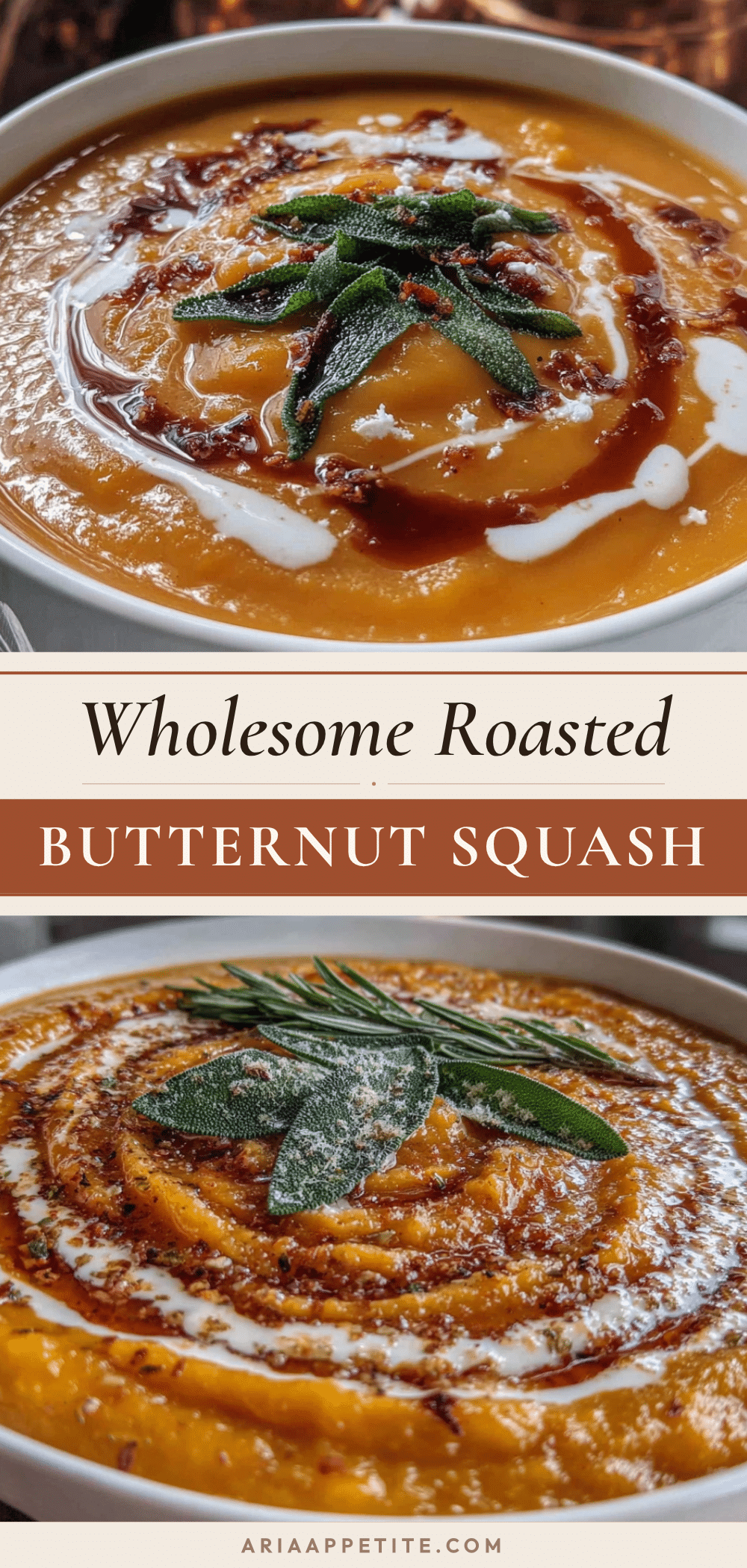
Best Wholesome Roasted Butternut Squash Soup with Brown Butter

A rich, creamy, and deeply satisfying butternut squash soup with a nutty brown butter drizzle. This easy, no-peel recipe is perfect for cozy evenings and is a crowd-pleaser that comes together in about 45 minutes.
- Prep Time: 15 minutes
- Cook Time: 40 minutes
- Total Time: 55 minutes
- Yield: 6 servings 1x
- Category: Soup
- Cuisine: American
Ingredients
- 1 medium butternut squash (about 2.5–3 pounds)
- 2 tablespoons olive oil
- 1 medium yellow onion, roughly chopped
- 3 cloves garlic, smashed
- 3 cups vegetable broth
- ½ cup unsalted butter
- 1 tablespoon apple cider vinegar
- ½ teaspoon cayenne pepper
- 1 teaspoon salt (plus more to taste)
- ½ teaspoon black pepper
- Optional garnishes: toasted pumpkin seeds, heavy cream or coconut milk, fresh thyme, nutmeg
Instructions
- Preheat your oven to 400°F (200°C). Line a baking sheet with parchment paper.
- Cut the butternut squash in half lengthwise. Scoop out the seeds and stringy bits.
- Place the squash halves cut-side up on the baking sheet. Drizzle with 1 tablespoon of olive oil and rub over the flesh. Sprinkle with salt and pepper. Add the chopped onion and smashed garlic to the sheet, drizzle with remaining 1 tablespoon olive oil, and toss to coat. Spread in a single layer.
- Roast for 35–40 minutes, until the squash is fork-tender and the onion is soft and browned. Let cool for 5 minutes.
- While the squash roasts, make the brown butter: In a small skillet over medium heat, melt the ½ cup butter. Stir occasionally until it foams, then the foam subsides and brown specks form (about 5–7 minutes). Once it smells nutty and looks amber, remove from heat and pour into a heatproof bowl. Set aside.
- When the squash is cool enough to handle, scoop the flesh away from the skin. Discard the skin. Transfer the roasted squash, onion, and garlic to a large pot or Dutch oven.
- Add the vegetable broth, apple cider vinegar, cayenne pepper, salt, and black pepper. Stir to combine. Bring to a gentle simmer over medium heat, then reduce heat to low and cook for 10 minutes, stirring occasionally.
- Blend the soup until smooth using an immersion blender (or in batches in a regular blender, letting it cool first). Return to the pot.
- Taste and adjust seasoning. Add more broth or water if too thick.
- Ladle into bowls. Drizzle each serving with about 1 tablespoon of the brown butter. Garnish as desired and serve immediately.
Notes
Don’t skip the apple cider vinegar—it brightens the soup. For a vegan version, skip the brown butter and use olive oil or coconut oil, and add coconut milk for creaminess. The soup tastes even better the next day. Make fresh brown butter each time you serve.
Nutrition
- Serving Size: 1 bowl (about 1.5 cu
- Calories: 250
- Sugar: 8
- Sodium: 550
- Fat: 16
- Saturated Fat: 9
- Carbohydrates: 26
- Fiber: 5
- Protein: 4
Keywords: butternut squash soup, roasted butternut squash soup, brown butter, fall soup, creamy soup, easy soup, healthy soup, gluten-free soup, vegetarian soup