Love this? Save it for later!
Share the inspiration with your friends
I was standing in the frozen foods aisle last November, staring at a bag of pre-cut butternut squash cubes, when this smell hit me. Not from the store—from somewhere deep in my memory. It was sweet and nutty, with this warm, almost caramelized edge that I could feel in my chest before I could name it. And suddenly I was seven years old, sitting cross-legged on the cold linoleum floor of my neighbor Mrs. Kowalski’s kitchen, watching her pull a roasting pan from the oven. The steam curled up and the whole room went golden, and she said, “There it is, kiddo. Autumn in a pan.”
I hadn’t thought about that woman in years. She moved away when I was twelve, and honestly, I’d forgotten all about her roasted squash. But standing there holding that bag of frozen cubes, I felt this ache to get it back. That exact smell. That exact feeling. So I bought a whole butternut squash instead—figured I owed it to myself to do it right—and spent the next three afternoons trying to recreate what she did without a recipe. The first batch was too soggy. The second one burned on the edges. But the third time, I added a splash of maple syrup and some toasted pecans, and I swear the air in my kitchen shifted. I almost heard her say, “Told you so.”
This maple roasted butternut squash with pecans and feta is my attempt to bottle that moment. It’s sweet from the maple, salty from the feta, and has this incredible crunch from the pecans that makes every bite interesting. Maybe you’ve had roasted squash before and thought, “Yeah, it’s fine.” This one is different. It’s the kind of side dish that steals the show—the one people reach for first, even when there’s turkey or roast chicken on the table. And honestly, once you taste it, you’ll understand why I couldn’t let that memory go.
Why You’ll Love This Recipe
Let me tell you why this maple roasted butternut squash with pecans and feta has become my most-requested dish for holiday dinners and random Tuesday nights alike. I’ve tested this recipe at least a dozen times, tweaking the temperature, the cut size, the timing—everything—so you don’t have to guess.
- Quick & Easy: It comes together in about 40 minutes, and most of that is hands-off roasting time. Perfect for busy weeknights when you want something that feels special without the effort.
- Simple Ingredients: You probably already have maple syrup and olive oil in your pantry. The pecans and feta are easy to find, and the squash is everywhere in fall and winter.
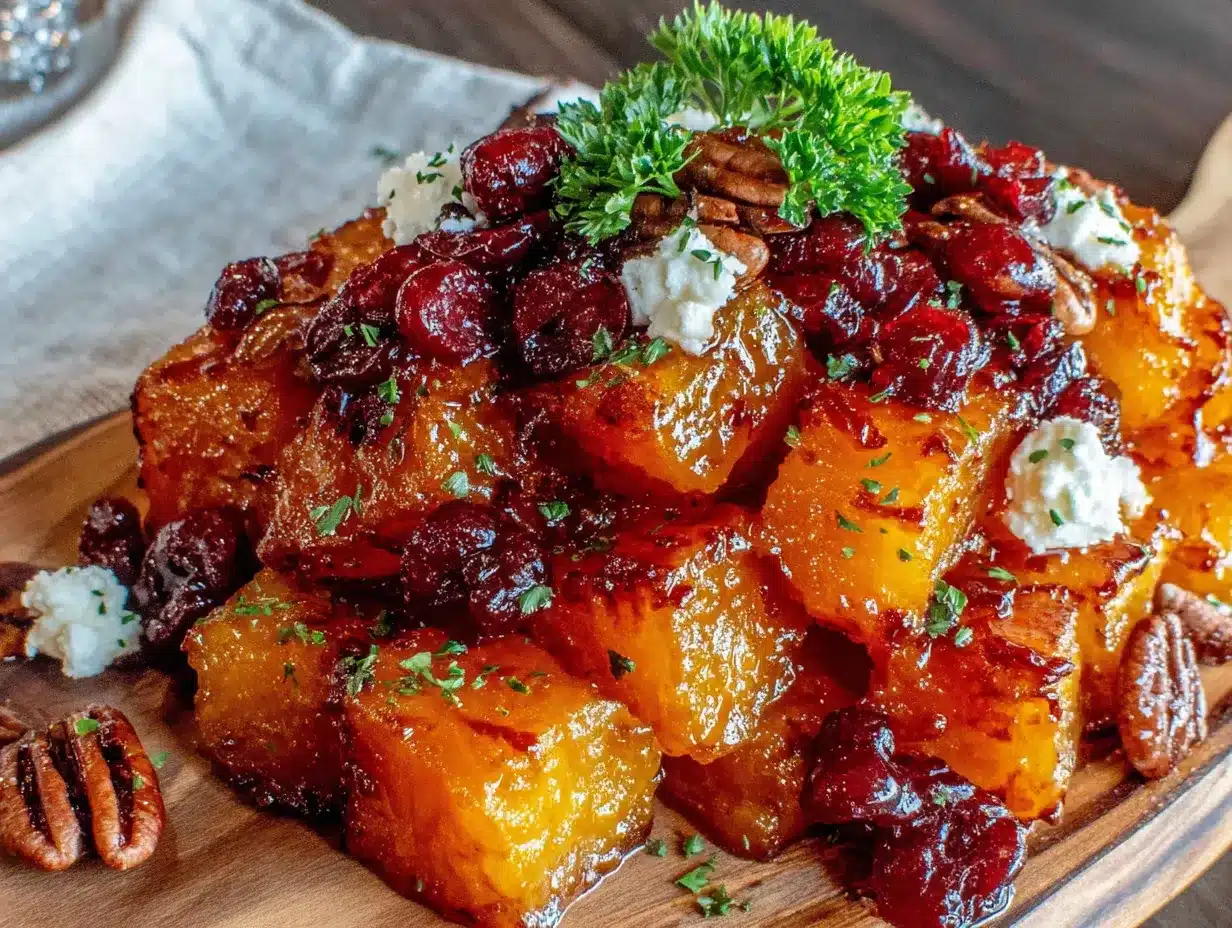
- Perfect for Entertaining: This dish looks gorgeous on a platter—the orange squash, green herbs, white feta, and brown pecans are a total color party. It’s great for Thanksgiving, Christmas, or just impressing dinner guests.
- Crowd-Pleaser: I’ve served this to kids who “don’t like squash” and adults who went back for thirds. The sweet and salty combo is basically irresistible.
- Unbelievably Delicious: The edges get caramelized and sticky from the maple syrup, the pecans add this toasty crunch, and the feta brings a tangy, creamy finish. It’s next-level comfort food that somehow still feels wholesome.
What makes this version different from all the others? It’s the technique. I roast the squash at a high temperature to get those deep, browned edges without making it mushy. And I add the pecans halfway through so they toast perfectly without burning. The feta goes on at the very end, just to soften slightly—not melt into a puddle. It’s those little details that turn a good recipe into one you’ll make on repeat.
This is the kind of dish that makes you close your eyes after the first bite. It’s comfort food reimagined—healthier than you’d expect, but with the same soul-soothing satisfaction. Perfect for impressing guests without stress, or turning a simple weeknight dinner into something memorable.
What Ingredients You Will Need
This recipe uses simple, wholesome ingredients to deliver bold flavor and satisfying texture without the fuss. Most of these are pantry staples or easy to find at any grocery store, especially during fall and winter.
- Butternut squash (1 medium, about 2-3 pounds) — Peeled, seeded, and cut into 1-inch cubes. Look for a squash that feels heavy for its size with firm, unblemished skin. I prefer buying whole squash and cutting it myself for the freshest flavor, but pre-cut cubes work in a pinch—just make sure they’re roughly the same size for even roasting.
- Pure maple syrup (3 tablespoons) — Not pancake syrup! Real maple syrup makes a huge difference here. Grade A dark amber has a stronger flavor that stands up well to roasting. I like the brand from my local farmer’s market, but any pure maple syrup works beautifully.
- Olive oil (2 tablespoons) — Use a good-quality extra virgin olive oil for the best flavor. It helps the squash caramelize and keeps everything from sticking to the pan.
- Pecan halves (1/2 cup) — Roughly chopped. Toast them lightly for extra depth. You can use whole pecans or pieces, just keep an eye on them in the oven so they don’t burn.
- Feta cheese (1/3 cup, crumbled) — Buy a block of feta and crumble it yourself for the best texture. Pre-crumbled feta tends to be drier and less creamy. Goat cheese works too if you want a tangier flavor.
- Fresh thyme (4-5 sprigs) — The leaves get crispy in the oven and add this lovely earthy note. Dried thyme works if that’s what you have, but fresh really shines here.
- Salt (1/2 teaspoon, or to taste) — I use kosher salt for even seasoning. Flaky sea salt at the end adds a nice finishing touch.
- Black pepper (1/4 teaspoon, freshly ground) — Freshly ground pepper has so much more flavor than pre-ground. Don’t skip it.
- Optional garnish: Fresh parsley or basil, chopped — Adds a pop of color and freshness right before serving.
For the best results, use fresh butternut squash when it’s in season (September through December). In the summer, you can swap in delicata squash or sweet potatoes—both roast beautifully with maple syrup. If you’re avoiding dairy, try using a vegan feta alternative or simply omit the cheese and add extra toasted pecans for crunch.
Equipment Needed
- Large baking sheet (half-sheet pan, 18×13 inches) — A rimmed baking sheet prevents any maple syrup drips from burning on your oven floor. I’ve used the same Nordic Ware pan for years and it’s never let me down.
- Chef’s knife (8-inch or larger) — A sharp knife makes cutting butternut squash so much safer and easier. Dull knives are actually more dangerous—they slip.
- Vegetable peeler — A Y-shaped peeler works best for removing the tough skin from butternut squash. I’ve tried using a paring knife and it’s just more work.
- Mixing bowl (medium) — For tossing the squash with oil and seasonings before roasting.
- Spatula or wooden spoon — For stirring the squash halfway through roasting. A thin metal spatula also works great for flipping the pieces.
- Small skillet (optional) — If you want to toast the pecans on the stovetop instead of in the oven. I usually just add them to the baking sheet.
- Serving platter or bowl — Something wide and shallow shows off the colors nicely. A white platter makes the orange squash and green herbs pop.
If you don’t have a large baking sheet, use two smaller ones—just make sure the squash pieces are in a single layer with space between them. Crowding the pan leads to steaming instead of roasting, and nobody wants soggy squash.
Preparation Method
- Preheat your oven to 400°F (200°C). Getting the oven hot before you start is crucial—you want that immediate blast of heat to start caramelizing the squash right away.
- Prep the butternut squash. Using a sharp chef’s knife, cut off both ends of the squash. Stand it upright on a flat surface and slice down the middle from top to bottom. Scoop out the seeds and stringy bits with a spoon. Then use your vegetable peeler to remove the tough skin. Cut the flesh into 1-inch cubes—try to make them as uniform as possible so they cook evenly. This takes about 10 minutes the first time, but you’ll get faster with practice.
- Season the squash. In a large mixing bowl, combine the cubed squash with olive oil, maple syrup, salt, pepper, and fresh thyme leaves (strip them off the stems). Toss everything together with your hands or a spatula until every piece is coated. The maple syrup will feel sticky—that’s good, it means it’s clinging to the squash.
- Arrange on the baking sheet. Spread the squash in a single layer on your large baking sheet. Make sure there’s space between the pieces—if they’re touching too much, they’ll steam instead of roast. Reserve the bowl (don’t wash it yet—you’ll use it for the pecans).
- Roast for 20 minutes. Place the baking sheet in the preheated oven and let the squash do its thing. Don’t peek too often—every time you open the door, heat escapes.
- Add the pecans. After 20 minutes, remove the baking sheet from the oven. Use a spatula to flip each piece of squash over. In the same bowl you used for the squash, toss the chopped pecans with a tiny drizzle of maple syrup (about 1 teaspoon) and a pinch of salt. Scatter the pecans around the baking sheet among the squash pieces. Return to the oven.
- Roast for another 15-20 minutes. The squash should be tender when pierced with a fork and have deep golden-brown edges. The pecans should smell toasty and look slightly darker. Keep an eye on them in the last 5 minutes—pecans can go from perfect to burnt very quickly.
- Add the feta. Remove the baking sheet from the oven. Let it cool for about 2 minutes, then sprinkle the crumbled feta evenly over the warm squash. The residual heat will soften the cheese without melting it completely—you want those little white pockets of creamy goodness.
- Finish and serve. Transfer everything to a serving platter. Garnish with fresh parsley or basil if you’re using it. Add an extra crack of black pepper and a tiny drizzle of maple syrup if you’re feeling fancy. Serve warm or at room temperature.
Pro tip: If your squash pieces are different sizes, the smaller ones will cook faster. Check for doneness by piercing the largest piece—if it’s tender, the rest are ready. And don’t skip the flipping step! That’s what gives you those beautiful caramelized edges on both sides.
Cooking Tips & Techniques
I’ve made this maple roasted butternut squash with pecans and feta enough times to know where things can go wrong. Let me save you the trouble.
The biggest mistake? Crowding the pan. I learned this the hard way when I tried to double the recipe on a single baking sheet. The squash released steam and turned mushy instead of caramelizing. If you’re making a larger batch, use two pans or roast in batches. Space is your friend here.
Cut size matters. I used to cut my squash into really small cubes thinking they’d cook faster. They did—but they also dried out and burned before the centers were tender. One-inch cubes are the sweet spot. They’re big enough to stay juicy inside while getting crispy on the outside.
Don’t skip the flipping. I know it’s tempting to just let the oven do all the work, but flipping the pieces halfway through ensures even caramelization. Set a timer if you need to—I’ve definitely forgotten and ended up with squash that was perfect on one side and pale on the other.
Toast your pecans. Raw pecans are fine, but toasting them brings out this incredible nutty flavor that makes the dish so much better. Adding them at the halfway point (instead of at the beginning) means they toast without burning. I’ve tried adding them at the start and ended up with charcoal-flavored pecans. Not great.
Let the feta warm up. Cold feta straight from the fridge doesn’t soften properly on the hot squash. Let it sit at room temperature for about 15 minutes before crumbling. Or, if you’re in a rush, just add it and let the residual heat do its thing—it’ll still be delicious.
Multitasking strategy: While the squash is roasting, you can prep your other dishes. This recipe is mostly hands-off, so it’s perfect for making alongside a main course. Just remember to set that timer for flipping!
Variations & Adaptations
One of the things I love about this recipe is how flexible it is. Here are some variations I’ve tried and loved:
- Vegan version: Skip the feta and add a sprinkle of nutritional yeast or toasted pumpkin seeds for that savory, umami kick. I made this for a vegan friend last Thanksgiving and she said it was the best thing on the table. The maple and pecans are already plant-based, so you’re almost there.
- Spicy twist: Add a pinch of cayenne pepper or red pepper flakes along with the salt and pepper. The heat plays beautifully with the sweet maple syrup and salty feta. I tried this on a whim one night and now I can’t go back.
- Herb swap: Instead of thyme, try fresh rosemary or sage. Rosemary gives it a woodsy, almost pine-like flavor that’s amazing in winter. Sage has this earthy, slightly peppery note that pairs perfectly with butternut squash.
- Different squash: Delicata squash doesn’t need peeling (the skin is thin and edible), and it roasts faster. Acorn squash works too, but it’s a little less sweet. Sweet potatoes are a fantastic substitute if butternut squash isn’t available.
- Add dried fruit: Toss in a handful of dried cranberries or golden raisins during the last 5 minutes of roasting. They plump up slightly and add little bursts of sweetness. I did this for a Christmas dinner and everyone raved.
- Balsamic glaze: Drizzle a little balsamic reduction over the finished dish instead of extra maple syrup. The tangy acidity cuts through the richness beautifully.
Don’t be afraid to experiment—this recipe is forgiving. The first time I made it, I accidentally used salted butter instead of olive oil, and honestly, it was still pretty good. Just not as good as the original.
Serving & Storage Suggestions
This maple roasted butternut squash with pecans and feta is best served warm, right after it comes out of the oven. The feta is soft, the pecans are crunchy, and the squash is tender with those caramelized edges. But it’s also fantastic at room temperature, which makes it perfect for buffets and potlucks.
What to serve with it: This dish pairs beautifully with roasted chicken, turkey, pork chops, or a simple seared steak. For a vegetarian meal, serve it over a bed of quinoa or farro with a side of roasted Brussels sprouts. It’s also amazing alongside a cozy lentil soup or as part of a holiday spread.
For drinks: A crisp white wine like Sauvignon Blanc or a light Pinot Noir works well. If you’re going non-alcoholic, try sparkling apple cider or a warm chai tea—the spices complement the maple and squash flavors.
Storage: Leftovers keep in an airtight container in the refrigerator for up to 4 days. The feta will soften and the pecans will lose some crunch, but the flavor is still wonderful. I actually like it cold, straight from the fridge, as a quick snack.
Reheating: The best way to reheat is in a 350°F (175°C) oven for about 10 minutes. This helps the squash re-crisp a little. You can use the microwave in a pinch, but the texture won’t be as good. If you’re reheating in the microwave, add a sprinkle of fresh pecans on top to bring back some crunch.
Freezing: You can freeze the roasted squash (without the feta and pecans) for up to 3 months. Thaw in the refrigerator overnight, then reheat in the oven. Add fresh feta and toasted pecans after reheating for the best texture.
The flavors actually develop over time—day-old squash tastes even more maple-y and caramelized. So don’t worry if you have leftovers. They’re a gift to your future self.
Nutritional Information & Benefits
This dish is packed with nutrients that make you feel good about eating it. Here’s an approximate breakdown per serving (based on 4 servings):
- Calories: 280-320
- Protein: 6g
- Fat: 16g (mostly from heart-healthy olive oil and pecans)
- Carbohydrates: 35g
- Fiber: 6g
- Sugar: 14g (naturally occurring from squash and maple syrup)
- Vitamin A: Over 200% of your daily needs (from the butternut squash)
- Vitamin C: About 35% of your daily needs
Butternut squash is loaded with vitamin A, which supports eye health and immune function. Pecans provide healthy fats and magnesium, which is great for heart health and energy levels. Maple syrup contains antioxidants and minerals like zinc and manganese. And feta cheese offers calcium and protein in a smaller, more digestible package than many other cheeses.
This recipe is naturally gluten-free and can be made dairy-free by omitting the feta. It’s also relatively low in added sugar—just 3 tablespoons of maple syrup for the whole dish. If you’re watching your sugar intake, you can reduce the maple syrup to 2 tablespoons and the squash will still caramelize beautifully.
I love that this dish feels indulgent but is actually packed with good-for-you ingredients. It’s the kind of recipe that makes eating your vegetables feel like a treat.
FAQs
Can I use frozen butternut squash?
Yes, but you’ll need to adjust the cooking time. Frozen squash releases more water, so it won’t caramelize as well. Thaw it first and pat it dry with paper towels before roasting. Add about 10 minutes to the total roasting time.
How do I cut butternut squash safely?
Start by cutting off both ends to create flat surfaces. Stand the squash upright and slice it in half lengthwise. Scoop out the seeds, then use a vegetable peeler to remove the skin. Always use a sharp knife and cut on a stable surface. If the squash is too hard, microwave it whole for 2-3 minutes to soften it slightly.
Can I make this ahead of time?
Absolutely! Roast the squash and pecans up to 2 days in advance. Store them separately in the refrigerator. When you’re ready to serve, reheat the squash in a 350°F oven for 10 minutes, then add the pecans and fresh feta. This is a lifesaver for holiday dinners.
What can I substitute for feta cheese?
Goat cheese is the best substitute—it has a similar tangy, creamy texture. You can also use crumbled ricotta salata, queso fresco, or omit the cheese entirely and add extra toasted pecans or pumpkin seeds for crunch.
How do I know when the squash is done?
The squash is done when it’s tender all the way through and has deep golden-brown edges. Pierce the largest piece with a fork—it should slide in easily with no resistance. The edges should look caramelized and slightly sticky from the maple syrup.
Conclusion
This maple roasted butternut squash with pecans and feta is more than just a side dish—it’s a little piece of autumn on a plate. Every time I make it, I think of Mrs. Kowalski’s kitchen and that moment when the smell hit me and I knew I was home. It’s sweet, salty, crunchy, creamy, and everything in between.
I hope you give this recipe a try and make it your own. Maybe you’ll add extra pecans like I sometimes do. Maybe you’ll swap in goat cheese or add a pinch of cayenne. That’s the beauty of cooking—you get to play and discover what you love.
If you make this, I’d love to hear about it. Leave a comment below and tell me how it turned out, or share your own twist on the recipe. And if you’re looking for more cozy fall dishes, don’t miss our creamy butternut squash soup or these maple glazed carrots—they pair beautifully with this roasted squash for a full autumn feast.
Happy cooking, and don’t forget to save room for seconds!
Pin This Recipe!
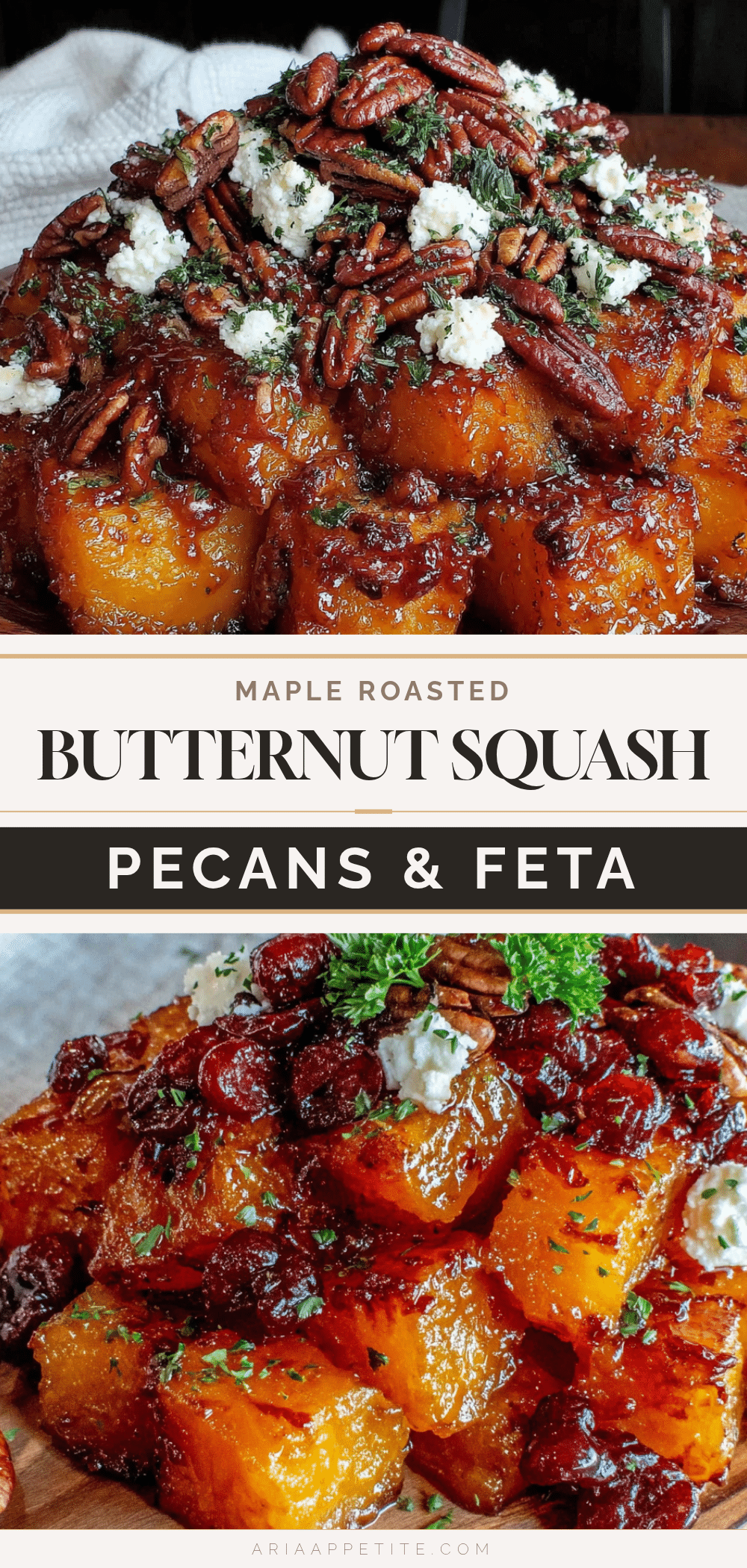
Easy Maple Roasted Butternut Squash with Feta

Sweet maple syrup, salty feta, and crunchy pecans transform simple roasted butternut squash into an irresistible side dish that steals the show at any meal. This easy recipe delivers caramelized edges and cozy autumn flavors in about 40 minutes.
- Prep Time: 15 minutes
- Cook Time: 35-40 minutes
- Total Time: 50-55 minutes
- Yield: 4 servings 1x
- Category: Side Dish
- Cuisine: American
Ingredients
- 1 medium butternut squash (about 2–3 pounds), peeled, seeded, and cut into 1-inch cubes
- 3 tablespoons pure maple syrup (Grade A dark amber preferred)
- 2 tablespoons extra virgin olive oil
- 1/2 cup pecan halves, roughly chopped
- 1/3 cup feta cheese, crumbled (from a block, not pre-crumbled)
- 4–5 sprigs fresh thyme, leaves stripped
- 1/2 teaspoon kosher salt, plus more to taste
- 1/4 teaspoon freshly ground black pepper
- Optional garnish: fresh parsley or basil, chopped
Instructions
- Preheat your oven to 400°F (200°C).
- Prep the butternut squash: Cut off both ends, stand upright, and slice in half lengthwise. Scoop out seeds and stringy bits. Use a vegetable peeler to remove the tough skin. Cut flesh into 1-inch cubes, as uniform as possible.
- In a large mixing bowl, combine cubed squash with olive oil, maple syrup, salt, pepper, and fresh thyme leaves. Toss until every piece is coated.
- Spread squash in a single layer on a large rimmed baking sheet, leaving space between pieces. Reserve the bowl.
- Roast for 20 minutes.
- Remove baking sheet from oven. Flip each piece of squash. In the reserved bowl, toss chopped pecans with about 1 teaspoon maple syrup and a pinch of salt. Scatter pecans around the baking sheet among the squash pieces.
- Return to oven and roast for another 15-20 minutes, until squash is tender when pierced with a fork and has deep golden-brown edges. Watch pecans closely in the last 5 minutes to prevent burning.
- Remove from oven and let cool for about 2 minutes. Sprinkle crumbled feta evenly over the warm squash.
- Transfer to a serving platter. Garnish with fresh parsley or basil if desired. Add an extra crack of black pepper and a tiny drizzle of maple syrup if desired. Serve warm or at room temperature.
Notes
For best results, don’t crowd the pan—space allows caramelization instead of steaming. Cut squash into uniform 1-inch cubes for even cooking. Flipping halfway through ensures even browning. Let feta come to room temperature before adding for better softening. Leftovers keep in an airtight container in the refrigerator for up to 4 days. Reheat in a 350°F oven for 10 minutes to re-crisp. Can be made vegan by omitting feta and adding toasted pumpkin seeds or nutritional yeast.
Nutrition
- Serving Size: 1 serving (about 1 c
- Calories: 300
- Sugar: 14
- Sodium: 380
- Fat: 16
- Saturated Fat: 3
- Carbohydrates: 35
- Fiber: 6
- Protein: 6
Keywords: maple roasted butternut squash, roasted butternut squash with feta, butternut squash with pecans, fall side dish, Thanksgiving side dish, easy roasted squash, maple syrup squash