Love this? Save it for later!
Share the inspiration with your friends
The power went out halfway through my third Zoom meeting of the day. It was one of those Tuesday afternoons where everything felt stuck—my laptop battery draining, the fridge humming its last breath, and my stomach making noises that definitely didn’t sound professional. I sat there in the sudden silence, staring at the wilting bag of baby carrots and the half-eaten cucumber that was probably past its prime. Somewhere in the back of the fridge, I remembered the container of hummus I’d made three days ago. That afternoon changed everything about how I think about snacking.
Let me tell you, before that day, I was a grab-and-go kind of person. Chips, crackers, whatever was within arm’s reach. But sitting in that dim kitchen, I started pulling things out of the fridge—red bell pepper, yellow squash, purple cabbage, orange carrots. It felt almost silly, arranging them on a plate like I was making art instead of just feeding myself. But honestly, there was something deeply satisfying about it. The colors woke me up more than coffee could have. And when I dipped that first crunchy pepper strip into the creamy hummus? I actually laughed out loud. Alone. In a dark kitchen. That’s when I knew this was more than just a snack.
Maybe you’ve been there—staring into the fridge, wanting something that feels good but not wanting to cook a whole meal. You know that feeling when you want to eat something that makes you feel like you have your life together, even if you’re still in your pajamas at 3 PM. This rainbow veggie and hummus snack box is that answer. It’s the kind of thing that looks impressive but takes almost no effort. I keep making it because it makes me feel like I’m taking care of myself, even on the chaotic days. And honestly, the colors just make me happy.
Why You’ll Love This Rainbow Veggie and Hummus Snack Box
I’ve tested this rainbow veggie and hummus snack box more times than I can count, and here’s what I’ve learned: it’s not just a snack—it’s a strategy. After years of food blogging and recipe development, I’ve found that the best meals aren’t always the most complicated. Sometimes they’re the ones that make you feel like you’ve got your act together, even when you don’t.
- Ready in Under 10 Minutes : No joke, this comes together faster than you can decide what to order for delivery. Perfect for those afternoons when hangry is about to become your middle name.
- Simple Ingredients : You probably have most of these veggies in your fridge right now. No specialty stores, no weird ingredients you’ll never use again.
- Perfect for Meal Prep : Make a few of these on Sunday and you’ve got grab-and-go lunches or snacks for the whole week. Great for work, school, or road trips.
- Crowd-Pleaser : I’ve brought these to picnics and potlucks, and they disappear faster than the chips. Kids love the colors, adults love the convenience.
- Unbelievably Satisfying : The crunch of fresh veggies combined with creamy hummus hits that perfect texture combo that makes snacking feel like a treat.
What makes this different from just cutting up vegetables? It’s the intentional arrangement, the variety of colors and textures, and the way the hummus ties everything together. This isn’t just another veggie plate—it’s your best version. I’ve learned through trial and error that cutting veggies at the right angle and pairing them with the perfect hummus makes all the difference. Plus, there’s something about eating a rainbow that just feels good for the soul.
This recipe is the kind that makes you close your eyes after the first bite. It’s comfort food reimagined—healthier, faster, but with the same soul-soothing satisfaction. Perfect for impressing guests without stress, or turning a simple afternoon into something memorable.
What Ingredients You Will Need
This rainbow veggie and hummus snack box uses simple, wholesome ingredients to deliver bold flavor and satisfying texture without the fuss. You can find everything at your local grocery store, and most items are pantry or fridge staples.
For the Veggies (The Rainbow)
- Red bell pepper, sliced into strips (adds sweetness and crunch)
- Orange carrots, cut into sticks or rounds (I prefer organic for sweeter flavor)
- Yellow squash, sliced into half-moons (mild and tender)
- Green cucumber, cut into spears (English cucumbers have fewer seeds)
- Purple cabbage, thinly sliced or cut into wedges (adds that beautiful deep color)
- Cherry tomatoes, halved (burst of juiciness in every bite)
For the Hummus Base
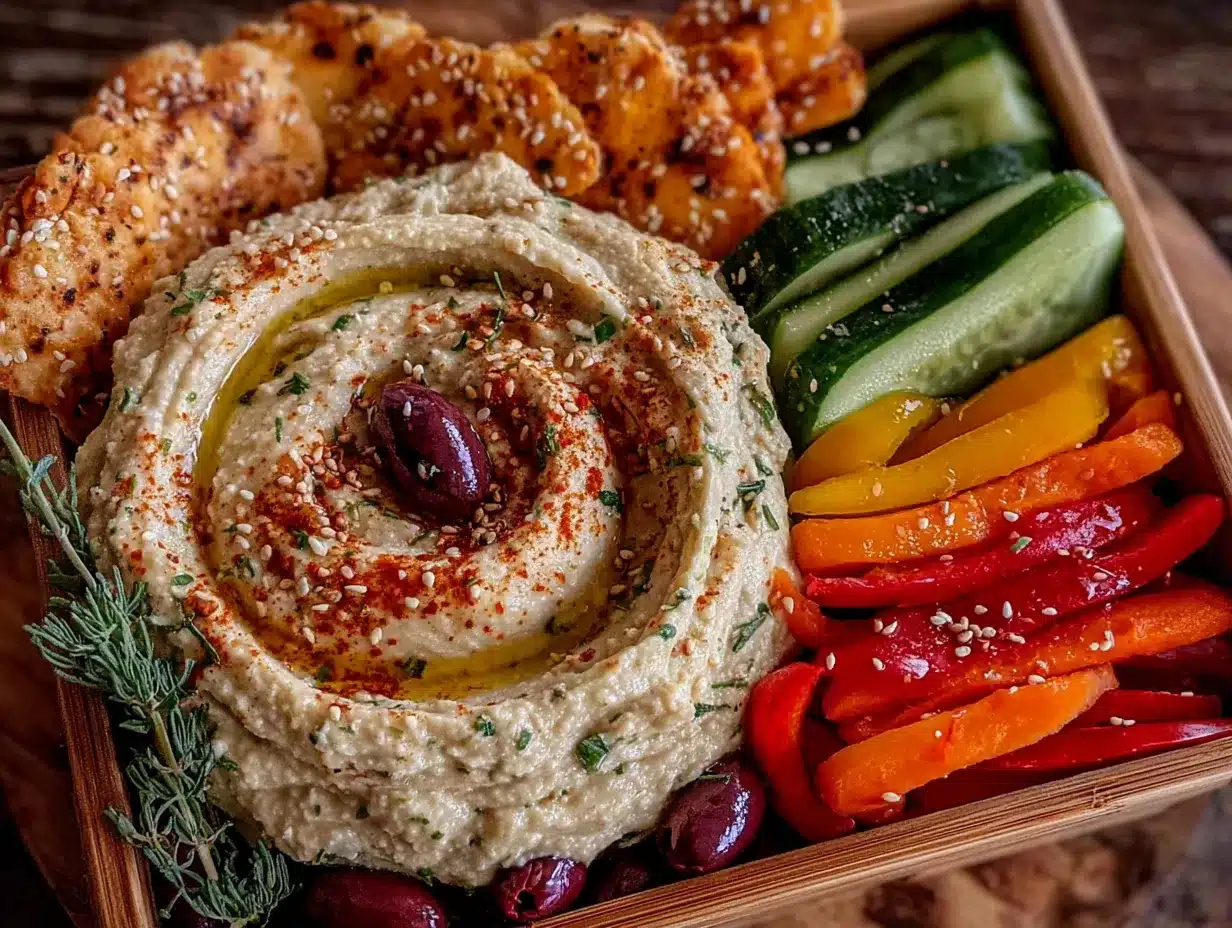
- 1 cup prepared hummus (store-bought or homemade—I recommend Sabra or Cedar’s for consistent texture)
- 1 tablespoon extra virgin olive oil, for drizzling (adds richness)
- 1/2 teaspoon smoked paprika, for garnish (optional but gorgeous)
- Fresh parsley or cilantro, chopped (adds freshness)
Optional Add-Ins
- Pita chips or crackers, for scooping (I like Stacy’s pita chips)
- Olives, for a briny pop of flavor
- Feta cheese, crumbled (adds salty creaminess)
- Lemon wedges, for squeezing over everything
Substitution guidance: Use any veggies you have on hand—the rainbow concept is flexible. For a low-carb option, swap carrots and squash for more cucumber and bell pepper. If you’re dairy-free, skip the feta or use a vegan alternative. For gluten-free, serve with rice crackers or veggie sticks instead of pita chips. I’ve also used roasted red pepper hummus or spicy hummus for extra flavor—both work beautifully.
Equipment Needed
You don’t need much for this rainbow veggie and hummus snack box, which is part of the beauty. Here’s what I use:
- Cutting board : A large wooden or plastic board gives you room to work. I prefer bamboo because it’s gentle on knife blades.
- Sharp chef’s knife : A good 8-inch knife makes slicing veggies quick and safe. Dull knives are actually more dangerous—they slip.
- Vegetable peeler : Useful for carrots and cucumber if you prefer peeled strips. I use a Y-shaped peeler for better control.
- Small serving bowls or containers : For the hummus. I love using small ramekins or mason jar lids.
- Large platter or bento box : For arranging everything. A wooden board or white plate makes the colors pop.
- Measuring spoons : For the olive oil and paprika garnish.
If you don’t have a bento box, a regular dinner plate works perfectly. I’ve even used a sheet pan in a pinch—it looks rustic and intentional. For meal prep, glass containers with lids keep everything fresh for days. Pro tip: store the hummus separately from the veggies to prevent sogginess.
Preparation Method
- Wash all your vegetables thoroughly under cold running water. Pat them dry with a clean kitchen towel or paper towels. Wet veggies make the hummus watery, so this step matters more than you think.
- Prepare the hummus base. Spoon 1 cup of hummus into a small serving bowl. Use the back of a spoon to create a small well in the center. Drizzle 1 tablespoon of extra virgin olive oil into the well, then sprinkle 1/2 teaspoon of smoked paprika over the top. Garnish with chopped fresh parsley or cilantro. Set aside.
- Cut the red bell pepper. Slice off the top and bottom, remove the seeds and white membranes, then cut into 1/2-inch wide strips. You should get about 8-10 strips per pepper. The strips should be sturdy enough for dipping.
- Prepare the carrots. Peel them if desired (I leave the skin on for extra fiber and color). Cut into 3-inch long sticks, about 1/2-inch thick. If your carrots are thick, cut them in half lengthwise first.
- Slice the yellow squash. Cut off the ends, then slice into 1/4-inch thick rounds. For a prettier presentation, cut them on a slight diagonal. Yellow squash is tender, so handle gently.
- Cut the cucumber. If using English cucumber, no need to peel. Cut into 3-inch spears, about 1/2-inch thick. If using regular cucumber, peel and remove seeds first to prevent sogginess.
- Prepare the purple cabbage. Remove any wilted outer leaves. Cut the cabbage into quarters, then slice each quarter into thin ribbons, about 1/4-inch wide. Alternatively, cut into small wedges for a chunkier texture.
- Halve the cherry tomatoes. Cut each tomato in half through the equator. If they’re large, cut into quarters. Place them cut-side up to prevent juice from running everywhere.
- Arrange everything on your platter or in your bento box. Start by placing the hummus bowl in the center or in one corner. Then arrange the veggies in color order around it—red peppers, orange carrots, yellow squash, green cucumber, purple cabbage, and red tomatoes. This creates that beautiful rainbow effect that makes this snack box so visually appealing.
- Add any optional items like pita chips, olives, or feta cheese in small piles around the veggies. Squeeze a lemon wedge over the whole thing if you like a bright, acidic finish.
Sensory cue : When you’re done, step back and look at your creation. The colors should be vibrant and distinct. You should smell the earthy hummus, the fresh cucumber, and the sweet bell pepper. The crunch should be audible when you break a carrot stick. That’s how you know it’s right.
Cooking Tips & Techniques
After making this rainbow veggie and hummus snack box probably fifty times, I’ve picked up a few tricks that make a real difference. Let me share what I’ve learned the hard way.
Cut veggies at the same size for even dipping and a professional look. I used to just hack things into random shapes, and it looked like a toddler arranged it. Now I aim for sticks that are all about the same length and thickness. It takes an extra minute but makes everything feel intentional.
Blanch the broccoli or green beans if you’re using them. I learned this after serving raw broccoli that was basically inedible. Drop them in boiling salted water for 60 seconds, then plunge into ice water. They turn bright green and become actually enjoyable to eat.
Don’t skip drying the veggies. I know, it seems like an extra step. But wet veggies make the hummus watery and slide off when you try to dip. Pat them dry with paper towels after washing, and your hummus will stay thick and creamy.
Make the hummus from scratch if you have time. I know store-bought is convenient, but homemade hummus with good tahini and fresh lemon juice is a game-changer. I once forgot to add salt to my homemade batch, and it was the most boring hummus ever. Taste and adjust seasoning before serving.
Prep veggies ahead of time but store them separately. Cut everything on Sunday, store each veggie in its own container with a damp paper towel, and assemble when you’re ready to eat. The hummus should always be stored separately to prevent the veggies from getting soggy.
Use room temperature hummus for the best flavor and texture. Cold hummus straight from the fridge tastes flat. Let it sit on the counter for 15 minutes before serving, or microwave it for 10 seconds. I learned this from a chef friend, and it makes a noticeable difference.
Variations & Adaptations
One of the best things about this rainbow veggie and hummus snack box is how flexible it is. Here are some variations I’ve tried and loved:
Seasonal Rainbow
In spring, swap in asparagus spears and radishes. In summer, use heirloom tomatoes and zucchini. Fall calls for roasted butternut squash cubes and apple slices. Winter works well with roasted beets and citrus segments. The rainbow concept works year-round with whatever is fresh at the market.
Protein-Packed Version
Add hard-boiled eggs, grilled chicken strips, or chickpeas roasted with cumin and paprika. I often make this for lunch and add a handful of almonds or walnuts for healthy fats and extra protein. It turns a snack into a full meal.
Dipping Sauce Trio
Instead of just hummus, serve three dips: classic hummus, tzatziki, and baba ganoush. Or go with hummus, guacamole, and salsa. My personal favorite combo is hummus, roasted red pepper dip, and spinach artichoke dip. The variety keeps things interesting.
Keto-Friendly Adaptation
Focus on low-carb veggies: cucumber, bell peppers, celery, zucchini, and cherry tomatoes. Skip the carrots and squash. Serve with guacamole or a creamy ranch dip instead of hummus (which has some carbs from chickpeas).
Kid-Friendly Bento Box
Cut veggies into fun shapes using cookie cutters. Add a small container of ranch dressing or peanut butter for dipping. Include some cheese cubes and fruit for a complete lunch. My niece calls these “rainbow boxes” and actually eats her vegetables without complaining.
Serving & Storage Suggestions
This rainbow veggie and hummus snack box is best served at room temperature, which allows the flavors to fully develop. If you’ve refrigerated the veggies, let them sit out for 10-15 minutes before serving. The hummus should be served at room temperature for the creamiest texture.
For presentation , arrange the veggies in rainbow order on a large wooden board or white platter. The contrast makes the colors pop. I like to place the hummus bowl in the center and fan the veggies around it like a sunburst. Add small piles of olives, feta, or nuts to fill any gaps.
Storage instructions : Store leftover veggies and hummus separately in airtight containers in the refrigerator. The veggies will stay fresh for 3-4 days, while the hummus keeps for 5-7 days. I recommend storing cut veggies with a slightly damp paper towel to maintain crispness.
Reheating tips : This is a cold dish, so no reheating needed. However, if you’ve refrigerated the hummus, let it come to room temperature before serving. You can also microwave it for 10-15 seconds to soften it up.
Flavor development : The hummus actually tastes better after a day or two as the flavors meld together. The veggies are best within 24 hours of cutting. If you’re meal prepping, cut fresh veggies every 2-3 days for the best texture.
Nutritional Information & Benefits
This rainbow veggie and hummus snack box is packed with nutrients that support overall health. Here’s what you’re getting in a typical serving (about 2 cups of veggies with 1/4 cup hummus):
- Calories : Approximately 200-250 calories per serving
- Protein : 8-10 grams (from hummus and chickpeas)
- Fiber : 6-8 grams (supports digestive health)
- Vitamin C : Over 100% of daily needs (from bell peppers and tomatoes)
- Vitamin A : High amounts from carrots and squash (great for eye health)
- Antioxidants : Abundant from the variety of colorful vegetables
Health benefits : Eating a variety of colorful vegetables ensures you’re getting a wide range of phytonutrients. Red veggies contain lycopene, orange ones have beta-carotene, green ones are rich in chlorophyll, and purple ones provide anthocyanins. The hummus adds plant-based protein and healthy fats from olive oil and tahini.
Dietary considerations : This recipe is naturally vegan, gluten-free, and dairy-free (if you skip the feta). It’s also low in added sugars and sodium. For those watching carbs, the veggie variety keeps net carbs reasonable, especially if you focus on non-starchy options.
Conclusion
This rainbow veggie and hummus snack box has become my go-to for those afternoons when I need a reset. It’s proof that eating well doesn’t have to be complicated or time-consuming. In less time than it takes to decide what to order, you can create something that looks like it came from a fancy café and makes you feel genuinely good about what you’re putting into your body.
I love this recipe because it meets me where I am—whether I’m meal prepping for a busy week, hosting friends for a casual gathering, or just trying to get through a Tuesday afternoon. The colors make me smile, the crunch satisfies my cravings, and the hummus ties it all together in a way that feels like comfort food, even though it’s packed with vegetables.
Now I want to hear from you. What’s your favorite veggie to dip in hummus? Have you tried any fun variations? Drop a comment below and share your rainbow creation. And if you loved this recipe, pin it on Pinterest or share it with a friend who needs a little more color in their life. Happy snacking, friend!
Frequently Asked Questions
Can I make this rainbow veggie and hummus snack box ahead of time?
Absolutely! You can prep the veggies up to 3 days in advance. Store each type of vegetable separately in airtight containers with a damp paper towel to keep them crisp. Keep the hummus in a separate container and assemble everything just before serving for the best texture and presentation.
What if I don’t have all the rainbow colors?
No worries at all! Use whatever vegetables you have on hand. The rainbow concept is flexible—even 3-4 colors create a beautiful and nutritious snack. Some easy swaps include using orange bell peppers instead of yellow, or green beans instead of cucumber. The goal is variety, not perfection.
How do I keep the veggies from getting soggy?
The key is drying them thoroughly after washing. Use a salad spinner or pat them dry with clean kitchen towels. Also, store the hummus separately from the veggies until you’re ready to eat. If you’re packing this for lunch, use a bento box with separate compartments to keep everything fresh and crunchy.
Can I use homemade hummus for this recipe?
Yes, and I actually recommend it if you have the time! Homemade hummus with fresh lemon juice, good tahini, and quality olive oil has a brighter, more complex flavor than most store-bought versions. Plus, you can customize it with roasted garlic, sun-dried tomatoes, or fresh herbs to match your mood.
Is this rainbow veggie and hummus snack box good for weight loss?
Yes, it’s an excellent option for weight management. The combination of fiber-rich vegetables and protein-packed hummus keeps you full and satisfied without excess calories. A typical serving is around 200-250 calories, making it a great low-calorie snack or light lunch option.
Pin This Recipe!
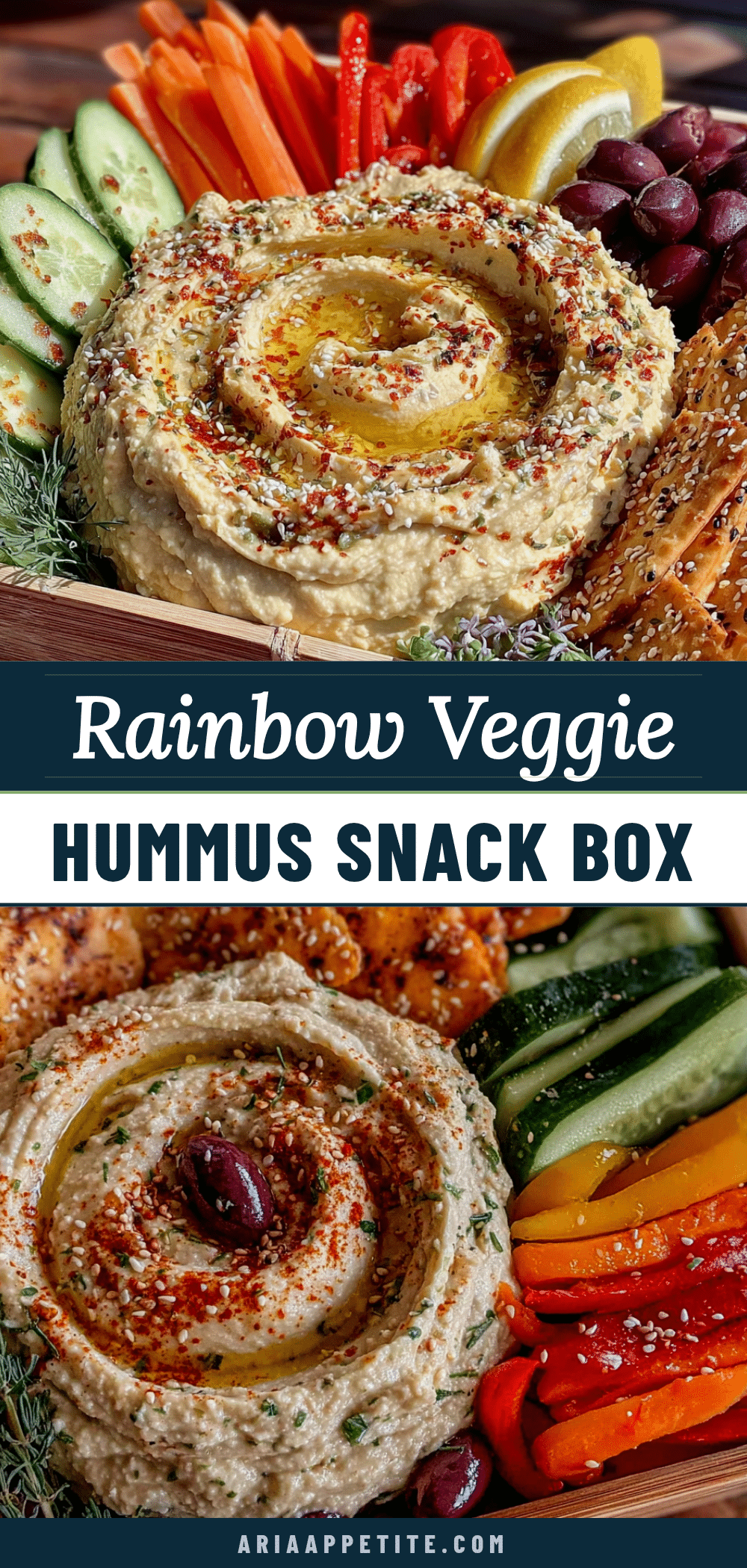
40 Easy Rainbow Veggie and Hummus Snack Box in 10 Minutes

A vibrant, no-cook snack box featuring colorful vegetables and creamy hummus, ready in under 10 minutes. Perfect for meal prep, busy afternoons, or impressing guests with minimal effort.
- Prep Time: 10 minutes
- Cook Time: 0 minutes
- Total Time: 10 minutes
- Yield: 4 servings 1x
- Category: Snack
- Cuisine: American
Ingredients
- 1 red bell pepper, sliced into strips
- 2 orange carrots, cut into sticks or rounds
- 1 yellow squash, sliced into half-moons
- 1 green cucumber, cut into spears
- 1/4 head purple cabbage, thinly sliced or cut into wedges
- 1 cup cherry tomatoes, halved
- 1 cup prepared hummus (store-bought or homemade)
- 1 tablespoon extra virgin olive oil, for drizzling
- 1/2 teaspoon smoked paprika, for garnish (optional)
- Fresh parsley or cilantro, chopped, for garnish
- Pita chips or crackers, for serving (optional)
- Olives, for serving (optional)
- Feta cheese, crumbled (optional)
- Lemon wedges, for squeezing (optional)
Instructions
- Wash all vegetables thoroughly under cold running water. Pat them dry with a clean kitchen towel or paper towels.
- Spoon 1 cup of hummus into a small serving bowl. Use the back of a spoon to create a small well in the center. Drizzle 1 tablespoon of extra virgin olive oil into the well, then sprinkle 1/2 teaspoon of smoked paprika over the top. Garnish with chopped fresh parsley or cilantro. Set aside.
- Slice off the top and bottom of the red bell pepper, remove seeds and white membranes, then cut into 1/2-inch wide strips.
- Peel carrots if desired, then cut into 3-inch long sticks, about 1/2-inch thick.
- Cut off the ends of the yellow squash, then slice into 1/4-inch thick rounds, preferably on a slight diagonal.
- Cut the cucumber into 3-inch spears, about 1/2-inch thick. If using regular cucumber, peel and remove seeds first.
- Remove any wilted outer leaves from the purple cabbage. Cut into quarters, then slice each quarter into thin ribbons, about 1/4-inch wide, or cut into small wedges.
- Halve the cherry tomatoes through the equator. If large, cut into quarters.
- Arrange everything on a platter or in a bento box. Place the hummus bowl in the center or in one corner. Arrange the veggies in color order around it: red peppers, orange carrots, yellow squash, green cucumber, purple cabbage, and red tomatoes.
- Add any optional items like pita chips, olives, or feta cheese in small piles around the veggies. Squeeze a lemon wedge over the whole thing if desired.
Notes
Cut veggies at the same size for even dipping and a professional look. Don’t skip drying the veggies to prevent watery hummus. Use room temperature hummus for the best flavor. Store veggies and hummus separately to maintain crispness. For meal prep, cut fresh veggies every 2-3 days for the best texture.
Nutrition
- Serving Size: 2 cups of veggies wi
- Calories: 225
- Sugar: 8
- Sodium: 300
- Fat: 12
- Saturated Fat: 2
- Carbohydrates: 24
- Fiber: 7
- Protein: 9
Keywords: rainbow veggie snack box, hummus snack, healthy snack, meal prep, vegetarian snack, gluten-free snack, vegan snack, easy snack, no-cook snack, colorful vegetables