Love this? Save it for later!
Share the inspiration with your friends
Introduction
“You have to try this,” my neighbor Mark said one chilly autumn evening as he handed me a container of something that smelled both sweet and savory. I was fixing a leaky faucet in his kitchen, tools in one hand and curiosity in the other. Mark, an avid hunter and self-taught cook, had just whipped up what he called his “secret weapon” for impressing guests—a pan-seared duck breast with a cherry port reduction sauce. At first, I was skeptical; duck always seemed a bit intimidating to me. But the glossy, ruby-red sauce and the crispy skin on that perfectly cooked breast told a different story.
That night, while the heater hummed quietly in the background, Mark walked me through his method. He wasn’t following any fancy recipes—just instincts honed over years of trial and error. Honestly, I made a mess trying it the first time, forgetting to score the skin properly and nearly burning the sauce. You know that feeling when you want something to be perfect but it just won’t cooperate? That was me. But after a few tries, I nailed it, and now this recipe is my go-to for special dinners that feel fancy without the stress.
Maybe you’ve been there—wanting to make something impressive but not having hours to fuss. This pan-seared duck breast with cherry port sauce hits that sweet spot: elegant, flavorful, and surprisingly straightforward. Let me tell you, once you get the hang of it, it’s hard not to keep making it. Plus, the balance of rich duck and tart cherry sauce? Absolutely unforgettable.
Why You’ll Love This Recipe
After testing this duck breast recipe multiple times (and tasting plenty of less-than-stellar versions along the way), I can say it’s a winner for lots of reasons. Here’s why this one stands out:
- Quick & Easy: Comes together in about 30 minutes, perfect for those busy weeknights when you want something special but don’t have all day.
- Simple Ingredients: No need for exotic spices or hard-to-find items. Most ingredients are pantry staples or easy to grab from your local market.
- Perfect for Date Night or Dinner Parties: Impress your guests with a restaurant-quality meal that’s surprisingly doable at home.
- Crowd-Pleaser: The crispy skin and the sweet-tart cherry port sauce get rave reviews every time, even from picky eaters.
- Unbelievably Delicious: The juicy, tender duck paired with the silky, fruity sauce is next-level comfort food that feels indulgent but balanced.
What sets this recipe apart is the technique of carefully rendering the duck skin to crispy perfection while keeping the meat juicy inside. The cherry port reduction isn’t just a sauce—it’s the perfect foil to the richness of the duck, made with a touch of honey and fresh cherries for that natural tang. Honestly, it’s the kind of dish that makes you close your eyes and savor every bite.
This recipe isn’t just another duck breast—it’s the best version I’ve found, a blend of simplicity and sophistication that anyone can pull off. Whether you’re cooking for two or a small group, it delivers every time.
Ingredients You Will Need
This recipe uses simple, wholesome ingredients to deliver bold flavor and a satisfying texture without the fuss. Here’s what you’ll want to have on hand:
- Duck Breasts: 2 duck breasts (about 6-7 oz / 170-200 g each), skin on, trimmed of excess fat
- Salt and Freshly Ground Black Pepper: for seasoning
- Fresh Cherries: 1 cup (150 g), pitted and halved (fresh is best, but frozen works fine too)
- Port Wine: ½ cup (120 ml), ruby port preferred for a richer flavor
- Honey: 1 tablespoon, to balance the tartness (local or wildflower honey recommended)
- Shallots: 1 small shallot, finely chopped (adds a subtle sweetness)
- Garlic: 1 clove, minced
- Butter: 2 tablespoons (unsalted, for finishing the sauce)
- Fresh Thyme: 1 teaspoon, finely chopped (optional, adds aromatic earthiness)
- Olive Oil: 1 tablespoon, for searing
If you want to make this gluten-free, double-check your port wine label, as some brands may contain additives. For a dairy-free version, swap the butter with a neutral oil or vegan butter alternative.
When selecting duck breasts, I recommend choosing ones that are firm with a good layer of fat under the skin; this helps get that crispy exterior. For cherries, if it’s summer, fresh Bing or Rainier cherries are fantastic. In winter, frozen wild cherries or tart cherry preserves (unsweetened) can work as a substitute, but adjust the honey accordingly.
Equipment Needed
- Heavy Skillet or Cast-Iron Pan: Essential for even heat distribution and perfect sear; I personally love my seasoned cast iron for this recipe.
- Tongs: For flipping the duck breasts without piercing the skin.
- Saucepan: Small to medium size for preparing the cherry port reduction sauce.
- Sharp Knife and Cutting Board: For scoring the duck skin and chopping shallots and cherries.
- Meat Thermometer (optional but helpful): To check duck doneness without guesswork.
- Fine Mesh Strainer (optional): If you prefer a smooth sauce, though the texture with cherry chunks is lovely.
If you don’t have a cast-iron pan, a heavy-bottomed stainless steel skillet works well, too. Just be sure it can hold steady heat. And if you’re on a budget, a non-stick pan with a good sear capability can do the trick, but the crispiness might not be quite the same.
Keep your cast iron in top shape by seasoning it regularly, especially after cooking fatty meats like duck. Trust me, it makes every sear better!
Preparation Method
- Score the Duck Skin: Using a sharp knife, gently score the skin of the duck breasts in a crisscross pattern, being careful not to cut into the meat. This helps render the fat and creates that beautiful crispy skin. Season both sides generously with salt and pepper. (10 minutes)
- Heat the Pan: Place your skillet over medium heat and add the olive oil. Let it warm until shimmering but not smoking. You want steady, medium heat to slowly render the fat. (2 minutes)
- Sear the Duck Breasts: Place the duck breasts skin-side down in the pan. Press gently with a spatula or spatula edge to ensure even contact. Cook for about 6-8 minutes, watching as the fat renders and the skin turns golden brown and crisp. Don’t rush this step—if the heat is too high, the skin will burn before fat renders. Flip the breasts and cook the meat side for 3-4 minutes for medium-rare (internal temp ~135°F/57°C). Adjust time if you prefer more or less cooked. (10-12 minutes)
- Rest the Duck: Remove from the pan and place on a plate, loosely covered with foil. Let it rest for at least 5 minutes to allow the juices to redistribute. (5 minutes)
- Make the Cherry Port Reduction Sauce: In a saucepan over medium heat, add a tablespoon of duck fat (reserved from the pan) or butter. Sauté the chopped shallots and garlic until translucent and fragrant, about 2-3 minutes.
- Add the fresh cherries and cook for another 3 minutes until they start to soften.
- Pour in the port wine and honey, stir well, and bring to a simmer. Let the mixture reduce by half, stirring occasionally, about 8-10 minutes. The sauce should thicken and become glossy.
- Remove from heat and stir in the butter and fresh thyme for richness and depth. Season with salt and pepper to taste.
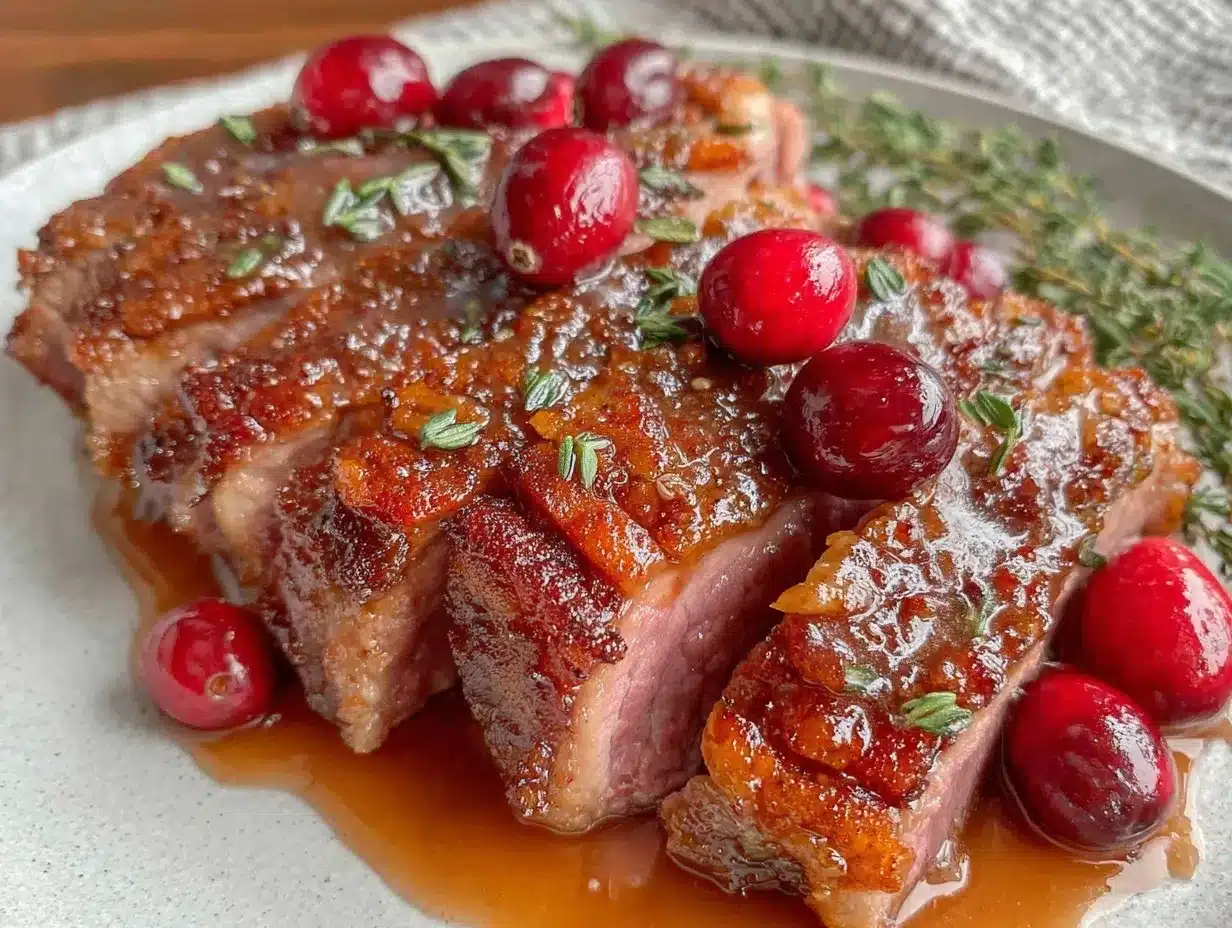
- Slice and Serve: Slice the rested duck breasts thinly against the grain. Arrange on plates and drizzle generously with the cherry port reduction sauce. Enjoy with your favorite sides!
Pro tip: If your sauce thickens too much, add a splash of water or more port to loosen it up. And don’t forget to save some rendered duck fat—it’s liquid gold for roasting potatoes or veggies!
Cooking Tips & Techniques
Getting duck breast right can feel tricky, but a few insider tips make all the difference.
- Pat the Skin Dry: Moisture is the enemy of crispiness. Before scoring and seasoning, pat your duck breasts dry with paper towels.
- Score Carefully: Don’t cut too deep. The goal is to help fat render out, not to slice through the meat.
- Low and Slow: Rendering duck fat takes patience. Medium heat is your friend to avoid burnt skin.
- Don’t Crowd the Pan: Sear in batches if needed. Crowding traps steam and prevents crisping.
- Let It Rest: Resting locks in juices and makes slicing easier.
- Use a Thermometer: Duck breast is best medium-rare to medium. Aim for 135°F (57°C) for medium-rare; it will rise a bit while resting.
- Sauce Balance: Taste your sauce at the end—add a pinch of salt or a squeeze of lemon juice if it needs brightness.
I once overcooked a batch by rushing the sear and ended up with leathery meat—lesson learned! Also, multitasking helps: start your sauce as the duck rests to save time without sacrificing flavor.
Variations & Adaptations
This recipe is versatile and can be tailored to your preferences or dietary needs.
- Fruit Variations: Swap cherries for fresh raspberries, blackberries, or even figs for a different flavor twist.
- Spice it Up: Add a pinch of cinnamon or star anise to the sauce for a warm, aromatic note.
- Cooking Methods: Instead of pan-searing alone, try finishing the duck in a 400°F (200°C) oven for 5 minutes after searing if you prefer a more evenly cooked interior.
- Allergen-Free: Use coconut oil instead of butter in the sauce for dairy-free adjustments.
- Personal Twist: I once tossed in a splash of balsamic vinegar near the end of the sauce reduction to add a tangy depth—highly recommend!
Feel free to experiment with herbs too; rosemary or sage work beautifully if thyme isn’t on hand.
Serving & Storage Suggestions
Serve the duck breasts sliced warm, with the cherry port sauce drizzled right over. They pair wonderfully with creamy mashed potatoes, roasted root vegetables, or even a simple wild rice pilaf. A glass of Pinot Noir or a fruity red wine complements the richness perfectly.
Leftovers? Store sliced duck and sauce separately in airtight containers in the fridge for up to 2 days. Reheat gently in a skillet over low heat to avoid drying out the meat. The sauce can be warmed slowly on the stove, adding a splash of water or port if too thick.
Flavors deepen if you let the sauce rest overnight—just reheat before serving. If you want to freeze, keep the sauce separate from the meat; it freezes well for up to 3 months.
Nutritional Information & Benefits
Each serving of pan-seared duck breast with cherry port sauce provides roughly:
| Nutrient | Amount |
|---|---|
| Calories | 450 kcal |
| Protein | 32 g |
| Fat | 32 g (mostly monounsaturated and saturated from duck fat) |
| Carbohydrates | 12 g (from cherries and honey) |
| Fiber | 2 g |
Duck is a great source of iron and zinc, essential for energy and immune function. Cherries add antioxidants and vitamin C, while port wine provides flavor without excess sugar when used sparingly. This recipe fits well into gluten-free and low-carb diets when paired appropriately.
From a wellness perspective, treating yourself occasionally to a rich but balanced meal like this feels satisfying and wholesome, especially when made with fresh, quality ingredients.
Conclusion
Perfect pan-seared duck breast with cherry port reduction sauce is one of those recipes that’ll quickly become a favorite for special occasions or whenever you want to impress without fuss. It’s approachable, packed with flavor, and offers a stunning presentation that’s sure to get compliments.
Customize it with your favorite fruit or herbs, and make it your own—cooking is all about personal touches anyway. Honestly, the first time I nailed this recipe felt like a small victory, and I still get a little thrill every time I make it.
If you give this recipe a try, I’d love to hear how it turns out or what unique twists you add. Share your stories and adaptations in the comments below—let’s keep this delicious conversation going!
So grab those duck breasts and get cooking—you’re in for a treat you won’t forget.
FAQs About Pan-Seared Duck Breast with Cherry Port Reduction Sauce
How do I know when the duck breast is cooked perfectly?
The best way is to use a meat thermometer. Medium-rare is around 135°F (57°C). The skin should be golden and crispy, and the meat should feel tender but not mushy.
Can I use frozen duck breasts for this recipe?
Yes, but make sure to thaw them completely in the refrigerator before cooking. Pat dry thoroughly to get that crispy skin.
What can I substitute if I don’t have fresh cherries?
Frozen cherries work well, just thaw before using. You can also try dried cherries soaked in warm water or tart cherry preserves (reduce honey accordingly).
Is it necessary to score the duck skin?
Scoring helps render the fat and crisp the skin evenly. If you skip it, the fat won’t render as well, and the skin might be chewy.
Can I prepare the cherry port sauce ahead of time?
Absolutely! You can make the sauce a day ahead and gently reheat it before serving. Just stir in a little water or port if it thickens too much.
Just a quick note: if you enjoy recipes like this, you might appreciate trying my crispy garlic chicken for another flavorful but easy dinner option or the roasted vegetable risotto when you want something cozy and comforting with a veggie twist.
Pin This Recipe!
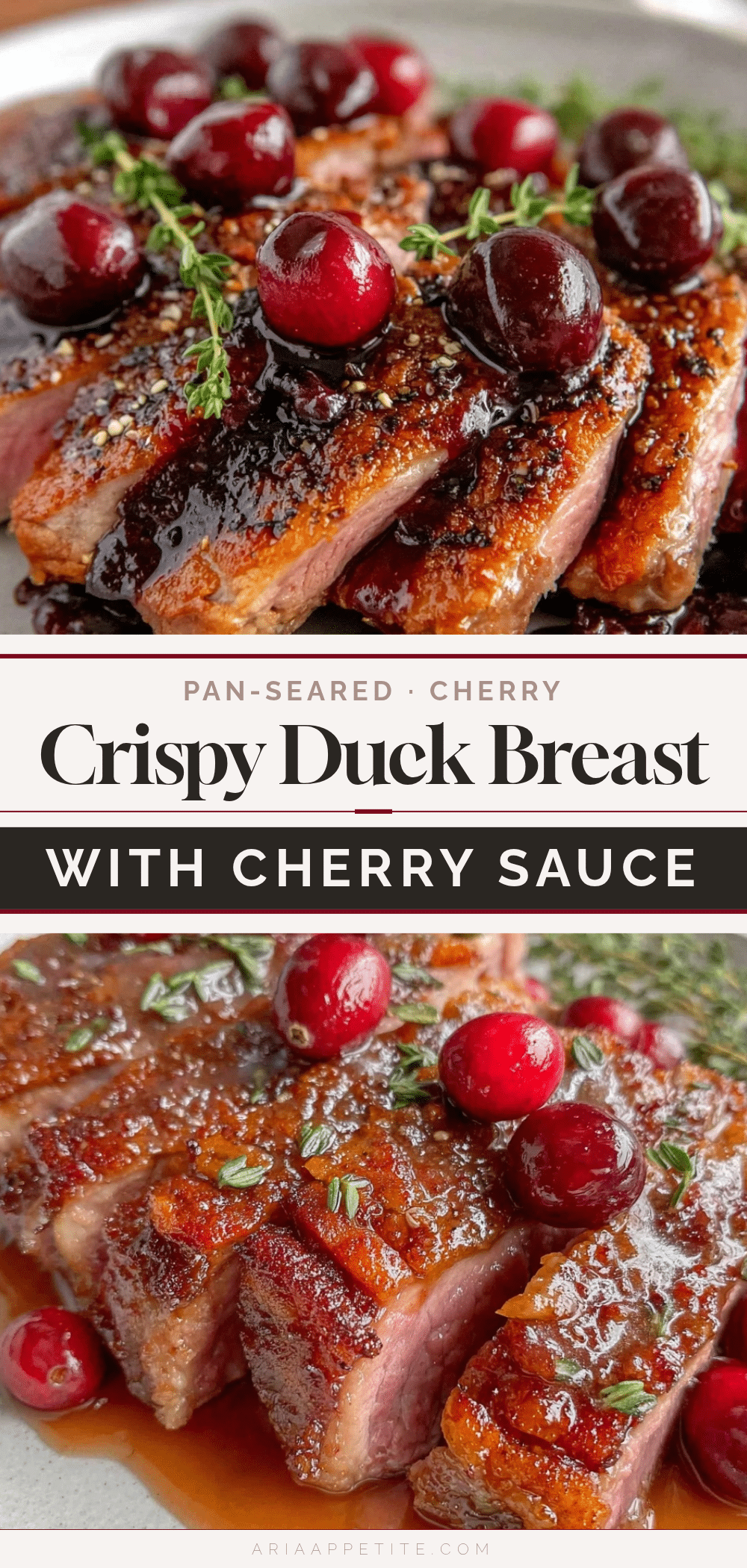
Perfect Pan-Seared Duck Breast Recipe with Easy Cherry Port Sauce

An elegant and flavorful pan-seared duck breast with a crispy skin paired with a sweet-tart cherry port reduction sauce. Perfect for special dinners that are quick and easy to prepare.
- Prep Time: 10 minutes
- Cook Time: 20 minutes
- Total Time: 30 minutes
- Yield: 2 servings 1x
- Category: Main Course
- Cuisine: French-inspired
Ingredients
- 2 duck breasts (about 6–7 oz / 170–200 g each), skin on, trimmed of excess fat
- Salt and freshly ground black pepper, for seasoning
- 1 cup (150 g) fresh cherries, pitted and halved (fresh is best, but frozen works fine too)
- ½ cup (120 ml) port wine, ruby port preferred
- 1 tablespoon honey (local or wildflower honey recommended)
- 1 small shallot, finely chopped
- 1 clove garlic, minced
- 2 tablespoons unsalted butter, for finishing the sauce
- 1 teaspoon fresh thyme, finely chopped (optional)
- 1 tablespoon olive oil, for searing
Instructions
- Score the duck skin in a crisscross pattern with a sharp knife, being careful not to cut into the meat. Season both sides generously with salt and pepper. (10 minutes)
- Heat a heavy skillet or cast-iron pan over medium heat and add the olive oil. Warm until shimmering but not smoking. (2 minutes)
- Place the duck breasts skin-side down in the pan. Press gently to ensure even contact. Cook for about 6-8 minutes until the fat renders and the skin is golden brown and crisp. Flip and cook the meat side for 3-4 minutes for medium-rare (internal temp ~135°F/57°C). Adjust time for preferred doneness. (10-12 minutes)
- Remove duck breasts from the pan and rest loosely covered with foil for at least 5 minutes. (5 minutes)
- In a saucepan over medium heat, add a tablespoon of reserved duck fat or butter. Sauté shallots and garlic until translucent and fragrant, about 2-3 minutes.
- Add fresh cherries and cook for another 3 minutes until they start to soften.
- Pour in port wine and honey, stir well, and bring to a simmer. Reduce by half, stirring occasionally, about 8-10 minutes until sauce thickens and becomes glossy.
- Remove from heat and stir in butter and fresh thyme. Season with salt and pepper to taste.
- Slice rested duck breasts thinly against the grain. Arrange on plates and drizzle with cherry port reduction sauce. Serve immediately.
Notes
Pat duck breasts dry before scoring to ensure crispy skin. Score skin carefully without cutting into meat. Use medium heat to render fat slowly and avoid burning. Rest duck after cooking to lock in juices. Save rendered duck fat for roasting vegetables. If sauce thickens too much, add a splash of water or port to loosen. For dairy-free, substitute butter with neutral oil or vegan butter. Check port wine for gluten if needed.
Nutrition
- Serving Size: 1 duck breast with s
- Calories: 450
- Fat: 32
- Carbohydrates: 12
- Fiber: 2
- Protein: 32
Keywords: duck breast, pan-seared duck, cherry port sauce, easy duck recipe, date night dinner, quick gourmet meal