Love this? Save it for later!
Share the inspiration with your friends
My neighbor Sarah asked why I couldn’t just dump everything into one bowl and skip the whole “make a well in the center” thing. I was mid-explanation—something about proper technique, about how my grandmother would roll over in her grave—when I stopped. I mean, honestly, why couldn’t I? I had been making Irish soda bread for years, always following the same fussy ritual of creating that flour volcano, carefully pouring in the buttermilk, and slowly drawing the flour into the center with my fingertips. It felt sacred. It also felt like a lot of unnecessary steps on a Tuesday afternoon when I just wanted bread.
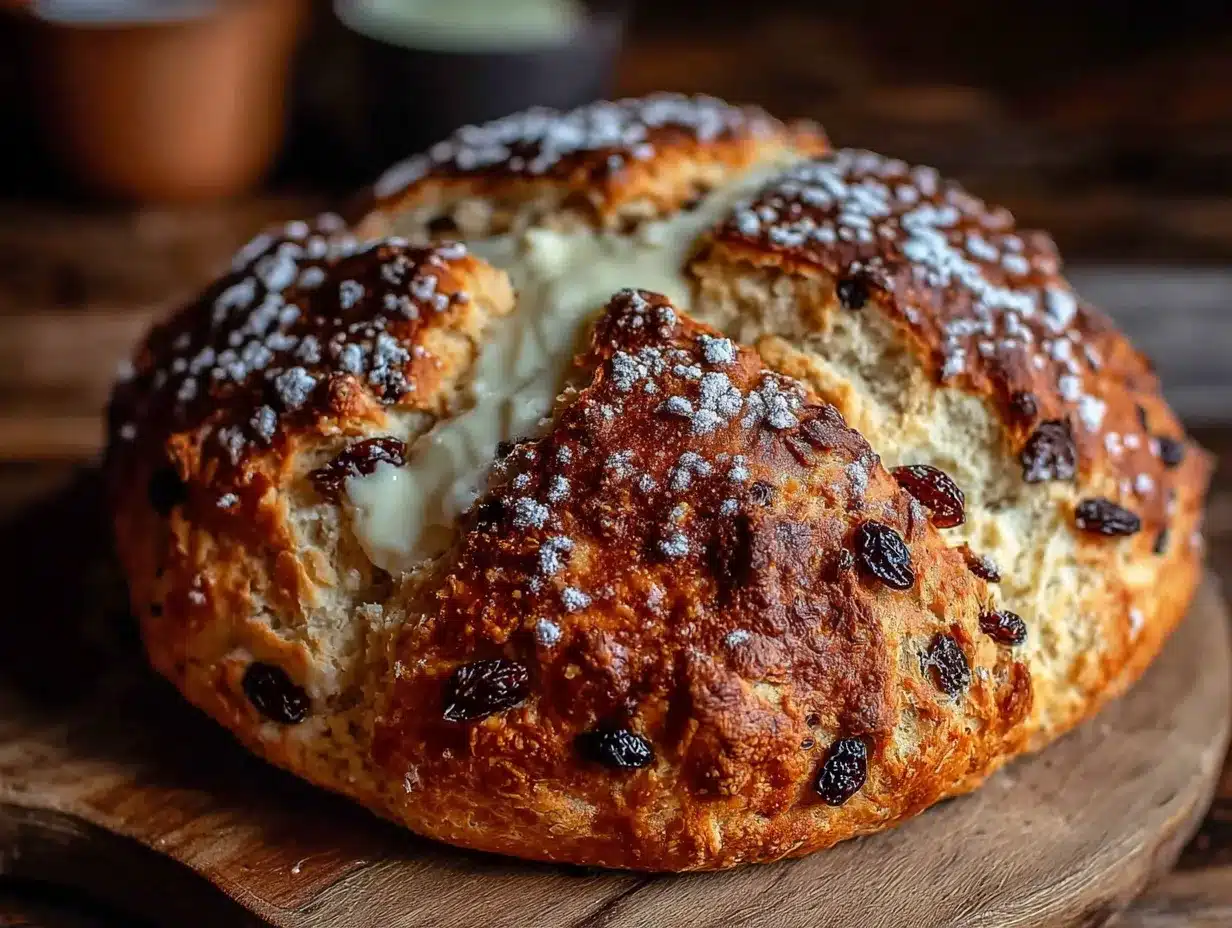
So I tried it her way. I tossed everything into a big bowl, gave it a quick stir with a wooden spoon, and kneaded it maybe four times before shaping it into a round. The loaf came out of the oven looking exactly the same—golden brown, crackled across the top, with that signature cross slashed into the center. The kitchen smelled like a Dublin bakery. And when I cut into it, there it was: that dense, tender crumb studded with plump raisins and fragrant caraway seeds, exactly as it should be. Sarah took one bite and said, “See?” I couldn’t even be mad. She was right.
That moment changed how I approach this classic Irish soda bread with raisins and caraway forever. It reminded me that sometimes the best recipes come from letting go of the rules we learned and trusting the simplicity that’s already there. This bread doesn’t need fussing over. It needs a light hand, good ingredients, and someone willing to break a few “rules” to get to the good stuff. Maybe you’ve been there too—staring at a recipe thinking there has to be an easier way. Trust me, there is. And it’s this one.
Why You’ll Love This Recipe
This classic Irish soda bread with raisins and caraway has become my go-to for every gathering, from St. Patrick’s Day parties to casual Sunday brunches with friends. It’s the kind of bread that makes people stop mid-conversation and ask, “Did you make this?” And honestly, the look on their faces when you say yes is priceless.
- Incredibly Quick: From mixing bowl to cooling rack in under an hour. No yeast, no rising time, no complicated steps. You can literally start this bread twenty minutes before guests arrive and still have warm slices to pass around.
- Simple Pantry Ingredients: Flour, buttermilk, baking soda, salt, raisins, and caraway seeds. That’s it. No special trips to specialty stores, no hunting for obscure ingredients. Everything you need is probably already in your kitchen.
- Perfect for Hosting: This bread shines at dinner parties and potlucks. Slice it into wedges, arrange on a wooden board with salted butter and a dish of honey, and watch it disappear. It pairs beautifully with soups, stews, and cheese boards.
- Always a Crowd-Pleaser: Kids love the sweet bursts of raisins. Adults appreciate the subtle anise-like flavor of caraway. Even picky eaters go back for seconds. I’ve never served this bread without someone asking for the recipe.
- Unbelievably Satisfying: The crust is crisp and golden, the interior is tender and slightly crumbly—exactly what Irish soda bread should be. The raisins add little pockets of sweetness, and the caraway seeds provide that unmistakable warm, earthy note that makes this bread so distinctive.
What sets this version apart is the texture. By keeping the kneading minimal—just enough to bring the dough together—you get a bread that’s tender rather than tough. The buttermilk reacts with the baking soda to create a soft, almost scone-like crumb that’s perfect for toasting the next day. This isn’t just another soda bread recipe; it’s the one that’ll earn a permanent spot in your rotation.
What Ingredients You Will Need
This classic Irish soda bread with raisins and caraway relies on a short list of humble ingredients that work together beautifully. Here’s what you’ll need and why each one matters.
- 4 cups (500g) all-purpose flour – I prefer Gold Medal or King Arthur for consistent results. Don’t substitute bread flour here; the higher protein content will make the bread tough. All-purpose gives you that perfect tender crumb.
- 1 teaspoon baking soda – This is your leavening agent. Make sure it’s fresh—test it by dropping a pinch into vinegar; if it fizzes vigorously, you’re good. Old baking soda won’t give you the rise you need.
- 1 teaspoon salt – Fine sea salt works best. It dissolves evenly and enhances all the other flavors without leaving salty pockets.
- 1/4 cup (50g) granulated sugar – Just enough to balance the tanginess of the buttermilk and complement the raisins. You can reduce this to 2 tablespoons if you prefer a less sweet bread.
- 1 cup (150g) raisins – Golden or dark raisins both work beautifully. I often use a mix for color contrast. If your raisins are dry and hard, soak them in hot water for 10 minutes, then drain and pat dry before adding to the dough.
- 2 tablespoons caraway seeds – This is the signature flavor of traditional Irish soda bread. The seeds add a subtle licorice-like warmth that pairs perfectly with the raisins. Toast them lightly in a dry pan for 30 seconds to intensify their flavor.
- 1 3/4 cups (420ml) buttermilk – Full-fat buttermilk gives the best texture and flavor. If you don’t have buttermilk, you can make a quick substitute: add 1 tablespoon of lemon juice or white vinegar to a measuring cup, then fill with regular milk to the 1 3/4 cup line. Let it sit for 5 minutes until it curdles slightly.
That’s everything you need. No eggs, no butter, no yeast—just seven simple ingredients that transform into something truly special. The magic happens when the acidic buttermilk meets the alkaline baking soda, creating bubbles of carbon dioxide that lift the dough without any rising time.
Equipment Needed
You don’t need fancy equipment to make this classic Irish soda bread with raisins and caraway, which is part of its charm. Here’s what you’ll need:
- Large mixing bowl – Any big bowl works. I use a sturdy ceramic one that gives me room to stir without flour flying everywhere.
- Wooden spoon or rubber spatula – For mixing the dough. A wooden spoon feels right for this rustic bread, but a silicone spatula works just as well.
- Bench scraper or sharp knife – For cutting the cross into the top of the loaf. This isn’t just decorative; it helps the bread bake evenly and allows the “fairy” to escape (old Irish folklore says it lets the fairies out).
- Baking sheet or cast iron skillet – A rimmed baking sheet lined with parchment paper works perfectly. For an even crustier bottom, use a 10-inch cast iron skillet. I’ve used both and honestly prefer the skillet for the extra heat retention.
- Parchment paper – Makes cleanup a breeze and prevents sticking. If you don’t have it, lightly grease your baking sheet with butter.
- Cooling rack – Essential for letting the bread cool properly. If you leave it on the baking sheet, the bottom will steam and get soggy.
- Pastry brush (optional) – For brushing the top with a little extra buttermilk before baking, which gives a beautiful golden sheen.
If you don’t have a cast iron skillet, don’t worry. A regular baking sheet produces excellent results. The key is to preheat your pan while the oven heats up—this gives the bottom of the bread a head start on browning.
Preparation Method
Let me walk you through making this classic Irish soda bread with raisins and caraway step by step. Trust me, it’s easier than you think.
- Preheat your oven to 425°F (220°C). Place your baking sheet or cast iron skillet on the middle rack while it heats. A hot pan helps the bottom of the bread crisp up beautifully.
- Whisk the dry ingredients together. In your large mixing bowl, combine the 4 cups of flour, 1 teaspoon baking soda, 1 teaspoon salt, and 1/4 cup sugar. Whisk them together until evenly distributed. This takes about 30 seconds and ensures the baking soda is evenly dispersed.
- Add the raisins and caraway seeds. Toss them into the flour mixture and stir until every raisin and seed is coated in flour. This step prevents the raisins from sinking to the bottom of the bread during baking. Take your time here—really make sure everything is well coated.
- Make a well in the center. Push the flour mixture to the sides of the bowl, creating a deep crater in the middle. This is where the buttermilk goes. Don’t skip this—it helps the liquid incorporate more evenly.
- Pour in the buttermilk. Add all 1 3/4 cups of buttermilk into the well. Don’t dump it all in at once if you’re nervous; pour it slowly and watch it pool in the center.
- Mix until just combined. Use your wooden spoon or spatula to stir the flour into the buttermilk, working from the center outward. The dough will look shaggy and messy—that’s perfect. Stop mixing as soon as you can’t see any more dry flour. Overmixing develops gluten and makes the bread tough.
- Turn the dough onto a floured surface. Lightly dust your counter or a large cutting board with flour. Scrape the dough out of the bowl. It will be sticky, so don’t panic.
- Knead very gently, 4 to 5 times. This is the part where most people go wrong. You’re not making yeast bread here. Just fold the dough over itself a few times to bring it together into a rough ball. That’s it. Four or five gentle folds, no more. The dough should still look a little ragged on the surface.
- Shape into a round loaf. Pat the dough into a disk about 6 to 7 inches across and 2 inches tall. Don’t use a rolling pin—just use your hands. The shape doesn’t need to be perfect; rustic is the look you’re going for.
- Transfer to your hot baking sheet. Carefully remove the preheated pan from the oven. Place the dough round on it. If using parchment, slide the parchment onto the pan with the dough.
- Cut a deep cross into the top. Using a sharp knife or bench scraper, cut an X about 1/2 inch deep across the top of the loaf. This isn’t just tradition—it helps the bread bake through and gives you those beautiful quadrants for serving.
- Brush with buttermilk (optional). For a shiny, golden crust, brush the top with a little extra buttermilk. This step is optional but makes the bread look bakery-worthy.
- Bake for 35 to 40 minutes. Place the pan in the oven and bake until the bread is deep golden brown and sounds hollow when you tap the bottom. The internal temperature should reach about 200°F (93°C) when tested with an instant-read thermometer.
- Cool completely on a wire rack. Transfer the bread to a cooling rack. Resist the urge to slice into it while it’s hot—the interior needs time to set. Wait at least 30 minutes. I know it’s hard, but trust me, it’s worth it.
Your kitchen will smell incredible during baking—that warm, toasty aroma of caraway and toasted flour. When the bread comes out, golden and crackled, you’ll feel like you just pulled something magical from the oven. And honestly, you did.
Cooking Tips & Techniques
After making this classic Irish soda bread with raisins and caraway more times than I can count, I’ve learned a few things the hard way. Let me share them so you don’t make the same mistakes I did.
Don’t overwork the dough. This is the number one mistake people make. Soda bread relies on the chemical reaction between buttermilk and baking soda, not on gluten development. The more you knead, the tougher the bread gets. Think of it like making biscuits—gentle hands, gentle folds, done.
Use cold buttermilk. Cold liquid slows down the reaction between the buttermilk and baking soda, giving you more time to shape the dough before it starts rising. If your buttermilk is room temperature, the dough will start reacting immediately and you’ll have to work faster.
Toast the caraway seeds. This is a game-changer. Throw the caraway seeds into a dry skillet over medium heat for 30 to 45 seconds until they’re fragrant. Toasting releases their essential oils and makes the flavor much more pronounced. I forgot to do this once and the bread was noticeably less flavorful.
Check your baking soda’s freshness. I learned this lesson after making a flat, dense loaf that tasted metallic. Baking soda loses potency over time. If your box has been open for more than six months, buy a new one. Your bread will thank you.
Let it cool properly. I know it’s tempting to slice into warm bread, but soda bread needs time to finish cooking internally. The residual heat continues to set the crumb. Cutting too early gives you a gummy, doughy texture. Set a timer for 30 minutes and walk away.
Toast leftovers. Day-old soda bread makes the best toast. The slices crisp up beautifully in a toaster or under the broiler. Slather with butter and a drizzle of honey—it’s a breakfast worth waking up for.
Variations & Adaptations
One of the best things about this classic Irish soda bread with raisins and caraway is how adaptable it is. Here are some variations I’ve tried and loved.
Whole Wheat Version: Substitute 2 cups of the all-purpose flour with whole wheat flour. The bread will be denser and nuttier, with a more rustic texture. You may need to add an extra 2 to 3 tablespoons of buttermilk since whole wheat flour absorbs more liquid. This version pairs beautifully with sharp cheddar cheese.
Gluten-Free Adaptation: Use a good quality gluten-free all-purpose flour blend that contains xanthan gum. Cup4Cup and King Arthur both work well. The texture will be slightly more crumbly, but the flavor is still wonderful. Add an extra tablespoon of buttermilk to compensate for the different flour absorption.
Savory Soda Bread: Omit the raisins and sugar entirely. Add 1/2 cup of shredded sharp cheddar cheese, 2 tablespoons of chopped fresh rosemary, and an extra teaspoon of caraway seeds. This version is incredible served alongside a bowl of hearty soup or used for sandwiches.
Dried Fruit Swaps: Not a fan of raisins? Try dried cranberries, chopped dried apricots, or dried currants. Each brings its own personality. Cranberries add a tart pop that contrasts beautifully with the caraway, while apricots bring a subtle honeyed sweetness.
Herb and Garlic Version: Add 1 teaspoon of dried thyme, 1 teaspoon of garlic powder, and 1/2 teaspoon of black pepper to the dry ingredients. Omit the raisins and reduce the sugar to 1 tablespoon. This savory version is fantastic for sopping up stew juices.
Serving & Storage Suggestions
This classic Irish soda bread with raisins and caraway is incredibly versatile when it comes to serving. Here’s how I like to do it.
Serving temperature: Serve slightly warm or at room temperature. If you’re hosting a dinner party, bake the bread earlier in the day and let it cool completely. About 15 minutes before serving, wrap it in foil and warm it in a 300°F (150°C) oven for 10 minutes. It’ll taste freshly baked.
Presentation ideas: Cut the bread into wedges along the cross you baked into the top. Arrange the wedges on a wooden cutting board or in a bread basket lined with a linen napkin. Serve with a dish of high-quality salted butter (Kerrygold is my favorite) and a small bowl of honey or orange marmalade.
What to serve alongside: This bread is a natural companion to soups and stews—think creamy potato leek soup, hearty beef stew, or a simple tomato basil soup. It’s also wonderful with a cheese board featuring aged cheddar, soft goat cheese, and fresh grapes. For breakfast, toast a slice and top with scrambled eggs and chives.
Storage instructions: Store the bread wrapped in a clean kitchen towel at room temperature for up to 2 days. Don’t store it in plastic—the bread will become soggy. If you need to keep it longer, wrap it tightly in plastic wrap and then foil, and freeze for up to 3 months.
Reheating tips: To refresh day-old bread, wrap it in foil and warm in a 350°F (175°C) oven for 10 minutes. For toast, slice and pop directly into the toaster. The bread freezes beautifully; just thaw at room temperature and reheat as needed.
Flavor development: Honestly, this bread is best the day it’s made. The crust stays crisp and the interior is at its most tender. But day-old slices make exceptional toast, and the flavors of the caraway and raisins actually mellow and blend overnight.
Nutritional Information & Benefits
This classic Irish soda bread with raisins and caraway is a wholesome treat that offers more than just great flavor. Here’s what you’re getting in a typical slice (1/8 of the loaf).
- Calories: Approximately 210 per slice
- Carbohydrates: 42g
- Protein: 6g
- Fat: 1.5g
- Fiber: 2g
- Sugar: 12g (mostly from raisins)
- Sodium: 380mg
Health benefits: Caraway seeds are known for their digestive properties and have been used in traditional medicine for centuries. Raisins provide natural sweetness along with fiber, potassium, and iron. The buttermilk adds calcium and probiotics (if using cultured buttermilk). This bread is naturally low in fat and contains no cholesterol or trans fats.
Dietary considerations: This recipe is vegetarian and can be made vegan by using plant-based milk mixed with lemon juice instead of buttermilk. It’s also nut-free and egg-free, making it suitable for many common allergies. For a lower-sugar version, reduce the granulated sugar to 1 tablespoon and use less sweet dried fruit.
While this bread isn’t exactly health food, it’s a far better choice than most store-bought breads with their long lists of preservatives and additives. It’s real food made from real ingredients—and that’s something worth celebrating.
Conclusion
This classic Irish soda bread with raisins and caraway has earned a permanent place in my kitchen, and I have a feeling it will in yours too. It’s the bread I turn to when I need something impressive without the stress, when I want the house to smell amazing but don’t have hours to spend, when I want to share something handmade with the people I love.
What I love most about this recipe is how forgiving it is. You don’t need to be an experienced baker to nail it. You don’t need special equipment or hard-to-find ingredients. You just need a bowl, a spoon, an oven, and the willingness to try. And honestly, that first bite—warm, tender, studded with sweet raisins and fragrant caraway—makes everything worth it.
I’d love to hear how yours turns out. Did you try a variation? Serve it with something unexpected? Burn the bottom and learn a lesson? (Been there.) Drop a comment below and let me know. And if you loved this recipe, share it with a friend who needs a little homemade goodness in their life. Happy baking!
Frequently Asked Questions
Can I make Irish soda bread without buttermilk?
Absolutely. If you don’t have buttermilk on hand, you can make a quick substitute by adding 1 tablespoon of lemon juice or white vinegar to a measuring cup and filling it with regular milk to the 1 3/4 cup line. Let it sit for 5 minutes until it curdles slightly. This homemade “buttermilk” works perfectly in this recipe.
Why did my soda bread turn out dense and heavy?
This usually happens for one of two reasons: overkneading the dough or using old baking soda. Remember to knead gently and only 4 to 5 times. Also, test your baking soda by dropping a pinch into vinegar—if it doesn’t fizz vigorously, it’s time to buy a fresh box.
Can I freeze Irish soda bread?
Yes, this bread freezes beautifully. Wrap the completely cooled loaf tightly in plastic wrap, then in aluminum foil. Freeze for up to 3 months. To thaw, leave it at room temperature for a few hours, then warm in a 350°F (175°C) oven for 10 minutes to refresh the crust.
Do I have to add caraway seeds?
Not at all. While caraway seeds are traditional in Irish soda bread, they have a strong flavor that not everyone loves. Feel free to omit them entirely or substitute with fennel seeds, poppy seeds, or even orange zest for a different flavor profile.
Why did my raisins sink to the bottom of the loaf?
This happens when the raisins aren’t properly coated in flour before adding the buttermilk. Make sure you toss the raisins and caraway seeds thoroughly with the flour mixture before adding any liquid. The flour coating helps suspend them evenly throughout the dough during baking.
Pin This Recipe!
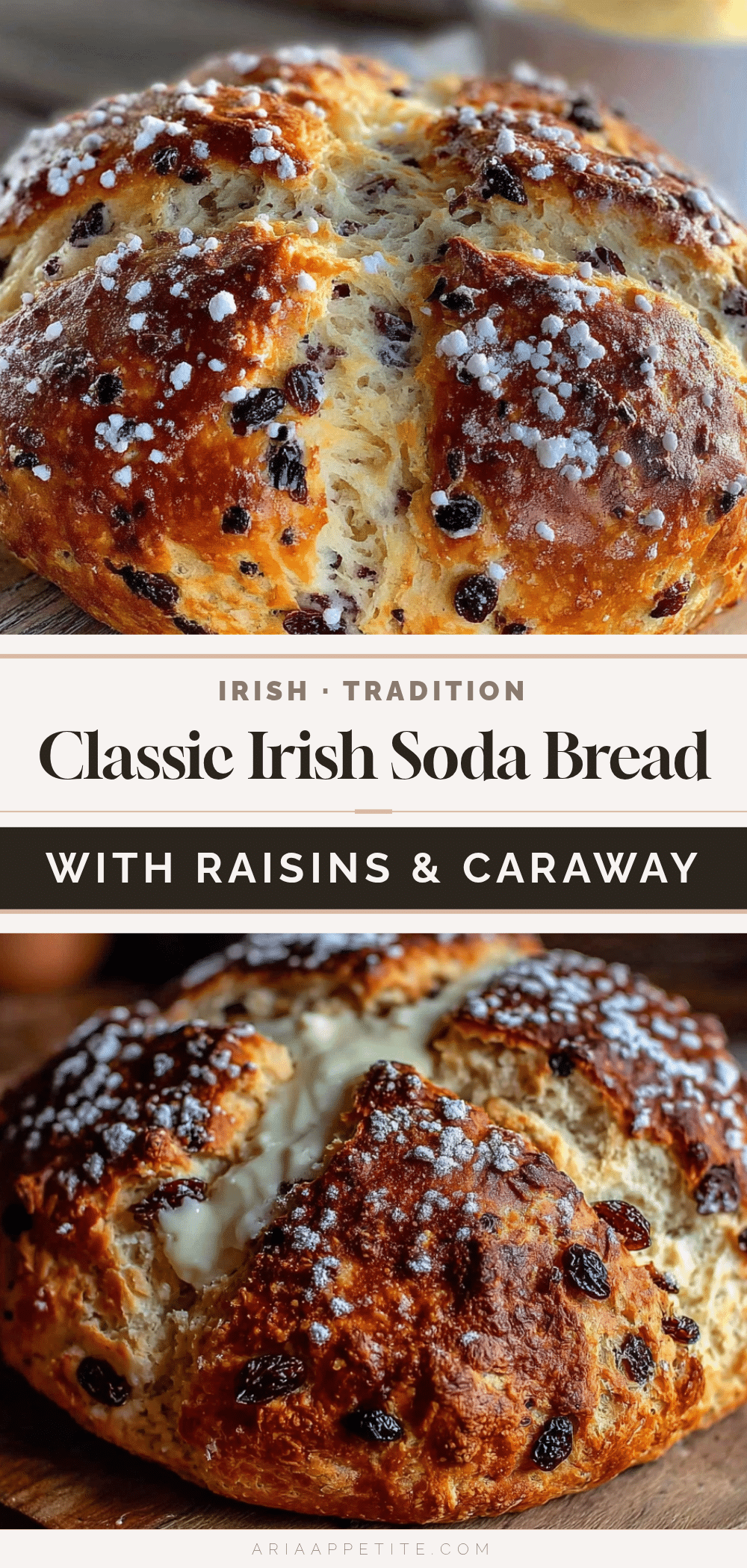
Classic Irish Soda Bread with Raisins and Caraway – Best Easy Recipe

This classic Irish soda bread with raisins and caraway is incredibly quick, uses simple pantry ingredients, and is perfect for hosting. With a tender crumb, sweet bursts of raisins, and fragrant caraway seeds, it’s a crowd-pleaser that comes together in under an hour.
- Prep Time: 15 minutes
- Cook Time: 35 minutes
- Total Time: 50 minutes
- Yield: 8 servings 1x
- Category: Bread
- Cuisine: Irish
Ingredients
- 4 cups (500g) all-purpose flour
- 1 teaspoon baking soda
- 1 teaspoon fine sea salt
- 1/4 cup (50g) granulated sugar
- 1 cup (150g) raisins (golden or dark, or a mix)
- 2 tablespoons caraway seeds
- 1 3/4 cups (420ml) buttermilk (full-fat preferred)
Instructions
- Preheat your oven to 425°F (220°C). Place your baking sheet or cast iron skillet on the middle rack while it heats.
- In a large mixing bowl, whisk together the flour, baking soda, salt, and sugar until evenly distributed.
- Add the raisins and caraway seeds to the flour mixture and stir until every raisin and seed is coated in flour.
- Make a well in the center of the flour mixture.
- Pour the buttermilk into the well.
- Stir with a wooden spoon or spatula until just combined; the dough will look shaggy. Stop mixing as soon as no dry flour remains.
- Turn the dough onto a lightly floured surface.
- Knead very gently, 4 to 5 times, just until the dough comes together into a rough ball.
- Pat the dough into a round disk about 6 to 7 inches across and 2 inches tall.
- Carefully remove the preheated pan from the oven. Transfer the dough round onto the hot pan (use parchment if desired).
- Cut a deep cross (about 1/2 inch deep) into the top of the loaf using a sharp knife or bench scraper.
- Optionally, brush the top with a little extra buttermilk for a shiny crust.
- Bake for 35 to 40 minutes, until deep golden brown and the loaf sounds hollow when tapped on the bottom. Internal temperature should reach about 200°F (93°C).
- Transfer the bread to a wire rack and cool completely (at least 30 minutes) before slicing.
Notes
Don’t overwork the dough—knead only 4 to 5 times. Use cold buttermilk to slow the reaction. Toast caraway seeds in a dry pan for 30 seconds to intensify flavor. Check baking soda freshness by dropping a pinch into vinegar; it should fizz vigorously. Let the bread cool completely before slicing to avoid a gummy texture. Day-old bread makes excellent toast.
Nutrition
- Serving Size: 1 slice (1/8 of loaf
- Calories: 210
- Sugar: 12
- Sodium: 380
- Fat: 1.5
- Carbohydrates: 42
- Fiber: 2
- Protein: 6
Keywords: Irish soda bread, soda bread with raisins, caraway seed bread, quick bread, no yeast bread, St. Patrick's Day bread, easy bread recipe