Love this? Save it for later!
Share the inspiration with your friends
It was 11:47 PM on a Tuesday that felt like a Thursday—you know the kind, where the week has blurred into one long, tired afternoon—and I wanted a bowl of noodles more than I’ve ever wanted anything in my life. The problem was, I didn’t have the energy for a proper broth, and my fridge was looking sad. I had a carton of eggs, some soy sauce, and a bottle of mirin that was almost empty. That’s when the idea arrived: what if I just made the eggs? The perfect, jammy, soy-marinated kind that usually feels like a special treat from a ramen shop. I wasn’t trying to be clever. I was just hungry and lazy, and honestly, it was too late to overthink it.
So I boiled some water, set a timer on my phone, and stood there watching the bubbles. I dropped the eggs in with a gentle splash, and for the next six minutes and forty seconds, I just listened to the quiet hum of the kitchen. When the timer went off, I scooped them out, dropped them into an ice bath, and peeled them under cold running water. The shells came off in satisfying, clean strips. Then I mixed a quick marinade—soy sauce, mirin, a little sugar—and tucked the naked eggs into the dark liquid. I left them on the counter for about an hour because, let’s be real, I fell asleep on the couch.
I woke up at one in the morning, remembered the eggs, and fished one out with a spoon. I bit into it right there over the sink. The yolk was still soft, almost custard-like, and the soy had seeped into the white just enough to make it salty and sweet in all the right ways. I stood in my dark kitchen, in my pajamas, eating a cold soy-marinated egg at one in the morning, and I swear it was the best thing I had eaten all week. That’s the thing about these eggs. They don’t need a fancy bowl of ramen to be perfect. They’re perfect all on their own.
I’ve made them at least a dozen times since that night. They’ve become my go-to for adding a little luxury to a simple bowl of rice, a sad desk salad, or, yes, a proper bowl of noodles when I have the energy. Maybe you’ve been there—standing in front of your open fridge at a weird hour, wanting something that feels special without a trip to the store. This is that recipe. It’s barely a recipe, honestly. It’s more of a habit now. But it’s one I’m happy to share.
Why You’ll Love This Recipe
Let me tell you why these jammy soy-marinated ramen eggs have earned a permanent spot in my fridge. I’ve tested this method more times than I can count, tweaking the boil time, the marinade ratio, even the temperature of the eggs when they hit the water. This version is the one that never fails. It’s the one I’d serve to a food snob without a second thought.
- Quick & Easy: From start to finish, you’re looking at about 10 minutes of active work. The marinade does all the heavy lifting while you go about your day. Perfect for busy weeknights or when you need a high-protein snack in a pinch.
- Simple Ingredients: You likely have everything in your pantry right now. Eggs, soy sauce, mirin, and a touch of sugar. No fancy grocery trips required. I mean it.
- Perfect for Meal Prep: Make a batch on Sunday, and you’ve got instant flavor for salads, grain bowls, noodles, or just eating them straight from the jar like a goblin (no judgment here).
- Crowd-Pleaser: I’ve brought these to potlucks and watched people hover around the bowl. Kids love them. Adults love them. Even my friend who “doesn’t like eggs” ate three.
- Unbelievably Delicious: The texture is the real star here. That jammy yolk—not too runny, not too firm—combined with the savory-sweet soy marinade is pure comfort. It’s the kind of bite that makes you close your eyes for a second.
What makes this recipe different from every other egg recipe out there? It’s the timing, honestly. I’ve dialed in the exact boil time to get that perfect jammy consistency every single time. No guessing, no cutting into an overdone yolk. And the marinade? It’s balanced. Not too salty, not too sweet. It’s the kind of recipe that feels like a secret weapon in the kitchen. You’ll find yourself making excuses to use them.
What Ingredients You Will Need
This recipe uses simple, humble ingredients to create something that tastes far more complex than it should. Most of these are pantry staples, which is exactly why this recipe works so well for spontaneous cravings. Here’s what you’ll need:
- Large eggs: 6 large eggs, at room temperature (room temperature eggs cook more evenly and are less likely to crack in the boiling water). I prefer organic, free-range eggs for their richer yolk color and flavor.
- Soy sauce: ½ cup (120 ml) of regular soy sauce. I use Kikkoman for its consistent, balanced saltiness. Low-sodium soy sauce works too, but you may want to add a pinch more salt to the marinade.
- Mirin: ¼ cup (60 ml) of sweet mirin. This adds a gentle sweetness and a subtle depth that soy sauce alone can’t achieve. If you don’t have mirin, you can substitute with 2 tablespoons of rice vinegar mixed with 1 tablespoon of sugar.
- Sugar: 1 tablespoon (12 g) of granulated sugar. This balances the saltiness of the soy sauce and helps create that glossy, lacquered finish on the egg whites. You can use brown sugar for a slightly deeper flavor.
- Water: ¼ cup (60 ml) of filtered water. This dilutes the marinade just enough so it doesn’t overwhelm the delicate egg flavor. Don’t skip it—it makes a difference.
- Optional aromatics: 1 clove of garlic, smashed, or a 1-inch piece of ginger, sliced. These add a subtle aromatic layer to the marinade. I usually add them when I’m feeling fancy, but they’re completely optional.
Ingredient Selection Tips: For the best texture, use eggs that are at least a week old. Fresh eggs are harder to peel, and nobody wants to fight with their breakfast. If you’re using farm-fresh eggs, add an extra 30 seconds to the boil time and be extra gentle when peeling. For the soy sauce, I really do recommend a good-quality brand. Cheap soy sauce can be one-dimensional and overly salty, which throws off the whole balance of the marinade.
Substitution Guidance: For a gluten-free option, use tamari or coconut aminos instead of regular soy sauce. Both work beautifully, though coconut aminos will add a slightly sweeter note. If you’re watching your sugar intake, you can reduce the sugar to 1 teaspoon or omit it entirely—the mirin provides enough sweetness on its own. For a vegan version, you can’t really replace the egg here, but the marinade is fantastic on tofu slices or hard-boiled potatoes.
Equipment Needed
You don’t need a fancy kitchen to make these eggs. Here’s what you’ll need:
- Medium saucepan: Big enough to hold your eggs in a single layer without crowding. I use a 3-quart saucepan, and it’s perfect.
- Slotted spoon: For gently lowering the eggs into the boiling water and fishing them out. A spider skimmer works even better.
- Large bowl of ice water: This stops the cooking process immediately and makes peeling a breeze. Prepare it before you start boiling.
- Small bowl or jar: For mixing the marinade. I use a 16-ounce mason jar because it’s the perfect size for marinating 6 eggs.
- Timer: Your phone timer is fine. Precision is key here—those seconds matter.
- Paper towels: For gently drying the peeled eggs before they go into the marinade. Excess water dilutes the marinade.
Budget-Friendly Options: If you don’t have a slotted spoon, use a regular spoon and be gentle. No mason jar? Any container with a lid will work—just make sure the eggs are fully submerged. I’ve used a Tupperware container in a pinch, and it worked perfectly.
Preparation Method
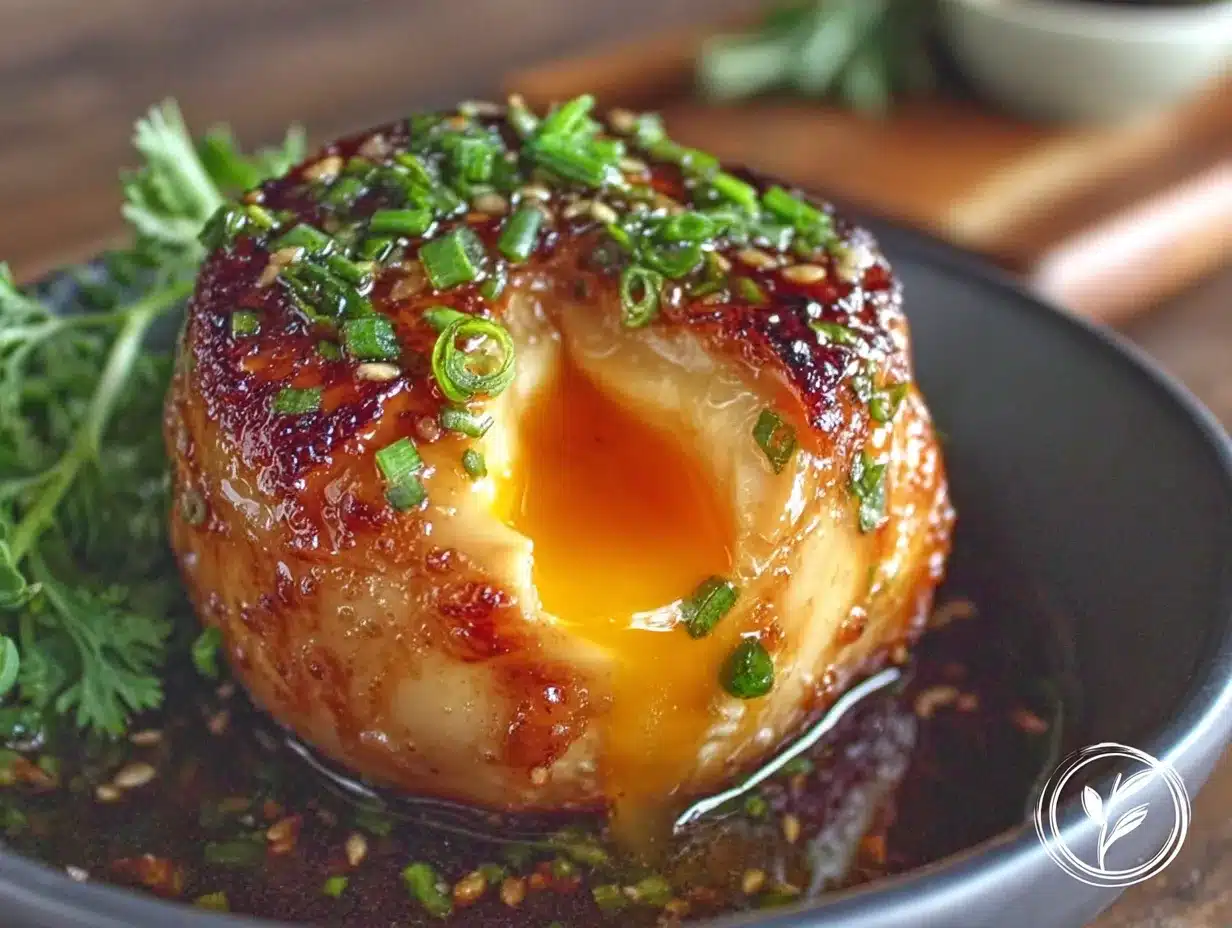
Making perfect jammy soy-marinated eggs is simpler than you think, but the details matter. Follow these steps closely, and you’ll get consistent results every time.
- Bring your eggs to room temperature: Take the eggs out of the fridge about 15-20 minutes before you start. This prevents them from cracking when they hit the boiling water. If you’re short on time, place them in a bowl of warm tap water for 5 minutes.
- Prepare the ice bath: Fill a large bowl with cold water and add a generous amount of ice cubes. Set it aside near your stove. You’ll need it ready to go.
- Boil the water: Fill your saucepan with enough water to cover the eggs by about an inch. Bring it to a rolling boil over high heat. Add a pinch of salt—this helps the whites set faster and makes peeling easier.
- Lower the eggs gently: Using your slotted spoon, carefully lower each egg into the boiling water. Do it slowly to avoid cracking. I usually do one at a time, waiting a few seconds between each. Set your timer for exactly 6 minutes and 40 seconds.
- Boil and watch: Keep the water at a steady, gentle boil. Don’t let it get too aggressive, or the eggs will bounce around and crack. At around 4 minutes, you’ll see the whites starting to set. At 6 minutes and 40 seconds, the whites will be fully set, and the yolks will be perfectly jammy—firm on the outside, soft and custard-like in the center.
- Transfer to ice bath: As soon as the timer goes off, use your slotted spoon to transfer the eggs to the ice bath. Let them sit for at least 5 minutes. This stops the cooking process immediately and shocks the shells, making them easier to peel.
- Peel under running water: Gently tap each egg on the counter to crack the shell all over, then peel under cold running water. The water helps separate the shell from the white. Be patient here—rushing can tear the white. If you’re having trouble, try peeling from the wider end of the egg, where there’s usually an air pocket.
- Prepare the marinade: In your small bowl or mason jar, combine the soy sauce, mirin, sugar, and water. Stir until the sugar is fully dissolved. If you’re using garlic or ginger, add them now. Give it a taste—it should be savory, slightly sweet, and not overwhelmingly salty.
- Marinate the eggs: Gently place the peeled eggs into the marinade. Make sure they’re fully submerged. If they float, you can place a small plate or a piece of plastic wrap directly on top of the liquid to keep them down. Seal the container and refrigerate.
- Wait (the hard part): Let the eggs marinate for at least 2 hours, but 4-6 hours is ideal. Overnight is even better. The longer they sit, the deeper the flavor penetrates. I’ve left them for 24 hours, and they were incredible—rich, savory, and perfectly seasoned all the way through.
Pro Tip: Don’t marinate them for more than 48 hours, or the texture can become rubbery. The soy sauce will start to break down the egg whites, and you’ll lose that beautiful, tender bite.
Cooking Tips & Techniques
I’ve made a lot of mistakes with these eggs so you don’t have to. Here’s what I’ve learned:
The Most Common Mistake: Overcooking the yolks. I know, it’s tempting to let them go an extra minute “just to be safe.” Don’t do it. At 7 minutes, the yolk starts to set. At 8 minutes, it’s fully hard-boiled. That jammy window is narrow—between 6 and 7 minutes depending on your stove and egg size. I always test with one egg first if I’m using a new pot or a different brand of eggs.
Another Mistake: Skipping the ice bath. I did this once when I was in a hurry, and the eggs kept cooking in their shells. By the time I peeled them, the yolks were solid. The ice bath isn’t optional—it’s the difference between jammy and hard-boiled.
Timing and Multitasking: The best way to approach this recipe is to prep everything before you start boiling. Get your ice bath ready, measure your marinade ingredients, and have your container ready. The actual boiling time is short, and you don’t want to be scrambling (pun intended) while your eggs are cooking.
Consistency Tip: Use a timer every single time. Don’t rely on your gut or the clock on your microwave. I use my phone timer and set it for 6 minutes and 40 seconds. That extra 40 seconds matters—it’s the difference between a runny yolk and a jammy one.
Personal Failure: I once tried to double the recipe and crammed 12 eggs into a pot that was too small. They cracked, the whites leaked out, and I ended up with a pot of cloudy, stringy water and four salvageable eggs. Don’t crowd the pot. Give them room to move gently.
Variations & Adaptations
This recipe is incredibly forgiving and adaptable. Here are some ways I’ve customized it over the years:
- Spicy Soy Eggs: Add 1 teaspoon of chili oil or a splash of sriracha to the marinade. The heat cuts through the richness of the yolk beautifully. I’ve also used gochugaru (Korean red pepper flakes) for a smokier heat.
- Garlic Ginger Eggs: Add 2 smashed garlic cloves and a 1-inch piece of ginger, thinly sliced, to the marinade. Let it infuse for at least 4 hours. The aromatics add a subtle warmth that’s perfect for cold-weather bowls.
- Sweet Soy Eggs: Increase the sugar to 2 tablespoons and add a tablespoon of honey. This creates a thicker, almost syrupy marinade that clings to the egg whites. It’s dangerously good.
- Tea-Marinated Eggs: Add 2 black tea bags and a star anise to the marinade. Let it steep for 10 minutes before adding the eggs. The tea adds a beautiful amber color and a subtle earthy flavor.
- Dietary Adaptations: For a low-sodium version, use low-sodium soy sauce and reduce the marinating time to 1 hour. For a sugar-free version, use a sugar substitute like monk fruit or stevia, or omit the sugar entirely and rely on the mirin for sweetness.
I’ve tried all of these variations, and my personal favorite is the spicy version. Something about the heat with that jammy yolk just works. But honestly, the classic version is still the one I make most often. It’s perfect as-is.
Serving & Storage Suggestions
These eggs are incredibly versatile. Here’s how I like to serve and store them:
Serving: Serve the eggs chilled or at room temperature. I prefer them cold right out of the fridge—the texture is firmer and the flavor is more concentrated. Slice them in half lengthwise to reveal that beautiful jammy yolk. They’re stunning on a bowl of ramen, of course, but don’t stop there. Try them on a bed of steamed rice with a drizzle of sesame oil, sliced green onions, and a sprinkle of furikake. Or slice them over a simple green salad with a ginger dressing. I’ve even chopped them up and folded them into a tuna salad for a next-level sandwich.
Pairings: These eggs love savory, umami-rich companions. Serve them alongside miso soup, stir-fried vegetables, or grilled meats. For a drink, a cold Japanese lager or a cup of green tea balances the richness perfectly.
Storage: Store the eggs in their marinade in an airtight container in the refrigerator. They’ll keep for up to 5 days, but the texture is best within the first 3 days. After that, the whites can start to firm up slightly from the salt. If you want to store them longer, remove them from the marinade after 24 hours and keep them in a sealed container. They’ll last another 2-3 days.
Reheating: These eggs are best enjoyed cold or at room temperature, but if you want them warm, place them in a bowl of hot (not boiling) water for 2-3 minutes. Don’t microwave them—it will cook the yolk and ruin that jammy texture.
Flavor Development: The flavor actually improves over the first 24 hours as the marinade penetrates deeper. I always try to make them a day ahead if I’m planning to serve them for a special meal. The wait is worth it.
Nutritional Information & Benefits
These eggs are a nutritional powerhouse disguised as a indulgent treat. Here’s the breakdown per egg (based on the marinade being partially absorbed):
- Calories: Approximately 80-90 calories per egg
- Protein: 6-7 grams
- Fat: 5-6 grams (mostly from the yolk)
- Carbohydrates: 2-3 grams (from the marinade)
- Sodium: 300-400 mg (varies based on marinating time)
Health Benefits: Eggs are one of the most nutrient-dense foods you can eat. They’re packed with high-quality protein, vitamin B12, vitamin D, and choline, which is essential for brain health. The yolk contains most of the nutrients, so don’t skip it. The soy-based marinade adds a small amount of antioxidants and may support heart health when used in moderation.
Dietary Considerations: This recipe is naturally gluten-free if you use tamari or coconut aminos. It’s also low-carb and keto-friendly, with only 2-3 grams of carbs per egg. The sugar content is minimal, but you can reduce it further if needed. The main allergen to note is soy, so those with soy allergies should use coconut aminos.
Personal Wellness Perspective: I love that these eggs feel like a treat but are actually a smart choice for a high-protein snack. They keep me full for hours and satisfy that craving for something savory without reaching for processed snacks. It’s comfort food that works with your body, not against it.
Conclusion
These jammy soy-marinated ramen eggs are proof that the best recipes are often the simplest. They take 10 minutes of active work, use ingredients you probably already have, and deliver a flavor that feels far more complex than it has any right to be. Whether you’re topping a bowl of noodles, adding protein to a salad, or just eating them straight from the jar at 1 AM (I won’t tell), these eggs are a game-changer.
I encourage you to make them your own. Play with the marinade. Try different boil times. Add your favorite spices. The beauty of this recipe is that it’s a foundation, not a rulebook. I’d love to hear how they turn out for you—drop a comment below and let me know your favorite way to use them. And if you tweak the recipe, share that too. We’re all in this kitchen together.
Go boil some eggs. You deserve this.
Frequently Asked Questions
Can I use brown eggs instead of white eggs?
Absolutely! The color of the shell doesn’t affect the flavor or texture. Just make sure they’re the same size (large) so the cooking time stays consistent. Brown eggs can sometimes be slightly harder to peel, but the ice bath trick helps with that.
How do I know when the eggs are perfectly jammy without cutting into them?
The easiest way is to trust the timer. At 6 minutes and 40 seconds, the whites will be fully set and the yolks will be jammy. If you want to be extra sure, you can do a “spin test”: spin an egg on the counter. A fully cooked egg spins smoothly; a raw or undercooked egg wobbles. But honestly, the timer is your best friend here.
Can I reuse the marinade for another batch of eggs?
You can, but I wouldn’t recommend it for more than one reuse. The marinade absorbs moisture and flavor from the eggs, and it can become watery and less potent. If you want to reuse it, bring it to a boil first to kill any bacteria, then let it cool before adding new eggs. The flavor will be milder, so you may need to add a splash of fresh soy sauce and mirin.
Why are my eggs hard to peel?
This usually happens with very fresh eggs. The membrane inside the shell is still tightly attached to the white. Using eggs that are a week or two old makes peeling much easier. Also, make sure your ice bath is truly cold—shocking the eggs helps separate the shell from the white. Peeling under running water is another game-changer.
Can I make these eggs without mirin?
Yes, you can. Mirin adds a specific sweetness and depth, but you can substitute it with a mixture of 2 tablespoons of rice vinegar and 1 tablespoon of sugar. Alternatively, you can use a dry sherry or even a splash of sake with a little extra sugar. The flavor will be slightly different, but still delicious.
Pin This Recipe!

Easy Jammy Soy-Marinated Ramen Eggs: Best 10-Minute Recipe

These jammy soy-marinated ramen eggs are the perfect quick and easy recipe for adding a touch of luxury to any meal. With a custard-like yolk and savory-sweet soy marinade, they’re delicious on their own or as a topping for noodles, salads, and rice bowls.
- Prep Time: 10 minutes
- Cook Time: 7 minutes
- Total Time: 17 minutes (plus marinating time)
- Yield: 6 servings 1x
- Category: Appetizer
- Cuisine: Japanese
Ingredients
- 6 large eggs, at room temperature
- ½ cup (120 ml) regular soy sauce (or tamari for gluten-free)
- ¼ cup (60 ml) sweet mirin
- 1 tablespoon (12 g) granulated sugar
- ¼ cup (60 ml) filtered water
- 1 clove garlic, smashed (optional)
- 1-inch piece ginger, sliced (optional)
Instructions
- Bring eggs to room temperature by leaving them out for 15-20 minutes or placing in warm water for 5 minutes.
- Prepare an ice bath: fill a large bowl with cold water and ice cubes. Set aside.
- Fill a medium saucepan with enough water to cover eggs by 1 inch. Bring to a rolling boil over high heat. Add a pinch of salt.
- Using a slotted spoon, gently lower each egg into the boiling water. Set a timer for exactly 6 minutes and 40 seconds.
- Maintain a steady, gentle boil. Do not let it get too aggressive.
- As soon as the timer goes off, transfer eggs to the ice bath using the slotted spoon. Let sit for at least 5 minutes.
- Peel eggs under cold running water, starting from the wider end where the air pocket is.
- In a small bowl or mason jar, combine soy sauce, mirin, sugar, and water. Stir until sugar dissolves. Add garlic or ginger if using.
- Place peeled eggs in the marinade, ensuring they are fully submerged. Seal container and refrigerate.
- Marinate for at least 2 hours, ideally 4-6 hours or overnight. Do not exceed 48 hours.
Notes
For best texture, use eggs that are at least a week old. Do not marinate for more than 48 hours to avoid rubbery texture. The ice bath is essential for stopping the cooking process and making peeling easier. For a spicy version, add 1 teaspoon chili oil or sriracha to the marinade.
Nutrition
- Serving Size: 1 egg
- Calories: 85
- Sugar: 2
- Sodium: 350
- Fat: 5.5
- Saturated Fat: 1.6
- Carbohydrates: 2.5
- Protein: 6.5
Keywords: ramen eggs, soy marinated eggs, jammy eggs, easy egg recipe, 10-minute recipe, meal prep, high protein snack