Love this? Save it for later!
Share the inspiration with your friends
Last December, I stopped by my neighbor’s house to drop off a package that had been delivered to my address by mistake. I wasn’t staying long—just a quick handoff and I’d be on my way. But the second she opened the door, this incredible smell hit me. It was warm, slightly sweet, and had this savory richness that made my stomach actually growl. Embarrassing, honestly.
“What is that?” I asked, probably sounding a little too desperate.
She just shrugged and said, “Oh, just some little hens I threw together for dinner. Nothing fancy.”
Nothing fancy. She said that while pulling these gorgeous, perfectly browned Cornish hens out of the oven, glistening with this deep ruby-red cranberry glaze. I mean, the presentation alone looked like something from a magazine cover. But she was treating it like it was no big deal—like she hadn’t just created the coziest, most romantic dinner I’d ever seen for two.
I stood there in her doorway, package still in hand, watching her casually brush more glaze over the hens. She didn’t even seem to notice how spectacular they looked. That’s when I knew I had to figure out how to make these myself. Maybe you’ve been there—you taste or smell something so good that it sticks with you for days, and you can’t stop thinking about it until you recreate it in your own kitchen.
Well, I did exactly that. After a few tries (and one slightly burnt glaze situation), I nailed it. And now I’m sharing this cozy cranberry glazed Cornish hens for two recipe with you. Trust me, this is the kind of meal that makes a Tuesday night feel like a special occasion.
Why You’ll Love This Recipe
Let me tell you why this recipe has become my go-to for those nights when I want to feel a little fancy without all the stress. I’ve tested this version multiple times, tweaked the glaze ratio, and even had my picky aunt try it (she asked for seconds, which is basically a miracle).
- Perfect for Two: This recipe is designed specifically for two people. No leftovers that you’ll get bored of by day three.
- Looks Impressive, Easy to Make: Honestly, these hens look like something from a fancy restaurant. But the prep work is surprisingly simple.
- Cozy Comfort Food: The combination of tender meat with that sweet-tart cranberry glaze is pure comfort. It’s the kind of meal that makes you want to light a candle and put on some soft music.
- Special Occasion Vibes: Whether it’s a date night, anniversary, or just a Wednesday that needs a little upgrade, this dish delivers.
- Simple Ingredients: No weird specialty items here. You probably have most of the glaze ingredients in your pantry right now.
What makes this recipe different from others you’ll find online? It’s the glaze, honestly. I spent time getting the balance just right—not too sweet, not too tart, with a hint of warmth from orange zest and a touch of rosemary. The first time I made these, I closed my eyes after the first bite. That’s the kind of reaction this dish gets. It’s comfort food that feels special, but comes together without making you feel like you’re running a restaurant kitchen.
What Ingredients You Will Need
This recipe uses simple, wholesome ingredients to create something that tastes way more complex than it actually is. Most of these are pantry staples or easy to find at any grocery store.
For the Cornish Hens
- 2 Cornish hens (about 1.5 pounds each), thawed if frozen (look for plump, evenly shaped hens for even cooking)
- 2 tablespoons olive oil (I prefer extra virgin for flavor, but regular works fine)
- Salt and black pepper, to taste (use kosher salt if you have it—it seasons more evenly)
- 1 teaspoon garlic powder (adds a subtle savory depth without being overpowering)
- 1 teaspoon dried thyme (or use fresh if you have it—about 1 tablespoon chopped)
For the Cranberry Glaze
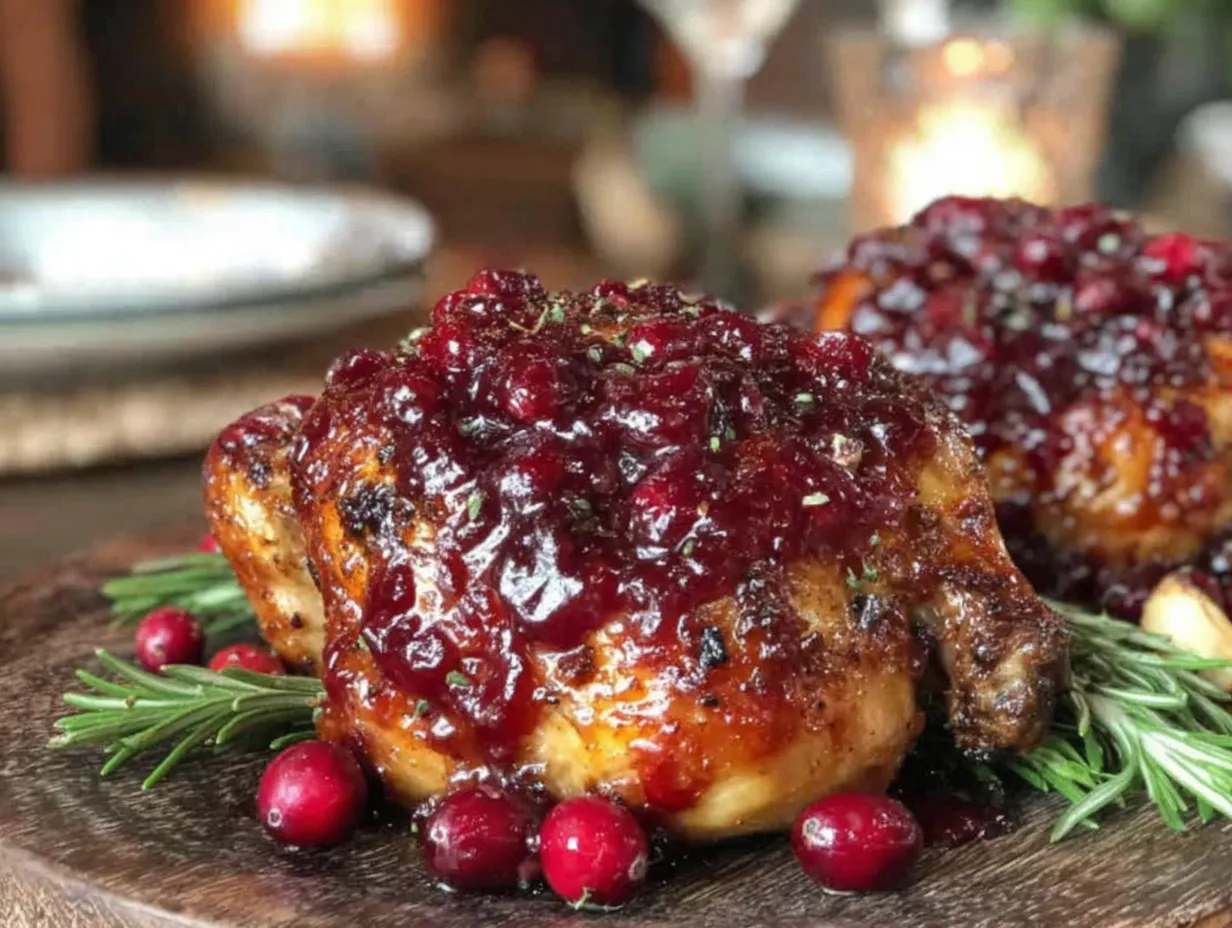
- 1 cup fresh or frozen cranberries (fresh give a slightly brighter flavor, but frozen work perfectly too)
- 1/3 cup honey (adds natural sweetness and helps the glaze get that beautiful sticky texture)
- 2 tablespoons balsamic vinegar (trust me on this—it balances the sweetness and adds depth)
- 1 tablespoon orange zest (from about 1 orange—zest before juicing)
- 1/4 cup fresh orange juice (about 1 orange worth)
- 1 sprig fresh rosemary (or 1 teaspoon dried, but fresh really shines here)
- 1 tablespoon unsalted butter (adds richness and helps the glaze coat the hens beautifully)
Optional Garnishes
- Fresh rosemary sprigs for presentation
- Orange slices or wedges
- Extra fresh cranberries for color
Ingredient Tips: I recommend using local honey if you can find it—the flavor is usually more complex. For the balsamic vinegar, I’ve found that a mid-range brand works better than the really cheap stuff (the flavor is smoother). And don’t skip the orange zest—it’s what makes the glaze taste bright and fresh instead of just sweet.
Substitution Guidance: If you don’t have honey, maple syrup works as a substitute. No fresh rosemary? Use 1 teaspoon dried. You can also swap the balsamic for apple cider vinegar in a pinch, though the flavor will be slightly different.
Equipment Needed
You don’t need a fully stocked professional kitchen for this recipe. Here’s what you’ll need:
- Roasting pan (a 9×13 inch baking dish works perfectly if you don’t have a dedicated roasting pan)
- Small saucepan for making the glaze
- Basting brush (a silicone one is great, but a regular pastry brush works too)
- Chef’s knife and cutting board
- Microplane or zester (if you don’t have one, a vegetable peeler can work for the orange zest—just chop it finely afterward)
- Kitchen twine (optional, but helps the hens cook more evenly)
- Meat thermometer (this is important—don’t skip it)
- Aluminum foil for tenting
I’ll be honest—I made these for the first time without a meat thermometer and ended up with one hen that was slightly overdone. Lesson learned. A simple instant-read thermometer costs about ten bucks and saves you from guessing. If you don’t have kitchen twine, you can skip trussing the hens—they’ll still cook fine, just maybe not quite as evenly.
Preparation Method
Let’s get cooking. This process is straightforward, but I’ll walk you through each step with the little details that make a difference.
- Preheat your oven to 400°F (200°C). While it’s heating, take your Cornish hens out of the fridge and let them sit at room temperature for about 15 minutes. This helps them cook more evenly.
- Pat the hens completely dry with paper towels. This is crucial—dry skin means crispy skin. I learned this the hard way after making soggy-skinned chicken for years. Really get in there and blot every surface.
- Season the hens generously. Rub them all over with olive oil, then sprinkle with salt, pepper, garlic powder, and dried thyme. Don’t be shy with the salt—it’s what makes the skin tasty. Get some seasoning inside the cavity too.
- Optional but recommended: Tie the legs together with kitchen twine. This helps the hens cook more evenly and gives them that classic roasted look. If you don’t have twine, no worries—just tuck the wing tips under the body.
- Place the hens breast-side up in your roasting pan. Make sure they’re not touching each other—they need space for the hot air to circulate. If they’re crowded, they’ll steam instead of roast.
- Roast for 20 minutes at 400°F. This initial high heat starts crisping the skin. While they’re roasting, start making your glaze.
- Make the cranberry glaze: In a small saucepan over medium heat, combine the cranberries, honey, balsamic vinegar, orange zest, orange juice, and rosemary sprig. Bring to a simmer, then reduce heat to low. Cook for about 8-10 minutes, stirring occasionally, until the cranberries have burst and the mixture has thickened slightly. Remove the rosemary sprig, then stir in the butter until melted. Set aside.
- After 20 minutes, reduce the oven temperature to 350°F (175°C). Brush the hens generously with the cranberry glaze. Reserve about half the glaze for later basting.
- Continue roasting for another 25-30 minutes, basting with the remaining glaze every 10 minutes or so. The glaze will caramelize and create that gorgeous, sticky coating. Your kitchen is going to smell absolutely incredible at this point.
- Check for doneness: The hens are done when a meat thermometer inserted into the thickest part of the thigh (without touching bone) reads 165°F (74°C). The juices should run clear when you pierce the thigh with a knife.
- Let them rest for 5-10 minutes before serving. This is important—resting allows the juices to redistribute throughout the meat. If you cut into them right away, all those delicious juices will end up on the cutting board instead of in your mouth.
- Serve immediately with your favorite sides. I love pairing these with roasted vegetables or a simple rice pilaf to soak up any extra glaze.
Cooking Tips & Techniques
After making these hens more times than I can count (and messing up a few along the way), here are my best tips:
Don’t skip the drying step. I know it seems fussy, but patting the hens dry is the difference between crispy, golden skin and sad, rubbery skin. Take the extra minute.
Watch your glaze temperature. The first time I made this, I got distracted and let the glaze cook too long. It became this thick, sticky mess that was hard to brush onto the hens. You want it to be syrupy but still brushable—think maple syrup consistency.
Baste, but don’t over-baste. I know it’s tempting to keep opening the oven and brushing more glaze on, but every time you open that door, heat escapes. Stick to basting every 10 minutes or so. Three or four times during the roasting is perfect.
Use a meat thermometer. I cannot stress this enough. Cornish hens are small and can go from perfectly cooked to dry in what feels like seconds. The thermometer takes the guesswork out. Trust the temperature, not the timer.
Let the glaze cool slightly before basting. If you brush scorching hot glaze onto the hens, it can slide right off. Let it cool for a minute or two so it sticks better to the skin.
Variations & Adaptations
This recipe is pretty flexible. Here are some ways to make it your own:
Make it dairy-free: Skip the butter in the glaze or use a dairy-free butter alternative. The glaze will still be delicious—just slightly less rich.
Add some heat: If you like a little kick, add a pinch of red pepper flakes to the glaze while it simmers. The heat pairs surprisingly well with the sweet-tart cranberry flavor.
Try different herbs: Not a rosemary fan? Use fresh thyme or sage instead. I’ve made this with sage and it gave the dish a lovely almost Thanksgiving-like vibe.
Swap the fruit: No cranberries? Use fresh or frozen cherries instead. The color will be darker, but the flavor is still amazing. I tried this one winter when I couldn’t find cranberries anywhere, and it was a happy accident.
Make it for a crowd: This recipe scales up easily. Just multiply the ingredients by the number of guests and use a larger roasting pan. You might need to add a few extra minutes to the cooking time if the pan is crowded.
Serving & Storage Suggestions
These hens are best served hot, right after resting. The glaze is at its stickiest and most flavorful when fresh. I like to serve each hen on its own plate with a drizzle of the pan juices over the top.
What to serve with them: Roasted Brussels sprouts or green beans are perfect—they soak up the extra glaze beautifully. A simple rice pilaf or mashed potatoes work great too. For something lighter, try a fresh arugula salad with a lemon vinaigrette to cut through the richness.
For drinks: A glass of dry red wine like Pinot Noir or a crisp white like Sauvignon Blanc pairs wonderfully. If you’re not drinking alcohol, sparkling water with a splash of cranberry juice fits the theme.
Storage: Leftover meat can be stored in an airtight container in the refrigerator for up to 3 days. The glaze will set as it cools, so don’t worry if it looks less shiny the next day.
Reheating: The best way to reheat is in a 300°F oven for about 10-15 minutes, covered loosely with foil. This prevents the meat from drying out. You can use the microwave in a pinch, but the skin won’t be as crispy.
Freezer note: I don’t recommend freezing the fully cooked hens—the texture suffers. But you can freeze the glaze separately for up to 3 months and use it on chicken or pork later.
Nutritional Information & Benefits
Here’s an approximate breakdown per serving (one hen with glaze):
- Calories: ~580
- Protein: 45g
- Fat: 28g
- Carbohydrates: 32g
- Fiber: 2g
- Sugar: 28g
Cornish hens are actually a great source of lean protein, especially if you remove the skin before eating (though the skin is the best part, let’s be honest). Cranberries are packed with antioxidants and vitamin C, which is always a nice bonus. The orange zest adds a little vitamin C too.
This recipe is naturally gluten-free and can be made dairy-free with a simple swap. If you’re watching your sugar intake, you can reduce the honey slightly, though the glaze won’t be as thick and sticky.
Conclusion
This cozy cranberry glazed Cornish hens for two recipe has become my little secret weapon for making any evening feel special. It’s the dish I make when I want to slow down, light a candle, and actually enjoy the process of cooking instead of rushing through it.
The first time I made these for my partner, he asked if I’d ordered takeout from somewhere fancy. That’s the kind of reaction you get when you put this on the table. But the best part? You know exactly what went into it, and you made it yourself.
I’d love to hear how yours turn out. Did you add your own twist? Swap the herbs? Serve it with something unexpected? Drop a comment below and let me know. And if you make these for someone special, tag me—I want to see your beautiful hens!
Go ahead, give yourself a cozy night in. You deserve it.
Frequently Asked Questions
Can I use chicken instead of Cornish hens?
Absolutely. You can use two bone-in, skin-on chicken thighs or a small whole chicken. Just adjust the cooking time—chicken thighs will cook faster (about 30-35 minutes), while a whole chicken will need longer (about 50-60 minutes depending on size).
Can I make the glaze ahead of time?
Yes! You can make the glaze up to 3 days in advance. Store it in an airtight container in the refrigerator. Let it come to room temperature or warm it slightly before brushing onto the hens.
My glaze is too thick. What should I do?
If your glaze becomes too thick after cooling, simply add a tablespoon of water or orange juice and stir over low heat until it loosens up. You want it to be brushable, not spreadable like jam.
Can I use frozen cranberries?
Absolutely. Frozen cranberries work perfectly—no need to thaw them first. Just toss them into the saucepan frozen and cook as directed. They might take an extra minute or two to break down.
How do I know when the hens are done without a thermometer?
If you don’t have a thermometer, pierce the thickest part of the thigh with a knife. The juices should run clear (not pink), and the meat should feel firm but not hard. The skin should be golden brown and crispy. But honestly, a thermometer is worth the investment for perfect results every time.
Pin This Recipe!
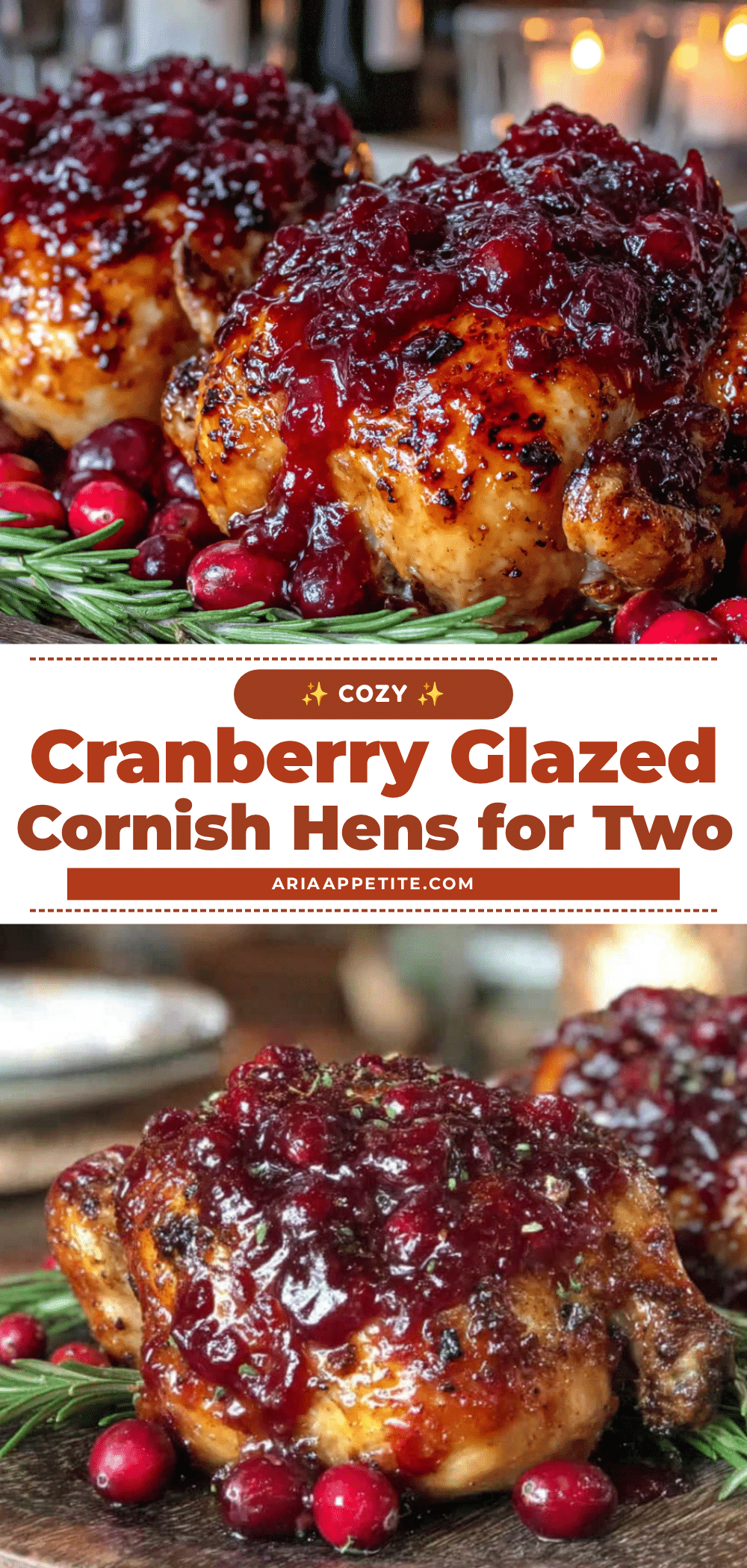
Cozy Cranberry Glazed Cornish Hens for Two: Easy Recipe

Perfectly roasted Cornish hens with a sweet-tart cranberry glaze, ideal for a romantic dinner or a cozy night in. This impressive yet simple recipe delivers tender meat and crispy skin with a beautiful ruby-red glaze.
- Prep Time: 15 minutes
- Cook Time: 45 minutes
- Total Time: 1 hour
- Yield: 2 servings 1x
- Category: Main Course
- Cuisine: American
Ingredients
- 2 Cornish hens (about 1.5 pounds each), thawed if frozen
- 2 tablespoons olive oil
- Salt and black pepper, to taste
- 1 teaspoon garlic powder
- 1 teaspoon dried thyme
- 1 cup fresh or frozen cranberries
- 1/3 cup honey
- 2 tablespoons balsamic vinegar
- 1 tablespoon orange zest
- 1/4 cup fresh orange juice
- 1 sprig fresh rosemary
- 1 tablespoon unsalted butter
- Fresh rosemary sprigs for garnish (optional)
- Orange slices or wedges for garnish (optional)
- Extra fresh cranberries for garnish (optional)
Instructions
- Preheat your oven to 400°F (200°C). Take the Cornish hens out of the fridge and let them sit at room temperature for about 15 minutes.
- Pat the hens completely dry with paper towels.
- Rub the hens all over with olive oil, then season generously with salt, pepper, garlic powder, and dried thyme. Season inside the cavity as well.
- Optional: Tie the legs together with kitchen twine. Tuck wing tips under the body if not using twine.
- Place the hens breast-side up in a roasting pan, ensuring they are not touching.
- Roast for 20 minutes at 400°F.
- While the hens roast, make the cranberry glaze: In a small saucepan over medium heat, combine cranberries, honey, balsamic vinegar, orange zest, orange juice, and rosemary sprig. Bring to a simmer, then reduce heat to low. Cook for 8-10 minutes, stirring occasionally, until cranberries burst and mixture thickens slightly. Remove rosemary sprig, then stir in butter until melted. Set aside.
- After 20 minutes, reduce oven temperature to 350°F (175°C). Brush the hens generously with the cranberry glaze. Reserve about half the glaze for later basting.
- Continue roasting for another 25-30 minutes, basting with remaining glaze every 10 minutes.
- Check for doneness: Insert a meat thermometer into the thickest part of the thigh (without touching bone); it should read 165°F (74°C). Juices should run clear.
- Let the hens rest for 5-10 minutes before serving.
- Serve immediately with your favorite sides.
Notes
Pat the hens dry for crispy skin. Use a meat thermometer to avoid overcooking. Let the glaze cool slightly before basting so it sticks better. For a dairy-free version, skip the butter or use a dairy-free alternative. Leftovers can be stored in the refrigerator for up to 3 days; reheat in a 300°F oven for 10-15 minutes.
Nutrition
- Serving Size: 1 hen with glaze
- Calories: 580
- Sugar: 28
- Sodium: 450
- Fat: 28
- Saturated Fat: 8
- Carbohydrates: 32
- Fiber: 2
- Protein: 45
Keywords: Cornish hens, cranberry glaze, romantic dinner, date night, easy recipe, gluten-free, roasted chicken