Love this? Save it for later!
Share the inspiration with your friends
I was supposed to be making a beef Wellington. That was the plan, anyway. I had the puff pastry defrosting on the counter, the mushroom duxelles recipe bookmarked, and a ridiculous amount of confidence for someone who had never actually wrapped a single thing in pastry before. My mother-in-law was coming for Sunday dinner, and I wanted to prove I could pull off something fancy. Something that screamed “I have my life together.”
Then the power flickered. Just a quick brownout, but it was enough to send my oven’s digital display into a confused loop of blinking numbers. The pastry was now a sad, soggy mess, and my grand Wellington dreams were evaporating fast. I stood there, staring at this beautiful, expensive prime rib roast on the counter, and felt that familiar knot of panic tighten in my chest. You know that feeling when a meal starts to slip through your fingers? I was already mentally composing an apology text to my mother-in-law.
I grabbed the butter, the garlic, and a handful of rosemary sprigs. I figured at the very least, I could sear the roast and call it a steak. I mean, how bad could a seared hunk of beef be? I slathered it in a garlic butter compound I had whipped up on a whim, threw it in the oven once the oven came back on, and honestly, I was just hoping for edible. What came out of that oven was nothing like the Wellington I had planned. It was better. The crust was a deep, crackling mahogany, the fat had rendered into something impossibly tender, and the garlic butter had seeped into every crevice. My mother-in-law asked for the recipe before she even finished her first slice. I’ve been making this perfect garlic butter prime rib roast for every special family dinner ever since.
Why You’ll Love This Recipe
This isn’t just another roast beef recipe. This is the one that makes everyone at the table go quiet for a minute. I’ve tested this method more times than I can count, and it’s the only way I’ll cook a prime rib now. It’s the kind of recipe that makes you look like a total pro, even if you’re just a home cook who really, really loves a good meal.
- Foolproof for a Crowd: This method takes the stress out of cooking a big, expensive cut of meat. No complicated techniques, no special equipment you don’t already have. It’s surprisingly simple.
- Incredible Flavor: The garlic butter isn’t just a topping. It’s a crust, a baste, and a flavor bomb all in one. It creates a savory, herby, garlicky exterior that’s absolutely addictive.
- Perfect for a Special Occasion: Whether it’s Christmas, a birthday, or just a Sunday you want to make feel important, this roast delivers. It’s the centerpiece of a meal everyone will remember.
- Family-Friendly: I know what you’re thinking—will the kids eat it? Yes. The garlic roasts into something mellow and sweet, and the beef is so tender even picky eaters will ask for seconds. Plus, the leftovers are legendary for sandwiches.
- Budget-Conscious Luxury: While prime rib is an investment, this recipe helps you get the absolute most out of it. The cooking method ensures zero waste, and the leftovers stretch into several other meals. It’s a smart splurge for a family dinner.
This recipe is the one that turned me from a nervous host into someone who actually enjoys cooking for a crowd. It’s the kind of meal that makes you close your eyes after the first bite, not just because it tastes good, but because you made it. And it was perfect.
What Ingredients You Will Need
This recipe uses simple, high-quality ingredients to build layers of flavor. You don’t need a pantry full of exotic spices—just a few key things that work together perfectly. Most of these are things you might already have on hand, which is part of the beauty of it.
- Prime Rib Roast (bone-in or boneless, 4-6 pounds): This is the star. I prefer a bone-in roast for maximum flavor, as the bones add a richness to the meat as it cooks. For a family dinner, a 4-6 pound roast will comfortably feed 6-8 people with leftovers. Look for one with a good fat cap on top—that fat is what keeps the meat moist and adds incredible flavor. I usually ask my butcher for a “first cut” or “small end” roast if I can get it.
- Unsalted Butter (1 cup, 2 sticks, softened): Don’t use salted butter here. You want to control the salt level yourself. The butter is the vehicle for all that garlic and herb goodness, making it a rich, flavorful paste that clings to the meat.
- Garlic (1 whole head, plus 4 extra cloves): We’re not messing around with garlic here. The whole head gets roasted alongside the beef, becoming sweet and spreadable. The extra cloves get minced fine and mixed into the butter for a fresh, pungent kick.
- Fresh Rosemary (2 tablespoons, finely chopped): Rosemary and beef are a classic pair. It adds an earthy, piney aroma that feels very special. If you only have dried, use 2 teaspoons, but fresh really is better here.
- Fresh Thyme (1 tablespoon, leaves removed): Thyme is more subtle than rosemary, but it adds a lovely, slightly floral depth. I like to use the leaves whole so they don’t get lost in the butter.
- Kosher Salt (2 tablespoons, plus more for finishing): I use Diamond Crystal kosher salt. It’s less salty by volume than Morton’s, so if you’re using a different brand, you might need to adjust. Salt is crucial for seasoning the meat all the way through.
- Freshly Ground Black Pepper (1 tablespoon): Freshly ground is non-negotiable here. The pre-ground stuff just doesn’t have the same punch. It adds a gentle heat that complements the richness of the beef.
- Olive Oil (2 tablespoons): A good quality olive oil helps the salt and pepper stick to the roast and aids in browning the exterior before it goes into the oven.
- Beef Broth (1 cup, low-sodium): This goes into the bottom of the roasting pan. It creates steam that keeps the meat moist, and it forms the base for a quick pan sauce or au jus. Low-sodium is key so you don’t end up with a salty sauce.
Equipment Needed
You don’t need a professional kitchen to pull this off. I’ve made this roast in a tiny apartment oven and a big fancy one, and it works the same. Here’s what you’ll actually use:
- Roasting Pan: A heavy-duty roasting pan with a rack is ideal. The rack lifts the meat up so hot air can circulate all around it, ensuring even cooking. If you don’t have a rack, you can use a few carrots or celery stalks as a makeshift one.
- Instant-Read Meat Thermometer: This is not optional. I cannot stress this enough. A good thermometer is the only way to guarantee a perfectly cooked roast. I use a Thermapen, but any reliable instant-read thermometer will do. It’s a small investment that saves you from a ruined dinner.
- Small Bowl: For mixing your garlic butter compound. Nothing fancy needed.
- Chef’s Knife: A sharp knife makes prepping the garlic and herbs so much easier. It’s also essential for carving the finished roast into beautiful slices.
- Cutting Board: A large, sturdy cutting board for carving. I like to use one with a groove around the edge to catch the juices.
- Aluminum Foil: For tenting the roast while it rests. This is a crucial step that keeps the meat warm and allows the juices to redistribute.
- Kitchen Twine: If your roast isn’t already tied, you’ll want some kitchen twine to tie it at even intervals. This helps it cook evenly and maintain a nice shape.
Preparation Method
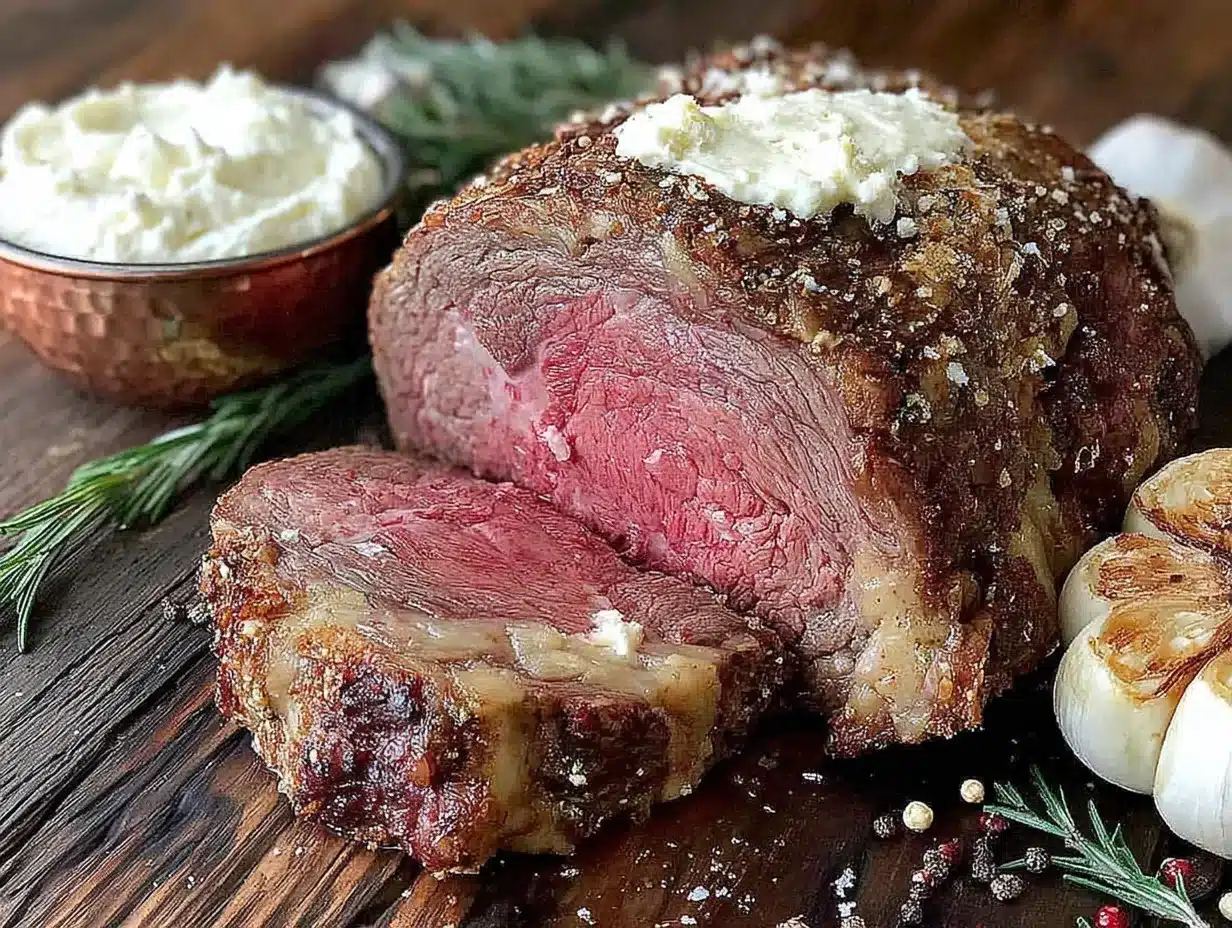
Alright, let’s get cooking. I’m going to walk you through this step-by-step, just like I’m standing next to you in the kitchen. Don’t rush—good things take time, and this roast is worth every minute.
- Take the Chill Off (2-3 hours before cooking): Pull your prime rib roast out of the refrigerator about 2-3 hours before you plan to cook it. This is called “tempering.” A cold roast will cook unevenly, with the outside getting overdone before the center is even warm. Let it sit on a plate on the counter, uncovered, to come to room temperature. Pro tip: If you’re short on time, even 1 hour is better than nothing.
- Make the Garlic Butter (15 minutes before roasting): In a small bowl, combine the 2 sticks of softened unsalted butter with the 4 finely minced garlic cloves, the chopped rosemary, and the thyme leaves. Mix it all together with a fork until it’s a uniform, fragrant paste. Set it aside at room temperature so it stays spreadable.
- Preheat the Oven & Prepare the Pan (30 minutes before roasting): Preheat your oven to 450°F (232°C). Place your roasting pan with the rack inside it on the stovetop or counter. Pour the 1 cup of low-sodium beef broth into the bottom of the pan.
- Season the Roast (10 minutes before roasting): Pat the prime rib roast completely dry with paper towels. This is essential for a good sear. Place the roast on the rack in the roasting pan. Drizzle it with the 2 tablespoons of olive oil and rub it all over. Then, season generously with the 2 tablespoons of kosher salt and 1 tablespoon of freshly ground black pepper. Don’t be shy—a lot of it will fall off during cooking.
- Sear the Roast (15 minutes): Place the roasting pan in the preheated 450°F (232°C) oven. Roast for 15 minutes. This high-heat blast creates that beautiful, deep brown crust. Sensory cue: You should hear a sizzle when it goes in. That’s the sound of good things happening.
- Slather with Garlic Butter (5 minutes): After 15 minutes, carefully pull the roasting pan out of the oven. Reduce the oven temperature to 325°F (163°C). Using a spatula or the back of a spoon, carefully spread the garlic butter mixture all over the top and sides of the roast. It will melt a bit from the heat, that’s fine. Just get a good, even coating on there.
- Add the Garlic Head (5 minutes): While you have the pan out, cut the top off the whole head of garlic to expose the cloves. Drizzle it with a tiny bit of olive oil and a pinch of salt, then nestle it cut-side down in the beef broth in the bottom of the pan. It will roast alongside the beef, becoming sweet and soft.
- Roast to Perfection (1.5 – 2 hours): Return the pan to the 325°F (163°C) oven. Roast until the internal temperature reaches your desired doneness. For medium-rare (my favorite), pull it out at 120-125°F (49-52°C). For medium, pull it at 130-135°F (54-57°C). Start checking the temperature with your instant-read thermometer about 1 hour and 15 minutes in. Insert it into the thickest part of the roast, away from any bones. Troubleshooting: If the top is getting too dark before the inside is done, tent it loosely with a piece of aluminum foil.
- Rest the Roast (20-30 minutes): This is the most important step that people often skip. Once the roast hits your target temperature, remove it from the oven and carefully transfer it to a cutting board. Tent it loosely with aluminum foil. Let it rest for at least 20 minutes, and up to 30. Do not skip this! The internal temperature will continue to rise by about 5-10°F during this time (carryover cooking), and the juices will redistribute throughout the meat. If you cut into it too soon, all those precious juices will run out onto the board, leaving you with dry meat.
- Make the Au Jus (during resting): While the roast rests, pour the drippings from the roasting pan through a fine-mesh strainer into a small saucepan. Discard the solids. Squeeze the roasted garlic cloves out of their skins and mash them into a paste. Whisk the garlic paste into the pan drippings. Place the saucepan over medium heat and bring to a simmer. Taste and adjust seasoning with salt and pepper. If it’s too strong, add a splash of water or more beef broth. Keep it warm until you’re ready to serve.
- Carve and Serve (5 minutes): Remove the kitchen twine from the roast. Using a sharp chef’s knife, slice the roast against the grain into ½-inch to ¾-inch thick slices. Arrange on a platter and spoon a little of the au jus over the top. Serve the remaining au jus on the side.
Cooking Tips & Techniques
I’ve made every mistake you can imagine with a prime rib. I’ve overcooked it (dry and sad), undercooked it (too chewy), and forgotten to rest it (a crime against beef). Here’s what I’ve learned so you don’t have to make the same mistakes.
- Trust Your Thermometer, Not the Timer: Every oven is different. Every roast is a different shape. The timer is a suggestion; the thermometer is the truth. That’s the number one rule. I’ve had roasts take 20 minutes less than expected and 30 minutes more. The thermometer never lies.
- Don’t Open the Oven Door: I know it’s tempting to peek. But every time you open that door, you let out heat and extend the cooking time. Trust the process. Only open it to check the temperature when you think it might be close.
- The Resting Step is Non-Negotiable: I once had a friend who was so excited to serve dinner that she carved the roast immediately. It was a beautiful, juicy-looking piece of meat… until the second the knife hit it, and all the juice flooded out onto the cutting board. It was a dry, disappointing meal. Don’t be that friend. The rest is where the magic happens.
- Pat it Dry: This is a small step that makes a huge difference. Moisture is the enemy of a good sear. If the surface of the meat is wet, it will steam instead of brown. A dry surface equals a beautiful, crispy crust.
- Let it Come to Room Temp: I know it feels weird to leave a big piece of raw meat on the counter. But it’s safe for a couple of hours, and it’s the difference between a perfectly pink center and a grey, overcooked ring around the outside. Trust me on this one.
Variations & Adaptations
One of the best things about this recipe is how flexible it is. I’ve tweaked it for different diets, different crowds, and different cravings. Here are a few ways you can make it your own.
- Herb Swap: Not a fan of rosemary? No problem. Swap it out for equal amounts of fresh oregano, marjoram, or even a tablespoon of herbes de Provence. For a more peppery kick, add a teaspoon of cracked black peppercorns to the butter.
- Dairy-Free Version: You can make a fantastic dairy-free version by using a high-quality vegan butter or even a good olive oil. The flavor will be a little different, but still incredibly delicious. Just make sure the vegan butter is a stick-style that’s firm when cold, not a spread.
- Garlic Lover’s Dream: If you’re like me and believe there’s no such thing as too much garlic, roast two whole heads of garlic alongside the beef. You can also add a tablespoon of garlic powder to the salt and pepper rub for an extra layer of flavor.
- Add a Smoky Crust: For a deeper, more complex flavor, add a teaspoon of smoked paprika or ancho chili powder to the garlic butter. This is especially good if you’re serving the roast with a spicy chimichurri sauce.
- Make it a Meal: While the roast rests, you can use the same pan to roast some vegetables. Toss some halved Brussels sprouts, baby carrots, and quartered red onions with olive oil, salt, and pepper, and spread them in the pan. Roast them at 400°F for about 20 minutes while you carve the beef. They’ll soak up all those delicious pan juices.
Serving & Storage Suggestions
This roast is a showstopper, so let’s make sure you serve it right. And because I know you’re thinking about those leftovers, I’ve got you covered there too.
Serve the prime rib hot, right after its rest. Arrange the slices on a warm platter and spoon a little of the au jus over the top. It’s beautiful on its own, but I love to pair it with creamy mashed potatoes (to soak up all that jus), a simple green salad with a vinaigrette (to cut the richness), and some roasted asparagus or green beans. A good, crusty bread is also a must for sopping up every last drop.
For leftovers, let the roast cool completely to room temperature (but don’t leave it out for more than 2 hours). Wrap it tightly in plastic wrap, then again in aluminum foil, or place it in an airtight container. It will keep in the refrigerator for up to 4 days. The flavors actually get even better overnight!
To reheat, the best method is low and slow. Place slices in a baking dish with a splash of beef broth or au jus, cover with foil, and warm in a 300°F (150°C) oven for about 10-15 minutes, until just heated through. You can also reheat individual slices in a skillet over medium-low heat with a little butter or broth. Avoid the microwave—it will make the meat tough and rubbery. And don’t forget about leftover prime rib sandwiches! Thinly sliced, piled high on a crusty roll with some horseradish cream and arugula… it’s a whole other meal.
Nutritional Information & Benefits
I’m not a nutritionist, but I do know that food is more than just numbers. That said, here’s a rough idea of what you’re looking at per serving (about 6 ounces of cooked meat, no au jus).
- Calories: Approximately 450-550
- Protein: 40-50 grams
- Fat: 35-45 grams
- Saturated Fat: 15-20 grams
- Carbohydrates: 1-2 grams
- Sodium: 600-800 mg (depending on how much salt you use)
Prime rib is a fantastic source of high-quality protein, which is essential for building and repairing tissues. It’s also rich in iron, zinc, and B vitamins, especially B12, which is crucial for energy and brain function. The fat, while high in calories, provides flavor and helps you feel full and satisfied. The garlic and herbs offer their own antioxidant benefits, too. This is a meal that nourishes you on many levels. It’s a special occasion food, meant to be enjoyed and savored, not something to feel guilty about.
Conclusion
This perfect garlic butter prime rib roast has become my go-to for every special family dinner. It’s the recipe that turned a stressful, failed Wellington into a beloved tradition. It’s proof that sometimes the best things in life come from happy accidents. The crust is impossibly crispy and flavorful, the meat is melt-in-your-mouth tender, and the whole experience feels like a celebration.
I really hope you give this a try for your next family gathering. Don’t be intimidated by the size or the price tag—you’ve got this. Follow the steps, trust your thermometer, and give it that all-important rest. And please, don’t be afraid to make it your own. Swap the herbs, add some spice, or serve it with your favorite sides. The best recipes are the ones that become yours.
I’d love to hear how it turns out! Drop a comment below and let me know if your family loved it as much as mine does. Did you make any changes? What did you serve it with? Let’s share the joy of a perfect dinner. Happy cooking!
Frequently Asked Questions
Can I use a boneless prime rib for this recipe?
Absolutely! A boneless roast will work just as well. The cooking time might be slightly shorter since there’s no bone to act as an insulator. I still recommend using a thermometer to check for doneness. The bone adds flavor, but a boneless roast is easier to carve, so it’s a trade-off.
My roast is bigger than 6 pounds. How do I adjust the cooking time?
For a larger roast (8-10 pounds), the high-heat sear at 450°F remains the same at 15 minutes. Then, when you lower the oven to 325°F, expect to add about 10-15 minutes of cooking time per additional pound. Again, the thermometer is your best friend here. Don’t rely on the clock.
What if I don’t have a roasting pan with a rack?
No problem at all! You can use a large, rimmed baking sheet. To mimic a rack, place a few thick-cut carrots, celery stalks, or even halved onions on the sheet. Rest the roast on top of these vegetables. They’ll lift the meat up and add a little flavor to the drippings.
Can I prepare the garlic butter ahead of time?
Yes, and I often do! You can make the garlic butter up to 3 days in advance. Just wrap it tightly in plastic wrap or store it in an airtight container in the refrigerator. Let it come to room temperature for about 30 minutes before you need to spread it on the roast so it’s soft and easy to work with.
My roast came out more medium than medium-rare. What went wrong?
This usually happens for one of two reasons. The first is that your oven runs hot. An oven thermometer is a great investment to check. The second, and most common, is that you didn’t account for carryover cooking. Remember, the internal temperature will rise by 5-10°F while the roast rests. Always pull it out of the oven a little early, at about 120°F for medium-rare. It will climb to the perfect 125-130°F as it rests.
Pin This Recipe!
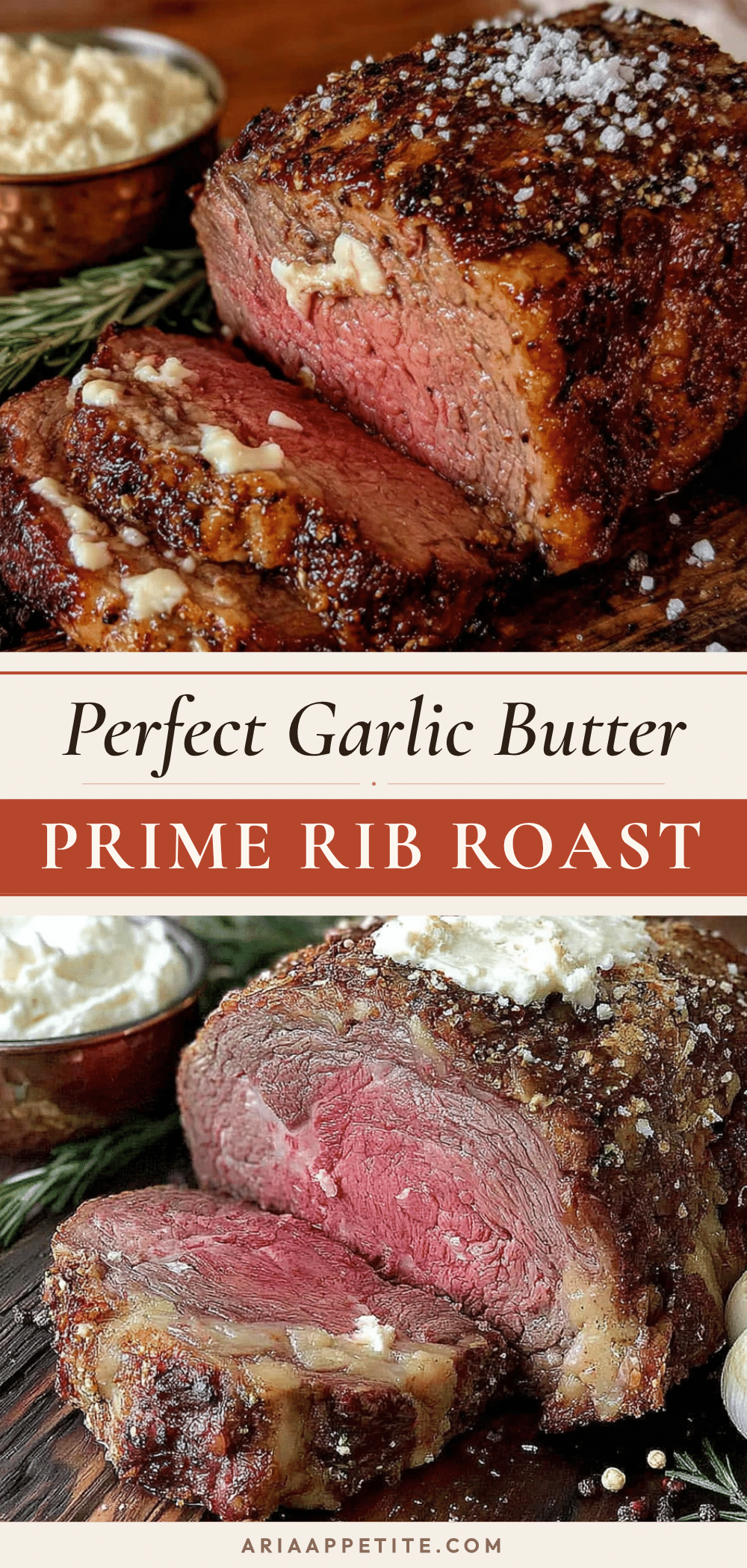
Perfect Garlic Butter Prime Rib Roast: Easy Holiday Dinner Recipe
This foolproof prime rib roast is slathered in a savory garlic herb butter and roasted to perfection, creating a crispy, flavorful crust and melt-in-your-mouth tender meat. It’s the ultimate centerpiece for any special family dinner.
- Prep Time: 15 minutes
- Cook Time: 1 hour 45 minutes
- Total Time: 2 hours 30 minutes
- Yield: 6-8 servings
- Category: Main Course
- Cuisine: American
Ingredients
- Prime rib roast (bone-in or boneless, 4-6 pounds)
- Unsalted butter (1 cup, 2 sticks, softened)
- Garlic (1 whole head, plus 4 extra cloves)
- Fresh rosemary (2 tablespoons, finely chopped)
- Fresh thyme (1 tablespoon, leaves removed)
- Kosher salt (2 tablespoons, plus more for finishing)
- Freshly ground black pepper (1 tablespoon)
- Olive oil (2 tablespoons)
- Beef broth (1 cup, low-sodium)
Instructions
- Take the Chill Off (2-3 hours before cooking): Pull the prime rib roast out of the refrigerator about 2-3 hours before cooking to temper. Let it sit on a plate on the counter, uncovered, to come to room temperature.
- Make the Garlic Butter (15 minutes before roasting): In a small bowl, combine the softened unsalted butter with the 4 finely minced garlic cloves, chopped rosemary, and thyme leaves. Mix until a uniform paste forms. Set aside at room temperature.
- Preheat the Oven & Prepare the Pan (30 minutes before roasting): Preheat oven to 450°F (232°C). Place the roasting pan with rack on the stovetop or counter. Pour the beef broth into the bottom of the pan.
- Season the Roast (10 minutes before roasting): Pat the prime rib roast completely dry with paper towels. Place on the rack in the roasting pan. Drizzle with olive oil and rub all over. Season generously with kosher salt and black pepper.
- Sear the Roast (15 minutes): Place the roasting pan in the preheated 450°F oven. Roast for 15 minutes to create a deep brown crust.
- Slather with Garlic Butter (5 minutes): After 15 minutes, carefully remove the pan from the oven. Reduce oven temperature to 325°F (163°C). Spread the garlic butter mixture all over the top and sides of the roast.
- Add the Garlic Head (5 minutes): Cut the top off the whole head of garlic to expose the cloves. Drizzle with a tiny bit of olive oil and a pinch of salt, then nestle cut-side down in the beef broth in the pan.
- Roast to Perfection (1.5 – 2 hours): Return the pan to the 325°F oven. Roast until internal temperature reaches desired doneness: 120-125°F (49-52°C) for medium-rare, 130-135°F (54-57°C) for medium. Start checking temperature about 1 hour 15 minutes in.
- Rest the Roast (20-30 minutes): Once the roast hits target temperature, remove from oven and transfer to a cutting board. Tent loosely with aluminum foil. Let rest for at least 20 minutes, up to 30. The internal temperature will rise by 5-10°F during this time.
- Make the Au Jus (during resting): Pour drippings from the roasting pan through a fine-mesh strainer into a small saucepan. Discard solids. Squeeze roasted garlic cloves out of their skins and mash into a paste. Whisk garlic paste into pan drippings. Place over medium heat and bring to a simmer. Season with salt and pepper. Keep warm until serving.
- Carve and Serve (5 minutes): Remove kitchen twine from the roast. Slice against the grain into ½-inch to ¾-inch thick slices. Arrange on a platter and spoon a little au jus over the top. Serve remaining au jus on the side.
Notes
Trust your thermometer, not the timer. Every oven is different. Don’t open the oven door frequently. The resting step is non-negotiable for juicy meat. Pat the roast dry for a good sear. Let the roast come to room temperature before cooking for even doneness.
Nutrition
- Serving Size: 6 ounces cooked meat
- Calories: 500
- Sodium: 700
- Fat: 40
- Saturated Fat: 18
- Carbohydrates: 2
- Protein: 45
Keywords: prime rib, garlic butter, roast beef, holiday dinner, Christmas dinner, special occasion, beef roast, prime rib roast